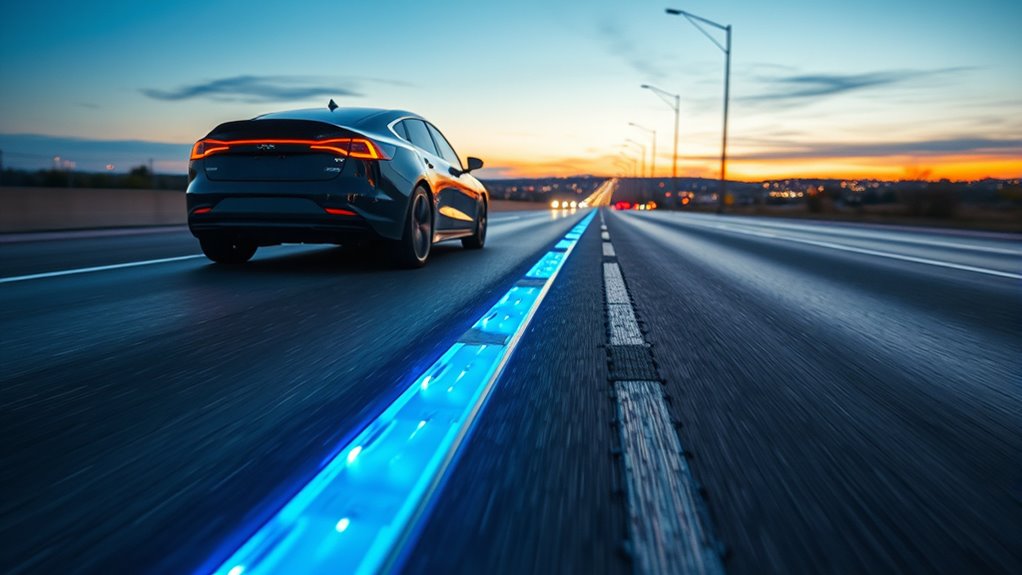

Dynamic wireless charging lets you recharge your vehicle while driving on electrified roads through embedded coils that transfer power wirelessly via electromagnetic fields. As you pass over these specially equipped zones, your vehicle’s receiver coils induce current, keeping your battery charged without stopping or plugging in. This technology reduces range anxiety and supports longer trips smoothly. To find out more about how this innovative system works and its safety features, keep exploring the details below.
Key Takeaways
- Dynamic wireless charging uses embedded coils in roads to transfer power wirelessly to vehicles while they are driving.
- Vehicles equipped with compatible receiver coils can seamlessly receive energy from the road’s electromagnetic fields.
- This technology enables continuous vehicle charging, reducing range anxiety and eliminating frequent stops for charging.
- Safety measures ensure electromagnetic fields are controlled and shielded to protect users and other road users.
- Standardized protocols and infrastructure planning are essential for widespread adoption of dynamic wireless charging systems.
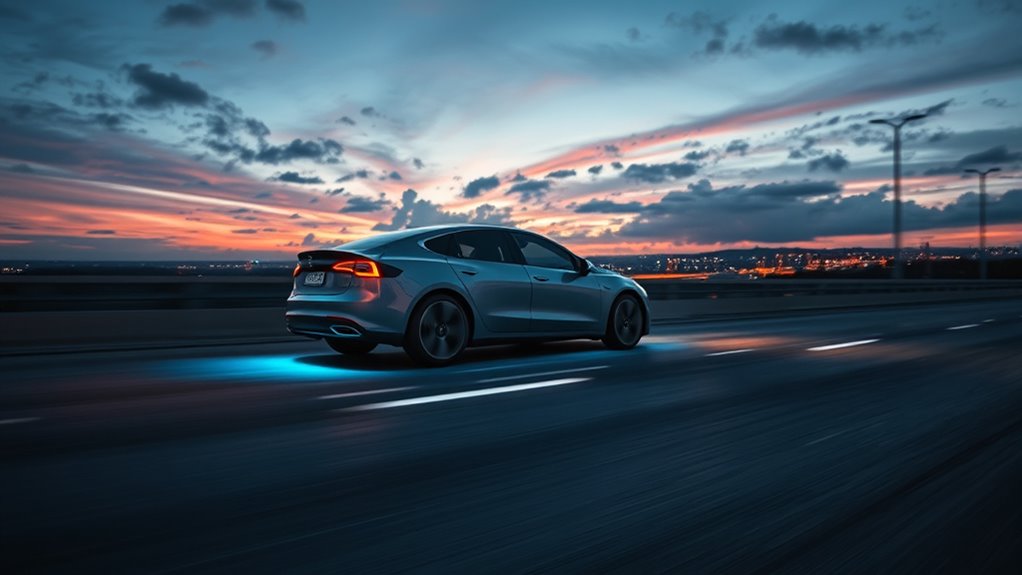
As technology advances, wireless charging while driving is becoming an increasingly practical solution for keeping your devices powered on the go. One of the most innovative methods is dynamic wireless charging, which involves charging your devices while you’re on the move by utilizing electrified roads. This system relies on inductive technology, a form of wireless power transfer that uses electromagnetic fields to transmit energy without physical connectors. When your vehicle passes over these specially equipped roads, electromagnetic fields generated beneath the surface create a magnetic flux that your device can tap into, provided it’s compatible with the system. This seamless transfer means you don’t need to stop or plug in; your device charges as you drive, ensuring you stay connected without interruption.
Inductive technology is at the core of this system’s efficiency and safety. It works by creating a magnetic field in a coil embedded within the road surface. When your vehicle, equipped with a matching coil, passes over this area, the electromagnetic fields induce a current in your device’s receiver coil. This process is similar to how wireless chargers work at home, but on a much larger scale designed for high-speed, continuous power transfer. Because the electromagnetic fields are carefully controlled and shielded, they pose minimal risk to you or other vehicles. The system is engineered to ensure that the energy transfer only occurs when your vehicle is aligned with the charging zone, preventing unintended energy exposure. Additionally, the use of standardized protocols helps ensure compatibility across different vehicle models and infrastructure setups.
Inductive technology creates safe, controlled magnetic fields for seamless, high-speed wireless power transfer while driving.
This technology transforms how you think about charging on the road. Instead of stopping at charging stations or relying solely on large batteries, your vehicle can maintain its charge while in motion. It’s especially beneficial for electric vehicles, reducing range anxiety and extending driving distances without adding extra stops. As the system becomes more widespread, roads could be embedded with multiple charging zones, creating a network that continuously supplies power as you travel. This ongoing transfer of energy not only simplifies your journey but also supports the development of more efficient, longer-range electric vehicles.
However, implementing this technology involves careful infrastructure planning and standardization to ensure compatibility across different vehicle models. As the roads evolve with embedded coils and advanced electromagnetic field controls, you’ll need vehicles equipped with compatible receiver coils to take full advantage of dynamic wireless charging. In the near future, as this technology matures, you might find yourself seamlessly cruising over electrified roads that keep your devices and vehicle batteries charged, all without the need for traditional charging stops. This innovation promises a more connected, convenient, and sustainable driving experience, powered by the invisible force of electromagnetic fields.
Frequently Asked Questions
How Does Dynamic Wireless Charging Impact Overall Vehicle Range?
Dynamic wireless charging substantially extends your vehicle’s range by using wireless power transfer from road infrastructure. As you drive on electrified roads, your car can recharge seamlessly, reducing the need for frequent stops and large batteries. This technology makes long trips more feasible, enhances efficiency, and lowers costs. With continuous power transfer, you can enjoy a more convenient driving experience, knowing your vehicle stays charged even during extended journeys.
What Safety Measures Protect Drivers and Pedestrians Around Charging Roads?
Imagine you’re driving on a dynamically charged road, and safety measures kick in to protect pedestrians and drivers. You’re alerted by pedestrian alert systems that warn of nearby vehicles or charging zones. Additionally, emergency shutdown protocols activate if hazards arise, instantly stopping power transfer. These safety systems guarantee everyone stays safe, preventing accidents and providing peace of mind while benefiting from the convenience of wireless charging on the go.
How Does Infrastructure Installation Affect Existing Road Systems?
Installing infrastructure for dynamic wireless charging can cause roadwork disruptions, temporarily affecting traffic flow. You’ll notice lane closures and detours during installation, which may impact your daily commute. Urban planning plays a vital role, as authorities need to balance new technology deployment with existing road systems. Proper planning minimizes inconvenience, ensuring that charging infrastructure integrates smoothly without considerably disrupting traffic or compromising road safety.
Are There Compatibility Issues With Different Vehicle Models?
Imagine cruising smoothly over electrified roads, but your vehicle struggles to connect. Vehicle compatibility can be a challenge, as different models may not seamlessly work with dynamic wireless charging systems. Standardization challenges arise because manufacturers haven’t yet unified charging standards, leading to potential incompatibility. To enjoy uninterrupted charging, you need vehicles designed or adapted to meet these standards, ensuring your ride stays powered on the go.
What Is the Cost Comparison Between Dynamic Wireless Charging and Traditional Charging?
You’ll find that dynamic wireless charging generally has higher initial costs due to technology investment and infrastructure setup. However, over time, it offers better cost efficiency by reducing the need for frequent stops and traditional charging stations. While traditional charging involves lower upfront expenses, ongoing costs can add up with multiple charges. So, if you prioritize convenience and long-term savings, dynamic wireless charging might be worth the investment.
Conclusion
You might think wireless charging on the go is too costly or complex to implement, but the benefits outweigh the hurdles. As technology advances, infrastructure costs will decrease, making it more accessible. Plus, it offers a seamless driving experience, reducing range anxiety and emissions. Embracing electrified roads with dynamic wireless charging can revolutionize transportation, making your daily commute more efficient and eco-friendly. Don’t let initial doubts hold you back from the future of clean, convenient driving.