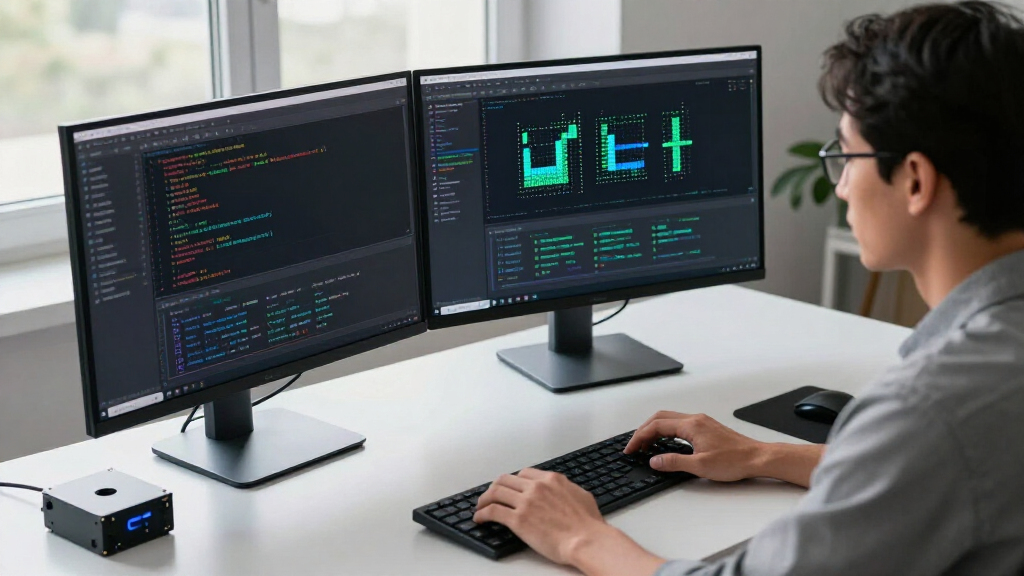
Meta releases Muse Spark 1.2 and Muse Code, its first integrated AI coding model and agent, aiming to compete with OpenAI and others in developer tools.
Browsing Category
Technology and Innovation
569 posts
Counteracting The Cronkite Effect In AI: Why Diversity Matters
Explores how reliance on homogeneous AI models risks societal understanding, emphasizing the importance of interpretive diversity to prevent collective bias.
I’m Switching My Phone From Android To Linux
A user announces switching their smartphone from Android to a Linux-based OS, highlighting the motivations and implications of this move.
Designed Before The Thing It Runs: The Future Of AI Hardware
Exploring how AI hardware is being rethought from the ground up to meet inference demands, emphasizing thermal limits, memory, and specialization.
Unseen Market Trends That Are Undermining AI Tokens
Analysis of hidden demand shifts in AI token markets reveals structural changes that challenge traditional valuation models, with implications for investors.
Microsoft Never Learns, IT Admins Rage As A New OneDrive App Invades Windows 11 And Keeps Coming Back When You Remove It
Microsoft has reintroduced a new version of the OneDrive app in Windows 11, prompting frustration among IT admins who have previously removed it. The issue highlights ongoing challenges.
The Future Of Open Source AI? Huawei’s 505B openPangu And Its Open Code
Huawei has open-sourced its 505B openPangu AI model, releasing weights and code. Details on licensing, performance, and usage remain unclear.
I Followed ChatGPT’s PC Build Guide (2026)
A user attempts to follow ChatGPT’s latest PC build instructions from 2026, highlighting confirmed steps and ongoing uncertainties about the guide’s accuracy.
The Limits Of AI Efficiency With Four-Bit Quantization
Exploring how four-bit quantization impacts AI model performance, revealing a sharp decline below 4 bits and the importance of dynamic precision techniques.
How 2026’S AI Trends Leverage Compression For Better Local LLMs
In 2026, AI models leverage native trained-in quantization and dynamic mixed-precision techniques to enable smaller, more efficient local large language models.