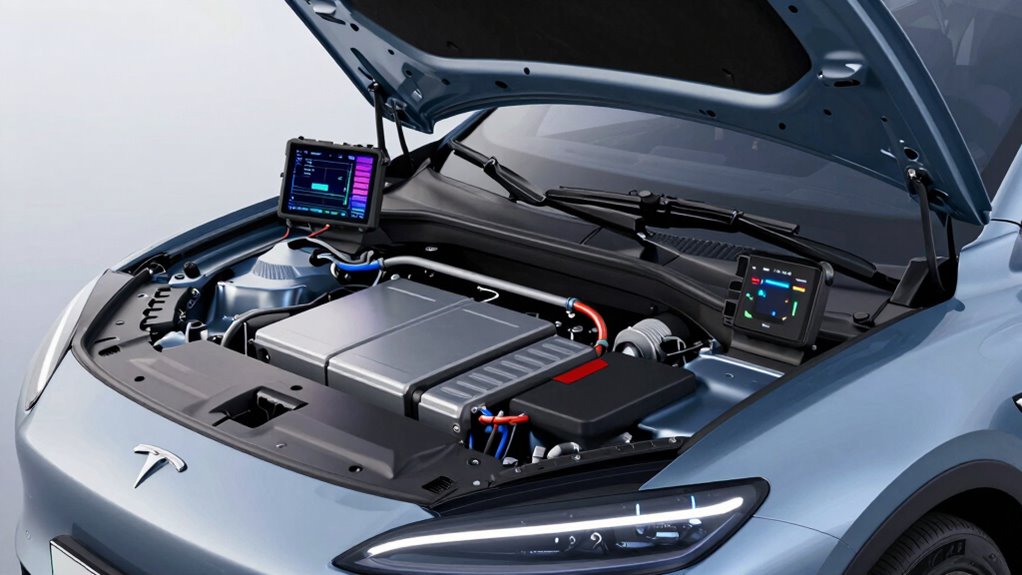

Standard OBD2 scanners fall short for EV diagnostics because they can’t access critical systems like the battery management system, thermal controls, or charging interfaces. These advanced components require specialized tools that can read complex data and monitor battery health, cell balancing, and thermal conditions in real time. If you want a clear picture of your EV’s performance and safety, you’ll need a dedicated diagnostic scanner—keep going to discover what features and models are best for you.

Get monitors, keyboards and dev gear delivered free — and shop member deals
- Fast, free delivery on millions of items
- Access to Prime Big Deal Days deals on October 6–7
- Prime Video, Amazon Music and more included
Key Takeaways
- Standard OBD2 scanners can’t read complex EV battery management systems and cell-level data.
- EVs require diagnostics for specialized systems like thermal management, charging infrastructure, and motor controllers.
- Advanced EV diagnostics provide real-time battery health, fault detection, and thermal monitoring beyond basic codes.
- Compatibility with proprietary protocols and connectors is essential for accurate EV diagnostics.
- Future-focused tools support software updates, remote monitoring, and AI-driven insights for comprehensive EV maintenance.
EV battery management system diagnostic scanner
As an affiliate, we earn on qualifying purchases.
As an affiliate, we earn on qualifying purchases.
Why Standard OBD2 Scanners Fall Short for EV Diagnostics
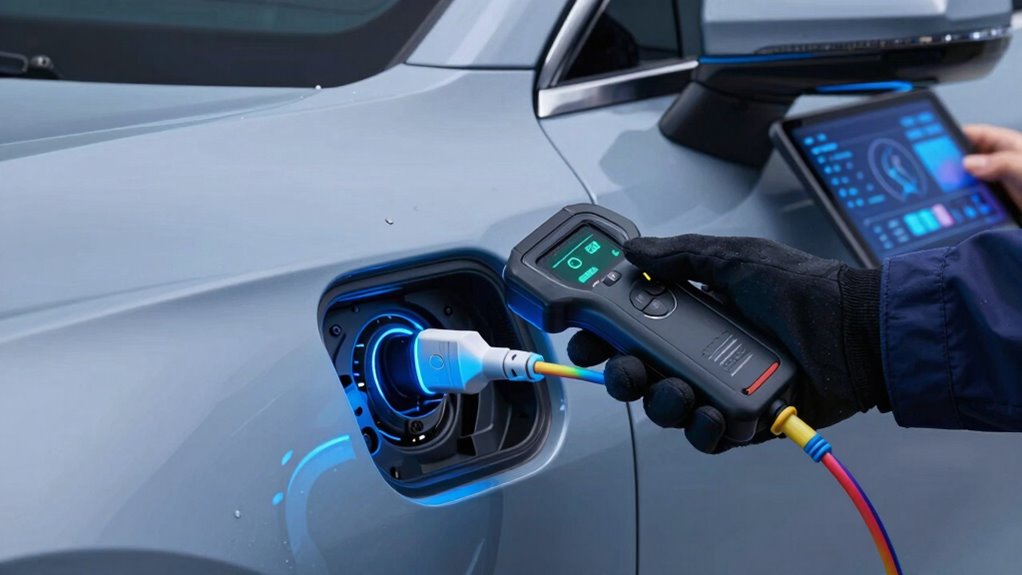
While standard OBD2 scanners are useful for diagnosing traditional internal combustion engine vehicles, they often fall short when it comes to electric vehicles (EVs). EV diagnostics require insights into battery chemistry, which influences performance and safety. Standard scanners lack the ability to read complex battery management systems that monitor cell health, temperature, and charge levels. Additionally, they don’t provide information about charging infrastructure integration or battery state-of-charge, which are vital for EV operation. Without specialized tools, you can’t accurately assess battery health or diagnose issues related to charging compatibility. As EV technology advances, relying solely on traditional OBD2 scanners leaves gaps in understanding critical systems, making specialized diagnostic tools essential for effective maintenance and troubleshooting. Understanding vehicle diagnostics is crucial as EV systems become more sophisticated, especially as battery management systems grow more complex and integral to vehicle performance.
As an affiliate, we earn on qualifying purchases.
Understanding Key EV Systems That Need Specialized Diagnostics
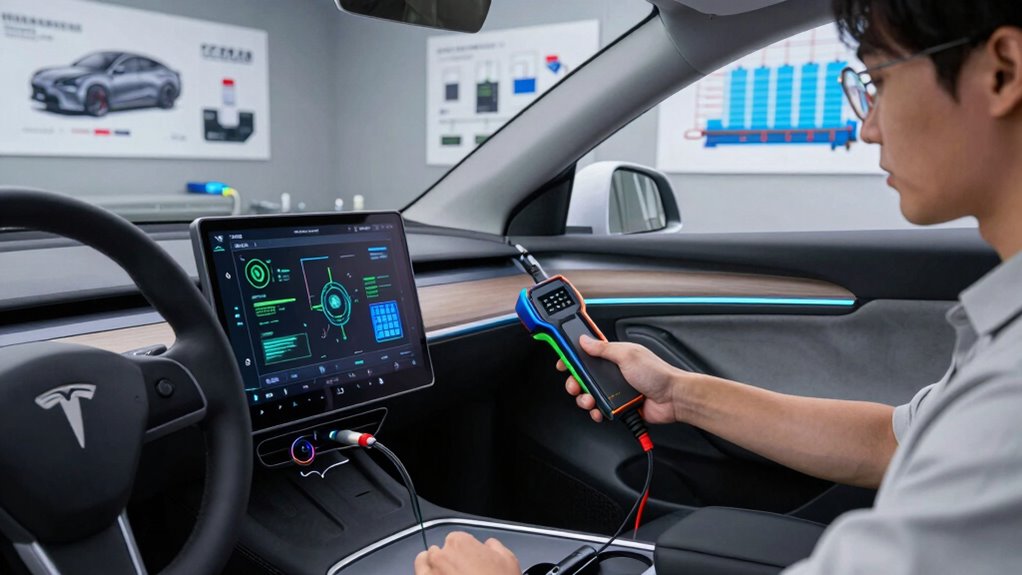
To properly diagnose an EV, you need to understand its critical systems like the Battery Management System, Powertrain Control Module, and Charging System. These components require specialized tools to identify issues accurately and efficiently. Using the right diagnostics ensures you keep the vehicle running safely and effectively. Additionally, understanding the cultural lessons behind technological advancements can provide valuable context for maintenance practices. Recognizing how technological evolution influences diagnostic tools can help technicians adapt to rapidly changing systems. Staying informed about diagnostic technology developments is essential for maintaining high standards of EV repair and safety. Moreover, having a comprehensive understanding of personality assessment tools, such as the 16PF, can aid in enhancing team communication and training within technical environments.
Battery Management Systems
Have you ever wondered how electric vehicles keep their batteries healthy and functioning at their best? The answer lies in the Battery Management System (BMS). This critical component monitors and controls key functions to maximize battery longevity and ensure safety. Proper thermal management prevents overheating and extends battery life, while balancing cells avoids uneven wear. A sophisticated BMS tracks voltage, current, and temperature, detecting issues early. It also manages charging and discharging cycles to optimize performance and prevent damage. Without a specialized diagnostic tool, it’s difficult to identify faults or inefficiencies in these systems. Battery health assessment is essential for maintaining overall vehicle performance and safety. Additionally, advanced diagnostics can provide insights into how the BMS interacts with other EV components, ensuring comprehensive maintenance.
Powertrain Control Modules
Powertrain Control Modules (PCMs) serve as the brain of an electric vehicle’s drivetrain, coordinating the operation of the electric motor, inverter, and transmission systems. They constantly monitor battery chemistry to optimize power delivery and guarantee safety. The PCM manages motor controllers, adjusting torque and speed based on driver input and system conditions. Because of the complex interactions between battery chemistry and motor controllers, specialized diagnostics are essential. Standard OBD2 scanners can’t access these detailed functions, making dedicated EV scanners necessary. These modules also track temperature, voltage, and current, helping prevent overheating and prolonging component life. Understanding and diagnosing issues within the PCM is vital for maintaining excellent EV performance, which requires tools designed specifically for the intricacies of electric powertrain systems. Additionally, electric motor controllers play a crucial role in managing power flow and ensuring smooth operation of the vehicle.
Charging System Diagnostics
Ever wonder what makes charging systems in electric vehicles so critical and complex? Diagnosing these systems requires specialized tools that can assess more than just basic connectivity. You need to evaluate the charging port’s integrity, monitor the battery management system, and ensure proper communication between the charger and vehicle. Regenerative braking systems also play a key role, as they recharge the battery during deceleration, requiring precise diagnostics. Faults in any of these areas can lead to charging failures, reduced efficiency, or safety issues. A dedicated EV scanner helps identify issues quickly, guaranteeing safe and efficient operation. Understanding dark psychology tactics can also help technicians recognize signs of intentional system sabotage or manipulation in complex diagnostic scenarios.
As an affiliate, we earn on qualifying purchases.
Features to Consider in an EV Diagnostic Scanner
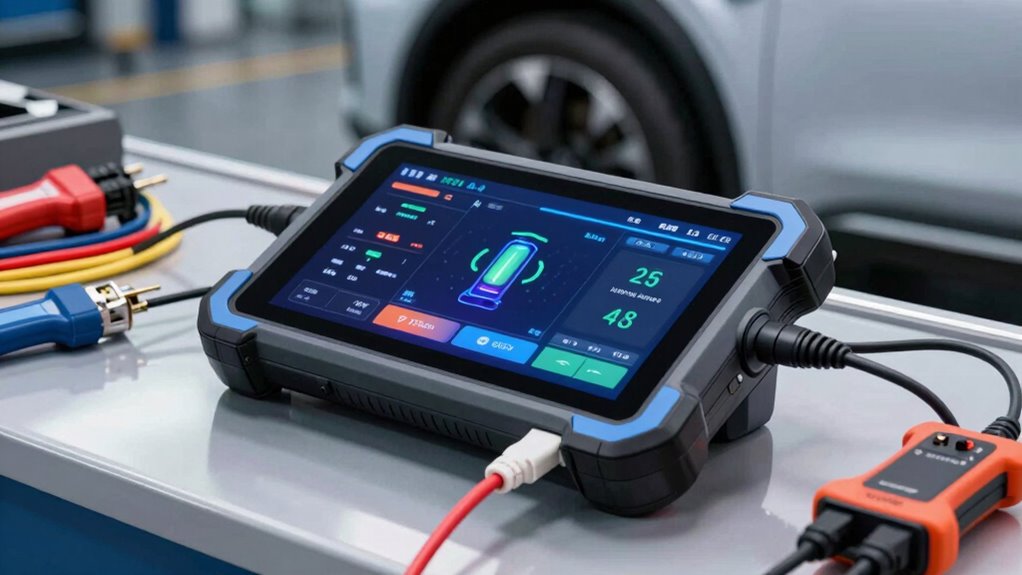
When choosing an EV diagnostic scanner, you need to make certain it works with your specific vehicle models. Look for features like advanced data monitoring to get detailed insights, and check if the software can be easily updated. These capabilities ensure your scanner stays current and effective for your diagnostic needs. Additionally, verify that the scanner supports connection standards such as Bluetooth or Wi-Fi for seamless integration with your devices. Ensuring compatibility with home design and architecture details can also help streamline your overall vehicle maintenance setup. Incorporating essential DIY tools into your toolkit can further enhance your ability to perform quick diagnostics and minor repairs at home. To maximize your diagnostic efficiency, consider scanners that offer software compatibility with popular vehicle brands and models.
Compatibility With EV Models
Choosing an EV diagnostic scanner that’s compatible with your specific vehicle model is essential for getting accurate readings and effective diagnostics. Different EVs have unique charging connectors and motor controllers, so verify the scanner supports your make and model. Compatibility ensures the scanner can communicate properly with your vehicle’s systems, avoiding errors or incomplete data. Confirm if the device supports your charging connectors, especially if you have a fast-charging port or proprietary connector. Additionally, check if it can access motor controllers for detailed diagnostics. Some scanners are tailored for specific brands or models, providing deeper insights. This compatibility streamlines troubleshooting and maintenance, saving you time and money.
- Support for various charging connectors
- Compatibility with your vehicle’s brand and model
- Access to motor controllers diagnostics
- Updates for new EV models
- Robust communication protocols
Advanced Data Monitoring
Advanced data monitoring features are essential for getting extensive insights into your EV’s performance and health. They allow you to track critical parameters like battery health, ensuring you catch issues early. Keeping an eye on thermal management is equally important, as it helps prevent overheating and maintains ideal operating temperatures. With real-time data, you can monitor how your EV’s battery responds during charging and driving, identifying potential problems before they become costly repairs. An effective scanner provides detailed graphs and alerts, making it easier to interpret complex data. This level of monitoring empowers you to optimize your vehicle’s efficiency and longevity, giving you peace of mind and confidence in your EV’s performance. Advanced data features are now a must-have for any serious EV owner.
Software Update Capabilities
Software update capabilities are an essential aspect of an EV diagnostic scanner, ensuring it stays compatible with the latest vehicle models and software developments. Regular firmware updates improve software integration, fix bugs, and add new features, keeping your scanner relevant over time. Without these updates, your device might become obsolete or inaccurate, limiting its usefulness. Look for scanners that support automatic or easy manual updates, ensuring seamless compatibility with future vehicle releases. Firmware updates often include enhanced diagnostics, expanded vehicle coverage, and security improvements. Staying current with software updates means you’ll get reliable data and maintain diagnostic accuracy. Investing in a scanner with strong update support ensures your tool remains a valuable asset in maintaining your EV’s health and performance.
- Automatic update notifications
- Easy firmware updates
- Cloud-based update access
- Compatibility with new vehicle models
- Enhanced diagnostic features
electric vehicle charging system diagnostic
As an affiliate, we earn on qualifying purchases.
As an affiliate, we earn on qualifying purchases.
How Advanced EV Scan Tools Enhance Troubleshooting and Maintenance
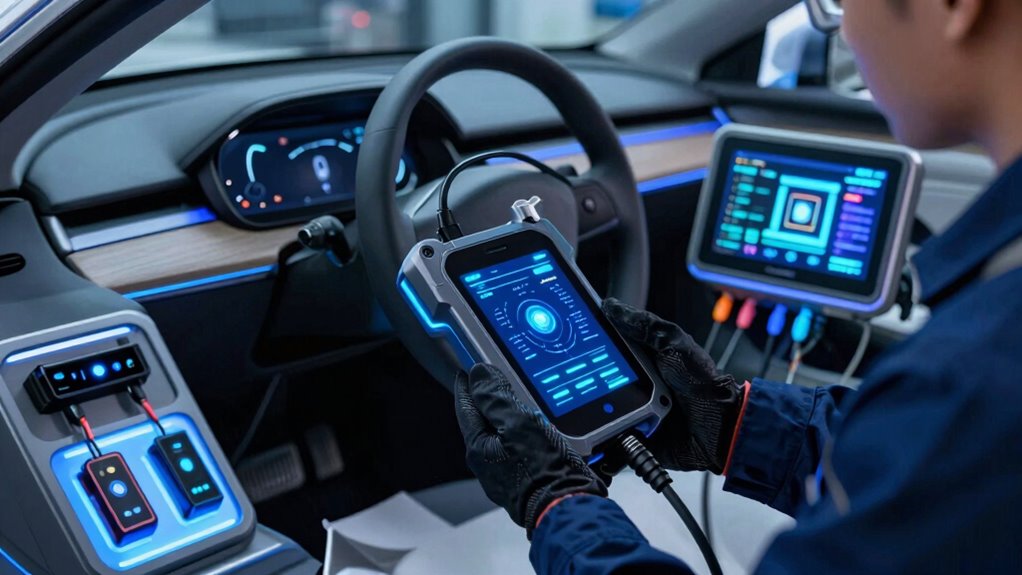
Because electric vehicles (EVs) are becoming more complex, using advanced scan tools is essential for effective troubleshooting and maintenance. These tools leverage wireless connectivity, allowing you to quickly access diagnostic data without cumbersome cables. This speeds up the process and reduces downtime. The user interface of modern EV scan tools is designed for ease of use, presenting data clearly and intuitively. You can easily interpret error codes, monitor real-time data, and perform system tests with minimal training. Advanced features like remote diagnostics enable you to troubleshoot issues from a distance, saving time and resources. Additionally, these tools often incorporate local automation capabilities, enhancing the efficiency of maintenance workflows. Incorporating up-to-date vehicle information helps technicians stay aligned with the latest electric vehicle technology advancements. These innovations also help keep technicians up-to-date with rapidly evolving electric vehicle technology, ensuring accurate diagnostics. Staying current with diagnostic technology is crucial for maintaining optimal vehicle performance, especially as EV systems become more sophisticated. Overall, these tools improve accuracy, streamline workflows, and ensure your EV maintenance is thorough, efficient, and up-to-date with the latest technology.
Comparing the Best EV Diagnostic Scanners: Which One Is Right for You?
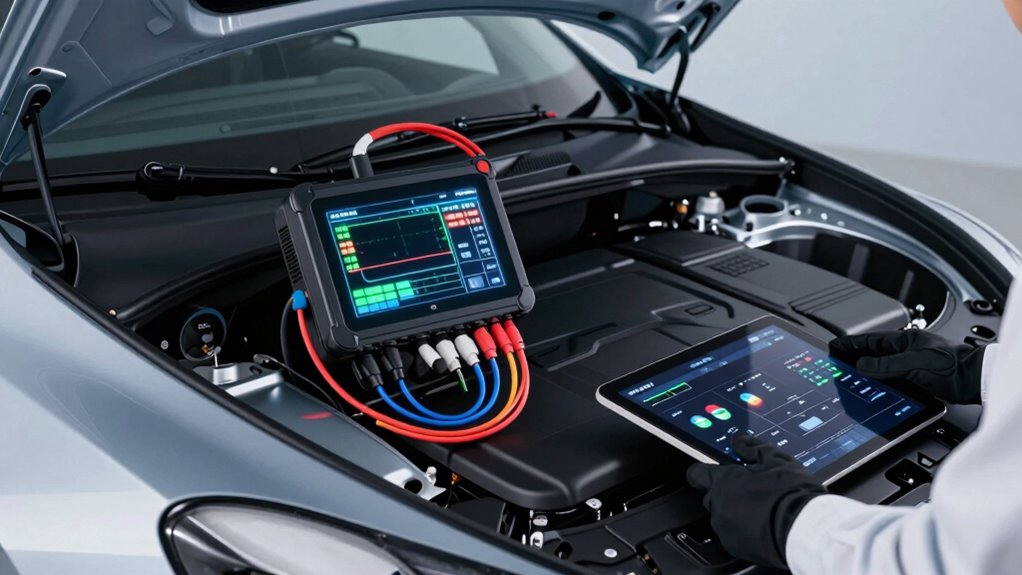
With numerous EV diagnostic scanners available today, choosing the right one can feel overwhelming. To make an informed decision, consider these key factors:
- Wireless connectivity options for quick data transfer
- User interface that’s intuitive and easy to navigate
- Compatibility with your specific EV model
- Advanced diagnostic features for thorough troubleshooting
- Battery life and portability for on-the-go use
The best scanner matches your skill level and needs, whether you’re a DIY enthusiast or a professional. Look for a device with seamless wireless connectivity to avoid tangled cables and a user-friendly interface that minimizes learning curve. Clear display screens and logical menus help you diagnose issues efficiently. Comparing these features will help you identify the EV diagnostic scanner that’s right for you, ensuring accurate diagnostics and ease of use.
Choosing the Right EV Diagnostic Scanner for Your Needs
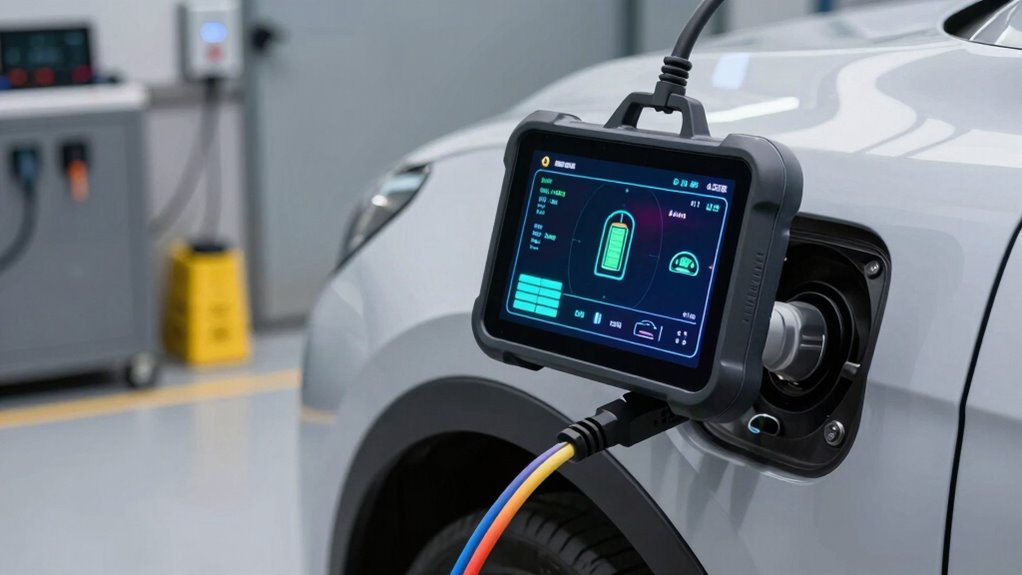
Choosing the right EV diagnostic scanner depends on understanding your specific needs and skill level. If you’re focused on battery analysis, you’ll want a scanner that offers detailed insights into battery health, charge cycles, and capacity. For troubleshooting charging port issues, select a scanner with specialized functions to diagnose port connectivity and communication errors. Beginners may prefer user-friendly interfaces with guided diagnostics, while experienced technicians might need advanced tools with extensive data logging. Consider whether you need real-time monitoring or in-depth reports. Also, check compatibility with your EV make and model. By matching features to your skill level and specific maintenance tasks, you’ll ensure your scanner effectively supports your EV diagnostics without unnecessary complexity. Additionally, understanding safety precautions is crucial when working with electrical components to prevent accidents or damage.
Future Trends in EV Diagnostics and the Role of Specialized Scan Tools
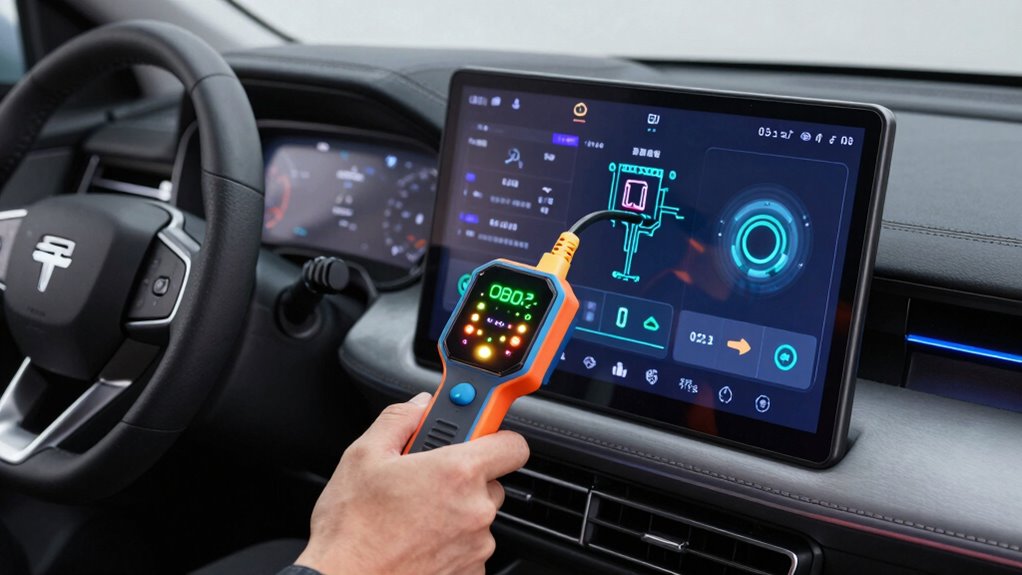
As EV technology advances, diagnostic tools are evolving to keep pace with increasingly complex systems. Future trends focus on enhancing efficiency and accessibility through features like wireless connectivity, enabling you to perform diagnostics without cumbersome cables. Improved user interfaces make it easier to interpret data quickly, reducing downtime. Specialized scan tools will increasingly support real-time monitoring of battery health, thermal management, and powertrain diagnostics. Integration with cloud platforms allows seamless updates and data sharing. Additionally, AI-driven insights can predict issues before they occur, saving you time and money. Developing diagnostic protocols tailored to EV-specific components is crucial for accurate troubleshooting. Understanding diagnostic complexity is essential for selecting the right tools and staying ahead in EV maintenance. These advancements empower you to diagnose EVs more accurately and effectively, ensuring optimal performance and safety for your fleet or workshop.
Frequently Asked Questions
Can Standard OBD2 Scanners Detect All EV Battery Issues?
No, standard OBD2 scanners can’t detect all EV battery issues because of their limitations in EV battery diagnostics. These scanners mainly read basic engine codes, which don’t cover complex battery health and performance data. To truly diagnose EV battery problems, you need specialized EV-specific tools that can access detailed battery parameters and diagnose issues beyond what general OBD2 scanners can handle.
Are There Legal Restrictions on Using Advanced EV Diagnostic Tools?
You should be aware that using advanced EV diagnostic tools can run into legal hurdles, like regulatory compliance and licensing restrictions. While these tools are essential for thorough diagnostics, some regions restrict their use without proper certification. Think of it as crossing a T’s and dotting the I’s—failure to adhere could lead to penalties or legal trouble. Always check local laws before diving into advanced EV diagnostics to stay on the right side of the law.
How Often Should EV Diagnostic Scanners Be Calibrated or Updated?
You should calibrate your EV diagnostic scanner regularly, ideally every 6 to 12 months, to guarantee accuracy. Keep the software updated consistently, especially after new vehicle models or firmware releases, to access the latest diagnostic features. Frequent calibration and timely software updates help you maintain reliable readings, prevent errors, and stay compatible with evolving EV technologies. Staying proactive ensures your scanner performs at its best whenever you need it.
Do EV Diagnostic Scanners Require Specific Training or Certification?
You do need specific training and certification to operate EV diagnostic scanners safely and effectively. As an EV technician, obtaining a safety certification ensures you understand high-voltage systems and proper handling procedures. This specialized training helps you interpret advanced diagnostic data accurately, prevent accidents, and comply with safety standards. Without proper certification, you risk mishandling components or missing critical issues, so investing in training is essential for professional and safe EV diagnostics.
What Are the Cost Differences Between Basic and Professional EV Scan Tools?
You’ll notice a clear cost comparison between basic and professional EV scan tools. Basic models are more affordable, typically ranging from $50 to $200, offering essential features like reading codes and clearing faults. In contrast, professional tools cost $500 or more, providing advanced features such as real-time data analysis, battery diagnostics, and programming capabilities. The feature differences justify the price gap, making professional tools ideal for serious technicians.
Conclusion
As EV technology accelerates, relying solely on OBD2 scanners is like steering through a maze with a flashlight—insufficient and limiting. To truly unlock the secrets of electric vehicles, you need specialized tools that dive deeper into complex systems. Think of these advanced scanners as your secret map, illuminating the path to efficient troubleshooting and maintenance. Embrace the future of EV diagnostics—because in this rapidly evolving landscape, only the right tools can keep you ahead of the curve.
Halloween Picks
halloween
As an affiliate, we earn on qualifying purchases.