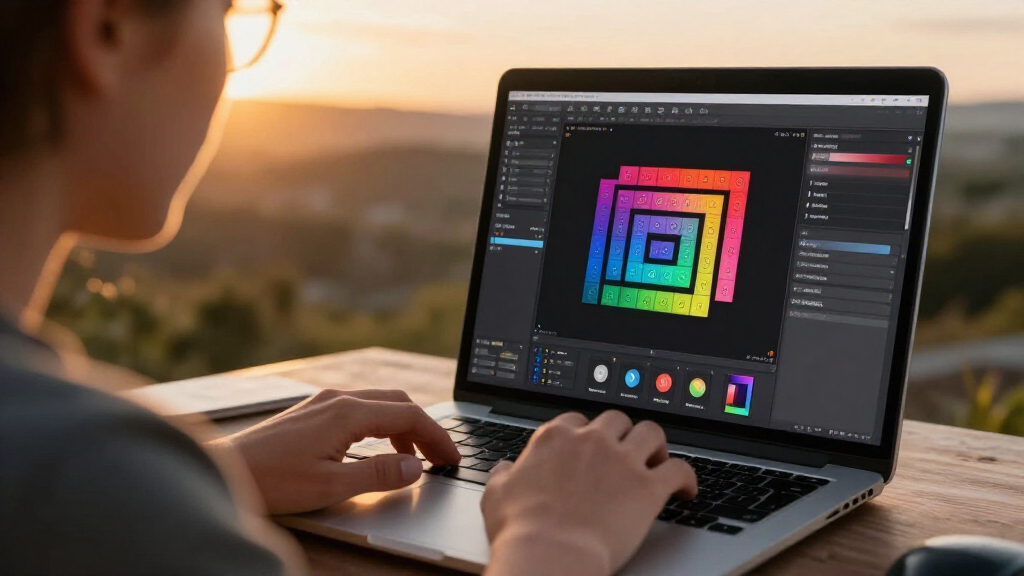

🔍 Read the full analysis: The Art Of AI In SVG Carving: A Deep Dive Into 'The Runestone Field' on ThorstenMeyerAI.com

Get monitors, keyboards and dev gear delivered free — and shop member deals
- Fast, free delivery on millions of items
- Access to Prime Big Deal Days deals on October 6–7
- Prime Video, Amazon Music and more included
TL;DR
Thorsten Meyer’s latest project transforms traditional runic carvings into dynamic SVG animations, showcasing AI’s role in elevating storytelling through digital craftsmanship. The process combines historical artistry with automation, creating immersive visual narratives.
Thorsten Meyer has unveiled ‘The Runestone Field’, a digital art project that uses AI-driven SVG carving animation to animate ancient runic carvings. This development demonstrates how automation and precise vector techniques can create immersive storytelling experiences, bridging historical craftsmanship with modern technology.
The project involves transforming static images of runic carvings into animated SVGs that appear to be carved in real time, giving viewers the sensation that the stones are speaking. Meyer’s team integrated advanced SVG techniques with AI algorithms to automate the carving process, allowing for detailed, fluid animations that highlight the intricacies of ancient runes.
According to Meyer, the process involved meticulous digital craftsmanship combined with machine learning to simulate the carving process, capturing the texture and depth of traditional runestones. The result is an immersive visual experience that invites viewers to explore the carvings from multiple angles, almost as if they are witnessing a historical artifact come alive.
While the project’s technical foundation has been confirmed, details about the specific AI models used remain proprietary. Meyer emphasizes that the technique allows for both artistic expression and educational storytelling, making ancient history accessible through modern digital art.
The Art of AI in SVG Carving: A Deep Dive into ‘The Runestone Field’
Thorsten Meyer’s latest project transforms traditional runic carvings into dynamic SVG animations — stones that appear to carve themselves in real time, making ancient history speak through modern digital art.
A New Frontier in Digital Storytelling
‘The Runestone Field’ uses AI-powered SVG carving techniques to animate ancient runic carvings, merging historical craftsmanship with modern technology. AI acts as a digital chisel, shaping stories in ways impossible with static images or manual animation.
AI as the Digital Chisel
Machine learning simulates the carving process, capturing the texture and depth of traditional runestones while reducing manual effort dramatically.
Scalable Vector Craft
Precise SVG techniques deliver fluid, scalable animations that maintain the authenticity of the original inscriptions at any resolution.
Stones That Speak
Viewers experience carvings emerging in real time, as if witnessing a historical artifact come alive — explorable from multiple angles.
From Static Stone to Living Rune
The pipeline combines historical artistry with automation at every stage, turning static images of runic carvings into immersive animated narratives.
Capture
Static images of ancient runic carvings are sourced and digitized as references.
Vectorize
Paths are translated into precise SVG geometry, preserving inscription authenticity.
AI Carving
Algorithms simulate the chisel stroke-by-stroke, capturing texture and depth.
Immerse
Animated stones invite multi-angle exploration — history comes alive.
“This project demonstrates how automation can bring ancient storytelling to life, creating immersive experiences that bridge history and modern digital craftsmanship.”— Thorsten Meyer
Traditional Craft vs. AI-Driven Carving
Runic inscriptions conveyed myths, laws, and histories for centuries. Meyer’s approach reinterprets this tradition through digital means — part of a growing movement to preserve cultural heritage with technology.
| Attribute | Hand Carving | AI SVG Carving | Standard Digital Art |
|---|---|---|---|
| Fidelity to original inscriptions | ✓ Authentic | ✓ Preserved | ~ Approximate |
| Animation fluidity | ✗ Static | ✓ Real-time carving | ~ Manual, slow |
| Scalability of output | ✗ Physical only | ✓ Vector, infinite | ~ Raster limits |
| Reproducibility | ✗ One of a kind | ~ Unverified | ✓ Repeatable |
| Manual effort required | ✗ Extreme | ✓ Reduced | ~ High |
Indicative Impact of AI Automation
Illustrative comparison of how AI-driven SVG carving shifts effort, detail, and accessibility relative to manual digital animation workflows.
Showcases & Technical Deep Dives Expected Soon
While specifics about the AI models and automation processes remain proprietary for now, Meyer has outlined what audiences can expect next.
FAQ
The most common questions about ‘The Runestone Field’ and its AI-driven approach, answered at a glance.
How does AI improve SVG carving?
AI automates complex carving animations, enabling highly detailed, fluid visualizations of ancient runes that would be difficult to produce manually — enhancing precision and realism.
Are the AI techniques publicly available?
No. The specific AI models and automation processes remain proprietary. Further technical details are expected in upcoming publications.
Can this method apply to other artifacts?
Potentially, yes. Combining AI with SVG carving can be adapted to animate various static artifacts, making history more engaging and accessible.
What is the project’s significance for digital art?
It demonstrates how AI can elevate traditional craftsmanship, creating immersive animated narratives that connect audiences with cultural heritage.
When will more technical details be available?
A comprehensive case study is planned soon, including insights into the AI models and automation workflows used.
Why SVG specifically?
SVG enables scalable, fluid animations that preserve carving authenticity at any size — ideal for immersive, multi-angle exploration.
Innovative Fusion of Art and Technology in Digital Storytelling
This project showcases how AI can elevate traditional craftsmanship by automating complex artistic processes, enabling the creation of highly detailed and dynamic visual narratives. It highlights a new frontier in digital art where automation enhances human creativity, offering novel ways to engage audiences with historical content. For viewers and creators alike, it demonstrates the potential for AI to serve as a digital chisel, shaping stories in ways previously impossible with static images or manual animation.
As an affiliate, we earn on qualifying purchases.
Historical Carvings Meet Modern Digital Automation
‘The Runestone Field’ builds on a long tradition of stone carving and storytelling, dating back centuries. Traditionally, runic inscriptions conveyed myths, laws, and histories, often carved by hand in stone. Recent technological advances have allowed digital artists to reinterpret these artifacts, but Meyer’s project is among the first to combine AI with SVG carving to animate these ancient symbols.
The project follows a broader trend of using AI to animate static historical artifacts, aiming to make them more engaging and accessible. Meyer’s approach leverages precise SVG techniques, which allow for scalable, fluid animations that maintain the authenticity of the original carvings. This method is part of a growing movement to preserve and reinterpret cultural heritage through digital means.
While the technique is new, its roots are in established digital art practices, now enhanced with AI automation to streamline complex carving animations, reducing manual effort while increasing detail and realism.
“This project demonstrates how automation can bring ancient storytelling to life, creating immersive experiences that bridge history and modern digital craftsmanship.”
— Thorsten Meyer
As an affiliate, we earn on qualifying purchases.
Details of AI Techniques and Automation Methods Still Under Wraps
While the overall concept and visual results are confirmed, specifics about the AI models, algorithms, and automation processes used in ‘The Runestone Field’ remain proprietary. It is not yet clear how Meyer’s team trained or implemented the AI to simulate the carving process, or whether any novel machine learning techniques were employed beyond standard SVG automation tools.
Further technical details are expected to be revealed in upcoming case studies or presentations, but as of now, the precise methodology is undisclosed, leaving some questions about the scalability and reproducibility of the approach unanswered.
As an affiliate, we earn on qualifying purchases.
Upcoming Showcases and Technical Deep Dives Expected Soon
Thorsten Meyer plans to publish a detailed case study outlining the technical workflow behind ‘The Runestone Field,’ including AI model specifics and automation techniques. Additionally, future exhibitions or digital art festivals may feature live demonstrations, allowing audiences to see the SVG carving process in real time.
The project also aims to inspire other digital artists and historians to adopt AI-driven techniques, potentially leading to new collaborations that blend cultural heritage with cutting-edge automation. As AI tools become more accessible, expect a broader adoption of similar projects that reimagine historical storytelling through digital craftsmanship.
As an affiliate, we earn on qualifying purchases.
Key Questions
How does AI improve SVG carving in ‘The Runestone Field’?
AI automates complex carving animations, allowing for highly detailed, fluid visualizations of ancient runes that would be difficult to produce manually. It enhances precision and realism in digital storytelling.
Are the AI techniques used in this project publicly available?
No, the specific AI models and automation processes remain proprietary. Further technical details are expected to be shared in upcoming publications.
Can this method be applied to other historical artifacts?
Potentially, yes. The approach of combining AI with SVG carving can be adapted to animate various static artifacts, making history more engaging and accessible.
What is the significance of ‘The Runestone Field’ for digital art?
It demonstrates how AI can elevate traditional craftsmanship, creating immersive, animated narratives that connect audiences with cultural heritage through modern technology.
When will more technical details be available?
Thorsten Meyer plans to publish a comprehensive case study soon, which will include insights into the AI models and automation workflows used in the project.
Source: ThorstenMeyerAI.com
Fall Picks
fall essentials
As an affiliate, we earn on qualifying purchases.