🔍 Read the full analysis: Ways To Make GPU Cluster Scheduling More Impactful on ThorstenMeyerAI.com

Get business pricing on monitors, keyboards and dev gear
- Business-only prices and quantity discounts
- Tax-exempt purchasing
- Multiple users, one account, clear invoices
TL;DR
Ai2 says it has replaced a priority-based GPU scheduler with a system built around project GPU-time budgets, hierarchical fair-share allocation and time slicing. The institute says the change is meant to make compute tradeoffs a management decision, but it has published no results showing whether utilization, wait times or research output have improved.
Ai2 says it has replaced its priority-based GPU scheduler with a system that assigns compute through project time budgets, hierarchical fair-share rules and time slicing. The change shifts decisions about how much GPU capacity research projects receive toward administrative budgeting, as described in the original analysis, but Ai2 has not reported performance results for the new system.
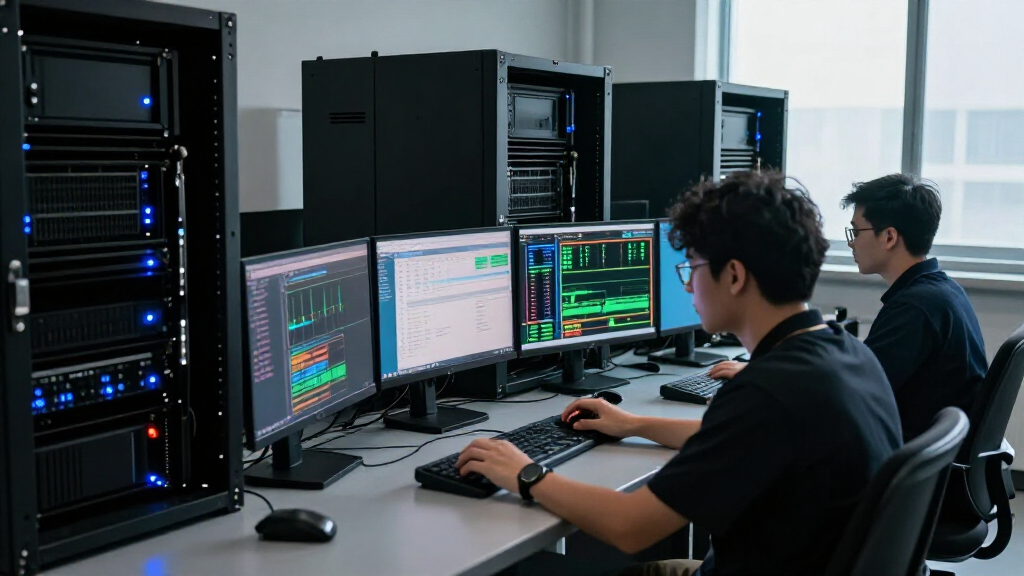
Ai2’s infrastructure team manages thousands of NVIDIA H100, B200 and B300 GPUs across clusters ranging from 88 to 1,024 GPUs. The institute says about 150 internal researchers use the systems for work including language and vision model training, robotics reinforcement-learning simulations and scientific agent development. According to Ai2, submitted workloads request two to three times the GPU capacity available at a given moment.
Under the previous arrangement, workloads could opt out of preemption, while teams faced limits on how many GPUs they could protect from interruption. Preemptible jobs could run on idle capacity beyond those limits. Ai2 says some users kept idle workloads running so they could attach debugging work quickly, while the growing use of the highest priority setting weakened the distinction between priority levels. The institute also says on-call engineers spent much of their ticket response time negotiating the shutdown of protected jobs on machines requiring maintenance.
The replacement gives projects allocations of GPU time rather than permanent control of particular GPUs. Ai2 says leadership can set relative priorities through budgets before workloads arrive, and the scheduler uses those decisions to prioritize incoming work. The institute also identifies hierarchical fair-share allocation and a time-slicing contract as parts of the design, but its account does not explain their detailed operation.
How Compute Budgets Could Change Access
The shift addresses a practical problem for research organizations: demand exceeds available GPU capacity, and scheduling rules shape which experiments can run and when. A priority system can lose its force if teams routinely mark work as high priority. Protected jobs may also limit the scheduler’s ability to reclaim hardware, including when machines need maintenance.
Project time budgets could move some of these tradeoffs from urgent, job-by-job disputes into a process where leaders decide in advance how to divide scarce compute. That may give the organization a clearer way to align GPU access with its research priorities and let teams plan around an allocation. It also changes the question from who can hold specific machines to how much compute a project should receive over time.
Those potential benefits depend on how the system handles uneven research schedules. If a project cannot use its allocation at a particular moment, other teams may need access to that capacity; if budgets are too flexible, they may not preserve the priorities they were intended to express. Ai2 has not provided measurements showing whether its approach has improved GPU utilization, job wait times, maintenance response or research output.
As an affiliate, we earn on qualifying purchases.
Why Ai2 Left Priority Queues
Ai2 says it tried tighter controls on priority settings and assigning GPU monopolies to important projects. The institute characterizes monopolies as a static answer to changing research demand: hardware could sit unused when its assigned team was not ready to run work, even as other teams needed capacity. Its account describes the new budget approach as a move away from permanent hardware claims.
The institute’s post also cites a 2011 paper on Dominant Resource Fairness by Ghodsi and co-authors. That paper recounts an example in which users added infinite loops to make code appear highly utilized when dedicated machines depended on utilization guarantees. The example illustrates how incentives can shape resource use; it is not evidence about the results of Ai2’s new scheduler. Ai2’s descriptions of its own former scheduling problems likewise come from the institute and are not independently verified in the supplied material.
““We decided to iterate on the ownership model.””
— Ai2’s AI Infrastructure team
As an affiliate, we earn on qualifying purchases.
Results and Allocation Rules Unreported
Ai2’s account describes the scheduler’s structure and the problems the institute says led to the change, but it supplies no before-and-after performance data. It is not clear whether GPU occupancy, utilization, job wait times, research throughput or maintenance response have changed, or how long the new system has been in operation.
The description also leaves key implementation questions unanswered. Ai2 does not specify how projects receive budgets, how often leaders can revise them, what happens if a project exhausts its allocation, or how unused time is made available to other work. The practical rules for time slices, urgent jobs and changing project needs are also not detailed. Without those details, readers cannot judge how the system balances predictable access with flexible use of idle capacity.
As an affiliate, we earn on qualifying purchases.
Evidence Needed to Judge the Change
The next useful update from Ai2 would set out how budgets and fair-share decisions work in practice and report results against the problems the institute identified. Measures such as GPU utilization, queue wait times, preemption frequency and maintenance delays could show whether the new rules changed day-to-day operations. The source material gives no date for such a report or a scheduled evaluation, so when performance evidence will be available is not clear.
high performance GPU computing hardware
As an affiliate, we earn on qualifying purchases.
As an affiliate, we earn on qualifying purchases.
Key Questions
What changed in Ai2’s GPU scheduler?
Ai2 says it replaced a priority-based system with project GPU-time budgets, hierarchical fair-share allocation and time slicing. Projects receive allocations of compute time instead of permanent control of specific GPUs.
Why did Ai2 change its previous system?
Ai2 says users increasingly chose the highest priority, some kept idle workloads running to connect debugging work quickly, and protected jobs could complicate maintenance. These are the institute’s descriptions of its own operations, not independently verified findings in the supplied material.
Has the new scheduler improved GPU efficiency?
No results are reported in the available account. It does not provide before-and-after figures for utilization, wait times, research throughput or maintenance response.
How are project budgets and time slices determined?
The source says budgets let leadership set relative priorities and names time slicing as part of the system, but it does not explain how allocations are calculated, revised or enforced.
Primary source: Hugging Face · via ThorstenMeyerAI.com
Halloween Picks
halloween
As an affiliate, we earn on qualifying purchases.