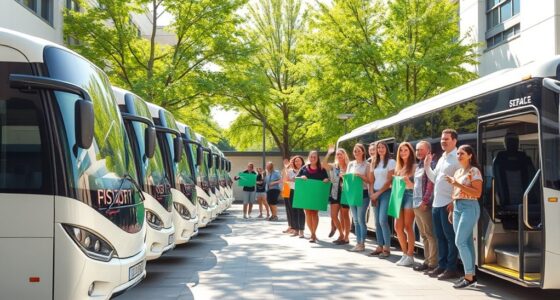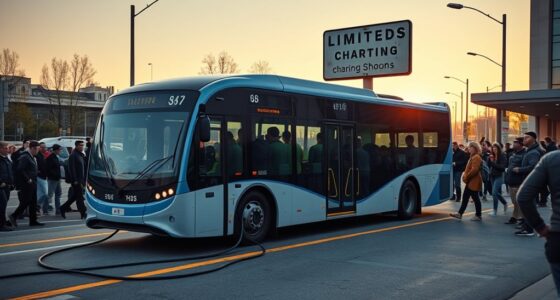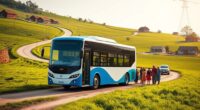
Driving an electric bus across the Alps is now feasible thanks to advanced battery tech, strategic charging stations, and smart energy management systems. These features guarantee your vehicle maintains efficiency and range despite rugged terrain and colder weather. Fast chargers along major routes let you replenish quickly, reducing worry about running out of power. If you keep exploring, you’ll discover how innovative infrastructure and technology make this challenging journey possible and even practical.
Key Takeaways
- Advanced battery management systems optimize performance and monitor range during challenging mountain terrains.
- Strategic placement of fast-charging stations along routes ensures quick recharging and reduces stranding risk.
- Smart energy management adjusts power use dynamically based on elevation and terrain conditions.
- Reliable infrastructure and innovative battery tech enable long-distance crossings with minimal delays.
- Proper route planning and infrastructure support demonstrate electric buses’ endurance capabilities across the Alps.

Starting an electric bus journey across the Alps is a true test of endurance and innovation. As you set out, you’re immediately aware of how essential battery efficiency is to your trip’s success. The rugged terrain and elevation changes demand a well-optimized battery system that can deliver maximum range with minimal energy loss. Modern electric buses are equipped with advanced battery management systems that monitor and optimize performance in real-time, ensuring you make the most of every charge. You’ll find that high-quality batteries maintain their efficiency even in colder mountain air, which is imperative for completing the journey without unnecessary stops. Battery technology continues to evolve, providing improved longevity and performance for such demanding conditions.
Efficient batteries and real-time management are vital for crossing the Alps sustainably.
However, even the most efficient batteries need proper support from a reliable charging infrastructure. As you traverse the Alps, you notice that charging stations are strategically placed along major routes, but their availability can vary. The charging infrastructure has improved markedly over recent years, with fast-charging stations enabling you to replenish your battery in just 30 minutes or less. This minimizes downtime and maximizes your travel time, allowing you to tackle mountain passes without prolonged interruptions. It’s essential to plan your route around these charging points, especially in remote areas where infrastructure might be sparse. The growth of ultra-fast chargers and mobile charging solutions offers reassurance that you won’t be stranded, even in challenging conditions.
Your experience is further enhanced by the integration of smart energy management systems within the bus. These systems automatically adjust power consumption based on terrain, reducing energy wastage during steep climbs or descents. They also provide real-time data on battery health and remaining range, helping you make informed decisions about when and where to recharge. This technology is crucial for crossing the Alps, where unpredictable weather and elevation can affect battery performance. You’ll also appreciate how the charging infrastructure supports this efficiency—stations often include amenities and user-friendly interfaces that simplify the charging process, even for first-time users.
As you ascend higher into the mountains, you notice the importance of maintaining ideal battery efficiency and a robust charging network. The combination of cutting-edge battery technology and widespread, accessible charging stations makes your journey feasible and sustainable. It’s a proof of how far electric mobility has come, turning what once seemed impossible into a manageable, even enjoyable, adventure. With careful planning and reliance on the right infrastructure, you’ll confidently conquer the Alps, demonstrating that endurance and innovation are truly the backbone of electric transportation’s future.
Top picks for "endurance test driv"
Open Amazon search results for this keyword.
As an affiliate, we earn on qualifying purchases.
Frequently Asked Questions
How Does the Electric Bus Handle Extreme Weather Conditions?
You’ll find that the electric bus handles extreme weather conditions well, thanks to advanced thermal regulation systems that maintain ideal battery efficiency. Cold temperatures might reduce range initially, but the thermal regulation keeps the battery warm, ensuring consistent performance. In hot weather, the system cools the battery effectively, preventing overheating. Overall, you’ll notice the bus adapts smoothly to various weather extremes, maintaining safety and reliability on your journey.
What Safety Measures Are in Place During the Mountain Ascent?
As you ascend the mountain, you’re surrounded by breathtaking snowy peaks and crisp air, but safety stays top priority. You rely on real-time wireless communication for instant updates, ensuring smooth navigation and hazard alerts. Driver training prepares you to handle steep inclines and challenging conditions confidently. Safety measures like automatic braking, stability control, and emergency protocols keep you secure, so you can focus on the awe-inspiring journey ahead.
How Does the Battery Performance Vary With Altitude Changes?
You’ll notice that battery efficiency drops with altitude effects as you ascend the Alps. Higher altitudes mean thinner air, which can lead to cooler temperatures that impact battery performance. This results in reduced driving range and slower charging times. To counteract this, your bus’s system adjusts power output and manages thermal conditions, helping to optimize battery performance despite altitude changes. Keep an eye on these factors for a smooth, efficient journey.
What Maintenance Challenges Arose During the Test?
Think of your electric bus as a finely-tuned orchestra facing a storm. During the test, you encounter maintenance challenges like ensuring the charging infrastructure stays reliable amidst remote mountain spots and managing tire wear from steep ascents and descents. These issues test your preparedness, requiring regular checks and swift adjustments to keep the performance smooth. Staying vigilant helps you meet the demands of such a rigorous journey.
How Does the Journey Impact the Bus’s Overall Lifespan?
The journey can slightly reduce your bus’s overall lifespan due to increased battery degradation from the steep climbs and cold temperatures. Constant strain on components during the Alps crossing tests their durability, but if your maintenance is proper, these effects are manageable. You might notice a gradual decrease in battery capacity, but with regular checks and upgrades, your electric bus can still serve reliably for many years.
Conclusion
As you’ve seen, pushing an electric bus across the Alps proves that true endurance isn’t just about distance—it’s about resilience and innovation. Some say electric vehicles can’t handle tough terrains, but this journey suggests otherwise. When you challenge assumptions and test limits, you discover new possibilities. Maybe, just maybe, our belief in what’s impossible is what truly holds us back. Keep questioning, keep exploring—because the future belongs to those willing to go the extra mile.