As a student leading an electric bus repair club, you gain hands-on experience in maintaining and repairing electric buses, focusing on battery care, motor troubleshooting, and safety procedures. You’ll work closely with peers to diagnose issues, perform preventative maintenance, and contribute to sustainable transit efforts in your community. This role helps you develop valuable skills for automotive and electrical engineering careers. Interested in how you can lead a team and make a difference? Keep exploring for more details.
Key Takeaways
- Students lead hands-on maintenance and repair of electric buses, gaining practical skills in transportation technology.
- The club emphasizes battery care, motor troubleshooting, and electrical safety procedures.
- Members develop teamwork, problem-solving, and technical confidence through real-world repair projects.
- The program promotes sustainability and community engagement by supporting electric transit initiatives.
- Participants prepare for careers in automotive, electrical engineering, and technical fields with specialized training.
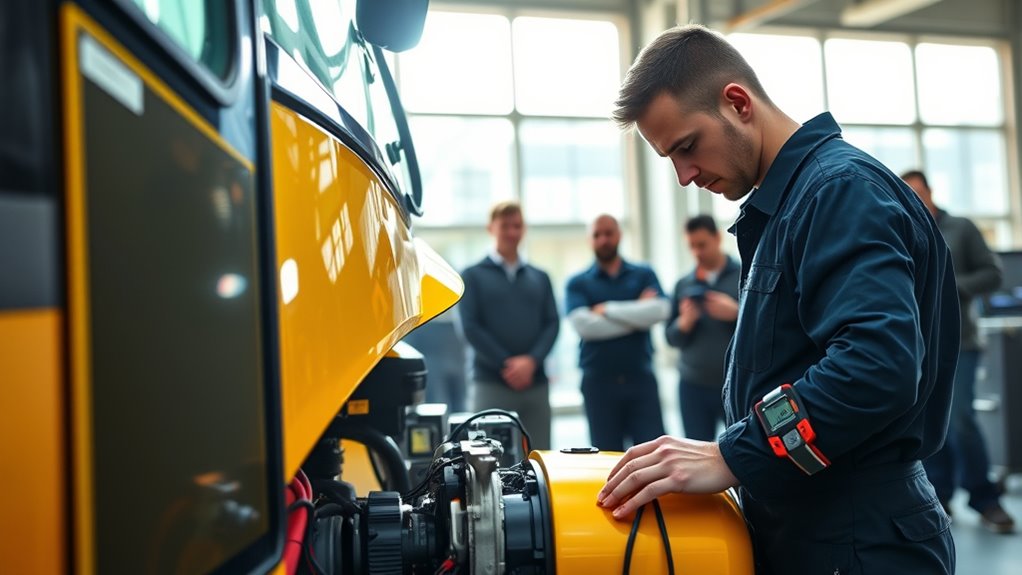
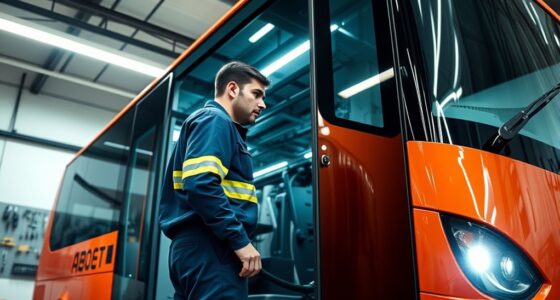
At Lincoln High School, students are taking the lead in maintaining and repairing electric buses through their new Mechanics Club. This innovative program gives you a hands-on opportunity to learn about cutting-edge transportation technology while actively contributing to your community. As part of the club, you get involved in everything from routine battery maintenance to complex motor troubleshooting, gaining skills that could shape your future career in automotive or electrical engineering.
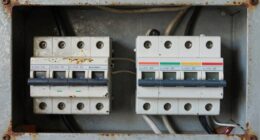
Battery maintenance is a fundamental focus of the club’s activities. You learn to carefully inspect the battery packs, check for signs of wear or corrosion, and ensure all connections are secure. Proper battery care is vital because it directly impacts the bus’s performance and safety. You’re taught how to use specialized tools to measure voltage levels and identify potential issues before they cause serious problems. This proactive approach not only extends the lifespan of the batteries but also helps prevent unexpected breakdowns. As you gain confidence, you might even assist in replacing old batteries with new ones, understanding the importance of proper disposal and recycling of old components.
Motor troubleshooting is another essential skill you develop through the club’s hands-on projects. Electric bus motors are complex, and understanding their workings requires careful examination. You learn to listen for unusual noises, monitor performance metrics, and identify signs of malfunction. When a bus isn’t running smoothly, you work alongside experienced mentors to diagnose issues—whether it’s a faulty sensor, a wiring problem, or a controller glitch. Using diagnostic tools and your growing knowledge, you help pinpoint the root of the problem and assist in making the necessary repairs. This not only improves your technical skills but also builds your confidence in tackling real-world mechanical challenges.
Throughout the program, your team emphasizes safety and proper procedures. You’re trained to handle high-voltage components carefully, follow safety protocols, and understand the importance of teamwork. This experience teaches you valuable lessons about responsibility and precision, which are vital in any technical field. The club also encourages collaboration, so you learn from your peers, share insights, and develop problem-solving skills together.

ANCEL BA101 Car Battery Tester, 12V Digital Automotive Alternator Meter Diagnostic Tool,100-2000 CCA Load Capacity, Charging & Cranking Analyzer for Truck, Boat, RV, Marine Vehicle, and More
Catch Battery Problems Early: Featured in two videos by Project Farm, a popular YouTube channel with millions of…
As an affiliate, we earn on qualifying purchases.
As an affiliate, we earn on qualifying purchases.
Frequently Asked Questions
How Do Students Gain Hands-On Experience in Electric Bus Repair?
You gain hands-on experience in electric bus repair by actively working on the buses, focusing on tasks like battery maintenance and electric system diagnostics. You learn to troubleshoot issues, replace batteries, and analyze electrical components. By participating in real repairs, you build practical skills, understand safety procedures, and develop confidence in handling electric systems. This direct involvement helps you become proficient and prepares you for future careers in electric vehicle technology.
What Safety Precautions Are Emphasized During Repairs?
Imagine yourself in a workshop, sparks flying and tools clinking. You prioritize safety by always wearing protective gear—gloves, goggles, and ear protection—shielding you from sparks, chemicals, and loud noises. You stay alert to hazard awareness, carefully managing electrical components and avoiding shortcuts. These precautions help prevent accidents, ensuring your hands-on experience is safe and educational, so you confidently work on electric bus repairs while minimizing risks.
How Is the Club Funded and Maintained?
You fund the club through a mix of school budget allocations, community sponsorships, and fundraising events. To maintain it, you follow strategic maintenance strategies like regular inspections, equipment checks, and timely repairs. These funding sources guarantee you have the resources needed for tools and parts, while consistent maintenance keeps the electric buses in top condition. Your proactive approach helps sustain the club’s activities and supports ongoing learning and hands-on experience.
Are There Opportunities for Students to Earn Certifications?
Yes, you have opportunities for certification and skill accreditation through the club. Participating in our programs, you can earn industry-recognized certifications that boost your skills and resume. These certification opportunities help you validate your expertise in electric bus repair, making you more competitive in the field. By engaging actively, you’ll gain valuable credentials that demonstrate your proficiency and dedication to mastering electric vehicle maintenance and repair.
How Does Participation Impact Students’ Future Career Prospects?
Participating in this club boosts your career prospects by enhancing your industry knowledge and expanding your network. You get hands-on experience with electric bus repairs, making you more attractive to future employers. Through career networking opportunities, you connect with industry professionals and learn about job trends. This active involvement demonstrates your commitment and skills, giving you a competitive edge when applying for internships, apprenticeships, or full-time positions in the transportation and electric vehicle sectors.

Universal ECM Motor Tester for HVAC, Advanced Diagnostic Tool for Electronically Commutated Motors, Compatible with GE, Emerson, Regal Rexnord, Genteq, York, Carrier, Trane, Lennox
【INSTANT GO/NO-GO DIAGNOSIS】 – Stop the guesswork in seconds! No complicated screens or data to interpret. Just connect…
As an affiliate, we earn on qualifying purchases.
As an affiliate, we earn on qualifying purchases.
Conclusion
You see how leadership, passion, and teamwork drive this electric bus repair club forward. You witness students gaining skills, building confidence, and making a difference. You realize that through dedication, innovation, and collaboration, they’re shaping a sustainable future. You understand that their efforts inspire others, empower communities, and pave the way for greener transportation. You feel proud knowing that these students aren’t just fixing buses—they’re fueling change, igniting hope, and leading the way to a better tomorrow.

DongChu Insulated Electrician Gloves 400V,ASTM D120 Certified High Voltage Resistant Flame Retardant Work Gloves, Electrical Rubber Non-slip Prevent Shock,Large
Insulation Performance: The palm part of the work gloves is insulated, making them ideal for use as an…
As an affiliate, we earn on qualifying purchases.
As an affiliate, we earn on qualifying purchases.
electric bus maintenance toolkit
As an affiliate, we earn on qualifying purchases.
As an affiliate, we earn on qualifying purchases.