

Automated software testing tools help teams check software faster and more consistently, but choosing a framework is only part of the job: you also need the right skills and testing practices. From this lineup, Hands-On Automated Testing with Playwright is my best overall pick for readers seeking practical guidance on modern web automation, while Software Testing with Selenium Automated Testing Tool suits Selenium beginners and Design Patterns for High-Quality Automated Tests focuses on writing maintainable tests. The main tradeoff is between learning a specific tool, building broader QA knowledge, and exploring newer AI-assisted workflows. These entries are books and learning resources, not software products or subscriptions, so they cannot replace evaluating a tool against your application and team. Read on for the full comparison and a guide to choosing the right learning path.

Get business pricing on monitors, keyboards and dev gear
- Business-only prices and quantity discounts
- Tax-exempt purchasing
- Multiple users, one account, clear invoices
Key Takeaways
- Playwright gets the clearest practical focus. Its hands-on guide is the strongest fit for readers who want to build tests for modern web apps, rather than start with general QA concepts.
- Selenium remains the beginner-friendly framework path in this lineup. The Selenium book introduces the tool, while the cheat sheet is better for quick reference and interview preparation than for learning from scratch.
- Test quality is a separate skill from tool knowledge. Design Patterns for High-Quality Automated Tests addresses maintainability and test attributes, concerns that framework tutorials alone may not cover.
- AI titles are exploratory, not substitutes for fundamentals. The AI and Claude Code books focus on newer workflows; readers still need to judge generated tests for correctness, coverage, and upkeep.
- Several entries teach broad QA or career basics rather than automation alone. Beginner guides and no-code material can help orient new learners, but they may be less direct for readers who already know testing fundamentals.



| automated software testing tool | Format | Subject | Coverage |
|---|---|---|---|
| Design Patterns for High-Quali | Book | Automated software testing | — |
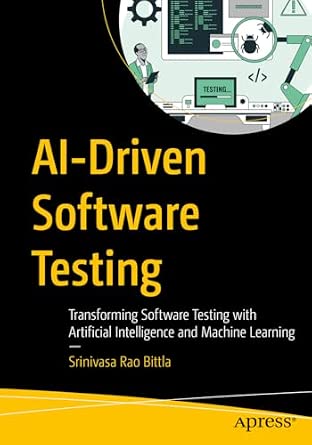
| AI-Driven Software Testing: Tr | Book | AI-driven software testing | AI-driven testing techniques |
| Software Testing with Selenium | Book | Automated software testing | Fundamental Selenium concepts |
| Selenium WebDriver Cheat Sheet | Book | Web automation and testing | Testing strategies |
| All You Need to Know About Sof | Book | — | — |
| Stop Coding: Learn to Test Aut | Book | Automation testing | — |
| Hands-On Automated Testing wit | Book | — | — |
| The Way of the Web Tester: A B | Book | Web testing automation | Testing fundamentals |
| AI-Assisted QA and Software Te | Book | AI-assisted QA and software testing | — |
| Introduction to Software Testi | Book | Software testing | Testing principles, design, automation, and execution |
More Details on Our Top Picks
Design Patterns for High-Quality Automated Tests: High-Quality Test Attributes and Best Practices
This book is the strongest fit here for readers who want to improve the quality and reliability of automated tests, rather than start with a specific framework. Its focus on test attributes and design patterns gives testers and developers a way to judge whether a suite is useful and maintainable. Compared with Software Testing with Selenium Automated Testing Tool, it is less tied to a beginner’s introduction to one tool and more centered on practices that can apply across automation work. That broader focus is also its limitation: the supplied description does not identify a framework, code examples, or implementation detail. I’d choose it to build a stronger testing foundation, but pair it with a hands-on guide when the immediate goal is writing Selenium tests.
Pros:- Focuses on attributes of high-quality automated tests
- Covers design patterns and practices intended to improve testing efficiency and reliability
- The principles-oriented scope can complement framework-specific learning
Cons:- The supplied description does not identify specific frameworks or technical implementation examples
- No edition or detailed format information is provided
- Readers seeking a hands-on starter path may need a separate tool-focused resource
Best for: Testers and developers who already work with automated tests and want principles for improving reliability and maintainability
Not ideal for: Beginners seeking a step-by-step Selenium tutorial or readers who need named tools, code samples, and implementation details
- Format:Book
- Subject:Automated software testing
- Focus:High-quality test attributes
- Topics:Design patterns and best practices
- Stated outcome:Improve testing efficiency and reliability
- Intended audience:Software testers and developers
Our verdict“Choose this for test-design guidance that can inform automation across tools, not as a substitute for a framework tutorial.”
AI-Driven Software Testing: Transforming Software Testing with Artificial Intelligence and Machine Learning
This is the most specialized pick in this group: it focuses on how artificial intelligence and machine learning can shape software testing, rather than teaching a conventional automation framework. That makes it a better match for testers and developers exploring AI-related methods than Design Patterns for High-Quality Automated Tests, which centers on test quality practices that are not described as AI-specific. The stated coverage includes applications and techniques, so it can help readers understand the subject’s place in modern development. The tradeoff is that the supplied description does not promise detailed implementation instructions, and the topic may be a steep entry point for beginners. I’d pair it with a practical framework guide if the goal is to build working automated tests now.
Pros:- Directly addresses AI and machine learning in software testing
- Connects AI-driven methods with modern software development
- Covers applications and techniques rather than only general testing principles
Cons:- The supplied description does not establish detailed technical implementation guidance
- The subject may be too advanced for readers new to software testing
- No specific AI tools, frameworks, or editions are identified
Best for: Test engineers and developers who already understand basic testing and want to explore AI and machine learning applications in QA
Not ideal for: New testers looking for a beginner-friendly introduction or practitioners who need detailed, executable implementation steps
- Format:Book
- Subject:AI-driven software testing
- Technology topics:Artificial intelligence and machine learning
- Coverage:AI-driven testing techniques
- Application focus:Use of AI in modern software development testing
- Intended audience:Software developers and testers interested in AI
Our verdict“Pick this to explore AI’s role in testing; choose a Selenium guide instead if you need to start writing browser tests.”
Software Testing with Selenium Automated Testing Tool: Selenium Book for Beginners
For someone starting browser automation, this book offers the clearest tool-specific entry point in this set. Its beginner focus and practical examples are meant to turn Selenium fundamentals into a starting path for automated tests. Compared with Selenium WebDriver Cheat Sheet, it is framed more as an introduction to the tool than as a practical reference spanning automation and interview preparation. That makes it a better choice for learning core concepts, while the cheat-sheet guide may suit readers who already want targeted WebDriver material. The tradeoff is a deliberately limited scope: the supplied description does not claim advanced topics or detailed troubleshooting. I’d use it to get started with Selenium, then move to a more specialized resource as test suites grow.
Pros:- Designed specifically for beginners learning Selenium automation
- Covers fundamental Selenium concepts
- Includes practical examples to connect concepts with test-writing tasks
Cons:- The supplied description says advanced topics are not covered
- No detailed troubleshooting section is specified
- The scope is narrower than a broad QA career guide covering multiple tools and testing areas
Best for: New QA learners and developers who want a beginner-oriented introduction to Selenium automation and practical examples
Not ideal for: Experienced automation engineers seeking advanced Selenium topics, robust troubleshooting guidance, or coverage beyond the fundamentals
- Format:Book
- Tool:Selenium
- Subject:Automated software testing
- Audience level:Beginner
- Coverage:Fundamental Selenium concepts
- Learning approach:Practical examples and techniques
Our verdict“Choose this as a starting point for Selenium basics, but look elsewhere for advanced techniques or broader QA training.”
Selenium WebDriver Cheat Sheet: A Practical Guide to Web Automation, Testing & Selenium Interview Preparation
This guide has a more reference-oriented angle than Software Testing with Selenium Automated Testing Tool: it brings WebDriver, web automation, testing strategies, and interview preparation into one practical resource. That blend suits readers who are learning Selenium while also preparing to explain their automation knowledge in professional settings. The beginner-friendly framing may make it easier to use as a refresher than a more general book such as All You Need to Know About Software Testing, which spans several testing areas and tools. The limitation is depth: the supplied description warns that advanced users may find the material too basic, and it gives no detailed specification of topics or editions. I’d treat it as an accessible companion, not a complete advanced WebDriver reference.
Pros:- Combines Selenium WebDriver with web automation and testing strategies
- Includes interview preparation as a distinct use case
- Presented as a practical, accessible guide
Cons:- The supplied description suggests limited depth for advanced users
- No detailed technical specifications or edition information are provided
- The combined learning and interview-prep scope may not replace a dedicated advanced reference
Best for: Entry-level automation testers and Selenium learners who want practical WebDriver guidance alongside interview preparation
Not ideal for: Senior automation engineers who need advanced WebDriver patterns, detailed technical coverage, or a narrowly focused reference for complex suites
- Format:Book
- Primary tool:Selenium WebDriver
- Subject:Web automation and testing
- Coverage:Testing strategies
- Additional focus:Selenium interview preparation
- Approach:Practical guide
Our verdict“Pick this for accessible WebDriver learning with interview preparation, not for advanced Selenium engineering detail.”
All You Need to Know About Software Testing: From Beginner to Job-Ready QA Engineer
This is the broadest career-oriented choice in the group. Rather than concentrating on Selenium fundamentals like Software Testing with Selenium Automated Testing Tool or AI methods like AI-Driven Software Testing, it spans manual testing, automation, APIs, Selenium, Playwright, CI/CD, and AI-assisted QA. That range makes it useful for aspiring QA engineers who need a map of the field and want to connect automation with the rest of a testing workflow. Breadth comes with a tradeoff: readers looking for deep instruction in one framework may be better served by a dedicated tool guide, and the supplied description warns that the material may feel dense for absolute beginners. I’d choose it for career preparation, then use focused resources to build depth in a chosen automation stack.
Pros:- Covers manual testing, automation, APIs, Selenium, and Playwright
- Includes CI/CD and AI-assisted QA alongside core testing topics
- Connects tool learning with a stated job-readiness goal
Cons:- The broad topic range may limit depth on any one automation framework
- The supplied description notes that the material may feel dense to absolute beginners
- No edition or detailed technical specifications are provided
Best for: Aspiring QA engineers who want a broad introduction to testing disciplines and automation tools as part of career preparation
Not ideal for: Readers who need a focused, step-by-step Selenium or Playwright course, or absolute beginners who may find broad coverage dense
- Format:Book
- Audience:Beginners and aspiring QA engineers
- Testing coverage:Manual testing and automation
- API coverage:APIs
- Automation tools:Selenium and Playwright
- Workflow topics:CI/CD
- Additional topic:AI-assisted QA
- Stated goal:Prepare readers for QA engineering work
Our verdict“Choose this for a broad QA career foundation; pair it with a dedicated framework guide when you need deeper automation practice.”
Stop Coding: Learn to Test Automate Without Coding and Get That Automation Testing Job
Stop Coding is aimed at readers who want to understand automation testing before taking on programming, making it a more accessible starting point than Hands-On Automated Testing with Playwright, which focuses on a specific framework. Its emphasis on practical testing techniques and job preparation can help aspiring QA candidates build familiarity with automation work and discuss it in entry-level interviews. The tradeoff is that learning without coding has limits: readers seeking to write or maintain robust automated scripts will need a more technical follow-up. The description also gives little detail about the tools covered, so this is better treated as an introduction to the work than as a tool-specific manual. I’d choose it for career exploration, not for advanced implementation guidance.
Pros:- Approaches automation testing for readers with no coding background
- Focuses on practical testing techniques rather than theory alone
- Connects testing knowledge with preparation for automation testing roles
Cons:- Does not offer detailed coding tutorials for readers ready to implement tests
- Provides limited information about specific tools and advanced testing workflows
Best for: Aspiring QA testers without coding experience who want an accessible introduction to automation tasks and testing job preparation.
Not ideal for: Developers or QA engineers who need hands-on instruction in writing scripts, selecting frameworks, or building advanced automated test suites.
- Format:Book
- Subject:Automation testing
- Intended audience:Readers without coding skills
- Approach:Practical techniques for non-coders
- Career focus:Preparation for automation testing roles
- Coding instruction:Not focused on detailed coding tutorials
- Advanced tool coverage:Limited, based on the supplied description
Our verdict“Choose this as a low-code entry point to automation testing, then pair it with a framework-focused guide when you are ready to write tests.”
Hands-On Automated Testing with Playwright: Create Fast, Reliable, and Scalable Tests for Modern Web Apps with Microsoft’s Automation Framework
Hands-On Automated Testing with Playwright is the most framework-specific choice in this group: it teaches automation for modern web applications with Microsoft’s Playwright framework. That focus makes it a more direct route to building web test skills than The Way of the Web Tester, which introduces broader beginner fundamentals without centering on one tool. The book’s stated emphasis on fast, reliable, scalable tests speaks to practical concerns that matter as a web suite grows. The tradeoff is its narrower scope: readers who need a non-coding introduction or a general survey of testing methods should start elsewhere. The supplied details do not identify prerequisites or coverage beyond Playwright, so I’d select it when that framework is already relevant to the reader’s work.
Pros:- Centers instruction on Microsoft’s Playwright automation framework
- Targets modern web application testing
- Emphasizes test reliability and scalability as well as speed
- Offers practical, hands-on guidance
Cons:- Its framework focus is less useful for readers who need tool-neutral testing foundations
- The supplied description does not specify prerequisites or detailed chapter coverage
Best for: QA engineers and developers working on modern web applications who want practical guidance centered on Playwright.
Not ideal for: Non-coders, readers seeking a general introduction to software testing, or teams committed to a different automation framework.
- Format:Book
- Framework:Playwright
- Framework publisher:Microsoft
- Application focus:Modern web apps
- Testing focus:Automated testing
- Stated goals:Fast, reliable, and scalable tests
- Instruction style:Hands-on guidance
Our verdict“Pick this when Playwright is your intended web testing framework and you want a focused, practical guide rather than a broad introduction.”
The Way of the Web Tester: A Beginner’s Guide to Automating Tests
The Way of the Web Tester offers a fundamentals-first path for beginners learning to automate web tests. Its practical introduction gives it a broader starting point than Hands-On Automated Testing with Playwright, which is more useful once a reader has chosen that particular framework. The focus on essential concepts and best practices can help newcomers understand what to automate and how to approach tests before committing to a narrower tool guide. That accessibility comes with clear boundaries: the subject is web testing, and the supplied description does not point to advanced techniques or deep coverage of a specific automation framework. I’d place it ahead of a framework manual for someone learning the basics, but not for an experienced tester seeking advanced implementation help.
Pros:- Introduces test automation with beginners in mind
- Covers essential web testing concepts and practices
- Provides a practical foundation before moving to a tool-specific guide
Cons:- Limited to web testing rather than broader software testing needs
- Does not appear to cover advanced automation topics in depth
Best for: New QA learners and junior web developers who want a practical introduction to web test automation before specializing in a framework.
Not ideal for: Experienced automation engineers, readers focused on non-web software, or buyers looking for advanced framework-specific instruction.
- Format:Book
- Audience:Beginners
- Subject:Web testing automation
- Coverage:Testing fundamentals
- Guidance:Best practices for automating tests
- Instruction style:Clear, practical introduction
- Advanced topics:Limited, based on the supplied description
Our verdict“Choose this for a first practical grounding in web automation, then move to a framework-specific book such as the Playwright guide.”
AI-Assisted QA and Software Testing with Claude Code
AI-Assisted QA and Software Testing with Claude Code takes a workflow-oriented approach, describing how an agentic coding assistant can help automate unit, integration, and end-to-end testing. That breadth sets it apart from Hands-On Automated Testing with Playwright, which concentrates on a single web automation framework rather than AI-supported work across several test levels. This could suit teams exploring where an AI assistant fits into testing tasks, especially when they want to connect test automation with coding workflows. The tradeoff is uncertainty: the supplied details do not explain setup, supported integrations, or how much human review the workflows require. Readers new to AI coding assistants may also face a learning curve, while buyers seeking a conventional, clearly scoped tool manual may prefer a framework-focused book.
Pros:- Addresses unit, integration, and end-to-end testing workflows
- Explores AI assistance through Anthropic’s Claude Code
- Connects test automation with agentic coding workflows
Cons:- The supplied description lacks detail about setup, integrations, and workflow requirements
- New users may need time to learn how to work effectively with an AI coding assistant
Best for: QA leads and developers exploring AI-assisted unit, integration, and end-to-end testing workflows with Claude Code.
Not ideal for: Readers who need a fully specified, step-by-step guide to a conventional test framework or who are not prepared to learn an AI coding assistant workflow.
- Format:Book
- Subject:AI-assisted QA and software testing
- Named assistant:Claude Code
- Assistant provider:Anthropic
- Testing levels:Unit, integration, and end-to-end
- Workflow approach:Agentic coding assistant
- Stated aim:Improve testing efficiency with AI-driven automation
Our verdict“Choose this to explore AI-assisted testing across multiple test levels, but favor a conventional framework guide if you need clearly specified implementation steps.”
Introduction to Software Testing: A Practical Guide to Testing, Design, Automation, and Execution
Introduction to Software Testing is the broadest foundation in this set, spanning testing principles, test design, automation, and execution. Unlike Stop Coding, which concentrates on non-coders and job preparation, this guide is positioned for both testers and developers who want a wider view of how testing work fits together. That range can help readers connect automated checks to the surrounding strategy instead of treating automation as a standalone activity. The tradeoff is that breadth may mean less depth on a single tool, and the supplied description notes limited case studies. Its technical orientation may also be a poor match for readers seeking an especially gentle introduction. I’d choose it for a general testing foundation, not as a replacement for focused Playwright or other framework instruction.
Pros:- Covers testing principles alongside automation and execution
- Includes test design as part of the broader testing process
- Aims to serve both beginners and experienced testers
- Connects automation with wider testing methodologies
Cons:- Limited case studies may leave fewer worked examples for applying the methods
- Its technical focus may be challenging for readers without a software background
- Broad coverage may not replace a dedicated guide to a specific automation tool
Best for: Testers and developers who want a practical, broad guide to testing strategy, design, automation, and execution.
Not ideal for: Non-technical beginners seeking a very gentle introduction or practitioners who need detailed instruction for one automation framework.
- Format:Book
- Subject:Software testing
- Coverage:Testing principles, design, automation, and execution
- Approach:Practical guide
- Intended readers:Software testers and developers
- Experience range:Beginners and experienced testers
- Case studies:Limited, based on the supplied description
Our verdict“Choose this for a wide, practical grounding in software testing, and add a framework-specific guide when you need detailed tool instruction.”

How We Picked
I compared these ten entries by how directly they support a reader learning or improving automated software testing: framework-specific instruction, practical relevance, accessibility for the stated audience, and attention to test design and reliability. I also considered whether a title works as a reference, a first introduction, or a wider QA foundation, since those roles are not interchangeable. The list contains books and guides—not executable testing platforms—so the ranking reflects their potential usefulness as learning resources, not software performance, integrations, or vendor support.
Hands-On Automated Testing with Playwright leads for its focused, practical scope around a current web automation framework. The Selenium titles follow for readers who need a beginner path or concise reference, while the test-design book stands out for maintainability rather than framework onboarding. Broader QA introductions and AI-focused titles fill narrower learning needs, but rank lower for readers seeking direct, tool-centered automation instruction. I treat every placement as a fit for a particular learner, not a claim that one framework suits every project.
| automated software testing tool | Coverage |
|---|---|
| Design Patterns for High-Quali | — |
| AI-Driven Software Testing: Tr | AI-driven testing techniques |
| Software Testing with Selenium | Fundamental Selenium concepts |
| Selenium WebDriver Cheat Sheet | Testing strategies |
| All You Need to Know About Sof | — |
| Stop Coding: Learn to Test Aut | — |
| Hands-On Automated Testing wit | — |
| The Way of the Web Tester: A B | Testing fundamentals |
| AI-Assisted QA and Software Te | — |
| Introduction to Software Testi | Testing principles, design, automation, and execution |
Factors to Consider When Choosing Automated Software Testing Tools
Before choosing a learning resource, decide what you need to do next: select a framework, write sturdier tests, understand QA basics, or explore AI-assisted workflows. That goal matters more than a title’s broad promise of automation. I would also separate learning material from the software decision itself; a book can teach concepts, but it cannot confirm that a tool fits your team’s application, infrastructure, or compliance needs.
Start With the Application You Need to Test
Choose a learning path that matches the kind of software you actually work on. A web UI project may call for a browser automation framework, while API, mobile, desktop, and embedded testing can require different tools and skills. A common mistake is picking a framework because it is popular, then discovering that it does not fit the app’s architecture or test environment. Check whether your team already uses a language or framework before committing to a tutorial centered on a different stack. If you are still unsure, learn transferable test design concepts first, then compare frameworks against a small, representative task. That approach can prevent you from mistaking a book’s scope for a complete tool recommendation.
Match the Resource to Your Current Skill Level
A beginner may need basic testing vocabulary, test planning, and programming context before a framework walkthrough becomes useful. More experienced readers often benefit more from a concise reference or guidance on reliability and maintainability than another introduction. Be realistic about prerequisites: a guide described as beginner-friendly may still assume comfort with code, command lines, or web development. Skipping foundational knowledge can lead to copied tests that run but do not check meaningful behavior. On the other hand, a broad QA primer may feel slow if your goal is simply to automate a specific browser workflow. Pick the narrowest resource that covers the next skill gap without leaving out the basics you genuinely lack.
Prioritize Maintainability, Not Just Getting Tests to Run
A first passing test is only a starting point; a useful suite must stay understandable as the product changes. Look for guidance that explains test structure, clear assertions, reusable setup, and how to reduce fragile dependencies on page layout or test order. Teams often overvalue test count and speed while overlooking flaky failures that erode trust in automation. Before expanding a suite, decide who will update tests when the interface or application behavior changes. Also ask whether the examples teach you to diagnose failures, rather than only create them. These habits can matter more over time than learning a long list of framework commands.
Treat AI-Assisted Testing as a Workflow to Validate
AI can help draft test cases or code, but generated output still needs review against product requirements and real application behavior. Think about whether your team can share code, test data, or application details with an AI service under its data and security policies. A frequent mistake is treating generated tests as proof of coverage; plausible code may miss edge cases or assert the wrong outcome. Assess how a proposed workflow handles human review, debugging, updates, and traceability from requirements to tests. AI-focused learning resources make the most sense when you already understand what a good test should verify. Keep conventional testing fundamentals in view so that assistance does not become a substitute for judgment.
Check Whether the Learning Format Fits Your Work
Books and cheat sheets serve different moments: a structured guide can build knowledge step by step, while a compact reference helps recall commands or concepts you have already learned. If you need guided practice, check whether the resource promises hands-on examples and whether you can run them with your available environment. Interview preparation is useful for job seekers, but it may not teach the maintenance practices needed for a production test suite. No-code approaches can lower the entry barrier, yet may offer less flexibility when test logic grows complex or needs to fit a code-based workflow. Consider how you prefer to learn and what you will need to produce afterward: a working example, an interview-ready explanation, or a durable testing approach. That output is a better selection test than a general claim that a resource is practical.
Frequently Asked Questions
Are these automated software testing tools, or books about them?
These ten entries are books and learning guides, not installable testing platforms. They can help you learn frameworks, testing practices, or QA concepts, but they do not run tests against your application. If you need software to execute tests, compare platforms separately based on application type, language support, integrations, reporting, security, and team workflow. Use the books to build understanding, then validate a candidate platform with a small project-specific trial. That distinction matters because a strong learning resource does not guarantee that the framework it covers fits your environment.
Should I learn Selenium or Playwright first?
Start with the framework that best matches your team’s existing codebase and the browser-testing needs of your application. This roundup’s Playwright guide is the more direct choice for readers focused on modern web apps, while the Selenium titles serve people who need Selenium onboarding or a quick reference. Avoid learning both at once if you have not yet practiced writing and debugging reliable tests in one framework. If you are studying for a role, check the technologies used in target job descriptions rather than relying on general popularity. The goal is to learn transferable testing judgment alongside framework syntax.
Can I learn test automation without coding?
A no-code or low-code approach may help you begin automating routine checks without first becoming a programmer. It can be a reasonable starting point for straightforward workflows, but complex conditions, reusable test logic, and debugging may call for coding skills. Before choosing that route, check whether the tools your team uses support visual authoring and whether the resulting tests can be maintained by others. Be wary of assuming that avoiding code also removes the need to understand assertions, test data, and failure causes. A gradual path—starting with simple automation and learning basic scripting as needs grow—can preserve flexibility.
Is an AI-focused testing guide a good first resource?
It can introduce ways AI may assist with test generation or QA tasks, but it is usually stronger when paired with a foundation in testing. You need to recognize whether a suggested test reflects a real requirement and whether its assertions would catch the failure that matters. Also check how the workflow treats sensitive code and data before using an AI service at work. Readers new to QA may gain more from basic testing concepts first, then return to AI assistance with a clearer standard for judging output. AI should support review and iteration, not stand in for them.
What should I choose if I need both QA fundamentals and a framework tutorial?
Plan to learn in two stages rather than expecting one book to cover every need equally well. Start with a broad QA introduction if testing concepts, test planning, and vocabulary are new to you; then move to a framework-specific guide aligned with your application. Add material on test design when your suite begins to grow or becomes difficult to maintain. This sequence helps prevent a common learning gap: knowing how to write framework commands without knowing what the tests should prove. If you already have QA experience, skip the broad introduction and spend your time on the framework or reliability skills you lack.
Conclusion
For a focused start in browser automation, my best overall pick is Hands-On Automated Testing with Playwright, while the Selenium beginner book is a sensible best value in learning scope for readers committed to that framework; this is a fit-based distinction, not a price claim. For beginners who need broader QA foundations, choose All You Need to Know About Software Testing or The Way of the Web Tester before tackling framework details. Readers seeking a more specialized, premium-depth learning path can pair framework instruction with Design Patterns for High-Quality Automated Tests, though these are books rather than paid software tiers. For a quick Selenium refresher, the cheat sheet is the specific-use pick; for AI experimentation, choose an AI-focused guide only if you can critically review its output. Match the resource to your next skill gap, then evaluate actual testing software separately against your application and team.
Halloween Picks
halloween
As an affiliate, we earn on qualifying purchases.