

Choosing among software testing automation tools in 2026 means deciding between three distinct paths: mastering a browser automation framework like Playwright, layering AI-assisted testing on top of an existing stack, or building the pipeline discipline of continuous delivery. The strongest all-around pick for most readers is Hands-On Automated Testing with Playwright, because it teaches the framework that has become the default for modern web test automation. Teams already invested in Java stacks should look at AI Integrated Software Automation Testing with Java and Selenium, while QA leads planning a broader transformation will get more from AI for Quality Assurance and Software Testing. The main tradeoff across the category is depth versus breadth: framework-specific guides make you productive fast, while pipeline and strategy guides pay off over years. Keep reading for the full breakdown.

Get monitors, keyboards and dev gear delivered free — and shop member deals
- Fast, free delivery on millions of items
- Access to Prime Big Deal Days deals on October 6–7
- Prime Video, Amazon Music and more included
Key Takeaways
- Playwright dominates this lineup: three of the eleven picks center on it, reflecting its displacement of Selenium and Cypress as the default web automation framework in 2026.
- AI-powered testing books split into two camps: practitioner guides that bolt AI onto existing Selenium or Playwright stacks, and transformation guides aimed at QA leads redesigning entire testing strategies.
- Books that pair a framework with CI/CD context (build, test, deploy pipelines) delivered more long-term value than pure framework tutorials, even for readers who already knew the tool.
- Power Apps and low-code automation testing remains a niche with thin coverage; the dedicated guide is the only serious option if your org runs Microsoft low-code platforms.
- Java/Selenium resources still make sense for enterprise teams with legacy suites, but beginners choosing a first framework today should skip Selenium and start with Playwright.
| Hands-On Automated Testing with Playwright |  | Best Overall | Format: Paperback / eBook | Topic: Web test automation with Playwright | Framework Covered: Microsoft Playwright | VIEW LATEST PRICE | See Our Full Breakdown |
| AI for Quality Assurance and Software Testing |  | Best for Career-Focused QA Professionals | Format: Paperback / eBook | Topic: AI-powered QA and software testing | Coverage: Tools, methodologies, transformation strategy | VIEW LATEST PRICE | See Our Full Breakdown |
| Software Testing with Generative AI |  | Best for Generative AI Techniques | Format: Paperback / eBook | Topic: Generative AI applied to software testing | Coverage: AI-driven test generation and techniques | VIEW LATEST PRICE | See Our Full Breakdown |
| Automate Testing for Power Apps | 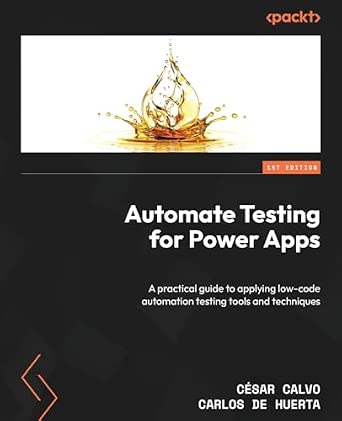 | Best for Low-Code Teams | Format: Paperback / eBook | Topic: Test automation for Power Apps | Approach: Low-code tools and techniques | VIEW LATEST PRICE | See Our Full Breakdown |
| Python Automation for Real Work |  | Best Value for Generalists | Format: Paperback / eBook | Topic: Python workflow automation including testing | Coverage: APIs, data, testing, scheduling, projects | VIEW LATEST PRICE | See Our Full Breakdown |
| Practical Playwright Test: Next-Generation Web Testing and Automation |  | Best for Modern Web Testers | Format: Book | Topic: Web testing and automation with Playwright | Focus: Best practices, tools, and techniques | VIEW LATEST PRICE | See Our Full Breakdown |
| AI Integrated Software Automation Testing with Java and Selenium |  | Best for Java Teams Adopting AI | Programming Language: Java | Framework: Selenium WebDriver, TestNG | AI Integration: Yes, including GitHub Copilot | VIEW LATEST PRICE | See Our Full Breakdown |
| Claude Code Mastery: The Complete Step-by-Step Guide to AI-Powered Software Development, Agentic Coding, Automation, Debugging, Testing, MCP Integration |  | Best for Agentic AI Workflows | Format: Book | Topic: AI-powered software development and testing | Coverage: Agentic coding, automation, debugging, testing, MCP integration | VIEW LATEST PRICE | See Our Full Breakdown |
| Continuous Delivery: Reliable Software Releases through Build, Test, and Deployment Automation |  | Best Foundational Reference | Format: Print/digital book | Series: Addison-Wesley Signature Series | Topic: Continuous delivery and release automation | VIEW LATEST PRICE | See Our Full Breakdown |
| Full Stack Testing: A Practical Guide for Delivering High Quality Software |  | Best Breadth for QA Generalists | Format: Book | Topic: Full-stack software testing | Focus: Practical strategies for high-quality delivery | VIEW LATEST PRICE | See Our Full Breakdown |
| Creating an End-to-End Test Framework: A Detailed Guide with Practical Examples from Playwright, Cypress, and Cucumber |  | Best for Framework Builders | Format: Book (digital/print) | Topic: End-to-end test framework design | Tools covered: Playwright, Cypress, Cucumber | VIEW LATEST PRICE | See Our Full Breakdown |
| software testing automation tool | Skill Level | Format | Topic | Approach |
|---|---|---|---|---|
| Hands-On Automated Testing wit | Intermediate | Paperback / eBook | Web test automation with Playwright | Hands-on, project-driven |
| AI for Quality Assurance and S | Intermediate to advanced | Paperback / eBook | AI-powered QA and software testing | Practitioner guide |
| Software Testing with Generati | Intermediate | Paperback / eBook | Generative AI applied to software testing | Technique-focused guide |
| Automate Testing for Power App | Beginner to intermediate (low-code) | Paperback / eBook | Test automation for Power Apps | Low-code tools and techniques |
| Python Automation for Real Wor | Beginner to intermediate | Paperback / eBook | Python workflow automation including testing | Project-driven, hands-on |
| Practical Playwright Test: Nex | Intermediate | Book | Web testing and automation with Playwright | — |
| AI Integrated Software Automat | Intermediate to advanced | — | — | — |
| Claude Code Mastery: The Compl | Intermediate to advanced | Book | AI-powered software development and testing | — |
| Continuous Delivery: Reliable | Intermediate to advanced | Print/digital book | Continuous delivery and release automation | — |
| Full Stack Testing: A Practica | Beginner to intermediate | Book | Full-stack software testing | Practical, strategy-oriented guide |
| Creating an End-to-End Test Fr | Beginner to experienced (some chapters skew technical) | Book (digital/print) | End-to-end test framework design | — |
More Details on Our Top Picks
Hands-On Automated Testing with Playwright
This book earns the top spot because Playwright itself has become the default choice for modern web test automation, and this guide teaches it with a practical, hands-on structure rather than dry theory. Compared with Creating an End-to-End Test Framework, which spreads its attention across Playwright, Cypress, and Cucumber, this option goes deeper on a single framework, which pays off if your team has already committed to Microsoft’s tooling. The focus on reliable and scalable tests translates directly into fewer flaky builds and less time babysitting CI pipelines. The tradeoff is the same one that comes with any single-framework book: if your stack relies on Selenium or a different runner, much of the code won’t transfer directly.
Pros:- Deep single-framework coverage of Playwright rather than a shallow survey
- Emphasizes reliable, scalable tests, reducing flaky CI runs
- Practical, hands-on structure suited to working developers
- Directly aligned with current industry adoption of Playwright
Cons:- Framework-specific — limited value if your team uses Cypress or Selenium
- Content assumes prior technical knowledge and can overwhelm newcomers
Best for: Front-end and QA engineers building automated end-to-end test suites for modern web apps on a Playwright stack
Not ideal for: Absolute beginners with no coding background — the material assumes familiarity with web development concepts
- Format:Paperback / eBook
- Topic:Web test automation with Playwright
- Framework Covered:Microsoft Playwright
- Skill Level:Intermediate
- Approach:Hands-on, project-driven
- Primary Audience:QA engineers and web developers
Our verdict“The most practical choice for teams already committed to Playwright who want dependable end-to-end coverage.”
AI for Quality Assurance and Software Testing
Where Software Testing with Generative AI narrows in on generative models, this guide takes a broader practitioner view of AI across the entire QA lifecycle — tools, methodologies, and how to actually transform a testing process rather than just experiment with prompts. That breadth makes it the better fit for test leads and managers who need to evaluate which AI capabilities justify investment, while developers wanting code-level techniques may find it too strategic. Compared with Claude Code Mastery, which treats AI through a single tool’s lens, this book’s tool-agnostic coverage ages better as vendors change. The drawback of breadth is depth: it surveys rather than masters any one tool, so hands-on learners will need supplemental material.
Pros:- Tool-agnostic coverage of the AI testing landscape
- Addresses strategy and transformation, not just features
- Written for working practitioners rather than researchers
- Broad enough to stay relevant as AI tools evolve
Cons:- Surveys many tools without deep treatment of any single one
- Concepts can be technical for readers new to AI fundamentals
Best for: QA leads, test managers, and practitioners planning an AI adoption strategy across their testing organization
Not ideal for: Hands-on developers who want copy-paste code for a specific AI testing tool
- Format:Paperback / eBook
- Topic:AI-powered QA and software testing
- Coverage:Tools, methodologies, transformation strategy
- Skill Level:Intermediate to advanced
- Approach:Practitioner guide
- Primary Audience:QA engineers, test leads, managers
Our verdict“The right pick for QA professionals who need strategic clarity on AI adoption, not just tool tutorials.”
Software Testing with Generative AI
This option stands out for tightening the lens specifically onto generative AI — test generation, synthetic data, and AI-assisted edge-case discovery — where AI for Quality Assurance and Software Testing stays at the level of strategy and tooling surveys. For developers and testers who already know how to test and now want AI to accelerate the writing of tests themselves, this narrower focus is exactly what makes it useful. The tradeoff mirrors its strength: readers who need help deciding whether to adopt AI, or how to restructure a QA org around it, will find less guidance here. It also has a shorter track record than established titles like Hands-On Automated Testing with Playwright, with fewer reader reviews to validate its real-world usefulness.
Pros:- Focused specifically on generative AI rather than general AI theory
- Applicable immediately by working developers and testers
- Covers practical techniques like test and data generation
Cons:- Narrow scope compared with broader AI-in-QA guides
- Limited reader feedback available to gauge practical value
Best for: Developers and testers with solid fundamentals who want hands-on generative AI techniques for generating tests and test data
Not ideal for: Teams evaluating AI adoption strategically — the scope is technique-level, not organizational
- Format:Paperback / eBook
- Topic:Generative AI applied to software testing
- Coverage:AI-driven test generation and techniques
- Skill Level:Intermediate
- Approach:Technique-focused guide
- Primary Audience:Software developers and testers
Our verdict“A focused choice for testers who want generative AI doing hands-on work, not just informing strategy.”
Automate Testing for Power Apps
Every other entry in this lineup assumes a code-first world; this one is the only pick built for the Microsoft Power Apps ecosystem, where citizen developers often have no traditional test automation background at all. Its low-code approach to test automation fills a genuine gap — most testing literature, including Hands-On Automated Testing with Playwright, ignores this platform entirely. Compared with Python Automation for Real Work, which teaches scripting from scratch, this guide works within the constraints of low-code tooling, meaning teams can add testing without hiring engineers. The cost of that specialization is obvious: if you are not building Power Apps, the book has almost nothing for you, and even within the platform, advanced testing scenarios get limited attention.
Pros:- One of the few dedicated resources for Power Apps test automation
- Low-code focus suits non-developer teams
- Practical guidance that improves testing efficiency quickly
- Covers tooling specific to the Microsoft ecosystem
Cons:- Assumes prior familiarity with Power Apps
- Shallow coverage of advanced testing techniques
Best for: Citizen developers and low-code teams building Power Apps who need test coverage without traditional programming
Not ideal for: Anyone outside the Power Platform ecosystem — the content is not transferable to general web or API testing
- Format:Paperback / eBook
- Topic:Test automation for Power Apps
- Approach:Low-code tools and techniques
- Platform:Microsoft Power Platform
- Skill Level:Beginner to intermediate (low-code)
- Primary Audience:Citizen developers and Power Apps teams
Our verdict“A niche but valuable pick for Power Apps teams — everyone else should look at the code-first options here.”
Python Automation for Real Work
This pick makes the most sense for buyers who see test automation as one part of a broader automation skill set rather than a dedicated discipline. Where Hands-On Automated Testing with Playwright drills into one framework, this book covers APIs, data handling, scheduling, and testing together through practical projects that mirror real workplace workflows — a breadth-to-price ratio that earns it the value slot. It pairs well with Continuous Delivery: that book explains the pipeline philosophy, while this one supplies the Python scripts that actually live inside it. The tradeoff is that testing gets only part of the page count, so dedicated QA engineers will want a deeper resource, and some advanced topics move too fast for complete beginners.
Pros:- Covers testing within a wider, practical automation toolkit
- Project-based structure builds job-relevant skills
- Emphasizes reliable, maintainable workflows
- Strong value for the breadth of topics included
Cons:- Testing is only one of several topics, limiting depth
- Advanced sections assume more background than true beginners have
Best for: Developers and IT generalists who want testing alongside API, data, and scheduling automation skills in one book
Not ideal for: Dedicated QA specialists who need exhaustive coverage of testing frameworks alone
- Format:Paperback / eBook
- Topic:Python workflow automation including testing
- Coverage:APIs, data, testing, scheduling, projects
- Language:Python
- Skill Level:Beginner to intermediate
- Approach:Project-driven, hands-on
Our verdict“The best budget-conscious pick for generalists who want test automation as part of an all-around Python skill set.”
Practical Playwright Test: Next-Generation Web Testing and Automation
Among the Playwright-focused titles in this roundup, this one stands out for pairing tool instruction with best practices and reliability techniques rather than just API walkthroughs. Compared with Hands-On Automated Testing with Playwright, which leans toward building scalable test suites from scratch, this pick makes the most sense for readers who already have tests running and want them to be faster and more dependable. The practical framing translates directly into fewer flaky runs and easier maintenance. The tradeoff: it assumes some baseline JavaScript comfort, and with no reader ratings yet, buyers are trusting the author’s structure sight unseen.
Pros:- Comprehensive Playwright coverage from fundamentals to advanced techniques
- Strong emphasis on best practices that reduce flaky tests
- Practical examples suited to both developers and testers
- Focused on a single modern framework rather than spreading thin across tools
Cons:- No reader reviews or ratings yet to validate quality
- Playwright-specific depth won’t help teams committed to Cypress or Selenium
Best for: Developers and QA engineers already using or adopting Playwright who want reliability-focused guidance beyond basics
Not ideal for: Complete beginners to web automation who need hand-holding from installation onward
- Format:Book
- Topic:Web testing and automation with Playwright
- Focus:Best practices, tools, and techniques
- Audience:Developers and testers
- Framework Coverage:Playwright
- Skill Level:Intermediate
Our verdict“A strong choice for teams standardizing on Playwright who want dependable, maintainable test suites.”
AI Integrated Software Automation Testing with Java and Selenium
This option occupies a specific niche: enterprise Java and Selenium WebDriver shops that want AI layered onto an existing stack rather than a rewrite. The TestNG framework support and machine learning-based flaky test detection are the real differentiators — few resources in this lineup address the practical pain of unreliable suites at the code level. Compared with Software Testing with Generative AI, which surveys AI testing more broadly, this guide is narrower and more hands-on for a specific language ecosystem. The cost of that specificity is real: beginners face a steep setup curve, and anyone outside the Java world gains little.
Pros:- AI integration including GitHub Copilot workflows
- Machine learning-based flaky test detection addresses a real enterprise pain point
- Built around TestNG, a mainstream enterprise testing framework
- Shows how to retrofit AI onto an existing Selenium stack
Cons:- Requires prior Java and Selenium proficiency
- Setup can be complex for those new to AI tooling
Best for: Java developers and QA automation engineers working with Selenium and TestNG who want to add AI-assisted workflows
Not ideal for: Python or JavaScript teams, or newcomers without existing Java and Selenium experience
- Programming Language:Java
- Framework:Selenium WebDriver, TestNG
- AI Integration:Yes, including GitHub Copilot
- Machine Learning Features:Flaky test detection
- Version:AI Integrated
- Skill Level:Intermediate to advanced
Our verdict“A targeted pick for Java/Selenium teams that want AI assistance without abandoning their current stack.”
Claude Code Mastery: The Complete Step-by-Step Guide to AI-Powered Software Development, Agentic Coding, Automation, Debugging, Testing, MCP Integration
Where most entries here treat AI as an add-on to testing, this guide flips the frame: AI agents as the primary developer, with testing as one workflow among many. Coverage of agentic coding, debugging, and MCP integration makes it the forward-looking choice in this batch, and it suits engineers who want testing automation embedded in a broader AI-assisted pipeline. Compared with AI Integrated Software Automation Testing with Java and Selenium, which anchors AI to a traditional stack, this title bets heavily on tool-centric development. That ambition is also the risk — testing depth is shallower than dedicated titles, and the tooling landscape it describes evolves quickly enough that some material may age fast.
Pros:- Step-by-step guidance across agentic coding, automation, debugging, and testing
- Covers MCP integration, a topic few testing books address
- Part of a specialized AI series with consistent structure
- Treats testing as part of an end-to-end AI development pipeline
Cons:- Content may be too technical for beginners
- Fast-moving AI tooling means some material can date quickly
- Testing coverage is broad rather than deep
Best for: Developers experimenting with AI-agent-driven development who want testing covered as part of an agentic workflow
Not ideal for: QA professionals who need deep, framework-specific testing instruction rather than general AI tooling
- Format:Book
- Topic:AI-powered software development and testing
- Coverage:Agentic coding, automation, debugging, testing, MCP integration
- Series:TekkyVille AI Series
- Instruction Style:Step-by-step guide
- Skill Level:Intermediate to advanced
Our verdict“Choose this if you want AI agents running your whole development loop, not just your tests.”
Continuous Delivery: Reliable Software Releases through Build, Test, and Deployment Automation
This is the canonical text of the batch — the Addison-Wesley Signature Series title that most modern DevOps practice is built on. Its value is strategic: it explains why test automation matters inside a delivery pipeline, not just how to write a selector. Compared with Full Stack Testing, which gets tactical about individual testing techniques, this book sits a level higher, covering deployment pipelines, configuration management, and release strategy. The tradeoff is age and abstraction — readers wanting current tool syntax for Playwright or Cypress will find none here, and the conceptual density makes it a slow read for anyone new to delivery practices.
Pros:- Authoritative treatment of build, test, and deployment automation
- Written by recognized experts in the delivery space
- Concepts remain foundational to modern CI/CD practice
- Explains the strategic role of test automation in releases
Cons:- Conceptual and dense; challenging for beginners
- Tooling examples predate modern frameworks and cloud-native practices
Best for: Engineering leads and DevOps-minded QA managers designing build-test-deploy pipelines from first principles
Not ideal for: Hands-on testers who need tool-specific tutorials rather than delivery philosophy
- Format:Print/digital book
- Series:Addison-Wesley Signature Series
- Topic:Continuous delivery and release automation
- Coverage:Build, test, and deployment automation
- Audience:Engineers, leads, and DevOps practitioners
- Skill Level:Intermediate to advanced
Our verdict“The definitive strategic reference for anyone architecting automated delivery pipelines rather than writing individual tests.”
Full Stack Testing: A Practical Guide for Delivering High Quality Software
This pick earns its place by spanning the entire testing surface — frontend, backend, APIs, and everything a QA professional touches across a stack. Where Practical Playwright Test goes deep on one framework, this guide trades depth for end-to-end coverage, making it the better fit for generalists and QA leads who must advise on strategy across layers. The practical, outcome-oriented framing helps readers connect technique to software quality rather than tool trivia. The downside of that breadth: individual topics get less depth than dedicated titles, and experienced specialists in any single layer may find portions they already know well.
Pros:- Covers testing across the full technology stack
- Practical strategies tied directly to software quality outcomes
- Useful for both developers and QA professionals
- Good breadth for shaping an overall test strategy
Cons:- Breadth comes at the cost of depth in any single testing layer
- Not a step-by-step tutorial for any specific tool
Best for: QA generalists and test leads responsible for quality strategy across the full application stack
Not ideal for: Specialists who need exhaustive depth in one area, such as Playwright-only web automation
- Format:Book
- Topic:Full-stack software testing
- Focus:Practical strategies for high-quality delivery
- Audience:Developers and QA professionals
- Approach:Practical, strategy-oriented guide
- Skill Level:Beginner to intermediate
Our verdict“The right pick when you need one book that covers the whole testing landscape rather than mastering a single tool.”
Creating an End-to-End Test Framework: A Detailed Guide with Practical Examples from Playwright, Cypress, and Cucumber
Most titles in this roundup teach you a single tool — Practical Playwright Test and Hands-On Automated Testing with Playwright go deep on one framework, while AI Integrated Software Automation Testing with Java and Selenium locks you into a specific stack. This book takes the opposite approach: it teaches how to architect an end-to-end test framework, using Playwright, Cypress, and Cucumber as working examples rather than destinations.
That framing matters if your goal is maintainable test infrastructure rather than tool-specific tricks. The practical examples translate directly into real projects, and the multi-tool coverage helps you justify framework decisions to your team instead of defaulting to whatever tool you happened to learn first.
The tradeoff is breadth over depth: readers who want exhaustive Playwright coverage will get more from a dedicated title, and the architectural material can feel technical if you’re still writing your first test script.
Pros:- Covers Playwright, Cypress, and Cucumber side by side, so you can compare framework approaches instead of committing blind
- Focuses on framework architecture and best practices, which outlasts any single tool’s documentation
- Practical, real-world examples that map directly to building test suites at work
- Useful across skill levels — intermediate testers grow into the architecture chapters as they gain experience
Cons:- Breadth across three tools means less depth than single-tool books like Practical Playwright Test
- Framework-design material can be heavy going for testers still new to automation
Best for: QA engineers and technical leads who need to design, standardize, or refactor an end-to-end test framework across multiple tools and teams
Not ideal for: Absolute beginners with no coding background — the framework-design focus assumes comfort with automation concepts before you start
- Format:Book (digital/print)
- Topic:End-to-end test framework design
- Tools covered:Playwright, Cypress, Cucumber
- Skill level:Beginner to experienced (some chapters skew technical)
- Includes:Practical examples and automation best practices
- Primary audience:QA engineers, automation engineers, test leads
Our verdict“Pick this if you’re building or overhauling a test framework and need the architectural playbook; skip it if you just want a tutorial for one specific tool.”

How We Picked
I evaluated each of these software testing automation resources against four buyer-relevant criteria. Framework relevance came first: books built around actively maintained, widely adopted tools scored higher than those tied to fading ecosystems. Practical applicability mattered next — guides with runnable examples, realistic project structures, and maintenance advice outrank theoretical treatments. Audience fit was the third filter: a guide can be excellent for a QA engineer but wrong for a developer or a QA manager, so each pick earned a role based on who it serves best. Finally, I weighed longevity: resources teaching transferable concepts like pipeline design and AI-assisted test generation hold value longer than version-specific tutorials.
The ranking reflects a simple logic: resources that combine a current framework with durable engineering practices sit at the top, specialized and niche picks fill specific roles in the middle, and broader strategy guides round out the list for readers whose needs are organizational rather than technical. Because several picks overlap in tooling, I prioritized the ones that differentiate through depth, project realism, or a unique angle — low-code platforms, generative AI test design, or full-stack test strategy — rather than covering the same ground twice.
| software testing automation tool | Format | Skill Level | Approach |
|---|---|---|---|
| Hands-On Automated Testing wit | Paperback / eBook | Intermediate | Hands-on, project-driven |
| AI for Quality Assurance and S | Paperback / eBook | Intermediate to advanced | Practitioner guide |
| Software Testing with Generati | Paperback / eBook | Intermediate | Technique-focused guide |
| Automate Testing for Power App | Paperback / eBook | Beginner to intermediate (low-code) | Low-code tools and techniques |
| Python Automation for Real Wor | Paperback / eBook | Beginner to intermediate | Project-driven, hands-on |
| Practical Playwright Test: Nex | Book | Intermediate | — |
| AI Integrated Software Automat | — | Intermediate to advanced | — |
| Claude Code Mastery: The Compl | Book | Intermediate to advanced | — |
| Continuous Delivery: Reliable | Print/digital book | Intermediate to advanced | — |
| Full Stack Testing: A Practica | Book | Beginner to intermediate | Practical, strategy-oriented guide |
| Creating an End-to-End Test Fr | Book (digital/print) | Beginner to experienced (some chapters skew technical) | — |
Factors to Consider When Choosing Software Testing Automation Tools
Before picking a testing automation resource, it helps to understand the forces shaping the category. The right choice depends less on which tool is ‘best’ and more on where your team sits today and where it needs to be in twelve months.Match the Framework to Your Stack, Not the Hype Cycle
The single most common mistake buyers make is choosing a resource based on tool popularity rather than compatibility with their existing codebase. A team running Java microservices with a decade of Selenium suites will lose more time rewriting tests in Playwright than they gain, while a greenfield JavaScript team starting with Selenium in 2026 is creating avoidable technical debt. Check what language your developers already write, what CI system you run, and which browsers you must support before committing. Playwright resources tend to assume a JavaScript or TypeScript environment, which suits web product teams but can feel alien to enterprise Java shops. The framework decision also constrains your hiring pool and community support for years, so treat it as an architectural choice, not a library download. If in doubt, pick the resource aligned with the stack your team can actually maintain.
Decide Whether AI Is a Feature or a Strategy
AI-powered testing books fall into two groups that serve completely different buyers, and confusing them wastes money. Tactical guides show you how to use generative AI to write test cases, generate selectors, and debug failures inside an existing workflow — valuable for individual engineers. Transformation guides, by contrast, address how AI changes test strategy, team structure, and quality ownership across an organization — the right reading for QA leads and engineering managers. A common mistake is buying the strategic guide when the team simply needs help generating flaky-test fixes, or vice versa. Ask whether your problem is ‘our tests are slow to write’ or ‘our quality process is broken’; the answer points to different shelves. Also be wary of resources that treat AI as magic rather than showing concrete prompts, model limitations, and failure modes.
Budget for Maintenance, Not Just Creation
Most automation failures happen six months after the suite is built, when selectors break, tests flake, and nobody wants to touch the code. Resources that teach maintainable patterns — page object models, resilient selectors, test isolation, and CI integration — deliver more value than those focused purely on getting the first test running. When comparing guides, look for chapters on debugging, reporting, and refactoring older suites, because that is where your team will spend most of its time. This is also where pipeline-oriented resources justify their price: a mediocre test suite inside a good CI/CD process outperforms a brilliant suite that nobody runs reliably. Skipping maintenance guidance is the fastest way to end up with an abandoned framework and a skeptical organization.
Low-Code and Niche Platforms Need Specialized Coverage
If your organization builds on Power Apps, ServiceNow, Salesforce, or similar low-code platforms, generic web automation knowledge transfers poorly. These platforms control their own rendering and data layers, which breaks standard selector strategies and requires vendor-specific tooling. Mainstream testing resources barely acknowledge this reality, so a dedicated low-code testing guide is usually worth the premium despite the smaller market. The tradeoff is that niche resources age faster and have smaller communities, so verify publication dates and check whether the tooling they describe still matches your platform version. Enterprise buyers should also confirm licensing implications, since some low-code testing tools carry per-user costs that surprise teams accustomed to open-source frameworks.
Weigh Single-Tool Depth Against Multi-Tool Breadth
Framework-specific guides make you productive in one tool within weeks; multi-framework and full-stack testing guides make you a better engineer over years. Neither is wrong, but buying the wrong one for your moment is. If you have a deadline and a mandate to automate regression testing this quarter, the single-tool guide wins. If you are designing a test strategy for a product with web, API, mobile, and data layers, breadth matters more than Playwright mastery. A practical pattern that works for many teams: start with one deep framework resource, then add a full-stack or end-to-end architecture guide once the basics are solid. This sequencing avoids the common trap of reading strategy books without the hands-on skills to execute them.
Watch Publication Date and Ecosystem Velocity
Testing automation moves faster than almost any software category, and both AI tooling and browser APIs change quarterly. A guide written against a two-year-old framework version can teach deprecated patterns that cost days to unlearn. Before buying, check the publication date, the framework version covered, and whether the author or publisher maintains errata or updates. Resources tied to AI tools are the most exposed here, since model capabilities and pricing shift constantly — prioritize those that teach durable prompting and evaluation techniques over button-by-button walkthroughs of a specific tool version. Older classics on continuous delivery hold up better, because pipeline principles evolve slowly even as the tooling around them churns.
Frequently Asked Questions
Should I learn Playwright or stay with Selenium in 2026?
The answer depends on what you already have. If you are starting fresh or building a new suite, Playwright is the stronger choice: it offers auto-waiting, better debugging, multi-browser support out of the box, and faster execution than Selenium’s architecture allows. If your organization has years of Selenium investment, a large Java codebase, or certified Selenium engineers, the migration cost usually outweighs the benefits — and resources like the AI-integrated Selenium guide show you can modernize your practice without abandoning the framework. A pragmatic middle path is using Playwright for new web projects while keeping Selenium suites in maintenance mode. What you should avoid is running parallel frameworks without a deliberate strategy, because maintaining duplicated test logic erodes the efficiency automation was meant to deliver.
Are AI testing books worth it if my team already writes good tests?
Often yes, but for reasons that surprise people. The value of AI-assisted testing is less about generating tests from scratch and more about accelerating the tedious parts: producing edge-case variations, explaining failed tests, suggesting selectors, and reviewing test coverage gaps humans overlook. Even strong teams spend hours on this work, and current AI tooling can compress it dramatically. That said, teams with mature suites gain less from books promising transformation and more from tactical guides showing prompt patterns and tool integration. Be realistic about limits too — AI-generated tests still need human review for assertions and coverage logic, and books that pretend otherwise will leave you disappointed. If your suite is healthy and your bottleneck is execution speed rather than test creation, invest in infrastructure instead.
Do I need a separate resource for CI/CD, or does a framework book cover pipelines?
Most framework books include a chapter on CI integration, but it is usually a basic walkthrough of running tests on a build server rather than genuine pipeline design. If your team already has a functioning CI/CD setup and just needs to plug tests in, the framework book is enough. If releases are manual, deployments are risky, or nobody owns the pipeline, a dedicated continuous delivery resource earns its cost quickly. The pipeline book teaches things framework guides rarely touch: test staging strategies, flaky test quarantine, deployment gating, and how failing fast protects release velocity. Many teams buy these in sequence — framework first, pipeline second — and that order works well because pipeline concepts make more sense once you have real tests to manage.
Which pick is right for someone automating tests with no programming background?
Honest answer: most of these assume some coding comfort, and pretending otherwise leads to abandoned purchases. The gentlest entry points are the low-code Power Apps guide, if that matches your platform, and the beginner-oriented Playwright guides, since Playwright’s tooling lowers the barrier compared with raw Selenium in Java. The practical Python automation resource also works well because Python reads close to plain English and the testing skills generalize beyond QA. Avoid starting with the AI transformation guides or the end-to-end framework architecture book — both assume you already understand what good tests look like. A realistic path is one beginner framework book plus a month of hands-on practice before adding anything strategic.
Is it better to buy one deep Playwright book or a multi-framework guide covering Playwright, Cypress, and Cucumber?
Single-tool depth wins if you have already chosen your framework, because you get coverage of advanced debugging, scaling, and maintenance patterns that multi-tool guides cannot fit. The multi-framework guide earns its place when you are still deciding, when different teams in your organization use different tools, or when you need BDD-style specification testing with Cucumber alongside UI automation. Multi-framework resources also teach comparison thinking — understanding why auto-waiting matters, or what component testing costs you — which makes you better at evaluating future tools. The risk of the multi-tool approach is shallow coverage of each, leaving you dependent on documentation for real problems. If budget allows only one and your framework is settled, go deep; if you are choosing or managing multiple teams, go broad.
Conclusion
For best overall, Hands-On Automated Testing with Playwright pairs the most relevant framework with practical, scalable test design, which is why it leads this lineup. The best value pick is Practical Playwright Test, covering the same framework for readers who want focused coverage without the broader scope. For best premium, AI for Quality Assurance and Software Testing justifies its price for QA leads and managers planning an organization-wide transformation rather than a single automation project. Beginners get the smoothest start with Python Automation for Real Work, which builds coding fundamentals alongside testing skills. For specific needs: enterprise Java teams should choose AI Integrated Software Automation Testing with Java and Selenium, Microsoft low-code shops need Automate Testing for Power Apps, release engineers will value Continuous Delivery, and architects comparing frameworks should read Creating an End-to-End Test Framework. Match the pick to where your team is today, and the investment pays off for years.
Halloween Picks
halloween
As an affiliate, we earn on qualifying purchases.