

QA automation testing tools have split into distinct camps, and choosing the right learning path or framework depends heavily on where you sit: browser-based UI testing with Selenium or Playwright, API-first automation with Python, or the fast-growing AI-assisted testing space. My top overall pick is Ultimate Selenium WebDriver for Test Automation, because Selenium remains the industry default across e-commerce, banking and SaaS environments, and this guide covers framework architecture and Selenium Grid rather than just scripting basics. Close behind are Scalable Test Automation with Playwright for teams modernizing their stacks, and Automation Testing with Python & Selenium as the strongest all-round value pick spanning CI/CD, Docker and AI workflows. The core tradeoff readers face is breadth versus depth — Selenium offers ecosystem maturity, Playwright offers speed and modern tooling, and specialized AI or API guides offer future-proofing at the cost of foundational coverage. Keep reading for the full breakdown of all twelve options.

Get business pricing on monitors, keyboards and dev gear
- Business-only prices and quantity discounts
- Tax-exempt purchasing
- Multiple users, one account, clear invoices
Key Takeaways
- Selenium guides dominate the lineup for enterprise relevance, but the best Selenium resources stand apart by covering Grid, framework design and domain-specific scenarios (banking, healthcare) rather than rehashing basic scripting.
- Playwright appears twice with very different audiences: the end-to-end guide suits generalists wanting API, accessibility and visual testing in one place, while the scalable-frameworks guide targets engineers building enterprise-grade systems.
- AI-assisted testing is the fastest-growing niche here, with three dedicated guides — but they reward readers who already have solid manual testing foundations, making them poor first books.
- Python-based guides (PyTest, Requests, API automation) consistently deliver the best value for money because the skills transfer across UI, API and AI testing contexts.
- Beginner-focused guides split between job-readiness paths (QA career fundamentals) and tool-first paths (Cypress, Playwright quick starts) — mixing the two in the wrong order is the most common mistake buyers make.
| Ultimate Selenium WebDriver for Test Automation: Build and Implement Automated Web Testing Frameworks Using Java, Selenium WebDriver and Selenium Grid | 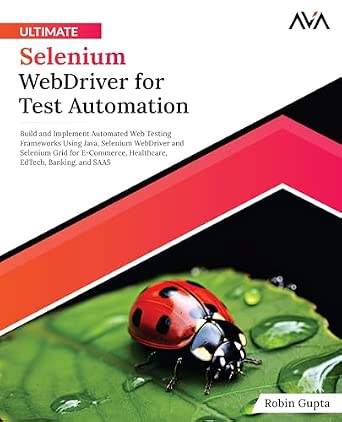 | Best for Enterprise Java Teams | Primary Tool: Selenium WebDriver | Language: Java | Scaling Coverage: Selenium Grid (parallel/distributed execution) | VIEW LATEST PRICE | See Our Full Breakdown |
| Automation Testing with Python & Selenium: From Beginner to Enterprise Frameworks with PyTest, CI/CD, Docker, Git, AI-Assisted Testing & Real-World Projects |  | Best Overall | Primary Tools: Python, Selenium, PyTest | DevOps Coverage: CI/CD, Docker, Git | AI Coverage: AI-assisted testing | VIEW LATEST PRICE | See Our Full Breakdown |
| Software Testing Unlocked – A Beginner’s Guide to QA & Automation |  | Best for Beginners | Structure: 20-step learning journey | Audience: Complete beginners | Coverage: QA fundamentals plus automation basics | VIEW LATEST PRICE | See Our Full Breakdown |
| AI for Quality Assurance and Software Testing: The Practitioner’s Complete Guide to AI-Powered Testing, Tools, and Transformation |  | Best for AI Transformation Strategy | Focus: AI-powered testing strategy and transformation | Audience: Practitioners, QA leads, managers | Coverage: AI testing tools, methodologies, process change | VIEW LATEST PRICE | See Our Full Breakdown |
| AI-Assisted QA and Software Testing with Claude Code |  | Best for Agentic AI Workflows | Core Technology: Anthropic’s Claude Code (agentic AI assistant) | Testing Scope: Unit, integration, and end-to-end | Workflow Style: AI-assisted test generation and execution | VIEW LATEST PRICE | See Our Full Breakdown |
| All You Need to Know About Software Testing: From Beginner to Job-Ready QA Engineer |  | Best for Career Changers | Topic Coverage: Manual testing, automation, APIs, Selenium, Playwright, CI/CD, AI-assisted QA | Audience Level: Beginner to job-ready | Focus: Career-oriented QA foundations | VIEW LATEST PRICE | See Our Full Breakdown |
| AI Testing with Python: Build Intelligent Test Automation Using Python, Selenium, APIs, PyTest, LLMs & AI-Powered Testing Tools |  | Best for AI-Forward Testers | Topic Coverage: AI-powered test automation, LLMs, Selenium, APIs, PyTest | Primary Language: Python | Audience Level: Intermediate to advanced | VIEW LATEST PRICE | See Our Full Breakdown |
| Software Testing with Python: Build Reliable, Maintainable Test Suites with pytest, unittest, Fixtures, Mocking, Integration Testing, Coverage, TDD, and Real-World Automation |  | Best for Python Foundations | Topic Coverage: pytest, unittest, fixtures, mocking, integration testing, coverage, TDD | Primary Language: Python | Audience Level: Beginner-advanced developers | VIEW LATEST PRICE | See Our Full Breakdown |
| Web Automation Testing Using Playwright: End-to-end, API, accessibility, and visual testing using Playwright (English Edition) |  | Best Playwright Practitioner’s Guide | Topic Coverage: End-to-end, API, accessibility, and visual testing | Primary Tool: Playwright | Audience Level: Developers and testers, beginner to intermediate | VIEW LATEST PRICE | See Our Full Breakdown |
| Python API Automation Testing: Requests, PyTest & AI for Real-World Projects |  | Best for API Testing Specialists | Topic Coverage: API automation testing with Python, requests, PyTest, and AI | Primary Language: Python | Audience Level: Intermediate to advanced | VIEW LATEST PRICE | See Our Full Breakdown |
| Ultimate Web Automation Testing with Cypress |  | Best for Modern JavaScript Teams | Format: Paperback / Kindle ebook | Primary Tool: Cypress | Focus: End-to-end web application testing | VIEW LATEST PRICE | See Our Full Breakdown |
| Scalable Test Automation with Playwright |  | Best for Enterprise Framework Builders | Format: Paperback / ebook | Primary Tool: Playwright | Focus: Scalable, enterprise-grade test automation frameworks | VIEW LATEST PRICE | See Our Full Breakdown |
| QA automation testing tool | Format | Focus |
|---|---|---|
| Ultimate Selenium WebDriver fo | Book (print/digital) | Framework design and implementation |
| Automation Testing with Python | Book (print/digital) | — |
| Software Testing Unlocked | Book (print/digital) | — |
| AI for Quality Assurance and S | Book (print/digital) | AI-powered testing strategy and transformation |
| AI-Assisted QA and Software Te | — | — |
| All You Need to Know About Sof | Book (digital listing) | Career-oriented QA foundations |
| AI Testing with Python: Build | Book (digital listing) | Intelligent test framework construction |
| Software Testing with Python: | Book (digital listing) | Reliable, maintainable test suites |
| Web Automation Testing Using P | Book | Practical Playwright techniques |
| Python API Automation Testing: | Book (digital listing) | Real-world API test automation |
| Ultimate Web Automation Testin | Paperback / Kindle ebook | End-to-end web application testing |
| Scalable Test Automation with | Paperback / ebook | Scalable, enterprise-grade test automation frameworks |
More Details on Our Top Picks
Ultimate Selenium WebDriver for Test Automation: Build and Implement Automated Web Testing Frameworks Using Java, Selenium WebDriver and Selenium Grid
This pick makes the most sense for Java-based QA teams working in regulated industries, because it’s the only entry in this lineup that pairs Selenium WebDriver with Selenium Grid for distributed, parallel test execution — a requirement the moment your suite runs into the thousands of tests. Compared with Automation Testing with Python & Selenium, it trades Python’s faster onboarding for Java’s enterprise staying power: stronger alignment with large banking and healthcare codebases, but a steeper first chapter for newcomers. The industry-specific chapters (e-commerce, healthcare, EdTech, SaaS) are what separate it from generic Selenium manuals, since framework design differs when audit trails and compliance enter the picture. The tradeoff is real, though: Java boilerplate makes examples longer, and the book assumes you already write comfortable Java.
Pros:- Framework-building focus rather than isolated Selenium commands
- Selenium Grid coverage for parallel and distributed execution
- Industry-specific chapters (e-commerce, healthcare, EdTech, banking, SaaS)
- Java examples align with large enterprise codebases
Cons:- Assumes working Java knowledge — not a programming primer
- No reader reviews yet, so quality is unverified by the market
- Java’s verbosity makes examples longer to work through than Python equivalents
Best for: Mid-to-senior QA engineers in Java shops, especially in banking, healthcare, or SaaS, who need Grid-scale framework design guidance
Not ideal for: Beginners or Python-first testers — the Java prerequisite and enterprise framing make it a frustrating starting point; newcomers should start with Software Testing Unlocked instead
- Primary Tool:Selenium WebDriver
- Language:Java
- Scaling Coverage:Selenium Grid (parallel/distributed execution)
- Focus:Framework design and implementation
- Industry Examples:E-commerce, Healthcare, EdTech, Banking, SaaS
- Experience Level:Intermediate to advanced
- Format:Book (print/digital)
Our verdict“Choose this if your team tests Java applications at enterprise scale and needs Grid-ready framework architecture, not tutorials.”
Automation Testing with Python & Selenium: From Beginner to Enterprise Frameworks with PyTest, CI/CD, Docker, Git, AI-Assisted Testing & Real-World Projects
This is the widest on-ramp in the batch, and that breadth is exactly why it earns the top slot. It walks a single path from beginner scripts to enterprise-grade PyTest frameworks, then layers in the surrounding tooling — CI/CD, Docker, Git — that separates hobby automation from something a team can actually maintain. Compared with Ultimate Selenium WebDriver for Test Automation, it covers a more modern, cloud-native toolchain, though it gives up the Java/Selenium Grid enterprise depth. Where Software Testing with Python goes deeper on pytest mechanics like fixtures and mocking, this one goes wider, folding in AI-assisted testing and real-world projects so readers graduate with portfolio-ready work. The tradeoff: breadth means some chapters skim topics that dedicated books cover exhaustively, and absolute non-programmers will still need a Python primer alongside it.
Pros:- Complete modern pipeline coverage: PyTest, CI/CD, Docker, and Git in one progression
- Real-world projects that double as portfolio material
- AI-assisted testing content keeps it current
- Genuinely spans beginner to advanced without assuming prior QA background
Cons:- Breadth over depth — several topics warrant their own dedicated book
- No customer ratings yet to validate quality
- Moves fast; readers with zero Python experience may struggle early on
Best for: Self-taught testers and career-switchers who want one resource that carries them from first script to a CI/CD-integrated, Dockerized framework
Not ideal for: Engineers who want deep mastery of one tool — pytest or Docker each get a chapter, not a book; pair it with a specialist title instead
- Primary Tools:Python, Selenium, PyTest
- DevOps Coverage:CI/CD, Docker, Git
- AI Coverage:AI-assisted testing
- Learning Path:Beginner to enterprise
- Projects:Real-world project walkthroughs included
- Format:Book (print/digital)
Our verdict“If you want a single volume that takes you from novice to a deployable automation framework, this is the strongest all-around choice.”
Software Testing Unlocked – A Beginner’s Guide to QA & Automation
Every roundup needs a true entry point, and this is it: a 20-step structured path aimed squarely at landing a first QA job. Unlike the other books here, it doesn’t assume you can code — it builds testing fundamentals before touching automation, which matters because most “beginner” automation titles quietly expect scripting experience. Compared with Automation Testing with Python & Selenium, which starts building frameworks within chapters, this one moves slower and covers the career-side groundwork: what QA roles actually involve and which skills interviewers probe. The flip side of that gentleness is real. Anyone past their first year will find the automation content thin next to Software Testing with Python or the Cypress and Playwright titles in this guide, and the lack of a detailed table of contents makes it hard to gauge depth before buying.
Pros:- Structured 20-step curriculum removes guesswork from self-study
- Teaches QA fundamentals before automation, unlike most tool-first books
- Explicitly oriented toward first-job readiness
- Low barrier to entry — no programming prerequisite
Cons:- Automation coverage is introductory; you’ll outgrow it quickly
- Sparse published detail on contents makes pre-purchase evaluation hard
- No reader reviews or ratings available
Best for: Career-changers and students targeting their first QA role who need fundamentals, not just tool syntax
Not ideal for: Working testers upgrading their automation skills — the pacing and foundational content will feel redundant; jump straight to a framework-focused title
- Structure:20-step learning journey
- Audience:Complete beginners
- Coverage:QA fundamentals plus automation basics
- Goal Orientation:First QA job preparation
- Prerequisites:None — no coding background required
- Format:Book (print/digital)
Our verdict“Start here if you’re brand new to QA and job-focused; switch to a framework book once you’ve landed the fundamentals.”
AI for Quality Assurance and Software Testing: The Practitioner’s Complete Guide to AI-Powered Testing, Tools, and Transformation
This option stands out for a different reason than everything else here: it’s about where testing is heading, not how to write today’s scripts. Positioned against AI Testing with Python, which teaches hands-on implementation with LLMs and Selenium, this book operates at the practitioner and transformation level — evaluating AI-powered testing tools, restructuring test processes, and making the case for change to stakeholders. That makes it the right read for a QA lead drafting an AI adoption roadmap, and the wrong read for someone who wants runnable code by chapter three. Compared with AI-Assisted QA and Software Testing with Claude Code, it covers the whole AI tooling landscape rather than one assistant’s workflow, which is more durable as tools churn. The drawback: strategy books age fast in this space, and the technical bar excludes juniors who’d benefit from Software Testing Unlocked first.
Pros:- Tool-agnostic survey of the AI testing landscape rather than a single vendor’s pitch
- Covers process transformation, not just tools — useful for stakeholder buy-in
- Written for practitioners, so it assumes and respects real QA experience
- Covers current AI testing methodologies and techniques
Cons:- AI tooling content risks dating quickly as the market shifts
- Too technical and strategic for beginners
- Little hands-on exercise content for readers who learn by building
Best for: QA leads, test architects, and engineering managers evaluating AI testing tools and planning team-wide adoption
Not ideal for: Junior testers and hands-on learners — it’s conceptual rather than tutorial-driven, and beginners will get more from a fundamentals title first
- Focus:AI-powered testing strategy and transformation
- Audience:Practitioners, QA leads, managers
- Coverage:AI testing tools, methodologies, process change
- Hands-On Content:Limited — conceptual emphasis
- Tool Scope:Broad survey across AI testing tools
- Format:Book (print/digital)
Our verdict“Buy this to plan your team’s AI testing strategy; skip it if what you need tonight is working automation code.”
AI-Assisted QA and Software Testing with Claude Code
Where the rest of this roundup teaches conventional frameworks, this entry bets on a different workflow entirely: an AI agent writing and running your unit, integration, and end-to-end tests for you. That’s a genuinely distinct proposition. Compared with AI for Quality Assurance and Software Testing, which surveys the AI landscape from a strategy altitude, this gets tactical with one specific assistant — you’ll finish with a working agentic pipeline rather than a vendor evaluation matrix. The tradeoffs are the sharpest in the lineup, though. Tying your testing practice to one AI assistant’s capabilities and pricing is a commitment that could shift under you, the documentation on platform compatibility is thin, and you still need solid AI-tool fluency to get good output — this amplifies a skilled tester rather than replacing the learning that Automation Testing with Python & Selenium provides.
Pros:- Covers unit, integration, and end-to-end testing in one agentic workflow
- Concrete, tactical guidance on a specific tool rather than abstract AI theory
- Can dramatically cut test-authoring time for experienced users
- Points toward where test automation workflows are heading
Cons:- Locked to one AI assistant — capability and pricing changes outside your control
- Requires prior familiarity with AI coding tools to be productive
- Sparse documentation on supported platforms and compatibility
Best for: Experienced developers and automation engineers already comfortable with AI coding tools who want to offload test authoring to an agent
Not ideal for: QA newcomers and teams with strict tool-approval processes — the AI prerequisite is real, and unclear compatibility and pricing details make procurement and onboarding risky
- Core Technology:Anthropic’s Claude Code (agentic AI assistant)
- Testing Scope:Unit, integration, and end-to-end
- Workflow Style:AI-assisted test generation and execution
- Prerequisites:Familiarity with AI coding assistants
- Platform Compatibility:Not clearly documented
- Pricing Model:Unclear / not published
Our verdict“A forward-looking pick for AI-fluent engineers who want an agent to write their tests — everyone else should build conventional framework skills first.”
All You Need to Know About Software Testing: From Beginner to Job-Ready QA Engineer
Most titles in this lineup assume you already write code — this one doesn’t, which is exactly why it earns a slot. Rather than drilling into a single tool, it walks the full QA career path: manual testing fundamentals, automation basics, APIs, Selenium, Playwright, CI/CD, and even AI-assisted QA. That breadth is the tradeoff. Compared with Software Testing with Python, the depth on any one framework is thinner, and experienced testers will find the early chapters slow. But for someone moving into QA from a non-technical role, that scaffolding is the point. It pairs well as a prerequisite read before jumping into the narrower, code-heavy picks in this roundup.
Pros:- Covers the complete path from manual testing to automation and CI/CD
- Includes modern tooling like Selenium, Playwright, and AI-assisted QA
- Beginner-friendly entry point that doesn’t assume prior coding experience
- Orients readers toward employability, not just tool mechanics
Cons:- Breadth comes at the cost of depth on any single framework
- Lacks clear format and edition details, which makes comparison shopping harder
Best for: Career changers and aspiring QA engineers who need the full journey from manual testing basics to job-ready automation skills
Not ideal for: Experienced automation engineers who already know testing fundamentals and want deep, single-tool coverage
- Topic Coverage:Manual testing, automation, APIs, Selenium, Playwright, CI/CD, AI-assisted QA
- Audience Level:Beginner to job-ready
- Focus:Career-oriented QA foundations
- Format:Book (digital listing)
- Primary Language:English
- Tools Featured:Selenium, Playwright, CI/CD pipelines, AI testing tools
Our verdict“If you’re starting a QA career from scratch and want one book to frame the whole field before specializing, this is the on-ramp.”
AI Testing with Python: Build Intelligent Test Automation Using Python, Selenium, APIs, PyTest, LLMs & AI-Powered Testing Tools
Where All You Need to Know About Software Testing treats AI as one chapter near the end, this book puts LLMs and AI-powered testing at the center of the framework you’re building. That makes it the strongest choice in this batch for testers who already know Python, Selenium, and PyTest and want to fold intelligent tooling into their stack rather than bolt it on later. The tradeoff is the on-ramp: compared with Software Testing with Python, it assumes far more upfront fluency, and beginners will likely stall on the LLM material. There’s also no ratings history to lean on, so you’re buying on topic fit alone. For mid-career automation engineers, that risk is worth it — the skill combination is still rare and valuable.
Pros:- Treats AI and LLMs as core framework components, not an afterthought
- Combines Selenium, APIs, and PyTest into a single intelligent automation stack
- Targets a rare, high-demand skill combination
- Practical, code-driven examples rather than theory
Cons:- Technical content may overwhelm readers new to Python automation
- No customer reviews or ratings to verify quality before buying
- No pricing visibility in the listing
Best for: Mid-level Python automation engineers who want to build LLM-enhanced test frameworks and stay ahead of the AI testing curve
Not ideal for: Beginners without solid Python and PyTest foundations — the AI material stacks on top of assumed knowledge
- Topic Coverage:AI-powered test automation, LLMs, Selenium, APIs, PyTest
- Primary Language:Python
- Audience Level:Intermediate to advanced
- Focus:Intelligent test framework construction
- Format:Book (digital listing)
- AI Tools Covered:LLM-based testing tools and integrations
Our verdict“If you already automate in Python and want AI baked into your framework rather than sprinkled on top, this is the most direct path in the roundup.”
Software Testing with Python: Build Reliable, Maintainable Test Suites with pytest, unittest, Fixtures, Mocking, Integration Testing, Coverage, TDD, and Real-World Automation
This is the craft book of the batch. Instead of chasing the newest tool, it teaches the discipline that makes any tool work: fixtures, mocking, coverage, TDD, and suite maintainability. Compared with AI Testing with Python, it skips the LLM hype entirely and goes deeper on pytest and unittest mechanics — which matters because brittle, unmaintainable suites are the number one reason automation projects fail. Developers who inherit messy legacy test code will get more from this than from any framework-specific title here. The catch: it’s developer-oriented rather than QA-career-oriented, so if you want browser automation strategy or CI/CD pipelines, pair it with a Playwright or Selenium book from this lineup rather than expecting it here.
Pros:- Deep, focused coverage of pytest and unittest fundamentals
- Emphasizes maintainability and TDD, the skills that prevent suite rot
- Real-world automation examples rather than toy snippets
- Covers mocking, fixtures, and coverage — the parts most tutorials skip
Cons:- No browser automation or CI/CD strategy coverage
- No customer ratings available to gauge reader reception
- Assumes existing Python proficiency
Best for: Python developers who need to write clean, maintainable test suites and want to master pytest, mocking, and TDD properly
Not ideal for: QA engineers focused on browser or end-to-end automation strategy — the scope stays inside Python testing practice
- Topic Coverage:pytest, unittest, fixtures, mocking, integration testing, coverage, TDD
- Primary Language:Python
- Audience Level:Beginner-advanced developers
- Focus:Reliable, maintainable test suites
- Format:Book (digital listing)
- Includes:Real-world automation examples
Our verdict“If your test suites break every sprint and you want to fix the craft, not just the tool, this is the most focused book in the roundup.”
Web Automation Testing Using Playwright: End-to-end, API, accessibility, and visual testing using Playwright (English Edition)
Among the Playwright titles in this roundup, this one earns its place through breadth of testing type. It’s not just end-to-end scripts — it covers API testing, accessibility checks, and visual regression inside Playwright, which is the difference between automating happy paths and building a real safety net. Compared with Scalable Test Automation with Playwright, which leans toward enterprise framework architecture, this book is more hands-on and technique-driven, making it the better fit for teams adopting Playwright for the first time. Accessibility coverage is a genuine differentiator — few testing books address it at all, and it’s increasingly a compliance requirement. The tradeoff: readers wanting large-scale framework design patterns will outgrow it and need the enterprise-oriented alternative.
Pros:- Covers four testing types: end-to-end, API, accessibility, and visual
- Accessibility testing guidance is rare and increasingly required
- Practical, implementation-focused rather than architectural
- Suits both developers and dedicated QA testers
Cons:- Less focus on enterprise-scale framework design patterns
- No customer ratings available in the listing
- No pricing information provided
Best for: Testers and developers adopting Playwright who want end-to-end, API, accessibility, and visual testing in one practical guide
Not ideal for: Engineers building large multi-team frameworks — the enterprise-scale Playwright title in this roundup serves that goal better
- Topic Coverage:End-to-end, API, accessibility, and visual testing
- Primary Tool:Playwright
- Audience Level:Developers and testers, beginner to intermediate
- Focus:Practical Playwright techniques
- Edition:English Edition
- Format:Book
Our verdict“If you want one book that shows everything Playwright can actually test — not just page clicks — this is the most complete practitioner’s option here.”
Python API Automation Testing: Requests, PyTest & AI for Real-World Projects
This pick narrows the lens where others widen it, and that’s its strength. Browser UIs are the slowest, flakiest layer to automate — this book concentrates on the API layer, where tests run fast and catch bugs earliest. It has a tighter scope than AI Testing with Python, which spreads across Selenium, APIs, and LLMs; here, requests, PyTest, and AI integration all serve one purpose: building production-grade API suites against real-world project scenarios. Backend-heavy QA engineers and developers will find that focus refreshing compared with the broader titles in this roundup. The downside: no stated prerequisites and an advanced lean, so newcomers should start with All You Need to Know About Software Testing before touching this one.
Pros:- Focused on API testing, the fastest and most stable automation layer
- Real-world project examples rather than isolated snippets
- Combines requests, PyTest, and AI integration in one workflow
- Practical orientation toward production testing efficiency
Cons:- No prerequisites listed, so gauging fit before buying is difficult
- Content may be too advanced for those new to automation
- Narrow scope — no UI or end-to-end testing coverage
Best for: Backend-focused QA engineers and developers who need fast, reliable API test automation with real project examples
Not ideal for: Beginners — the content assumes prior testing knowledge and unstated prerequisites make it a rough first book
- Topic Coverage:API automation testing with Python, requests, PyTest, and AI
- Primary Language:Python
- Audience Level:Intermediate to advanced
- Focus:Real-world API test automation
- AI Integration:Included for testing efficiency and accuracy
- Format:Book (digital listing)
Our verdict“If your job is automating backend tests and you want depth over breadth, this is the sharpest API-focused option in the batch.”
Ultimate Web Automation Testing with Cypress
Among the JavaScript-focused titles in this lineup, this one stands out for going beyond basics into end-to-end testing strategies that actually speed up a QA cycle. Compared with the broader Selenium WebDriver book, which leans on Java and grid infrastructure, this option zeroes in on Cypress — a framework whose real-time reloads and time-travel debugging make flaky tests far easier to diagnose. The tradeoff is ecosystem scope: Cypress historically struggles with multi-tab and cross-browser edge cases where Selenium still wins, and the book doesn’t pretend otherwise. It also doesn’t spell out prerequisites, so readers arriving from a non-JavaScript background — say, those finishing the beginner-level Software Testing Unlocked guide — may hit a wall mid-book.
Best suited to teams already committed to a JavaScript stack who want depth rather than breadth.
Pros:- Deep, focused coverage of Cypress automation techniques rather than surface-level tool tours
- Emphasizes end-to-end strategies that measurably reduce manual regression effort
- Real-time feedback and debugging workflows translate directly into faster test triage
- Scales in usefulness from intermediate learners to experienced testers refining their approach
Cons:- No stated prerequisites, so readers can’t easily gauge whether they’re prepared
- Later chapters may overwhelm complete beginners without JavaScript fundamentals
- Cypress-specific focus limits portability if your team later standardizes on a different framework
Best for: QA engineers and frontend developers on JavaScript/Node.js teams who want to build reliable end-to-end test suites in Cypress
Not ideal for: Testers working in Java or Python shops, or complete beginners with no JavaScript background — the content ramps up quickly without prerequisite guidance
- Format:Paperback / Kindle ebook
- Primary Tool:Cypress
- Focus:End-to-end web application testing
- Skill Level:Beginner to advanced (JavaScript knowledge assumed)
- Core Topics:Test automation strategies, QA efficiency, debugging
- Audience:QA professionals and web developers
Our verdict“Pick this if your stack is JavaScript-first and you want a single-framework deep dive; skip it if you need cross-language breadth or true beginner scaffolding.”
Scalable Test Automation with Playwright
Where the other Playwright title in this roundup — Web Automation Testing Using Playwright — teaches the tool itself, this book targets a harder problem: building frameworks that survive enterprise scale. That distinction matters. Quick-start knowledge gets a team started; architecture patterns for maintainability, parallelization, and cross-project reuse are what keep suites from rotting at the two-year mark. Compared with the Cypress book, this pick suits organizations managing many products across browsers, since Playwright’s multi-browser engine and language bindings fit heterogeneous environments better. The cost is accessibility — this is firmly intermediate-to-advanced material, and readers fresh from Software Testing Unlocked will likely find it dense. The enterprise-grade framing is genuine, not marketing gloss, but it assumes you already know what a fragile framework feels like.
Pros:- Focuses on scalability and maintainability, the areas where most automation projects fail
- Enterprise-grade patterns apply across large multi-product portfolios
- Playwright’s cross-browser, multi-language support fits heterogeneous tech stacks
- Practical framework-design guidance rather than API documentation rehash
Cons:- Too technical for beginners — assumes prior automation experience
- Sparse feature and specification detail makes it hard to preview scope before buying
- Overkill for solo projects or small teams that don’t need enterprise architecture
Best for: Senior QA engineers and automation leads designing test frameworks for large, multi-team organizations with long-lived codebases
Not ideal for: Hobbyist testers or those wanting a first Playwright tutorial — the framework-architecture focus assumes experience with pain at scale
- Format:Paperback / ebook
- Primary Tool:Playwright
- Focus:Scalable, enterprise-grade test automation frameworks
- Skill Level:Intermediate to advanced
- Core Topics:Framework architecture, scalability patterns, best practices
- Audience:Automation engineers and QA architects on large-scale projects
- Project Scope:Enterprise and multi-team environments
Our verdict“This is the framework-architecture pick for teams whose automation has outgrown tutorials; beginners should start with a gentler Playwright or general QA title first.”

How We Picked
I evaluated each resource against five buyer-relevant criteria: tool relevance in 2026 (whether Selenium, Playwright, Cypress or AI-assisted workflows match current industry demand), depth beyond basics (framework architecture, CI/CD integration, scalability versus quick-start tutorials), audience fit (career switchers, working QA engineers, enterprise teams), practical applicability (real-world projects, industry-specific scenarios, hands-on exercises), and value for money relative to what a reader can realistically absorb and apply.
The ranking reflects a simple philosophy: resources that teach transferable engineering judgment — maintainable test suites, scalable frameworks, CI/CD pipelines — outrank those that teach a single tool in isolation. That’s why the Selenium and Playwright framework-building guides sit near the top, generalist Python automation guides fill the value tier, and beginner or AI-specialist guides rank based on how well they serve their narrower audiences rather than competing head-on with the enterprise picks.
| QA automation testing tool | Format |
|---|---|
| Ultimate Selenium WebDriver fo | Book (print/digital) |
| Automation Testing with Python | Book (print/digital) |
| Software Testing Unlocked | Book (print/digital) |
| AI for Quality Assurance and S | Book (print/digital) |
| AI-Assisted QA and Software Te | — |
| All You Need to Know About Sof | Book (digital listing) |
| AI Testing with Python: Build | Book (digital listing) |
| Software Testing with Python: | Book (digital listing) |
| Web Automation Testing Using P | Book |
| Python API Automation Testing: | Book (digital listing) |
| Ultimate Web Automation Testin | Paperback / Kindle ebook |
| Scalable Test Automation with | Paperback / ebook |
Factors to Consider When Choosing QA Automation Testing Tools
Beyond the individual rankings, choosing the right QA automation learning resource involves matching your current skill level and career direction to the right tooling ecosystem. These are the factors I’d weigh before buying any of the guides above.Pick Your Tool Ecosystem Before Your Book
The single biggest decision is which automation ecosystem to invest in, because switching later costs months. Selenium remains the safest bet for enterprise job markets — it appears in more job postings and legacy codebases than anything else — but it demands more setup discipline. Playwright is the modern challenger with faster execution, auto-waiting and built-in API testing, making it the smarter choice for greenfield projects. Cypress sits in between: excellent developer experience but weaker cross-browser support for non-Chromium engines. A common mistake is buying a tool-specific guide before confirming which tools your target employers or current team actually use.
Match Depth to Your Career Stage
Beginners routinely overbuy, purchasing enterprise framework guides that assume working knowledge of programming and CI pipelines. If you can’t yet write a basic test script, a job-readiness or beginner QA guide will deliver more value in three months than an advanced Playwright architecture book will in a year. Conversely, experienced testers under-buy, grabbing quick-start tutorials that repackage free documentation. The tell-tale sign of an appropriately leveled resource: it should feel slightly uncomfortable, introducing concepts like fixtures, mocking or parallel execution that stretch you without assuming knowledge you lack.
Language Choice Compounds Over Time
Most guides in this space teach either Java or Python, and the choice shapes everything downstream — your test maintainability, hiring pool and AI-tooling compatibility. Python dominates AI-assisted testing and offers gentler syntax, which is why five of the twelve guides here lean on PyTest. Java remains stronger in large regulated enterprises (banking, insurance) where existing infrastructure is JVM-based. If you plan to explore AI-powered testing, Python is nearly mandatory since most LLM and ML testing libraries are Python-first. Don’t treat language as neutral plumbing; it’s a career decision.
Prioritize CI/CD and Framework Design Coverage
The resources that deliver lasting value are the ones teaching framework architecture — page object models, fixture design, parallel execution, Docker-based test environments — not just scripting syntax. Tool syntax changes; the engineering patterns for keeping large test suites maintainable do not. Before buying, check the table of contents for CI/CD integration, version control workflows and scalable runner configuration. A guide that ends at ‘here’s how to click a button’ will leave you stranded the moment your suite passes a few hundred tests and runtime balloons.
Decide How Much AI Coverage You Actually Need
AI-assisted testing is genuinely changing QA work, but the hype exceeds current practical maturity. Three guides in this lineup focus on AI, and they’re worth buying only if you already understand what good test design looks like — AI tools amplify your judgment, they don’t replace it. For most buyers, a single guide with an AI chapter (like the Python & Selenium enterprise guide) provides enough exposure, while dedicated AI titles suit leads and architects evaluating tool adoption. The mistake to avoid: buying AI-first resources hoping to skip fundamentals, which produces testers who can prompt tools but can’t diagnose why tests fail.
Factor in Industry-Specific Requirements
Regulated industries impose constraints generic guides ignore. The Selenium enterprise guide earns its ranking partly because it addresses banking, healthcare and e-commerce scenarios — compliance, data handling, audit trails — that mainstream tutorials skip. If you work in fintech or health tech, prioritize resources covering security testing, test data management and traceability. For SaaS and startup environments, speed-oriented tooling like Playwright or Cypress with strong CI/CD coverage matters more than regulatory depth. Buying for your actual industry, not an abstract ideal, is the difference between knowledge you deploy next month and knowledge that sits unused.
Frequently Asked Questions
Should I learn Selenium or Playwright in 2026?
If job market breadth matters most, learn Selenium first — it still dominates enterprise job postings, legacy test suites and regulated industries where rewriting infrastructure is impractical. If you’re building automation from scratch or joining a modern stack, Playwright is the stronger technical choice: faster execution, better auto-waiting, and unified API, accessibility and visual testing in one framework. Many senior QA engineers now know both, using Selenium for maintaining existing suites and Playwright for new work. My practical advice is to check the last six months of job listings in your target market and follow the majority, since local demand varies more than global trends suggest.
Do I need to know programming before starting QA automation?
You need some programming, but less than most people fear — basic variables, loops, functions and reading documentation covers the entry bar. The guides ranked as beginner-friendly in this lineup deliberately pace the coding alongside testing concepts so neither overwhelms. What genuinely blocks people isn’t syntax but testing fundamentals: understanding what to automate, how to design test cases, and diagnosing flaky tests. If you lack both, start with a job-readiness QA guide before touching framework-building books, because automation layered on weak test design produces fast, confident, wrong results.
Is Cypress still worth learning given Playwright’s rise?
Cypress remains worth learning if your current team or target employers use it — it still powers a large installed base and offers arguably the best developer experience for JavaScript-heavy teams. The honest caveat is that Playwright has overtaken Cypress in cross-browser support, multi-tab/multi-origin handling and language flexibility, which explains why two Playwright guides made this list against one Cypress title. If you’re choosing fresh with no constraints, Playwright is the forward-looking pick; Cypress knowledge pays off mainly for maintaining existing suites or teams already invested in its ecosystem. Neither choice is a dead end, since the underlying skills — selectors, assertions, CI integration — transfer almost entirely.
How much should I invest in AI-assisted testing skills right now?
Treat AI testing skills as a strong differentiator rather than a foundation — valuable, but only after core automation competence. The three AI-focused guides in this roundup suit QA leads, architects and engineers whose organizations are actively evaluating AI tooling, where being the in-house expert materially advances your career. For early-career testers, a guide with an AI chapter provides sufficient exposure while you build fundamentals, because AI tools currently amplify test design judgment rather than replace it. The risk of over-investing now is chasing tools that will look different in twelve months; the risk of ignoring AI entirely is falling behind peers who can produce test suites several times faster. A chapter-level investment today, escalating to dedicated study when your team adopts specific tools, balances both risks.
Can I get a QA automation job with only one of these guides?
One well-chosen guide plus hands-on projects can land an entry automation role, but the guide choice matters enormously. The job-readiness oriented resources in this lineup are designed exactly for that path, covering interview preparation, portfolio projects and the testing theory hiring managers probe. The enterprise framework guides, excellent as they are, assume knowledge entry-level candidates don’t have and won’t substitute for fundamentals. What actually gets interviews is a public portfolio: a GitHub repo with a maintainable test framework, CI pipeline and clear README demonstrates more than any certificate. Use one guide to build that portfolio properly rather than skimming three superficially.
Conclusion
For best overall, Ultimate Selenium WebDriver for Test Automation earns the top spot on enterprise relevance, framework depth and cross-industry applicability — it’s the resource most aligned with what employers actually run. The best value pick is Automation Testing with Python & Selenium, which packs CI/CD, Docker and AI exposure into one Python-based path that keeps multiple career doors open. Best premium choice goes to Scalable Test Automation with Playwright for engineers investing in the modern stack, with Web Automation Testing Using Playwright as its lighter generalist sibling. For beginners, Software Testing Unlocked and the Job-Ready QA Engineer guide build foundations before tool-specific depth. Specific needs round out the map: AI for Quality Assurance and AI-Assisted QA with Claude Code for future-focused specialists, Python API Automation Testing for API-first testers, Software Testing with Python for suite maintainability purists, and Ultimate Web Automation with Cypress for teams anchored in the Cypress ecosystem. Match the pick to your ecosystem and career stage, and you can’t go far wrong.
Halloween Picks

JOYIN 5-Foot Halloween Animatronic Drinking Skeleton

27FT Giant Inflatable Pumpkin Lighted Outdoor Halloween Decor

Spirit Halloween 4 ft 7 in Sitting Scarecrow Animatronic
As an affiliate, we earn on qualifying purchases.