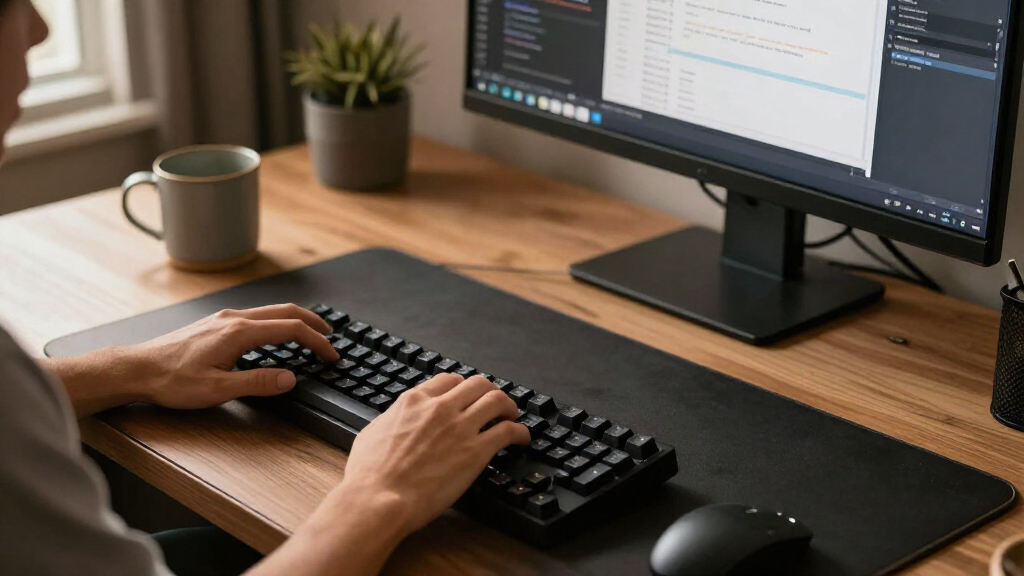

The best programmable macro keyboard for most developers is the Logitech MX Creative Console, which pairs customizable keys with a compact control surface. The Doohoeek 25-key keypad offers more room for layered commands, while the VSD K1 Pro adds LCD keys and knobs for visual, hands-on control. The main tradeoffs are key count versus desk space, wired simplicity versus wireless flexibility, and how much setup your shortcuts require. I compare all 14 options by programming flexibility, layout, connectivity, and fit for coding tasks. Read on for the full breakdown and recommendations by workflow.

Get business pricing on monitors, keyboards and dev gear
- Business-only prices and quantity discounts
- Tax-exempt purchasing
- Multiple users, one account, clear invoices
Key Takeaways
- The MX Creative Console is the strongest all-rounder: its customizable keys and compact control surface suit developers who want a mix of shortcuts and hands-on controls without a large keypad.
- More keys favor layered workflows, not every desk: the Doohoeek 25-key and Koolertron 45- and 48-key models offer room for more commands, but take more space and may be excessive for a short daily macro set.
- Dials and knobs serve distinct tasks: the VSD K1 Pro and several Koolertron or dual-knob pads suit workflows that benefit from continuous adjustment, while simple keypads are a better match for text snippets and command triggers.
- Small pads can be better developer tools: the SIKAI CASE 6-key and PCsensor 3-key options prioritize a few repeatable actions, making them easier to place beside a standard keyboard than one-handed mini boards.
- Connectivity and software shape the real fit: Bluetooth and tri-mode choices add placement flexibility, but developers should check operating-system support and programming workflow before valuing wireless features over a reliable setup.
| Logitech MX Creative Console with 9 Customizable Keys, Graphite |  | Best Overall for App-Aware Workflows | Customizable keys: 9 LCD keys | Controls: Control dial, roller, programmable keypad | Connectivity: USB-C | VIEW LATEST PRICE | See Our Full Breakdown |
| Doohoeek Tri-Mode Programmable 25-Key Macro Keypad for Windows | 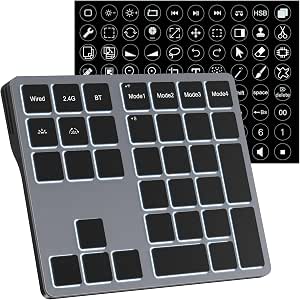 | Best Wireless Value for Windows | Programmable keys: 25 | Connectivity: Bluetooth 5.0, 2.4 GHz wireless, wired | Compatibility: Windows devices | VIEW LATEST PRICE | See Our Full Breakdown |
| Logitech MX Keypad Programmable Macro Pad, Graphite |  | Best for Developer App Profiles | Customizable keys: 9 LCD keys | Connectivity: USB-C | Compatible devices: Laptop, PC | VIEW LATEST PRICE | See Our Full Breakdown |
| SIKAI CASE 6-Key Programmable Macro Mechanical Keypad |  | Best Compact Companion Pad | Programmable keys: 6 | Switches: Hot-swappable; Cherry MX model listed | Connectivity: USB-C | VIEW LATEST PRICE | See Our Full Breakdown |
| Koolertron 45-Key One-Handed Programmable Mechanical Gaming Keyboard |  | Best for Large Macro Banks and Layers | Programmable keys: 45 | Macro buttons: 24 (12 advanced, 12 quick) | Maximum macro commands: 792 | VIEW LATEST PRICE | See Our Full Breakdown |
| Vaydeer 9-Key One-Handed Programmable Mechanical Keypad |  | Best for Layered App Shortcuts | Programmable keys: 9 | Customizable layers: 6 | Connectivity: USB-A, corded | VIEW LATEST PRICE | See Our Full Breakdown |
| HUION Keydial Mini Bluetooth Programmable Keypad with Dial and 18 Shortcut Keys |  | Best Wireless Dial for Creative Coding | Shortcut keys: 18 programmable keys | Dial: Supports up to 3 functions | Connectivity: Bluetooth 5.0 | VIEW LATEST PRICE | See Our Full Breakdown |
| PCsensor 3-Key Wireless Programmable Mechanical Keypad with RGB Backlighting |  | Best Minimal Macro Pad | Programmable keys: 3 | Connectivity: Bluetooth wireless; USB cable | Switches: Clicky Cherry MX Blue | VIEW LATEST PRICE | See Our Full Breakdown |
| VSD K1 Pro Programmable Macro Keyboard with 6 LCD Keys and 3 Knobs |  | Best Full-Size Developer Keyboard | Layout: 87-key QWERTY | LCD keys: 6 | Knobs: 3 multifunction knobs | VIEW LATEST PRICE | See Our Full Breakdown |
| Koolertron 16-Key Programmable Mechanical Keypad with 3 Knobs |  | Best Compact Controls for Windows and Mac | Programmable keys: 16 | Knobs: 3 | Macro capacity: Up to 16 macros, 500 characters each | VIEW LATEST PRICE | See Our Full Breakdown |
| Koolertron One-Handed Mechanical Gaming Keyboard, 48-Key Programmable Mini Keypad |  | Best for High-Volume Shortcuts | Keys: 48 programmable keys | Macro capacity: Up to 32 macros; up to 255 characters per macro | Switch type: Red switch | VIEW LATEST PRICE | See Our Full Breakdown |
| 12-Key Programmable Mechanical Macro Pad with RGB Backlighting and Dual Knobs |  | Best for Knob-Based Controls | Keys: 12 programmable mechanical keys | Knobs: 2 programmable knobs | Switch type: Clicky | VIEW LATEST PRICE | See Our Full Breakdown |
| VSD M18 Programmable Macro Pad with 18 Keys |  | Best for Visual Command Labels | Keys: 18 total: 15 LCD keys and 3 physical buttons | Connectivity: USB-C | Power: USB powered | VIEW LATEST PRICE | See Our Full Breakdown |
| XPPen ACK05 Mini Wireless Shortcut Keyboard with Dial |  | Best for Portable, Multi-Device Setups | Keys: 10 | Programmable shortcuts: Up to 40 across four sets | Connectivity: Bluetooth 5.0, Bluetooth dongle, or USB cable | VIEW LATEST PRICE | See Our Full Breakdown |
| programmable macro keyboards for developer | Connectivity |
|---|---|
| Logitech MX Creative Console w | USB-C |
| Doohoeek Tri-Mode Programmable | Bluetooth 5.0, 2.4 GHz wireless, wired |
| Logitech MX Keypad Programmabl | USB-C |
| SIKAI CASE 6-Key Programmable | USB-C |
| Koolertron 45-Key One-Handed P | USB-C |
| Vaydeer 9-Key One-Handed Progr | USB-A, corded |
| HUION Keydial Mini Bluetooth P | Bluetooth 5.0 |
| PCsensor 3-Key Wireless Progra | Bluetooth wireless; USB cable |
| VSD K1 Pro Programmable Macro | Wired USB-C |
| Koolertron 16-Key Programmable | USB-C |
| Koolertron One-Handed Mechanic | Mini USB and USB |
| 12-Key Programmable Mechanical | Wireless receiver or USB-C |
| VSD M18 Programmable Macro Pad | USB-C |
| XPPen ACK05 Mini Wireless Shor | Bluetooth 5.0, Bluetooth dongle, or USB cable |
More Details on Our Top Picks
Logitech MX Creative Console with 9 Customizable Keys, Graphite
The MX Creative Console suits developers who want programmable shortcuts alongside hands-on control for fine adjustments. Its nine LCD keys can show their assigned actions, while the dial and roller add navigation and adjustment controls that a keypad-only option like the Logitech MX Keypad lacks. App profiles and up to 15 keypad pages help keep actions organized as work shifts between supported tools, including Figma, DaVinci Resolve, and Zoom. That breadth is useful in a mixed creative-and-development workflow, though the supplied details do not call out specific developer tools such as VS Code or IntelliJ. The tradeoff is reliance on Logi Options+ and a wired USB-C connection. Compared with the wireless Doohoeek, this is less flexible to place away from a computer, but its visual keys and dial offer more direct feedback.
Pros:- LCD keys provide visual labels for assigned actions.
- Control dial and roller add tactile navigation and adjustment.
- Profiles and up to 15 keypad pages support different app workflows.
- Integrates with a range of creative and productivity apps.
Cons:- Requires Logi Options+ for customization.
- USB-C connectivity does not offer wireless placement.
- The provided app integrations emphasize creative and productivity tools rather than named developer environments.
Best for: Developers who regularly switch among supported apps and want labeled shortcuts plus a physical dial for navigation or adjustment.
Not ideal for: Developers who need wireless operation, Linux support, or a keypad focused specifically on coding-tool integrations.
- Customizable keys:9 LCD keys
- Controls:Control dial, roller, programmable keypad
- Connectivity:USB-C
- Compatible operating systems:Windows 10 or later; macOS
- Compatible devices:Laptop, PC
- Keypad pages:Up to 15
- Enclosure material:Plastic
- Recycled plastic content:72% for Graphite
Our verdict“Choose this if you want clearly labeled, app-profiled shortcuts with a dial; skip it if wireless use or developer-specific integrations matter most.”
Doohoeek Tri-Mode Programmable 25-Key Macro Keypad for Windows
The Doohoeek is the flexible choice for Windows developers who want a larger bank of macros without being tied to a cable during daily use. Its 25 programmable keys and four switchable layouts make room for separate sets of commands, snippets, or shortcuts; onboard memory keeps configured layouts available when switching from wired setup to wireless operation. That is a different priority from the Logitech MX Creative Console, which has fewer keys but adds an LCD display, dial, and roller for more visible, hands-on control. The Doohoeek instead gives key quantity and three connection modes: Bluetooth, 2.4 GHz, and wired. The compromises are meaningful for developers: it is Windows-only, requires Windows 11 according to the supplied compatibility data, and customization must be done while wired. It makes less sense for cross-platform teams or anyone who wants setup to be wireless too.
Pros:- 25 programmable keys provide room for commands, snippets, and shortcuts.
- Four switchable layouts can be saved onboard.
- Bluetooth, 2.4 GHz wireless, and wired modes offer placement flexibility.
- Adjustable seven-color backlighting can help distinguish layouts.
Cons:- Compatibility is limited to Windows devices.
- Macro configuration must be performed in wired mode.
- The supplied minimum operating system is Windows 11.
Best for: Windows 11 developers who want many dedicated macro keys, multiple saved layouts, and the option to use the keypad wirelessly.
Not ideal for: macOS or Linux developers, and anyone who needs to edit macros away from a wired connection.
- Programmable keys:25
- Connectivity:Bluetooth 5.0, 2.4 GHz wireless, wired
- Compatibility:Windows devices
- Minimum operating system:Windows 11
- Switchable layouts:4
- Backlighting:7 colors; high, medium, and low brightness
- Keyboard layout:QWERTY
- Color:Black
Our verdict“Pick this for a Windows setup that benefits from many wireless macro keys and saved layouts, but choose another model for Mac or Linux.”
Logitech MX Keypad Programmable Macro Pad, Graphite
This MX Keypad is the most directly developer-focused pick here: its app-aware profiles are described for VS Code, IntelliJ, and Slack, so actions can change with the application rather than staying fixed across the desktop. The nine customizable LCD keys suit a curated set of commands, scripts, or multi-step actions, while Logi Actions SDK support gives developers a route to custom app plugins. Compared with the Doohoeek’s 25 physical keys, the MX Keypad offers fewer assignments at once, but its display keys and automatic profile switching can make a smaller set easier to identify and maintain. It also differs from the MX Creative Console by focusing on programmable keys rather than listing a dial or roller. Its main costs in flexibility are USB-C-only connectivity and dependence on Logi Options+; some third-party AI actions also need an internet connection and provider account.
Pros:- App-aware profiles can switch layouts between applications.
- LCD keys support macros, scripts, and multi-step actions.
- Named integrations include VS Code, IntelliJ, and GitHub Copilot.
- Logi Actions SDK supports custom app plugins.
Cons:- Requires Logi Options+ for setup and customization.
- Connects by USB-C cable rather than wirelessly.
- Third-party AI features may require internet access and a provider account.
Best for: Windows or macOS developers who use VS Code or IntelliJ and prefer app-specific, labeled shortcuts over a large fixed key bank.
Not ideal for: Developers who need wireless connectivity, Linux compatibility, or more than nine directly visible programmable keys.
- Customizable keys:9 LCD keys
- Connectivity:USB-C
- Compatible devices:Laptop, PC
- Compatible operating systems:Windows 10 or later; macOS 10.13 High Sierra or later
- Orientation:Ambidextrous
- Features:Backlit display keys, hotkeys, media keys, customizable profiles and macros
- Enclosure material:Plastic
- Color:Graphite
Our verdict“Choose this for app-specific coding shortcuts and custom integrations, unless you need wireless use or a larger key count.”
SIKAI CASE 6-Key Programmable Macro Mechanical Keypad
The SIKAI CASE is for developers who need a small cluster of recurring actions beside a regular keyboard, not a second keyboard packed with layers of controls. Its six hot-swappable mechanical keys can hold a compact set of shortcuts, app launches, media controls, or text snippets, and onboard memory lets those assignments travel to another computer. That makes it a leaner desk companion than the 25-key Doohoeek or 45-key Koolertron, but its limits are unusually restrictive for code-heavy use: macros are capped at five characters, and configuration requires Windows even though saved shortcuts can be used on Windows, Mac, Linux, and Vista. Compared with the Logitech MX Keypad, it lacks LCD labels and app-aware profiles, but offers switch swapping and a minimal footprint. Pick it for a few short, stable commands; skip it for scripts or long command sequences.
Pros:- Compact six-key layout sits alongside a standard keyboard.
- Hot-swappable switches allow switch changes.
- Onboard memory stores up to six shortcuts.
- Saved assignments can be used across Windows, Mac, Linux, and Vista.
Cons:- Macro configuration requires a Windows computer.
- Each macro is limited to five characters.
- Six keys provide less room than the Doohoeek or Koolertron macro banks.
Best for: Developers who want a tiny wired companion for a handful of short shortcuts and need saved assignments to work across different operating systems.
Not ideal for: Developers who need long text expansions, extensive macros, app-aware profiles, or a setup process that works without Windows.
- Programmable keys:6
- Switches:Hot-swappable; Cherry MX model listed
- Connectivity:USB-C
- Macro configuration:Requires Windows
- Onboard memory:Up to 6 shortcuts
- Maximum macro length:5 characters
- Supported operating systems for saved shortcuts:Windows, Mac, Linux, Vista
- Keyboard layout:QWERTY
Our verdict“Choose this for a minimal set of short, portable shortcuts; avoid it if your developer macros need more than five characters.”
Koolertron 45-Key One-Handed Programmable Mechanical Gaming Keyboard
The Koolertron is the capacity pick for developers who want a broad bank of one-handed commands rather than a small set of labeled actions. It packs 45 programmable keys, including 24 macro buttons, and supports four configuration layers stored on the device. That lets one keypad cover different projects or applications without changing hardware. The programmable rotary knob adds press and turn actions for navigation or media control, giving it more physical controls than the SIKAI CASE’s six-key layout. Compared with the Doohoeek, the Koolertron offers many more keys and layers but uses USB-C rather than wireless modes. Its red mechanical switches and customizable RGB are a different focus from the LCD labels on the Logitech MX Creative Console: you gain density, not a visual display of each assignment. It is also a one-handed keypad, not a replacement for a full keyboard, and has no water resistance.
Pros:- 45 programmable keys include 24 macro buttons.
- Four configuration layers are stored on the keyboard.
- Rotary knob supports programmable press and turn actions.
- Works with Windows and macOS.
Cons:- USB-C connectivity offers no wireless placement option.
- One-handed keypad design does not replace a full-size keyboard.
- Not water resistant.
Best for: Developers who want many dedicated shortcuts across several projects or workflows and have room for a one-handed keypad beside their main keyboard.
Not ideal for: Developers who need wireless connectivity, a full-size keyboard replacement, water resistance, or LCD labels for their assignments.
- Programmable keys:45
- Macro buttons:24 (12 advanced, 12 quick)
- Maximum macro commands:792
- Configuration layers:4
- Switch type:Red mechanical switches
- Connectivity:USB-C
- Backlighting:Customizable RGB
- Compatible operating systems:Windows, macOS
- Water resistance:Not water resistant
Our verdict“Choose this for a dense, layered macro setup with a rotary control, but look elsewhere if you need wireless use or visible LCD labels.”
Vaydeer 9-Key One-Handed Programmable Mechanical Keypad
The Vaydeer makes sense for developers who want a small, dedicated bank of commands rather than another full keyboard. Its nine programmable keys and six customizable layers let you keep separate shortcut sets for coding, debugging, and other apps, while the floating function display helps identify the active assignments. Compared with the PCsensor 3-Key keypad, it offers more room for command groups; unlike the Koolertron 16-Key, it gives up knobs and seven keys in exchange for a smaller footprint. The tradeoff is a firm platform limit: it requires Windows 10 or later, so Mac and Linux developers should skip it. Nine keys also suit focused shortcuts, not broad macro libraries, and its USB-A wired connection is less flexible than wireless options.
Pros:- Six customizable layers can keep shortcuts organized by application or workflow.
- Floating function display shows the current key assignments.
- Nine programmable keys support macros and simultaneous key presses.
- Compact USB-A wired design is easy to connect and carry.
Cons:- Limited to Windows 10 or later.
- Nine keys restrict it to focused shortcut sets rather than extensive command libraries.
Best for: Windows developers who want a compact, app-specific shortcut pad with several manually or automatically switched command layers.
Not ideal for: Mac or Linux developers, and anyone who needs many dedicated commands, rotary controls, or a wireless setup.
- Programmable keys:9
- Customizable layers:6
- Connectivity:USB-A, corded
- Operating system:Windows 10 or later
- Key layout:QWERTY
- Hand orientation:Ambidextrous
- Switch options:Linear, clicky, or tactile
- Additional features:Macros, hotkeys, media controls, floating function display, settings import and export
Our verdict“Choose the Vaydeer if you work on Windows and value six switchable shortcut layers more than a large key count or knobs.”
HUION Keydial Mini Bluetooth Programmable Keypad with Dial and 18 Shortcut Keys
The HUION Keydial Mini suits developers who use a dial for adjustable values alongside a bank of shortcuts—for example, moving through timelines, changing brush settings, or scrubbing media while coding. Its 18 programmable keys offer more direct commands than the Vaydeer 9-Key, and its dial can switch among three functions. Bluetooth and a stated battery life of up to 70 hours also make it easier to place away from a crowded desk. The tradeoff is that custom shortcuts depend on HUION’s driver and compatible software, so this is less appealing for developers who want a self-contained, universally configurable macro pad. It supports up to five-key anti-ghosting, which may limit simultaneous inputs compared with a standard keyboard. The ABS body favors portability over a more substantial desktop feel.
Pros:- Eighteen programmable keys provide a broad shortcut bank in a compact format.
- Dial switches among three functions for adjustable controls.
- Bluetooth 5.0 avoids adding another cable to the desk.
- Ambidextrous design and a stated battery life of up to 70 hours support flexible placement.
Cons:- Custom shortcuts require the HUION driver and compatible software support.
- Anti-ghosting supports up to five keys.
- ABS enclosure may feel less substantial than a desktop mechanical keypad.
Best for: Developers who work across Mac and Windows and want wireless shortcut access plus a dial for adjusting or scrubbing controls.
Not ideal for: Linux users, buyers seeking a driver-independent macro pad, or workflows that require more than five simultaneous key presses.
- Shortcut keys:18 programmable keys
- Dial:Supports up to 3 functions
- Connectivity:Bluetooth 5.0
- Anti-ghosting:Up to 5 keys
- Battery life:Up to 70 hours
- Compatible systems:Mac OS 10.12 Sierra or later; Windows 7 or later
- Dimensions:5.74 × 3.65 × 0.42 in
- Enclosure:ABS
Our verdict“Pick the HUION if you want a wireless, cross-platform shortcut pad with a dial and can work within its software and five-key anti-ghosting limits.”
PCsensor 3-Key Wireless Programmable Mechanical Keypad with RGB Backlighting
The PCsensor is for developers who want a tiny, dedicated set of commands without giving desk space to a larger pad. Each of its three keys can trigger combinations, mouse actions, shortcuts, or text strings, making it useful for a few repeated tasks such as inserting boilerplate or invoking a debugging command. It stands apart from the Vaydeer 9-Key by taking a deliberately minimal approach, while its clicky Cherry MX Blue switches give each press clear tactile and audible feedback. Bluetooth operation keeps it portable, and the included USB-C cable allows charging or wired use. That small footprint comes with a real ceiling: three keys cannot organize a broad command set without relying on combinations. Setup is also required on Windows or macOS before use with other devices, so its broad listed compatibility is not completely plug-and-play.
Pros:- Keys can trigger combinations, shortcuts, mouse actions, and text strings.
- Bluetooth operation and wired USB use provide flexible connection options.
- Clicky Cherry MX Blue switches are rated for up to 50 million keystrokes.
- Compact ABS enclosure includes RGB backlighting.
Cons:- Three keys make it unsuitable for large banks of dedicated commands.
- Setup on Windows or macOS is required before use with other listed devices.
- Clicky switches may be distracting in shared or quiet workspaces.
Best for: Developers who need only a few frequently used macros, text snippets, or mouse actions and want a very small wireless pad.
Not ideal for: Anyone building a large shortcut library, seeking quiet switches, or expecting direct configuration on a phone or tablet.
- Programmable keys:3
- Connectivity:Bluetooth wireless; USB cable
- Switches:Clicky Cherry MX Blue
- Programmable actions:Key combinations, hotkeys, shortcuts, mouse actions, and text strings
- Backlighting:RGB
- Battery:Rechargeable; claimed up to 3 months of use after a 2-hour charge
- Compatible systems:Windows, Linux, macOS, Android, and iOS
- Dimensions:3 × 1.5 × 0.5 in
- Warranty:1 year
Our verdict“Choose the PCsensor for a handful of repeatable macros in the smallest footprint, not for a full developer shortcut system.”
VSD K1 Pro Programmable Macro Keyboard with 6 LCD Keys and 3 Knobs
The VSD K1 Pro is the broadest workstation choice here: rather than adding a small macro pad beside a normal keyboard, it combines an 87-key layout with six customizable LCD keys and three knobs. The LCD labels can make macros easier to identify, while switchable pages let developers group commands by task. Compared with the Koolertron 16-Key, it offers a complete typing layout and visual key displays, but takes up more desk space and requires a wired connection. Its hot-swappable switches, gasket mount, and five-layer dampening also give it more appeal as a daily typing keyboard than the smaller keypads. There are practical limits: screen-image and date/time customization requires software and a wired connection on Windows or macOS, it is not water resistant, and USB-C-to-USB-C cables are not included.
Pros:- Six LCD keys can display custom labels for easier macro recognition.
- Three multifunction knobs add controls for adjustable commands.
- Hot-swappable 3-pin and 5-pin switches allow changes without soldering.
- Gasket mount and five-layer sound dampening support daily typing comfort.
Cons:- Full 87-key layout takes more desk space than dedicated compact pads.
- Screen-image and date/time customization requires software and a wired connection.
- Not water resistant, and a USB-C-to-USB-C cable is not included.
Best for: Developers who want one full-size mechanical keyboard with labeled macro keys, knobs, and switchable command pages.
Not ideal for: Shoppers seeking a compact companion keypad, wireless operation, or a spill-resistant keyboard.
- Layout:87-key QWERTY
- LCD keys:6
- Knobs:3 multifunction knobs
- Connectivity:Wired USB-C
- Compatible systems:Windows 10 or later; macOS 11 Big Sur or later
- Switches:Linear Red mechanical; hot-swappable 3-pin and 5-pin
- Backlighting:RGB
- Adjustable stand angles:3°, 6°, and 13°
- Water resistance:Not water resistant
Our verdict“Choose the VSD K1 Pro if you want a full-size daily keyboard with visible macro labels and knobs, rather than a compact add-on pad.”
Koolertron 16-Key Programmable Mechanical Keypad with 3 Knobs
The Koolertron 16-Key is a practical middle ground for developers who want more than a few macro buttons but do not need the VSD K1 Pro’s full typing layout. It pairs 16 programmable keys with three knobs, giving command shortcuts and adjustable controls separate physical inputs. Six stored layers help organize different apps or workflows, and support for up to 16 macros of 500 characters each suits repeated sequences and text entry. Compared with the PCsensor 3-Key, this is far better suited to a larger command set; compared with the VSD K1 Pro, it saves space but lacks LCD labels and a full keyboard. Its limitations are clear: Linux is unsupported, the plastic enclosure is not water resistant, and blue mechanical switches may be too clicky for quiet offices.
Pros:- Six key-command layers organize shortcuts for different applications or tasks.
- Three knobs add physical controls alongside the 16 programmable keys.
- Supports up to 16 macros of 500 characters each.
- Hot-swappable blue switches allow switch replacement without soldering.
Cons:- Linux is not supported.
- Plastic enclosure is not water resistant.
- Blue mechanical switches may be too loud for quiet work areas.
Best for: Windows or Mac developers who want a compact macro bank with knobs and multiple stored command layers.
Not ideal for: Linux users, anyone needing a full typing keyboard or LCD-labeled commands, and people who need spill protection.
- Programmable keys:16
- Knobs:3
- Macro capacity:Up to 16 macros, 500 characters each
- Key-command layers:6
- Connectivity:USB-C
- Compatible systems:Windows and macOS; Linux not supported
- Switches:Blue mechanical; hot-swappable
- Dimensions:6 × 1.5 × 1.5 in
- Enclosure and water resistance:Plastic; not water resistant
Our verdict“Pick the Koolertron for a compact Windows or Mac command center with layers and knobs, provided Linux support and quieter switches are not priorities.”
Koolertron One-Handed Mechanical Gaming Keyboard, 48-Key Programmable Mini Keypad
For developers who want a dedicated bank of commands rather than a handful of hotkeys, the Koolertron 48-key keypad offers the most physical keys in this group. Its 32 macro capacity and macros of up to 255 characters can hold repeated code snippets, command sequences, or application shortcuts, while onboard memory keeps settings when the keypad moves between computers. The red switches and anti-ghosting suit frequent, rapid input; four unprinted replacement keycaps also help mark priority commands. Compared with the 12-Key Programmable Mechanical Macro Pad, this model gives up knobs and wireless flexibility in exchange for far more keys. That tradeoff favors dense, tactile command layouts, but the one-handed design is an adjunct, not a replacement for a regular keyboard, and compatibility is limited to Windows 7 or later.
Pros:- 48 programmable keys provide room for a large, labeled command layout.
- Supports up to 32 macros, each outputting up to 255 characters.
- Onboard memory retains settings when moved between computers.
- Anti-ghosting and replaceable unprinted keycaps support accurate, customized input.
Cons:- Compatibility is limited to Windows 7 or later.
- The one-handed layout cannot replace a standard keyboard.
- Wired USB connectivity offers less placement flexibility than wireless options.
Best for: Windows developers who want many dedicated mechanical keys for code snippets, build commands, and repetitive shortcuts without taking up a full keyboard-sized area.
Not ideal for: Mac or Linux developers, and anyone seeking a standalone full-size keyboard or wireless setup.
- Keys:48 programmable keys
- Macro capacity:Up to 32 macros; up to 255 characters per macro
- Switch type:Red switch
- Connectivity:Mini USB and USB
- Power:USB powered
- Compatibility:Windows 7 or later
- Key travel:2 ± 0.6 mm
- Materials:Metal and plastic
Our verdict“Choose this Koolertron if you use Windows and want the largest dedicated mechanical shortcut bank in this set; skip it if you need cross-platform support or wireless operation.”
12-Key Programmable Mechanical Macro Pad with RGB Backlighting and Dual Knobs
This 12-key macro pad with dual knobs suits developers who want a compact set of shortcuts plus hands-on controls for tasks like scrolling, volume, or other assigned functions. Its wireless receiver and USB-C connection make it easier to place than the wired Koolertron 48-key keypad, while stored configurations can carry between compatible computers. The key count is far lower, so it works better as a focused control surface than as a large bank of code snippets. A key setup caveat shapes its cross-platform appeal: configuration software must first be extracted and set up on Windows, even though the configured pad can work with macOS, Linux, and Raspberry Pi. Clicky switches provide clear feedback, but may be distracting in a quiet shared workspace; wireless operation also depends on a battery.
Pros:- Two programmable knobs add tactile controls beyond the 12 keys.
- Wireless receiver and USB-C connectivity support flexible placement.
- Stores its configuration for use with other compatible computers.
- Adjustable RGB backlighting helps distinguish key functions.
Cons:- Configuration software must be extracted and set up on a Windows computer.
- Only 12 keys are available for dedicated shortcuts.
- Wireless operation requires a battery.
Best for: Developers who want a small, movable shortcut pad with two assignable knobs for scrolling, volume, or other recurring controls.
Not ideal for: Buyers who need dozens of dedicated keys, quiet switches, or a configuration workflow that does not require access to Windows.
- Keys:12 programmable mechanical keys
- Knobs:2 programmable knobs
- Switch type:Clicky
- Backlighting:Adjustable RGB
- Connectivity:Wireless receiver or USB-C
- Compatible operating systems:Windows, macOS, Linux, and Raspberry Pi after Windows setup
- Power:Battery powered
- Layout:QWERTY
Our verdict“Pick this pad if two knobs matter as much as your shortcuts and you can configure it on Windows; choose the Koolertron 48-key model for a much larger command bank.”
VSD M18 Programmable Macro Pad with 18 Keys
The VSD M18 makes sense when developers want shortcuts that are easy to identify at a glance: its 15 LCD keys accept custom images and animations, alongside three physical buttons for actions or multi-step shortcuts. Custom icons can distinguish build, test, navigation, and debugging commands without relying on memorized positions. Compared with the 12-Key Programmable Mechanical Macro Pad, the M18 adds six controls and visual labels, but gives up wireless operation and dual knobs. Its clock, calendar, weather, stopwatch, and reminder plugins add utility, though those extras may matter less than shortcut access in a code-focused setup. USB-C power keeps it straightforward to connect, but native Linux plug-and-play is unavailable, and supported systems start at Windows 11 or macOS 11.
Pros:- Fifteen LCD keys support custom JPG, PNG, and GIF images.
- Three additional physical buttons can trigger single actions or multi-step shortcuts.
- Built-in plugins include clock, calendar, weather, stopwatch, and reminders.
- Adjustable RGB light ring and ambidextrous orientation suit varied desk layouts.
Cons:- Native Linux plug-and-play support is not available.
- Compatibility starts at Windows 11 or macOS 11.0.
- USB-C connection and USB power limit placement compared with wireless options.
Best for: Developers who prefer visual, changeable labels for a moderate set of shortcuts and use a supported Windows or macOS computer.
Not ideal for: Linux users who need plug-and-play support, or developers who want a wireless pad, mechanical switches, or physical knobs.
- Keys:18 total: 15 LCD keys and 3 physical buttons
- Connectivity:USB-C
- Power:USB powered
- Compatibility:Windows 11 or newer; macOS 11.0 or newer
- Supported key image formats:JPG, PNG, and GIF
- Lighting:Adjustable RGB light ring
- Orientation:Ambidextrous
- Water resistance:Water repellent
Our verdict“Choose the M18 if custom visual key labels are more useful to you than knobs or wireless freedom, and your computer runs a supported operating system.”
XPPen ACK05 Mini Wireless Shortcut Keyboard with Dial
At 75 g, the XPPen ACK05 is the most portable choice here for developers who move between desks or work with a tablet alongside a computer. Its ten keys can hold up to 40 shortcuts across four sets, and the dial adds a continuous control suited to zooming or adjusting values in compatible software. Bluetooth, a dongle, and USB cable give it more connection options than the wired VSD M18; the tradeoff is a smaller key bank and scissor switches rather than the mechanical feel of the Koolertron 48-key keypad. The dial and layout may be especially useful in visual development tools, but a dial does not replace a larger set of dedicated code commands. Key customization requires driver setup, and iOS or iPad use requires the Shortcut Remote app.
Pros:- Bluetooth, Bluetooth dongle, and USB cable provide three connection options.
- Ten keys support up to 40 shortcuts across four sets.
- Dial offers tactile control for functions such as zoom and brush size.
- Lightweight, ambidextrous design is easy to carry and position.
Cons:- Driver installation and configuration are required to customize shortcuts.
- iOS and iPad use requires the Shortcut Remote app.
- Scissor switches offer a different, less mechanical feel than the Koolertron keypad.
Best for: Developers and technical creatives who carry a shortcut controller between computers or tablets and want a dial for zoom or other continuous adjustments.
Not ideal for: Developers who want mechanical key switches, a large fixed bank of commands, or iOS/iPad support without installing an additional app.
- Keys:10
- Programmable shortcuts:Up to 40 across four sets
- Connectivity:Bluetooth 5.0, Bluetooth dongle, or USB cable
- Switch type:Scissor switch
- Battery capacity:1000 mAh
- Battery life:About 300 hours
- Weight:75 g
- Compatibility:Windows, macOS, and Linux; iOS/iPadOS with Shortcut Remote app
- Dimensions:3.94 × 3.15 × 0.79 in
Our verdict“Choose the ACK05 for portable shortcuts and dial control across devices; pick the Koolertron 48-key keypad if your priority is a dense mechanical command layout.”
How We Picked
I ranked these keyboards around developer workflows rather than gaming or general desktop use. The main criteria were how clearly each layout supports frequent commands, whether its keys, layers, dials, or knobs can map to useful actions, and how much desk space it asks for. I also weighed wired and wireless options by the flexibility they offer, while treating software compatibility and programming setup as essential checks for any buyer.
The order favors a balance of usable controls, adaptable layouts, and a manageable footprint. A larger keypad can be a better choice for developers who maintain several macro groups, but size alone does not make it a stronger pick. Compact pads rank well for focused workflows, while models with dials, LCD keys, or wireless operation earn a place when those additions solve a clear task. Because detailed software and operating-system capabilities can vary, I recommend verifying current compatibility before purchase.
Factors to Consider When Choosing Programmable Macro Keyboards For Developers
The right macro keyboard depends less on how many keys it has and more on how you plan to trigger commands. I’d start by mapping your actual workflow, then check whether the device’s programming method, footprint, and connection suit your computer and desk.
Map Your Repeated Actions Before Choosing a Key Count
Write down the commands you repeat across a normal workday: code snippets, terminal commands, window controls, or actions in an editor. Separate single-step triggers from tasks that need several stages or different profiles. A small pad is often easier to learn when you only have a few high-frequency actions. Larger boards make more sense when you can name specific commands for most of the available keys. A common mistake is buying extra keys on the assumption that more buttons automatically make work faster. Unassigned controls add little value, and a crowded layout can make frequently used actions harder to find.
Check How Macros Are Programmed and Stored
Macro keyboards differ in how users assign actions, create layers, and manage profiles. Before choosing one, check whether configuration happens in an app, through onboard controls, or by entering key combinations. Find out whether settings are stored on the device or depend on software running on your computer. That distinction matters if you switch between workstations, use a locked-down work machine, or reinstall your operating system. Do not assume that the word programmable means every key can run arbitrary scripts. For complex developer automation, confirm the available actions and software compatibility before treating a macro pad as a substitute for a scripting tool.
Choose Dials Only for Work That Benefits From Continuous Control
A dial or knob earns its space when an action changes gradually, such as adjusting a value, scrolling through a long document, or controlling media. For commands that are either triggered or not, dedicated keys are usually easier to map and remember. Think about whether your editor, terminal, or other daily software can make use of rotary input; support can vary by application and configuration. A device with several knobs may look versatile but can leave controls unused if your workflow has no natural rotary actions. Developers who mostly launch snippets or keyboard shortcuts may get more from extra keys instead. Choose the control type around the action, not the feature list.
Balance Desk Footprint Against Reach and Muscle Memory
A compact keypad can sit beside a full-size keyboard without changing your typing position much. A one-handed board with dozens of keys occupies more room, but may group a broad set of commands in one place. Consider which hand will operate the pad and whether you need to keep that hand on a mouse or another device. Also think about whether key spacing and layout will help you recognize commands by touch or require repeated visual checks. Buyers often focus on total key count and overlook reach, cable routing, and the space needed for a comfortable typing posture. A layout that stays within easy reach is more useful than a larger one that disrupts your desk arrangement.
Treat Wireless Operation as a Workflow Choice
Wireless connectivity can make a keypad easier to place, move, or share between setups. Tri-mode designs offer more connection options, while wired models avoid battery management and can suit a permanent workstation. Before paying extra attention to wireless flexibility, check which connection types work with your computer and whether the programming software supports your operating system. Consider whether the device will stay at one desk or travel with a laptop. If it rarely moves, a cable may be the simpler choice. If you switch work locations often, a wireless model can justify its added setup and charging considerations.
Decide Whether Visual Labels and Lighting Solve a Real Problem
LCD keys, backlighting, and visible labels can make a set of changing shortcuts easier to scan. They are most useful when you use several profiles or need different controls for different applications. If your macros stay fixed, a simpler set of physical keys may be easier to learn and maintain. Check how profiles are identified and whether labels update with the active configuration; visual controls help only when they accurately reflect what a key does. Lighting can help locate keys in a dim room, but it does not replace a clear layout. Prioritize features that reduce mistakes in your workflow over features that mainly add visual complexity.
Frequently Asked Questions
Can a macro keyboard run developer scripts, or does it only send keystrokes?
That depends on the device and its configuration software. Some pads focus on sending keystrokes or recorded sequences, while others may support additional actions through software or integrations. A keyboard shortcut that launches a script can be enough for many developer workflows, but it is different from running arbitrary code directly on the keypad. Check the supported action types and whether the required software can stay active on your computer. If you rely on complex automation, test that workflow before committing to a specific model.
Will a programmable macro keypad work with both Windows and macOS?
Do not assume cross-platform support from the hardware alone. A keypad may send standard keystrokes on multiple systems while its configuration app or profile features support only certain operating systems. Check the manufacturer’s current compatibility information for both setup and everyday use. Also confirm how the device handles different modifier keys and whether you can save separate layouts for each computer. This matters most if you switch between a personal Mac and a Windows work machine.
Should I choose a small macro pad or a one-handed keyboard with many keys?
Choose a small pad if you have a short list of frequent actions and want a low-footprint companion to your main keyboard. A one-handed board makes more sense when you can define enough useful commands to fill its layout or want a dedicated control surface for a particular application. Think through where it will sit and whether your hand can reach the controls without interrupting typing or mouse use. More keys can reduce layer switching, but they can also make a pad harder to place and learn. Start with your actual command list rather than the largest key count available.
Are knobs or dials useful for coding, or should I prioritize more keys?
Knobs help when your workflow includes actions that change incrementally, such as scrolling, adjusting a value, or controlling another supported function. They offer less benefit for macros that simply trigger a command or paste a snippet. Before choosing a dial-equipped pad, confirm that your intended application and configuration method can use rotary input as you expect. If most of your shortcuts are discrete actions, additional keys may be easier to assign and remember. A hybrid layout suits buyers who can identify clear uses for both control types.
What should I check before buying a wireless macro keyboard for a work computer?
Check whether your workplace permits the setup software, since some managed computers restrict new applications or peripheral configuration. Confirm that the keyboard can retain its assignments when disconnected from the computer or moved to another workstation. Review which wireless connection types it supports and how it is powered, especially if the device will travel with a laptop. If you cannot install software on your work computer, ask whether initial setup can be completed elsewhere and whether the saved profiles will remain usable. A wired model may be simpler when the keypad will stay at one desk.
Conclusion
For most developers, I’d start with the Logitech MX Creative Console as the best overall balance of customizable keys and additional controls. The Doohoeek 25-key keypad is my best value-style pick for buyers who want room for a wider set of macros, while the VSD K1 Pro is the best premium-style choice for people who specifically want LCD keys and knobs. Beginners who only need a handful of repeatable commands should look at a simpler compact option such as the SIKAI CASE 6-key keypad. For specific needs, choose a larger Koolertron one-handed model for a dense command layout, or a dial-equipped option such as the XPPen ACK05 when rotary control and wireless placement matter. Before deciding, verify software compatibility and make sure the layout matches actions you will actually use.