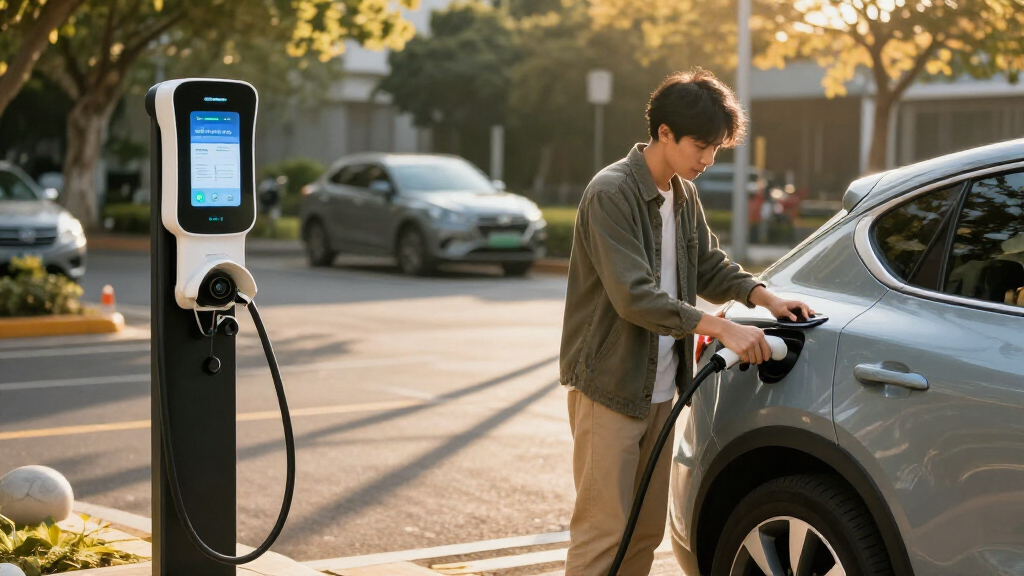
The best EV charging stations balance charging speed, installation needs, connector fit, and the way you actually park. My best overall pick is the Emporia Level 2 WiFi EV Charger, a strong match for drivers who want a high-output hardwired unit with app connectivity. The Autel MaxiCharger 80A stands out for homes prepared for unusually high power, while the Enphase HCS-D40 is the distinctive choice for charging two vehicles from one station. The main tradeoffs are hardwired versus plug-in installation, higher amperage versus electrical-panel capacity, and single-port convenience versus shared charging. Read on for the full comparison and guidance on choosing a station that fits your vehicle and home.

Get business pricing on monitors, keyboards and dev gear
- Business-only prices and quantity discounts
- Tax-exempt purchasing
- Multiple users, one account, clear invoices
Key Takeaways
- The Emporia 48A WiFi charger is my best overall pick for a balance of high charging output, app features, and a familiar J1772 connector; its hardwired setup is less flexible than a plug-in unit.
- High amperage only helps when the vehicle and home wiring can use it. The Autel 80A and Grizzl-E Ultimate 80A are specialized choices, not automatic upgrades for every household.
- Dual-port chargers solve a different problem than faster single-port models. The Enphase HCS-D40 and REV+ prioritize sharing a circuit across two cars.
- Connector choice can outweigh smart features. The Autel 50A NACS model fits NACS-equipped vehicles directly, while most models here use J1772.
- Plug-in and hardwired options serve different installation plans. The Autel MaxiCharger 40A, Grizzl-E Avalanche, and EVIQO use NEMA 14-50 plugs; many higher-output picks require hardwiring.




| EV charging station | Cable length | Connector | Installation | Warranty |
|---|---|---|---|---|
| EV Range Commercial Level 2 EV | 25 ft | J1772 | — | 2 years |
| PRIMECOM.TECH Level 2 Smart EV | — | — | Hardwired | — |
| EVwallbox Level 2 EV Charger w | 25 ft | SAE J1772 | — | — |
| Emporia Level 2 WiFi EV Charge | 25 ft | SAE J1772 | Hardwired with whip | 3 years |
| Autel MaxiCharger Level 2 EV C | 25 ft | — | — | 3 years |
| Grizzl-E Avalanche Edition Lev | 24 feet | — | — | — |
| Autel Level 2 Smart EV Charger | 25 feet | NACS | Hardwired, wall-mounted | 3 years |
| Autel MaxiCharger 80A Level 2 | 25 feet | SAE J1772 | Hardwired | — |
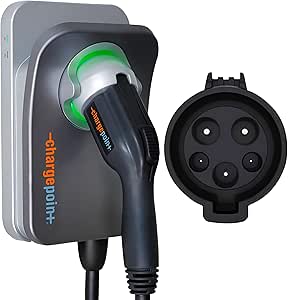
| ChargePoint Home Flex Level 2 | 23 feet | J1772 | Hardwired | 3 years |
| Enphase HCS-D40 Dual-Port Leve | 25 feet per cable | — | — | — |
| REV+ Dual-Port Level 2 EV Char | 18 ft | J1772 | Hardwired or NEMA 14-50 plug | — |
| Grizzl-E Ultimate Level 2 EV C | — | J1772 | Hardwired | 3 years |
| EVIQO Level 2 J1772 EV Charger | 25 ft | J1772 | — | 3 years |
| Lectron Nexus J1772 Level 2 EV | 23 ft | J1772 | Hardwired | — |
| Grizzl-E Ultimate 48A Level 2 | 25 ft | J1772 | Hardwired, wall mount | 3 years |
More Details on Our Top Picks
EV Range Commercial Level 2 EV Charging Station, 32A, 240V, J1772, OCPP 1.6J
EV Range’s commercial focus sets it apart from home-oriented choices such as the Autel MaxiCharger 40A: it supports OCPP 1.6J, RFID or app access, and networked payments, so operators can manage access and collect charging revenue. Its 25-foot cable and wall-or-pedestal mounting give drivers more reach across a parking space, while the NEMA 4, IK10-rated enclosure is suited to exposed, higher-use locations. The tradeoff is its 32A output, which is lower than the 40A and 48A home chargers here, and a pedestal must be purchased separately. Payment and network tools also require sign-up. I’d choose it for a shared site where access and billing matter more than maximizing a single vehicle’s charging rate.
Pros:- Supports OCPP 1.6J, app payments, custom pricing, and idle fees for commercial use.
- RFID and app access provide options for fleets and public users.
- NEMA 4 enclosure with IK10 impact resistance suits demanding installations.
- 25-foot cable and wall-or-pedestal mounting offer flexible placement.
Cons:- 32A output is lower than the 40A Autel MaxiCharger and 48A Emporia charger.
- Pedestal is not included for freestanding installations.
- Network and payment features require sign-up; Tesla vehicles need an adapter.
Best for: Small businesses, property operators, and fleet managers who need managed access and payment features at a shared charging location.
Not ideal for: Homeowners seeking the highest charging output or a simple charger without network enrollment; Tesla drivers who do not have a J1772 adapter.
- Charging level:Level 2
- Output:32A, 240V AC
- Connector:J1772
- Cable length:25 ft
- Ports:1
- Network protocol:OCPP 1.6J
- Access:RFID or app
- Enclosure:Polycarbonate, NEMA 4, IK10
- Warranty:2 years
Our verdict“Choose EV Range for a shared or commercial site where payment management and rugged construction matter more than maximum charging speed.”
PRIMECOM.TECH Level 2 Smart EV Home Charging Station, 50 Amp, Hardwired, 50-Foot Cord
The 50-foot cord is the defining reason to choose this PRIMECOM.TECH charger: it can reach a vehicle parked farther from the installation point than the 25-foot cables on the Emporia 48A and Autel MaxiCharger 40A. Its listed 50A output also puts it above those two options for maximum current, provided the home electrical setup supports it. The tradeoff is that this is a hardwired installation, so it does not offer the outlet-based flexibility of the Autel plug-in model. The product data lists two ports, but does not explain how they share power or operate simultaneously; buyers should verify that detail before relying on dual-vehicle charging. I’d shortlist it when cable reach is the main constraint, not when simple installation or clearly documented smart features are the priority.
Pros:- 50-foot cord offers substantially more reach than the 25-foot cables on the Emporia and Autel chargers.
- Listed 50A capacity supports higher current than the 40A Autel MaxiCharger.
- Compatible with Tesla and other EVs according to the product data.
- Compact listed dimensions of 11 × 4 × 7 inches.
Cons:- Hardwired installation limits relocation and calls for suitable electrical work.
- Product data does not clarify how its two ports share output or support simultaneous charging.
- The supplied information does not specify app functions or a warranty.
Best for: EV owners with a hardwired home setup whose parking spaces are unusually far from the intended charger location.
Not ideal for: Renters or homeowners who need a plug-in unit, or households that need confirmed simultaneous charging behavior from two ports.
- Charging level:Level 2
- Maximum current:50A
- Voltage:220V input; 240V output listed
- Installation:Hardwired
- Cord length:50 ft
- Ports:2
- Dimensions:11 × 4 × 7 in
- Weight:14 lb
- Certifications:CE, NEMA
Our verdict“Pick this model when a very long cord and hardwired 50A setup solve a real parking-layout problem, after confirming how its two ports work.”
EVwallbox Level 2 EV Charger with J1772 Connector, 40 Amp 9.6 kW, 25ft Cable, Smart App Control, ETL Certified
EVwallbox combines a 40A output with plug-in installation, making it a middle ground between the hardwired Emporia 48A and the 40A plug-in Autel MaxiCharger. Its NEMA 14-50 plug can suit homes that already have a compatible receptacle, while the app, scheduling, adjustable current, and 4.3-inch display give owners several ways to monitor and manage a charge. The 25-foot J1772 cable is practical for typical home parking, though it cannot match the 50-foot reach of PRIMECOM.TECH. Its 40A ceiling also falls short of Emporia’s 48A maximum. The listed ETL certification and IP65 weather protection support indoor or outdoor placement, but buyers without a NEMA 14-50 outlet may need electrical work before installation.
Pros:- 40A, 9.6 kW output offers a strong home-charging option without hardwiring.
- App control, scheduling, adjustable current, and a 4.3-inch display add charging oversight.
- 25-foot cable provides useful reach for many home parking layouts.
- ETL certification and listed IP65 weather protection support flexible placement.
Cons:- Requires a NEMA 14-50 outlet, which may require electrical installation.
- 40A maximum is below the Emporia charger’s 48A capacity.
- 25-foot cable is much shorter than PRIMECOM.TECH’s 50-foot cord.
Best for: Homeowners with a NEMA 14-50 outlet who want app scheduling, adjustable current, and on-unit status information.
Not ideal for: Drivers seeking the highest output in this group, a cable longer than 25 feet, or installation without a suitable 240V receptacle.
- Power output:9.6 kW
- Current:40A
- Voltage:240V
- Connector:SAE J1772
- Plug:NEMA 14-50
- Cable length:25 ft
- Connectivity:Wi-Fi, smartphone app
- Certifications:ETL, FCC, CE
- Dimensions:3.93 × 8.66 × 12.8 in
Our verdict“Choose EVwallbox if you have a NEMA 14-50 outlet and want a 40A charger with app controls and a display.”
Emporia Level 2 WiFi EV Charger, 48 Amp, 240V, J1772 Connector, 25-Foot Cable, Hardwired with Whip, White
Emporia is the strongest fit here for a hardwired home installation where output takes priority: its 48A rating exceeds the 40A EVwallbox and Autel MaxiCharger, and the advertised rate reaches up to 46 miles of range per hour. That extra capacity can help shorten charging sessions, though actual results depend on the vehicle and electrical setup. Its 2.4 GHz Wi-Fi adds energy monitoring and scheduled charging, while the 25-foot J1772 cable matches the reach of several other home picks. Unlike the Autel plug-in model, Emporia requires hardwiring, so it is less suitable for renters or anyone wanting to use an existing outlet. The J1772 connector may also require an adapter for Tesla or NACS vehicles. UL listing, ENERGY STAR certification, and a three-year warranty strengthen its case for a permanent installation.
Pros:- 48A maximum exceeds the 40A EVwallbox and Autel MaxiCharger.
- Wi-Fi supports energy monitoring and scheduled charging.
- UL listed and ENERGY STAR certified.
- Three-year warranty and 25-foot J1772 cable are included.
Cons:- Hardwired installation may require professional electrical work.
- J1772 is not a native NACS or Tesla connector.
- Listed 2.4 GHz Wi-Fi features depend on a compatible network.
Best for: Homeowners with an electrician-ready circuit who want higher charging current, Wi-Fi energy monitoring, and scheduled charging.
Not ideal for: Renters, buyers who need a plug-in charger, or drivers who require a native NACS connector without an adapter.
- Charging level:Level 2
- Current:48A
- Voltage:240V
- Connector:SAE J1772
- Cable length:25 ft
- Installation:Hardwired with whip
- Connectivity:2.4 GHz Wi-Fi
- Certifications:UL listed; ENERGY STAR certified
- Warranty:3 years
Our verdict“Choose Emporia for a permanent home installation when 48A output and Wi-Fi charging management outweigh plug-in convenience.”
Autel MaxiCharger Level 2 EV Charger, 40A, 240V, NEMA 14-50 Plug, 25-Foot Cable
The Autel MaxiCharger is the most straightforward choice for owners with a NEMA 14-50 outlet who want to adjust charging current rather than commit to a hardwired setup. Its four settings—16A, 24A, 32A, and 40A—can help match charging to the circuit or household needs, while the Autel app adds scheduling and updates. Compared with the EVwallbox, it offers a similar 40A ceiling and 25-foot cable, but the supplied details do not list EVwallbox’s display or RFID access. Compared with the higher-output Emporia, Autel gives up maximum current in exchange for a plug-in connection. Its NEMA 4X rating and three-year warranty suit indoor or outdoor use, but installation still depends on having a compatible receptacle; RFID access is optional.
Pros:- Current can be set to 16A, 24A, 32A, or 40A to suit the electrical setup.
- Plug-in NEMA 14-50 connection avoids hardwiring when a compatible receptacle is available.
- Autel app supports charging schedules and automatic updates.
- NEMA 4X rating, 25-foot cable, and three-year warranty.
Cons:- Requires a compatible NEMA 14-50 receptacle.
- 40A maximum is below the hardwired Emporia’s 48A output.
- RFID access control is optional rather than included as a standard feature.
Best for: Home EV owners with a NEMA 14-50 receptacle who want adjustable current and app-based scheduling without hardwiring.
Not ideal for: Drivers who need more than 40A, a longer cable, or a charger with included RFID access control.
- Maximum current:40A
- Adjustable current:16A, 24A, 32A, 40A
- Voltage:240V
- Plug:NEMA 14-50
- Ports:1
- Cable length:25 ft
- Dimensions:12 × 16 × 5 in
- Warranty:3 years
Our verdict“Pick the Autel MaxiCharger if you have a NEMA 14-50 outlet and value adjustable current and app scheduling over a higher hardwired output.”
Grizzl-E Avalanche Edition Level 2 EV Charger, 40A, NEMA 14-50 Plug
The Grizzl-E Avalanche Edition suits buyers who want a tough Level 2 charger without committing to hardwiring. Its NEMA 14-50 plug makes it a practical fit for a compatible outlet, while adjustable settings from 16A to 40A let an owner match charging to the circuit rather than use maximum output by default. The 24-foot cable also gives more parking flexibility than the ChargePoint Home Flex’s 23-foot lead.
Its IP67 weather resistance and electrical protections support indoor or outdoor placement, but this is a simpler choice than the app-connected Autel models: the supplied details list no smart controls. Buyers must also have an appropriately rated circuit and outlet; the plug does not remove electrical planning from the installation.
Pros:- Adjustable current from 16A to 40A can be matched to the available circuit.
- 24-foot cable offers useful reach around a driveway or garage.
- IP67 weather resistance supports indoor or outdoor use.
- Portable plug-in format avoids a permanently hardwired connection.
Cons:- Requires a compatible NEMA 14-50 outlet and an appropriately rated circuit breaker.
- No app controls or scheduling are listed.
- Maximum output is lower than the 50A Autel NACS and ChargePoint Home Flex options.
Best for: EV owners with a compatible NEMA 14-50 outlet who want adjustable charging and weather resistance without a hardwired setup.
Not ideal for: Drivers who need app scheduling, built-in smart monitoring, or a hardwired installation; the listed features emphasize straightforward charging rather than connected controls.
- Maximum current:40A
- Adjustable current:16A, 24A, 32A, or 40A
- Voltage and power:240V; 10 kW
- Plug:NEMA 14-50
- Cable length:24 feet
- Weather resistance:IP67
- Weight:16.79 pounds
- Compatibility:North American EVs and plug-in hybrids
Our verdict“Choose the Grizzl-E if you have a suitable NEMA 14-50 outlet and value adjustable, weather-resistant charging over app features or higher output.”
Autel Level 2 Smart EV Charger, 50 Amp, 240V, NACS Connector, 25-Foot Cable
For a Tesla owner seeking a hardwired home station, the Autel Maxi US AC LW12 pairs a native NACS connector with up to 50A and 12 kW of Level 2 output. That higher ceiling outpaces the 40A Grizzl-E Avalanche, while a 25-foot cable can make awkward parking positions easier to reach. App scheduling and Wi-Fi, Bluetooth, and Ethernet connectivity add control options for owners who want to manage charging remotely.
The tradeoff is a more involved installation: this charger is hardwired and needs a suitable circuit, unlike the plug-in Grizzl-E. Its NACS cable is a direct fit for Tesla vehicles, but drivers whose cars use another connector should check compatibility before buying. The NEMA 4X-rated enclosure and operation down to -40°C suit exposed locations, though the listed details do not specify adjustable current settings.
Pros:- Up to 50A and 12 kW provides more output than the 40A Grizzl-E Avalanche.
- Native NACS connector suits compatible Tesla vehicles.
- 25-foot cable helps reach vehicles parked farther from the mounting point.
- App controls and Wi-Fi, Bluetooth, and Ethernet support connected operation.
Cons:- Hardwired installation requires a suitable electrical circuit and professional planning.
- NACS connector may not fit vehicles that use another charging connector.
- No adjustable amperage range is provided in the listed specifications.
Best for: Tesla owners planning a hardwired home installation who want a long cable, app scheduling, and multiple connectivity options.
Not ideal for: Owners of vehicles that require a connector other than NACS, or anyone seeking a plug-in charger instead of electrician-installed hardware.
- Maximum output:12 kW
- Current and input voltage:50A; 240V
- Connector:NACS
- Cable length:25 feet
- Installation:Hardwired, wall-mounted
- Connectivity:Wi-Fi, Bluetooth, and Ethernet
- Enclosure:NEMA 4X-rated
- Warranty:3 years
Our verdict“Pick this Autel for a hardwired Tesla setup with smart controls, but choose a J1772 model if your vehicle needs that connector.”
Autel MaxiCharger 80A Level 2 EV Charger, Hardwired, J1772
The Autel MaxiCharger 80A is the high-output choice in this group: it can deliver up to 19.2 kW at 80A, well beyond the 50A Autel NACS charger and the 50A ChargePoint Home Flex. That capacity can suit drivers with a vehicle able to accept high-rate AC charging and a home electrical system built for the load. Its J1772 cable serves North American EVs and plug-in hybrids, while app tools cover scheduling, remote controls, energy monitoring, and alerts.
Output comes with a substantial installation requirement. Autel recommends a 100A circuit for full 80A operation, and the unit is hardwired, so this is not a straightforward upgrade for every garage. Tesla owners also need a NACS adapter, which is not included. If that much capacity is unnecessary, the ChargePoint offers a lower-current setup with app features and a smaller electrical demand.
Pros:- Up to 80A and 19.2 kW offers the highest stated output among these five chargers.
- App includes scheduling, remote control, energy monitoring, and alerts.
- 25-foot J1772 cable supports a range of North American EVs and plug-in hybrids.
- CSA and UL certifications and a 5-year warranty are specified.
Cons:- Full 80A output calls for a recommended 100A circuit.
- Hardwired installation is best handled by a professional electrician.
- Tesla vehicles require a NACS adapter that is not included.
Best for: Owners of high-acceptance-rate EVs who have, or are planning, a suitable 100A circuit and want detailed app-based energy controls.
Not ideal for: Drivers with limited electrical capacity, vehicles that cannot use high AC charging rates, or Tesla owners who do not want to source a separate adapter.
- Maximum output:19.2 kW
- Current and voltage:80A; 240V AC
- Recommended circuit:100A for full 80A output
- Connector:SAE J1772
- Cable length:25 feet
- Installation:Hardwired
- Connectivity:Wi-Fi and Wi-SUN
- Certifications and warranty:CSA and UL; 5 years
Our verdict“Choose this Autel only if your vehicle and electrical service can make use of its unusually high output; otherwise, the 50A ChargePoint is a less demanding fit.”
ChargePoint Home Flex Level 2 Hardwired EV Charger, J1772, 50A
The ChargePoint Home Flex earns its place as a flexible smart option for J1772 drivers who want a hardwired station without jumping to the 80A Autel MaxiCharger’s larger electrical demands. Its adjustable 16–50A current gives installers room to match the charger to the home circuit, and ChargePoint lists charging at up to 37 miles of range per hour, depending on the vehicle. App controls and Wi-Fi features add scheduling and remote management.
The 23-foot cable is cold-resistant and the unit is rated for indoor or outdoor installation, but it is shorter than the 25-foot leads on both Autel chargers and the Enphase. Installation requires an electrician, and some features depend on Wi-Fi. Tesla drivers need an adapter for the J1772 connector, so the Autel NACS model is the more direct match for compatible Tesla vehicles.
Pros:- Adjustable current from 16A to 50A helps match output to the home circuit.
- App and Wi-Fi features support connected charging controls.
- Cold-resistant 23-foot cable and indoor/outdoor installation suit varied locations.
- UL certification and Energy Star listing are specified.
Cons:- Hardwired installation requires an electrician.
- Some features rely on Wi-Fi availability.
- Tesla vehicles need an adapter, and the cable is shorter than the 25-foot leads on several alternatives.
Best for: J1772 EV owners who want adjustable charging current, app features, and indoor-or-outdoor installation without an 80A-class setup.
Not ideal for: Buyers who need a plug-in charger, lack reliable Wi-Fi for connected features, or want a native NACS cable for a Tesla.
- Maximum current:50A
- Adjustable current:16–50A
- Output voltage:240V AC
- Connector:J1772
- Cable length:23 feet
- Installation:Hardwired
- Certification:UL-certified; Energy Star
- Warranty:3 years
Our verdict“Choose the Home Flex for adjustable, app-connected J1772 charging; skip it if you need a plug-in setup or native NACS connection.”
Enphase HCS-D40 Dual-Port Level 2 EV Charger, 32A, 240V, Hardwired, J1772, 25-Foot Cables
The Enphase HCS-D40 stands apart from the single-cable chargers here by offering two J1772 cables. It can charge two compatible vehicles at once, dividing output to 16A per vehicle, or send up to 32A to one car. That makes it a more useful fit for households that need to top up two EVs from one station than the ChargePoint Home Flex or either Autel model, each of which has one port.
The tradeoff is shared capacity: two vehicles charging together receive less current each, and the unit’s 7.7 kW maximum is well below the 50A and 80A alternatives. Its 25-foot cables, NEMA 4 enclosure, rugged connector, and five-year limited warranty favor practical shared use, but hardwiring may call for professional electrical work. Buyers who charge only one vehicle and prioritize speed have better-matched options elsewhere in this lineup.
Pros:- Two J1772 cables can serve two compatible EVs at the same time.
- Can deliver 32A to a single vehicle when only one is charging.
- 25-foot cables offer reach across a garage or driveway.
- NEMA 4 enclosure, ETL and Energy Star certifications, and a 5-year limited warranty are specified.
Cons:- Dual charging divides output to 16A per vehicle.
- Maximum output of 7.7 kW is lower than the single-port 50A and 80A options.
- Hardwired installation may require professional electrical work.
Best for: Households with two J1772-compatible EVs that want one hardwired station to serve both vehicles.
Not ideal for: Drivers who prioritize the highest charging rate for one vehicle or need a plug-in installation; dual-vehicle use splits output to 16A per car.
- Maximum output:7.7 kW
- Maximum current:32A
- Dual-vehicle output:16A per vehicle
- Voltage:240V
- Connectors and cables:Two J1772 cables
- Cable length:25 feet per cable
- Installation and enclosure:Hardwired, wall-mounted; NEMA 4
- Certifications and warranty:ETL, Energy Star, UL 2594; 5-year limited warranty
Our verdict“Pick the Enphase when two J1772 vehicles need one shared station; choose the ChargePoint or Autel instead if one car’s charging speed matters more.”
REV+ Dual-Port Level 2 EV Charger, 50 Amp, 18-Foot Cable
For a household that needs to charge two vehicles at home, the REV+ Dual-Port has a clear advantage over single-connector models such as the Lectron Nexus: it provides two J1772 ports in one station. Its 50-amp, 12 kW rating and app controls add scheduling and energy monitoring, while the choice of hardwired or NEMA 14-50 installation gives buyers more setup flexibility than hardwired-only picks. The key unknown is how its output is divided when both vehicles are charging; the listing does not specify per-port speeds, so I would not assume both cars receive full power simultaneously. The 18-foot cables also offer less reach than the 23-foot Lectron or 25-foot EVIQO. It makes the most sense when shared charging access matters more than maximum cable length.
Pros:- Two J1772 ports let two vehicles connect to one station.
- Wi-Fi and Bluetooth app controls support scheduling, remote control, and energy monitoring.
- Hardwired or NEMA 14-50 installation accommodates different home setups.
- UL Certified with a 5-year warranty.
Cons:- The listing does not state how charging power is divided between ports during simultaneous use.
- The 18-foot cables are shorter than the 23-foot Lectron Nexus and 25-foot EVIQO.
- Tesla vehicles need a compatible adapter.
Best for: Households with two J1772-compatible EVs or plug-in hybrids that want one app-connected station for both vehicles.
Not ideal for: Drivers who need a long cable reach or require a stated charging rate for each vehicle while both ports are occupied.
- Charger level:Level 2
- Ports:2
- Power:12 kW
- Current:Up to 50 A
- Voltage:240 V
- Connector:J1772
- Cable length:18 ft
- Installation:Hardwired or NEMA 14-50 plug
- Connectivity:Wi-Fi and Bluetooth
Our verdict“Choose the REV+ when two J1772 vehicles need access to one home charging station and the unspecified shared-port speed is acceptable.”
Grizzl-E Ultimate Level 2 EV Charger, 80A / 19.2 kW, UL Certified, Metal Enclosure, Indoor/Outdoor, Hardwired, Classic Black, J1772
The Grizzl-E Ultimate 80A is the high-output choice in this group, rated for up to 19.2 kW where the vehicle and home electrical service can support it. That gives it more headroom than the 48-amp Grizzl-E Ultimate and Lectron Nexus, though the practical benefit depends on the car’s onboard charging limit. Adjustable amperage and load balancing can help coordinate multiple chargers, while Wi-Fi monitoring adds remote visibility. Its metal enclosure is suited to indoor or outdoor installation, but the tradeoff is a hardwired-only setup that calls for an electrician and may be awkward in a tight mounting spot. I would pick it for a compatible high-capacity vehicle and electrical system, not simply because the largest amperage figure sounds better.
Pros:- Up to 80 A and 19.2 kW, the highest output among these five products.
- Adjustable amperage and intelligent load balancing support multi-charger setups.
- UL-certified metal enclosure is designed for indoor or outdoor installation.
- Wi-Fi and app monitoring provide charging visibility.
Cons:- Hardwired-only installation requires a professional electrician.
- The bulky metal enclosure may be difficult to place in a confined area.
- Its higher output offers little advantage if the vehicle or home circuit cannot use it.
Best for: Owners of EVs that can accept high AC charging power, with electrical service capable of supporting an 80-amp hardwired charger.
Not ideal for: Drivers whose vehicle cannot use more than 48 amps, or homeowners seeking a plug-in unit they can move or install at an existing outlet.
- Charger level:Level 2
- Maximum current:80 A
- Power:Up to 19.2 kW
- Input voltage:240 V
- Connector:J1772
- Ports:1
- Installation:Hardwired
- Connectivity:Wi-Fi
- Warranty:3 years
Our verdict“Pick this Grizzl-E for a high-power-capable EV and electrical setup; otherwise, a 48-amp model such as the Lectron Nexus may be a more practical fit.”
EVIQO Level 2 J1772 EV Charger, 40A, 240V NEMA 14-50, 25-Foot Cable
The EVIQO 40A suits buyers who want a plug-in charger with enough cable to reach across a garage or driveway. Its 25-foot cord is longer than the REV+ cable and the Lectron Nexus cord, and the NEMA 14-50 connection avoids the hardwired-only requirement of those two options. App scheduling and energy tracking add useful control, while the IP66-rated housing and UL/ETL certifications support indoor or outdoor placement. The tradeoff is a lower 40-amp ceiling than the 48-amp Lectron Nexus and 80-amp Grizzl-E Ultimate; it also needs a dedicated 50-amp circuit and a 2.4 GHz Wi-Fi network for app features. Tesla drivers can use it with the vehicle’s J1772 adapter, rather than a built-in Tesla connector.
Pros:- 25-foot cable reaches farther than the REV+ and Lectron Nexus cables.
- NEMA 14-50 plug offers an alternative to hardwired installation.
- IP66 housing and UL/ETL certifications suit indoor and outdoor use.
- App controls support scheduling, remote operation, and energy tracking.
Cons:- Requires a NEMA 14-50 outlet on a dedicated 50-amp circuit.
- 40 A output is lower than the 48-amp Lectron Nexus and 80-amp Grizzl-E Ultimate.
- Wi-Fi features require a 2.4 GHz network.
Best for: Drivers with a dedicated NEMA 14-50 outlet who need a long reach to a J1772 vehicle parked outside or across a garage.
Not ideal for: Homeowners without a suitable 240 V outlet or those seeking higher output than 40 A or app access over a network without 2.4 GHz Wi-Fi.
- Model:EVIPOWER-2
- Maximum current:40 A
- Voltage:240 V
- Connector:J1772
- Plug type:NEMA 14-50
- Cable length:25 ft
- Connectivity:2.4 GHz Wi-Fi
- Weather protection:IP66 / NEMA 4
- Warranty:3 years
Our verdict“Choose the EVIQO if a long cable and plug-in setup matter more than the higher output of the hardwired alternatives.”
Lectron Nexus J1772 Level 2 EV Charger, 48A, 240V, Hardwired
The Lectron Nexus is a focused hardwired option for buyers who want 48 A charging without making Wi-Fi features a deciding factor. Its 11.5 kW output matches the 48-amp Grizzl-E Ultimate, while the 23-foot cable falls between that model’s 25 feet and the REV+ dual-port unit’s 18 feet. IP66 weather resistance and the listed electrical safety standards make it suitable for indoor or outdoor mounting, and the included holder gives the connector a designated place when it is not in use. Unlike the Grizzl-E, the provided details do not mention app monitoring or load balancing, so this is less compelling for owners who want connected controls or coordinated chargers. Hardwiring requires professional installation, and Tesla vehicles need a compatible NACS adapter.
Pros:- 48 A and 11.5 kW provide substantial Level 2 output.
- 23-foot cable reaches farther than the REV+ cable.
- IP66 protection supports indoor and outdoor installation.
- Includes a charger holder and lists multiple safety certifications.
Cons:- Hardwired installation requires a professional electrician.
- The provided specifications do not list Wi-Fi or app controls, unlike the Grizzl-E Ultimate 48A.
- Tesla vehicles require a compatible NACS adapter.
Best for: Owners who want a single 48-amp J1772 station, a long outdoor-capable cable, and a simple hardwired installation.
Not ideal for: Buyers who want Wi-Fi scheduling, energy statistics, or load balancing, or who need a plug-in charger.
- Model:LECHGNexusHWJ1772
- Charger level:Level 2
- Current:48 A
- Power:11.5 kW
- Voltage:240 V AC
- Connector:J1772
- Cable length:23 ft
- Weather resistance:IP66
- Installation:Hardwired
Our verdict“Choose the Lectron Nexus for a 48-amp hardwired station with a useful 23-foot reach, but choose the Grizzl-E 48A if app features are a priority.”
Grizzl-E Ultimate 48A Level 2 Hardwired EV Charger, J1772, Wi-Fi, 25-Foot Cable
Among the 48-amp options here, the Grizzl-E Ultimate 48A is the connected choice: Wi-Fi supports scheduling, monitoring, and energy statistics, and the charger also offers load balancing. Its 11.5 kW output matches the Lectron Nexus, but the Grizzl-E’s 25-foot cable gives it two extra feet and more flexibility for awkward parking positions. The aluminum enclosure is designed for indoor or outdoor use, and the mounting bracket and hardwire kit are included. This convenience comes with a fixed installation choice: it is hardwired only, unlike the plug-in EVIQO. The listing also notes that advanced OCPP integration requires a one-time activation fee, which matters to buyers planning to use that feature. For everyday app scheduling, it is a stronger fit than the Lectron.
Pros:- 48 A and 11.5 kW output match the Lectron Nexus.
- 25-foot cable is longer than the Lectron Nexus cable.
- Wi-Fi app features include scheduling, monitoring, energy statistics, and load balancing.
- Includes a mounting bracket and hardwire kit; enclosure is suited to indoor or outdoor use.
Cons:- Hardwired-only installation requires a suitable electrical setup.
- No power plug is included.
- Advanced OCPP integration requires a one-time activation fee.
Best for: EV owners who want a hardwired 48-amp charger with app scheduling and energy monitoring, plus a cable long enough for varied parking positions.
Not ideal for: Drivers who need a plug-in station, do not want hardwired installation, or expect advanced OCPP integration to be available without an activation fee.
- Model:GRU (GRS-077-W-HW-25J48-A-GW)
- Charging current:48 A
- Power output:11.5 kW
- Input voltage:240 V AC
- Connector:J1772
- Cable length:25 ft
- Installation:Hardwired, wall mount
- Connectivity:Wi-Fi
- Warranty:3 years
Our verdict“Choose the Grizzl-E 48A over the Lectron Nexus if connected controls and the longer cable matter more than plug-in flexibility.”
How We Picked
I compared these stations by how well they meet common home-charging needs: usable charging output, connector compatibility, cable reach, installation format, smart controls, enclosure and certification details where specified, and the ability to serve more than one vehicle. I also weighed how much flexibility a model offers if a buyer changes vehicles, moves, or adds another EV. Product specifications identify capabilities, but they do not establish that every home can support the listed amperage; electrical-panel capacity and vehicle acceptance limits remain part of the decision.
The ranking favors broad usefulness over headline amperage. That puts the Emporia 48A WiFi charger ahead as a capable single-car option, while plug-in models earn their place for buyers who want a simpler installation path. Dual-port units rank for households that need shared charging, and the 80A chargers are reserved for homes with a clear reason and electrical capacity for that output. Connector-specific models rank according to the vehicles they serve, rather than being treated as universal winners.
| EV charging station | Connector | Installation |
|---|---|---|
| EV Range Commercial Level 2 EV | J1772 | — |
| PRIMECOM.TECH Level 2 Smart EV | — | Hardwired |
| EVwallbox Level 2 EV Charger w | SAE J1772 | — |
| Emporia Level 2 WiFi EV Charge | SAE J1772 | Hardwired with whip |
| Autel MaxiCharger Level 2 EV C | — | — |
| Grizzl-E Avalanche Edition Lev | — | — |
| Autel Level 2 Smart EV Charger | NACS | Hardwired, wall-mounted |
| Autel MaxiCharger 80A Level 2 | SAE J1772 | Hardwired |
| ChargePoint Home Flex Level 2 | J1772 | Hardwired |
| Enphase HCS-D40 Dual-Port Leve | — | — |
| REV+ Dual-Port Level 2 EV Char | J1772 | Hardwired or NEMA 14-50 plug |
| Grizzl-E Ultimate Level 2 EV C | J1772 | Hardwired |
| EVIQO Level 2 J1772 EV Charger | J1772 | — |
| Lectron Nexus J1772 Level 2 EV | J1772 | Hardwired |
| Grizzl-E Ultimate 48A Level 2 | J1772 | Hardwired, wall mount |
Factors to Consider When Choosing Best EV Charging Stations
Before choosing among the best EV charging stations, match the unit to your vehicle, electrical setup, and parking routine. A model with a larger amperage number may add little if your car accepts less power or your panel cannot support the circuit. These broader checks can prevent a mismatch that product features alone cannot resolve.
Match the connector to your vehicle and likely next vehicle
Start with the connector your car accepts, then check whether an adapter is approved for your vehicle and charging setup. Most options in this roundup use J1772, while the Autel 50A model uses NACS; that distinction can determine whether you can plug in directly. Avoid choosing only for today’s car if another vehicle may join the household soon. A connector that serves both cars without an adapter can simplify daily use, but adapters may be a reasonable bridge when a station otherwise fits your needs. Check vehicle-maker guidance and local electrical requirements before relying on an adapter.
Choose amperage around the car and the circuit, not the biggest number
Charging output depends on the station, the circuit, and the vehicle’s onboard charger, so the lowest relevant limit sets the practical result. Higher-output models such as the 80A Autel and Grizzl-E are most relevant when a compatible vehicle and a suitable electrical supply can use that capacity. Many drivers can comfortably charge overnight without maximizing output. Ask an electrician to confirm panel capacity, breaker sizing, wire requirements, and any permit rules before buying a high-amperage unit. Spending more on unused capacity can be a poor trade if it requires expensive electrical work without changing your routine.
Decide between plug-in flexibility and hardwired installation
A NEMA 14-50 plug-in station can be easier to remove or relocate when a suitable outlet already exists, but the outlet and circuit must be rated for continuous EV charging. Hardwired models can support higher output and avoid a plug connection, though installation is less portable and typically calls for an electrician. Do not assume an existing dryer or range outlet is an appropriate substitute; outlet condition, circuit rating, and load-sharing rules matter. Compare the full installation plan, not just the charger format. If you expect to move, discuss whether a plug-in setup is practical and permitted at the next home.
Measure parking position and cable path before ordering
A cable that reaches the charge port from one parking position may fall short when you back in, park on the other side, or charge a second vehicle. Measure from the planned mounting point to each car’s charge port, including the route around walls and obstacles. Several models here provide 25-foot cables, while the REV+ lists an 18-foot cable, so mounting location matters. Avoid stretching a cable across a walkway or placing the unit where a vehicle can run over it. A longer cord improves placement flexibility, but it still needs tidy, safe storage when not in use.
Treat smart features as a convenience, not a substitute for a good setup
App controls and Wi-Fi can help schedule charging, view sessions, or manage energy use, but their value depends on reliable connectivity where the charger is mounted. If you use utility time-of-use plans, check whether scheduling is available in the charger, the vehicle, or both, and avoid overlapping schedules that prevent charging. A simpler unit may suit drivers who just plug in overnight and do not need remote controls. Think about who will manage settings if several household members share the car. Smart features are most useful when they solve a regular task rather than adding another app to maintain.
For two EVs, compare shared power with two separate stations
A dual-port charger can reduce the number of wall units and offer one place to connect two cars, but both vehicles may share available circuit capacity. That can work well when cars are parked together for many hours, even if neither receives full output simultaneously. Two separate chargers may offer more placement freedom, though they can require more wiring and load management. Check how a dual-port unit allocates power and whether its cable lengths suit both parking spaces. Choose based on overnight dwell time and household charging habits, not simply the number of ports.
Frequently Asked Questions
Should I choose a 40A, 48A, or 80A home charger?
Choose based on your vehicle’s maximum AC charging rate and the circuit your home can support. A 40A station can suit many households, while a 48A or 50A option may add useful headroom when the car and electrical installation support it. An 80A model is a specialized purchase and will not make a vehicle charge faster than its onboard system allows. Have an electrician verify the planned circuit before selecting the station. Compare the extra installation work with the charging time you actually need to recover overnight.
Is a plug-in EV charger better than a hardwired one?
Neither format is universally better; the right choice depends on the outlet, desired output, and whether portability matters. Plug-in models such as the Autel MaxiCharger 40A, Grizzl-E Avalanche, and EVIQO can be convenient when a correctly rated NEMA 14-50 circuit is already available. Hardwired stations are a better fit for installations requiring higher output or a permanent outdoor setup. A plug alone does not make installation safe if the circuit is undersized or worn. Ask an electrician to review the outlet and wiring rather than assuming an existing receptacle is suitable.
Will a J1772 charger work with a vehicle that has a NACS inlet?
Compatibility depends on the vehicle and an approved adapter, so check the automaker’s guidance before purchasing. Most stations in this roundup have J1772 connectors, while one Autel model has a NACS connector for direct connection to compatible vehicles. An adapter can make a J1772 station usable in some cases, but it adds another item to store and use correctly. Verify that the adapter supports the charging arrangement and power level you plan to use. If the household has vehicles with different inlets, compare the cost and convenience of a shared adapter against choosing a connector that fits the primary car.
Can one dual-port station charge two cars at full speed?
Do not assume both ports deliver their maximum output at the same time. Dual-port stations may divide available circuit power between connected vehicles, so charging speed can depend on whether one or both cars are charging and how the unit manages load. The Enphase HCS-D40 and REV+ are relevant for shared charging, but buyers should confirm their specific power-sharing behavior and electrical requirements. For cars parked overnight, shared output may be entirely adequate. If both vehicles need rapid turnarounds, compare a dual-port station with two separately managed circuits.
Do I need Wi-Fi or an app to charge my EV at home?
No; app connectivity is a convenience rather than a requirement for basic charging. Smart controls can help with schedules and session information, especially when you use a utility plan with different electricity rates by time of day. Some vehicles also provide scheduling, so check whether your car already covers the function you need. Wi-Fi features are less useful if the charger location has unreliable signal or you prefer controls that work without an app. Choose a connected model when its functions match a regular routine, not just because it has more features.
Conclusion
For most single-car households seeking a capable connected station, I recommend the Emporia Level 2 WiFi 48A as the best overall choice, provided hardwiring fits the home. My best value direction is a 40A plug-in model such as the EVIQO or Autel MaxiCharger 40A when a compatible NEMA 14-50 circuit is already in place; the right pick depends on the buyer’s feature and brand preferences. For a premium, high-capacity installation, consider the Autel MaxiCharger 80A or Grizzl-E Ultimate 80A only after confirming vehicle compatibility and electrical capacity. Beginners who want a straightforward plug-in path can start with the Grizzl-E Avalanche or another suitable 40A plug-in option. For two cars, choose the Enphase HCS-D40 or REV+; for a NACS-equipped vehicle, the Autel 50A NACS model offers a direct-connector alternative. The best match is the station your car can use, your home can support, and your parking setup can accommodate.