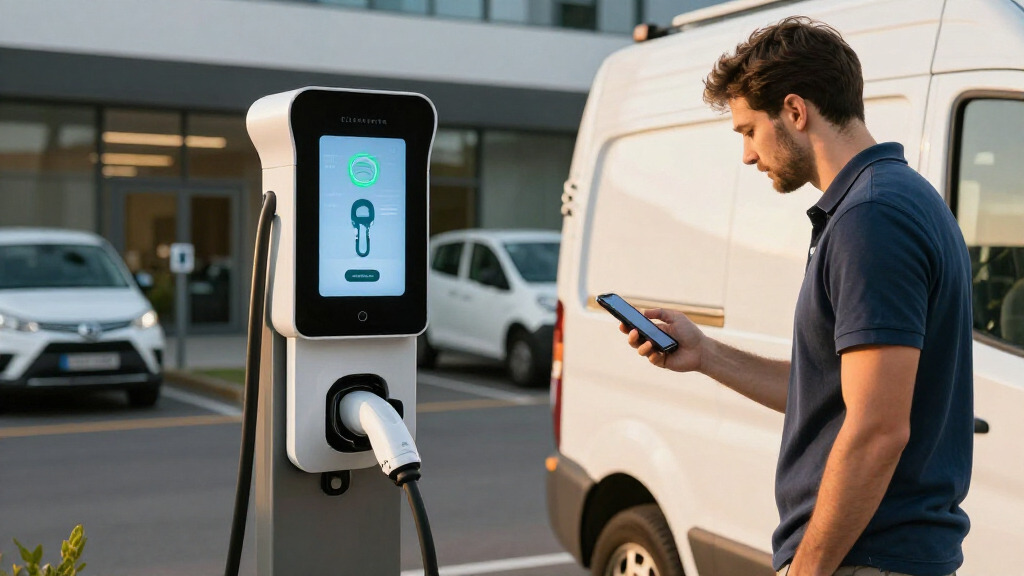
The best EV fleet charging stations balance charging speed, site capacity, connector compatibility, and the way vehicles are parked and managed. My best overall pick is the Autel MaxiCharger 80A for fleets that can support its high-power hardwired setup; the Enphase HCS-D40 stands out for serving two vehicles from one unit, while the Emporia 48A WiFi charger offers useful connectivity for a more budget-conscious setup. The main tradeoffs are whether a site has the electrical capacity for higher output, whether one or two ports matter more, and whether the fleet needs commercial-grade management beyond basic charging. A residential-style Level 2 unit may suit a small, predictable fleet, but it is not automatically a match for a busy depot. Read on for the full comparison, selection criteria, and guidance for matching a station to your site.

Get business pricing on monitors, keyboards and dev gear
- Business-only prices and quantity discounts
- Tax-exempt purchasing
- Multiple users, one account, clear invoices
Key Takeaways
- The Autel 80A stands apart on rated output, but its advantage matters only when site wiring, vehicle acceptance rates, and installation plans can support it.
- The Enphase HCS-D40 and Grizzl-E Duo Connect address shared parking differently: both offer two cables, so buyers should compare their desired current allocation and operating setup rather than count ports alone.
- Most listed stations are single-port Level 2 units rated around 32A to 50A, making them a closer fit for overnight or workday dwell times than rapid vehicle turnover.
- The PRIMECOM and Victron 22 kW listings are not straightforward upgrades for every fleet; their stated output and electrical configurations require a site and vehicle compatibility check before purchase.
- Connector flexibility is uneven across the lineup: most use J1772, while the ApexCharger includes a Tesla NACS adapter, which may simplify mixed-connector operations but does not replace checking each vehicle’s requirements.
| EV Range Commercial Level 2 EV Charging Station, 32 A, J1772, 25 ft Cable |  | Best for Fleet Access and Payments | Charging level: Level 2 | Output: 32 A at 240 V AC | Connector: J1772 | VIEW LATEST PRICE | See Our Full Breakdown |
| IYILO Level 2 EV Charger, 48A, 11.5 kW, 240V |  | Best for Flexible Single-Port Output | Maximum output: 48 A; 11.5 kW | Voltage: 240 V | Connector: SAE J1772 | VIEW LATEST PRICE | See Our Full Breakdown |
| Autel MaxiCharger 80A Level 2 EV Charger, Hardwired, J1772 |  | Best for High-Power Fleet Turnaround | Charger type: Level 2, hardwired | Maximum output: 80 A; up to 19.2 kW | Recommended circuit: 100 A for full 80 A output | VIEW LATEST PRICE | See Our Full Breakdown |
| LEFANEV 40A Level 2 EV Charger, 9.6 kW, NEMA 14-50, 20 ft Cable |  | Best for Existing NEMA 14-50 Sites | Charging level: Level 2 | Maximum output: 40 A; 9.6 kW | Voltage: 240 V | VIEW LATEST PRICE | See Our Full Breakdown |
| Enphase HCS-D40 Level 2 Dual EV Charger, 32 Amp, 240V, Hardwired, J1772 |  | Best for Two-Vehicle Fleet Parking | Charging ports: 2 | Amperage: 32 A total | Power output: Up to 7.7 kW | VIEW LATEST PRICE | See Our Full Breakdown |
| PRIMECOM 22 kW Three-Phase EV Charging Station, 480/277 V, 32 A, SAE J3068 5-Pin |  | Best for SAE J3068 Fleet Depots | Power: 22 kW | Voltage: 480/277 V AC | Current: 32 A | VIEW LATEST PRICE | See Our Full Breakdown |
| ChargePoint HomeFlex 50A Level 2 Hardwired EV Charger | 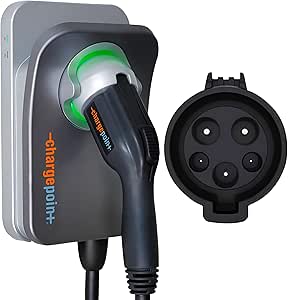 | Best for App-Based Charging Control | Connector: J1772 | Installation: Hardwired | Output voltage: 240 V | VIEW LATEST PRICE | See Our Full Breakdown |
| Lectron Nexus J1772 Level 2 EV Charger, 48A, 240V, Hardwired |  | Best for Weather-Exposed Installations | Connector: J1772 | Installation: Hardwired; professional installation required | Input voltage: 240 V AC | VIEW LATEST PRICE | See Our Full Breakdown |
| Grizzl-E Ultimate 48A Level 2 EV Charger, Hardwired, J1772 |  | Best for Long-Reach Wi-Fi Monitoring | Connector: J1772 | Maximum output: 48 A, 11.5 kW | Input voltage: 240 V AC | VIEW LATEST PRICE | See Our Full Breakdown |
| ApexCharger MACH 1 48A Level 2 EV Charger with J1772 Connector and Tesla NACS Adapter |  | Best for Flexible Installation and Mixed Fleets | Charger level: Level 2 | Output voltage: 240 V | Installation options: Hardwire or NEMA 14-50 plug | VIEW LATEST PRICE | See Our Full Breakdown |
| Emporia Level 2 WiFi EV Charger with J1772 Connector, 48A, 240V, 25 ft Cable, Hardwired, White |  | Best for Fleet Energy Tracking | Charger level: Level 2 | Output voltage: 240 V | Current: 48 A | VIEW LATEST PRICE | See Our Full Breakdown |
| Victron Energy EV Charging Station, 22 kW |  | Best for 22 kW Site Compatibility | Power: 22 kW | Operating voltage: 170–265 VAC | Input voltage: 220 V AC | VIEW LATEST PRICE | See Our Full Breakdown |
| Grizzl-E Duo Connect 40A Level 2 EV Charger with Two 25-Foot Cables |  | Best for Two-Vehicle Fleet Bays | Maximum power: 9.6 kW | Input voltage: 240 V AC | Adjustable amperage: 16–40 A | VIEW LATEST PRICE | See Our Full Breakdown |
| EVIQO Level 2 J1772 EV Charger, 48A Hardwired 240V |  | Best for Weather-Exposed Fleet Parking | Maximum charging current: 48 A; up to 50 A with DIP switch configuration | Electrical requirements: 240 V; dedicated 60 A circuit for 48 A charging | Connector: J1772 | VIEW LATEST PRICE | See Our Full Breakdown |
| Evwallbox Level 2 EV Charger, 40 Amp, 9.6 kW, 240V, J1772 Connector, 25 ft Cable |  | Best for Flexible Plug-In Fleet Charging | Charging level: Level 2 | Current: 40 A | Power: 9.6 kW | VIEW LATEST PRICE | See Our Full Breakdown |
| EV fleet charging station | Cable length | Connector | Warranty |
|---|---|---|---|
| EV Range Commercial Level 2 EV | 25 ft | J1772 | 2 years |
| IYILO Level 2 EV Charger | 25 ft | SAE J1772 | 3 years |
| Autel MaxiCharger 80A Level 2 | 25 ft | SAE J1772 | 5 years |
| LEFANEV 40A Level 2 EV Charger | 20 ft | SAE J1772 | 12 months |
| Enphase HCS-D40 Level 2 Dual E | Two 25 ft cables | J1772 | 5-year limited manufacturer warranty |
| PRIMECOM 22 kW Three-Phase EV | Up to 5 meters | SAE J3068 5-pin | — |
| ChargePoint HomeFlex 50A Level | 23 ft | J1772 | 3 years |
| Lectron Nexus J1772 Level 2 EV | 23 ft | J1772 | 3 years |
| Grizzl-E Ultimate 48A Level 2 | 25 ft | J1772 | 3 years |
| ApexCharger MACH 1 48A Level 2 | 30 ft | — | — |
| Emporia Level 2 WiFi EV Charge | 25 ft | SAE J1772 | 3 years |
| Victron Energy EV Charging Sta | — | — | — |
| Grizzl-E Duo Connect 40A Level | Two 25-foot cables | — | 3 years |
| EVIQO Level 2 J1772 EV Charger | 25 ft | J1772 | 3 years |
| Evwallbox Level 2 EV Charger | 25 ft | SAE J1772 | — |
More Details on Our Top Picks
EV Range Commercial Level 2 EV Charging Station, 32 A, J1772, 25 ft Cable
For operators who need more than a plug, the EV Range AC1-1-32-1120 pairs Level 2 charging with RFID or app access, driver payments, custom pricing, and idle fees. That makes it a stronger fit for a shared fleet or public parking operation than the Enphase HCS-D40, which can serve two vehicles but has no integrated phone connectivity. The tradeoff is output: at 32 A, it is less powerful than the 48 A IYILO and far below the 80 A Autel, so it suits vehicles parked for longer periods better than quick turnarounds. Its NEMA 4, IK10 enclosure and 25-foot cable support varied commercial placements. A pedestal is optional and sold separately, and Tesla vehicles need an adapter.
Pros:- RFID and app access controls support managed use.
- Driver payments, custom pricing, and idle fees fit shared or public charging.
- NEMA 4 enclosure with IK10 impact resistance is suited to demanding placements.
- 25-foot J1772 cable offers flexibility for vehicle positioning.
Cons:- 32 A output is slower than the 48 A IYILO and 80 A Autel options.
- Pedestal is not included.
- Tesla vehicles require a separate adapter.
Best for: Fleet and parking operators who need driver access controls, payment collection, and pricing rules for a single charging port.
Not ideal for: High-turnover fleets needing the fastest Level 2 output, or sites that require a pedestal without separately sourcing one.
- Charging level:Level 2
- Output:32 A at 240 V AC
- Connector:J1772
- Cable length:25 ft
- Ports:1
- Enclosure:NEMA 4 polycarbonate; IK10 impact resistance
- Networking:OCPP 1.6J compliant; EV Range network
- Certifications:CTEP, UL, Energy Star
- Warranty:2 years
Our verdict“Choose the EV Range when access management and collecting driver payments matter more than maximum charging speed.”
IYILO Level 2 EV Charger, 48A, 11.5 kW, 240V
The IYILO suits fleet managers who want 48 A charging with adjustable current rather than a fixed-output unit. Its range from 6 A to 48 A lets operators dial back load when electrical capacity is shared, while app scheduling and energy tracking help monitor use. Compared with the EV Range Commercial, it offers more power but lacks the stated payment, pricing, and idle-fee tools that make EV Range more suitable for public-facing service. Its power sharing can help coordinate loads, though this is still a single-port charger, not a way to connect two vehicles at once. Full output needs hardwiring, a 60 A breaker, and a licensed electrician; the 2.4 GHz-only Wi-Fi and separate Tesla adapter may also limit convenience.
Pros:- Adjustable current from 6 A to 48 A in 1 A increments.
- App provides charging schedules and energy-use tracking.
- Power sharing can help manage electrical load.
- NEMA 4 rating and connector overheat protection add practical safeguards.
Cons:- Full 48 A output requires hardwiring, a 60 A breaker, and professional installation.
- Wi-Fi supports 2.4 GHz only.
- Tesla NACS adapter is not included.
Best for: Small fleet depots with J1772 vehicles, available hardwired electrical capacity, and a need to adjust charging current or track energy use.
Not ideal for: Public charging operators who need built-in driver payment and pricing tools, or sites that cannot support a 60 A circuit for full output.
- Maximum output:48 A; 11.5 kW
- Voltage:240 V
- Connector:SAE J1772
- Cable length:25 ft
- Current adjustment:6 A to 48 A in 1 A increments
- Installation:Hardwired; 60 A breaker required for 48 A output
- Wi-Fi:2.4 GHz
- Certifications:ETL, Energy Star, CSA; UL 2594 test report
- Warranty:3 years
Our verdict“Pick the IYILO for an adjustable, app-connected 48 A port when your site can accommodate its hardwired installation.”
Autel MaxiCharger 80A Level 2 EV Charger, Hardwired, J1772
When vehicles need to recover more charge between shifts, the Autel’s 80 A, 19.2 kW output gives it a clear role above the 48 A IYILO and 32 A EV Range. That extra capacity can shorten charging sessions for vehicles able to accept it, though actual charging speed also depends on each vehicle and the site’s electrical supply. The 25-foot J1772 cable, app controls, scheduling, and energy monitoring make it a capable single-port option for a managed depot. Its price in site infrastructure is substantial: full output calls for a 100 A circuit and hardwired installation by a professional. Unlike the EV Range, it does not list built-in driver payment tools, and Tesla users need a separate adapter. A five-year warranty is longer than the other products in this batch.
Pros:- Up to 80 A and 19.2 kW for high-output Level 2 charging.
- App supports remote control, scheduling, current adjustment, and energy monitoring.
- 25-foot J1772 cable serves compatible North American EVs and plug-in hybrids.
- CSA and UL certifications with a five-year warranty.
Cons:- Full 80 A output requires a 100 A circuit and professional hardwired installation.
- Single charging port limits simultaneous vehicle service.
- Tesla NACS adapter is not included.
Best for: Fleet depots with high daily mileage, vehicles that can accept high AC charging power, and electrical capacity for a 100 A circuit.
Not ideal for: Small sites with limited service capacity, or public operators who need built-in payment and pricing functions.
- Charger type:Level 2, hardwired
- Maximum output:80 A; up to 19.2 kW
- Recommended circuit:100 A for full 80 A output
- Voltage:240 V AC
- Connector:SAE J1772
- Cable length:25 ft
- Ports:1
- Certifications:CSA, UL
- Warranty:5 years
Our verdict“Choose the Autel when fleet turnaround and available electrical capacity justify a high-output, single-port charger.”
LEFANEV 40A Level 2 EV Charger, 9.6 kW, NEMA 14-50, 20 ft Cable
The LEFANEV is the practical choice when a fleet location already has a NEMA 14-50 outlet and needs a straightforward J1772 charger. Its 40 A, 9.6 kW output sits between the 32 A EV Range and the 48 A IYILO, offering more output than the former without requiring the IYILO’s specified 60 A hardwired setup. The LCD readout displays charging information locally, a simple alternative to relying on app features. It is less purpose-built for managed fleet operations: the supplied details do not list network access, driver payments, or energy management tools. The 20-foot cable is shorter than the 25-foot leads on several alternatives, and the listed warranty is 12 months, so I would verify coverage before specifying it for a larger installation.
Pros:- 40 A, 9.6 kW output exceeds the 32 A EV Range model.
- NEMA 14-50 plug suits sites with a compatible existing outlet.
- LCD shows voltage, current, power, and charging time.
- IP65 protection and safeguards against overcurrent, overvoltage, and overheating.
Cons:- 20-foot cable is shorter than the 25-foot leads on the EV Range, IYILO, and Autel.
- No network or driver payment features are specified.
- Listed warranty is 12 months, limiting the stated coverage.
Best for: Small depots or workplace lots with an existing NEMA 14-50 outlet that need a basic 40 A J1772 charging point.
Not ideal for: Fleet managers seeking network controls, payment features, a longer cable, or a hardwired commercial installation.
- Charging level:Level 2
- Maximum output:40 A; 9.6 kW
- Voltage:240 V
- Plug type:NEMA 14-50
- Connector:SAE J1772
- Cable length:20 ft
- Ingress protection:IP65
- Certification:CSA
- Warranty:12 months
Our verdict“Choose the LEFANEV for a simple 40 A charger when a compatible NEMA 14-50 outlet is already available.”
Enphase HCS-D40 Level 2 Dual EV Charger, 32 Amp, 240V, Hardwired, J1772
For a depot where two vehicles routinely park together, the Enphase HCS-D40’s defining advantage is simple: two 25-foot J1772 cables let it serve two EVs at once. It can deliver 32 A to one vehicle or split output to 16 A per vehicle, reaching up to 7.7 kW total. That trades speed for port count compared with the single-port Autel MaxiCharger 80A, which is the better fit when one vehicle needs the highest available output. The Enphase’s NEMA 4 enclosure, rugged connectors, and five-year limited warranty suit a fixed, shared installation. It is hardwired, so setup calls for electrical work, and it lacks integrated phone connectivity. Operators needing app monitoring or payment tools should look to the network-focused EV Range instead.
Pros:- Two ports allow simultaneous charging for two vehicles.
- Can deliver 32 A to one vehicle or split output to 16 A per vehicle.
- Two 25-foot cables offer flexibility across adjacent parking positions.
- NEMA 4 enclosure, ETL and Energy Star certifications, and five-year limited warranty.
Cons:- Maximum total output is 7.7 kW, below the single-port Autel’s 19.2 kW.
- Hardwired installation may require electrical work.
- No integrated phone connectivity is specified.
Best for: Small fleet depots with paired parking spaces where two J1772 vehicles can charge concurrently at moderate output.
Not ideal for: High-mileage fleets needing rapid single-vehicle charging, or operators who require app monitoring and payment management.
- Charging ports:2
- Amperage:32 A total
- Power output:Up to 7.7 kW
- Voltage:240 V
- Connector:J1772
- Cable length:Two 25 ft cables
- Installation:Hardwired, wall-mounted
- Certifications:ETL, Energy Star, UL 2594
- Warranty:5-year limited manufacturer warranty
Our verdict“Choose the Enphase when serving two neighboring vehicles matters more than fast charging or app-based fleet controls.”
PRIMECOM 22 kW Three-Phase EV Charging Station, 480/277 V, 32 A, SAE J3068 5-Pin
I’d shortlist this PRIMECOM for fleets whose vehicles already use SAE J3068 and whose depot has 480/277 V three-phase power. Its 22 kW output is a different proposition from the 240 V J1772 units here, such as the Grizzl-E Ultimate: this station suits a compatible commercial electrical setup, not a typical mixed-vehicle home-charging circuit. The IP55 enclosure, broad operating temperature range, and cable up to five meters support outdoor or indoor placement, while the display gives staff a quick view of charging information. A built-in Type B circuit breaker adds fault detection. The tradeoff is limited flexibility: fleets without J3068 vehicles or three-phase supply cannot make use of its headline output, and the supplied information does not describe networked fleet-management tools.
Pros:- Up to 22 kW output for compatible vehicles on suitable three-phase power
- IP55 enclosure and operation from -25°C to 50°C support varied site conditions
- LED display shows charging and session information
- Built-in Type B circuit breaker provides fault detection
Cons:- Requires both an SAE J3068-compatible vehicle and 480/277 V three-phase power
- No Wi-Fi, app control, or fleet-network features are specified
- Cable length is up to 5 meters, shorter than the long-cable options in this group
Best for: Fleet operators with SAE J3068-compatible vehicles and existing 480/277 V three-phase service who need a higher-output AC depot station.
Not ideal for: Mixed-brand fleets centered on J1772 vehicles, or smaller sites with only 240 V single-phase power.
- Power:22 kW
- Voltage:480/277 V AC
- Current:32 A
- Connector:SAE J3068 5-pin
- Ingress protection:IP55
- Operating temperature:-25°C to 50°C
- Cable length:Up to 5 meters
- Safety certification:CE and TUV
Our verdict“Choose the PRIMECOM when your fleet and site already match its J3068 three-phase requirements; otherwise, a J1772 station such as the Grizzl-E Ultimate is more broadly applicable.”
ChargePoint HomeFlex 50A Level 2 Hardwired EV Charger
The HomeFlex is the pick in this group for buyers who value app controls and charging information more than a long list of fleet-specific functions. Its adjustable 16–50 A output lets an installer match charging to the available circuit, while the 23-foot cold-resistant cable can make daily parking less restrictive in a garage or outdoor stall. Compared with the ApexCharger MACH 1, it lacks a plug-in installation option and a bundled Tesla adapter, so it is less flexible when the site or vehicle mix changes. Wi-Fi also matters: some features and troubleshooting depend on a connection. This is a capable connected Level 2 unit, but I would not treat its single port or home-oriented feature set as a substitute for multi-stall fleet management.
Pros:- Adjustable 16–50 A output can be matched to the installed circuit
- App provides charging controls, reminders, and session information
- 23-foot cable is designed to remain flexible in cold conditions
- UL-certified and Energy Star compliant for indoor or outdoor installation
Cons:- Requires hardwired installation by an electrician
- Some features and troubleshooting rely on Wi-Fi
- Tesla vehicles require a separate adapter
Best for: Small businesses or owner-operated fleets with one J1772 vehicle that want app-based charging information and can arrange hardwired installation.
Not ideal for: Fleet sites needing multiple ports, offline-first controls, or easy plug-in installation; Tesla drivers must also provide a separate adapter.
- Connector:J1772
- Installation:Hardwired
- Output voltage:240 V
- Adjustable amperage:16–50 A
- Ports:1
- Cable length:23 ft
- Installation environment:Indoor or outdoor
- Warranty:3 years
Our verdict“Pick the HomeFlex for connected control of a single J1772 charging point, but choose the ApexCharger MACH 1 if plug-in flexibility or a bundled Tesla adapter matters more.”
Lectron Nexus J1772 Level 2 EV Charger, 48A, 240V, Hardwired
The Lectron Nexus earns its place with a particularly protective IP66 rating and a straightforward 48 A, 11.5 kW output. For fleet managers mounting a charger in a weather-exposed area, that enclosure rating is a more tangible differentiator than the app-oriented features of the ChargePoint HomeFlex, which is specified for indoor or outdoor use but does not list an IP rating here. The Nexus also includes a 23-foot cable and holder, helping keep the connector accessible and stowed between shifts. It is a J1772-only choice, so Tesla vehicles need a compatible NACS adapter. Like the Grizzl-E Ultimate, it requires hardwiring and professional installation; unlike that unit, its listed cable is shorter. The available details do not specify Wi-Fi or fleet-management functions.
Pros:- Up to 48 A and 11.5 kW output for Level 2 charging
- IP66 rating supports indoor and outdoor placement
- 23-foot cable and included holder simplify day-to-day cable storage
- UL, ETL, and Energy Star certifications are listed
Cons:- Hardwired professional installation is required
- Tesla vehicles need a separate compatible NACS adapter
- No Wi-Fi or fleet-management features are specified
Best for: Small fleet operators installing a J1772 charger outdoors who prioritize enclosure protection and a high-output Level 2 connection.
Not ideal for: Sites that need plug-in installation, built-in fleet networking, or a longer cable; Tesla fleets must source a compatible adapter.
- Connector:J1772
- Installation:Hardwired; professional installation required
- Input voltage:240 V AC
- Output current:Up to 48 A
- Power:11.5 kW
- Cable length:23 ft
- Ingress protection:IP66
- Warranty:3 years
Our verdict“Choose the Nexus for a weather-exposed J1772 site where IP66 protection leads your priorities, and favor the Grizzl-E Ultimate if its longer cable and Wi-Fi monitoring better fit operations.”
Grizzl-E Ultimate 48A Level 2 EV Charger, Hardwired, J1772
I’d rank the Grizzl-E Ultimate ahead of the Lectron Nexus for fleet sites where vehicles do not always park close to the wall: its 25-foot cable gives it two more feet of reach, and Wi-Fi monitoring, scheduling, and energy statistics add useful visibility. The 48 A, 11.5 kW output matches the Nexus, so the choice is less about charging power than access and operating information. A cast-aluminum Type 4 enclosure and included mounting and hardwire components suit a permanent installation. The tradeoff is that hardwiring is required, and the product data says advanced OCPP features require a one-time activation fee. That makes it less compelling for fleets expecting OCPP capabilities as an included part of a connected station; the Lectron’s listed appeal is instead its IP66 rating.
Pros:- 48 A and 11.5 kW maximum output
- 25-foot J1772 cable provides more reach than the Lectron Nexus
- Wi-Fi supports monitoring, scheduling, and energy statistics
- Type 4 cast-aluminum enclosure and included mounting bracket and hardwire kit
Cons:- Hardwired installation is required
- Advanced OCPP features require a one-time activation fee
- Tesla vehicles require a compatible adapter
Best for: Small fleet sites that need a long cable and want Wi-Fi scheduling and energy statistics from a wall-mounted J1772 station.
Not ideal for: Operators who need a plug-in unit, advanced OCPP features without an activation fee, or a charger with a specified IP66 rating.
- Connector:J1772
- Maximum output:48 A, 11.5 kW
- Input voltage:240 V AC
- Cable length:25 ft
- Enclosure:UL Type 4 rated cast aluminum
- Connectivity:Wi-Fi
- Installation:Hardwired
- Warranty:3 years
Our verdict“Pick the Grizzl-E Ultimate when cable reach and Wi-Fi energy tracking matter more than plug-in setup or included advanced OCPP access.”
ApexCharger MACH 1 48A Level 2 EV Charger with J1772 Connector and Tesla NACS Adapter
The MACH 1 is the most adaptable option in this batch for a small fleet that may need to serve both J1772 and Tesla vehicles. It includes a J1772 connector and Tesla NACS adapter, plus Wi-Fi, Bluetooth, app access, and RFID cards for a broader set of access and control options than the HomeFlex. Installation can be plug-in or hardwired, but the output changes with that choice: a NEMA 14-50 setup is limited to 40 A, while 48 A requires hardwiring and a 60 A breaker. Its 30-foot cable is the longest listed here, exceeding the Grizzl-E Ultimate’s 25 feet. The tradeoff is that maximum output brings a more demanding electrical installation, and the available specifications do not list certifications or a warranty.
Pros:- Includes J1772 connector and Tesla NACS adapter
- 30-foot cable reaches farther than the other chargers in this batch
- Offers Wi-Fi, Bluetooth, mobile app, and RFID access
- Can be installed with a NEMA 14-50 plug or hardwired
Cons:- NEMA 14-50 installation is limited to 40 A
- 48 A output requires hardwiring and a 60 A breaker
- Certification and warranty details are not specified in the supplied product data
Best for: Small mixed-brand fleets that want one Level 2 station with a long cable, RFID access, and a choice between plug-in and hardwired installation.
Not ideal for: Sites that cannot support the required 60 A breaker for 48 A charging, or buyers who need listed certification and warranty details before selection.
- Charger level:Level 2
- Output voltage:240 V
- Installation options:Hardwire or NEMA 14-50 plug
- Output:40 A via NEMA 14-50; up to 48 A hardwired
- Connectors:J1772 and Tesla NACS adapter
- Cable length:30 ft
- Connectivity:Wi-Fi and Bluetooth
- Included accessories:RFID cards, hardwire kit, connector holster, Tesla adapter
Our verdict“Choose the MACH 1 for mixed J1772 and Tesla use plus installation flexibility, but select another station if your site cannot support hardwiring for its full 48 A output.”
Emporia Level 2 WiFi EV Charger with J1772 Connector, 48A, 240V, 25 ft Cable, Hardwired, White
The Emporia earns this role by pairing 48A charging with Wi-Fi energy monitoring and scheduled charging, giving small fleet operators useful visibility into charging without moving to a more specialized dual-port unit. Its 25-foot cable adds flexibility across varied parking layouts, while the J1772 connector serves many North American EVs. Compared with the Grizzl-E Duo Connect, Emporia charges one vehicle at a time, so it is a better fit for a dedicated vehicle bay than a shared two-car position. Its tradeoff is the hardwired installation: a licensed professional is recommended, and the J1772 plug is not a direct fit for NACS vehicles. UL listing and ENERGY STAR certification add useful qualification, but this remains a single-port charger rather than a fleet-wide load-sharing system.
Pros:- 48A output can deliver up to 46 miles of range per hour when hardwired.
- Wi-Fi supports energy monitoring and scheduled charging.
- 25-foot J1772 cable provides useful reach across a parking bay.
- UL listed and ENERGY STAR certified.
Cons:- Hardwired installation calls for professional electrical work.
- Single connector cannot serve two vehicles at once.
- J1772 is not directly compatible with NACS charge ports.
Best for: Small fleets with one vehicle per charging bay that want app-based schedules and energy-use visibility.
Not ideal for: Sites that need two vehicles charging from one unit or have NACS vehicles without adapters; hardwired installation also limits easy relocation.
- Charger level:Level 2
- Output voltage:240 V
- Current:48 A
- Connector:SAE J1772
- Cable length:25 ft
- Connectivity:2.4 GHz Wi-Fi
- Installation:Hardwired with whip
- Warranty:3 years
Our verdict“Choose the Emporia for a J1772 fleet bay where 48A charging and energy tracking matter more than serving multiple vehicles at once.”
Victron Energy EV Charging Station, 22 kW
The Victron stands apart from the 240V-focused Emporia and EVIQO units with a stated 22 kW output and a broad 170–265 VAC operating range. That makes it a candidate for fleet sites whose electrical setup supports its requirements, rather than a straightforward replacement for a typical North American single-phase charger. Wi-Fi and Bluetooth provide two ways to connect, which can help with setup and access, but the listed data does not specify cable length, connector type, scheduling, or energy reporting. Those gaps make it harder to judge day-to-day fleet management fit than the Grizzl-E Duo Connect, which explicitly offers two cables and monitoring features. I would shortlist Victron only after confirming compatibility with the site supply and vehicles; its CE marking alone does not establish suitability for every local installation.
Pros:- Listed power output of up to 22 kW.
- Operating voltage range is specified as 170–265 VAC.
- Both Wi-Fi and Bluetooth connectivity are included.
- Lightweight listed weight of 1.38 kg.
Cons:- The product data does not identify a connector or cable length.
- Site electrical compatibility needs confirmation before purchase.
- The listed features do not specify scheduling or energy monitoring.
Best for: Fleet operators with a verified compatible 170–265 VAC supply who need a high stated charging-power option and wireless connectivity.
Not ideal for: Buyers seeking a clearly specified North American J1772 installation, documented cable reach, or built-in scheduling and energy reporting.
- Power:22 kW
- Operating voltage:170–265 VAC
- Input voltage:220 V AC
- Connectivity:Wi-Fi and Bluetooth
- Weight:1.38 kg
- Certification:CE
- Model number:EVC300400300
Our verdict“Consider the Victron only for a fleet site that has confirmed electrical and vehicle compatibility and can work with the limited connection details provided.”
Grizzl-E Duo Connect 40A Level 2 EV Charger with Two 25-Foot Cables
For a fleet parking position shared by two vehicles, the Duo Connect’s defining advantage is simple: two 25-foot cables from one charger. Its 16–40A adjustable output gives operators room to match charging to circuit capacity, while Wi-Fi monitoring and schedules provide more operating visibility than the available Victron feature details. Compared with the Emporia 48A, it trades peak single-vehicle current for two connectors and a more flexible shared-bay setup. The metal NEMA 4X enclosure is designed for indoor or outdoor use, and listed UL, CEC, and Energy Star certifications support a broad installation case. There are limits: the plug-in configuration needs a compatible NEMA 14-50 outlet, and advanced OCPP features require a one-time activation fee. I would favor it for shared parking, not for a site where each vehicle needs an independent high-current charger.
Pros:- Two charging ports and two 25-foot cables serve a shared bay.
- Adjustable 16–40A current can suit different circuit capacities.
- NEMA 4X metal enclosure is rated for indoor or outdoor use.
- Wi-Fi features include schedules, monitoring, and energy statistics.
Cons:- Maximum output is 40A, below the 48A Emporia and EVIQO options.
- Plug-in installation requires a compatible NEMA 14-50 outlet.
- Advanced OCPP features require a one-time activation fee.
Best for: Small fleets that regularly park two J1772-compatible vehicles together and want to share one charging location.
Not ideal for: Operators needing 48A or higher per vehicle, independent charging stations, or OCPP functions without an additional activation step.
- Maximum power:9.6 kW
- Input voltage:240 V AC
- Adjustable amperage:16–40 A
- Number of ports:2
- Cable length:Two 25-foot cables
- Enclosure:NEMA 4X metal
- Certifications:UL, CEC, Energy Star
- Warranty:3 years
Our verdict“Pick the Duo Connect when two vehicles need cable access from one shared bay and 40A output meets the fleet’s charging needs.”
EVIQO Level 2 J1772 EV Charger, 48A Hardwired 240V
The EVIQO combines 48A charging with an IP66/NEMA 4 weather-protected enclosure, making it a strong fit for fleet bays exposed to rain or dust. Its 25-foot cable and app controls for schedules and energy tracking give it a similar monitoring proposition to the Emporia, but the EVIQO specifies outdoor protection and a dedicated 60A circuit for 48A operation. That electrical requirement is a real planning factor: it may call for more site work than the Grizzl-E Duo Connect, which can plug into a compatible NEMA 14-50 outlet and serve two vehicles. The EVIQO is a single-port J1772 unit, with Tesla compatibility possible through an adapter. Professional hardwiring is required, and app features depend on 2.4 GHz Wi-Fi, so it suits a fixed installation better than a portable or frequently relocated setup.
Pros:- 48A charging on a dedicated 60A, 240V circuit.
- IP66/NEMA 4 enclosure supports indoor or outdoor installation.
- 25-foot cable and app controls support flexible parking and scheduling.
- UL, ETL, FCC, and Energy Star certifications are listed.
Cons:- Requires hardwiring by a licensed electrician.
- A dedicated 60A circuit is required for 48A charging.
- App features depend on a 2.4 GHz Wi-Fi connection.
Best for: Fleets installing a high-current J1772 charger outdoors where a dedicated 60A circuit and electrician-installed wiring are available.
Not ideal for: Sites that need two ports per unit, cannot provide a dedicated 60A circuit, or lack 2.4 GHz Wi-Fi for app functions.
- Maximum charging current:48 A; up to 50 A with DIP switch configuration
- Electrical requirements:240 V; dedicated 60 A circuit for 48 A charging
- Connector:J1772
- Cable length:25 ft
- Wi-Fi:2.4 GHz
- Weather protection:IP66 / NEMA 4
- Installation:Hardwired; professional installation required
- Warranty:3 years
Our verdict“Choose the EVIQO for an outdoor J1772 fleet bay that can support its hardwired 60A circuit and benefits from app-based tracking.”
Evwallbox Level 2 EV Charger, 40 Amp, 9.6 kW, 240V, J1772 Connector, 25 ft Cable
The Evwallbox gives fleet managers a different setup path from the hardwired Emporia and EVIQO: a NEMA 14-50 plug makes it a candidate for sites with a suitable outlet, while its 40A, 9.6 kW output avoids the higher circuit demands of 48A units. A 25-foot J1772 cable, adjustable current, app scheduling, and RFID activation cover practical needs for assigning access and planning charging. The Grizzl-E Duo Connect remains the better choice when two vehicles must reach one unit; Evwallbox serves one vehicle, but adds a 4.3-inch display for on-unit information. Its listed ETL certification and weatherproof enclosure support indoor or outdoor use, although the product data does not give a specific enclosure rating. Buyers should also confirm the outlet and wiring are suitable before installation.
Pros:- NEMA 14-50 plug can suit sites with an existing compatible outlet.
- Adjustable 40A charging and app scheduling support flexible operation.
- RFID activation offers an access-control option.
- 25-foot cable and 4.3-inch display provide convenient reach and local information.
Cons:- Single J1772 connector cannot charge two vehicles at once.
- A suitable outlet and electrical setup must be available.
- Weatherproofing is described without a specific IP or NEMA rating.
Best for: Small fleets with a compatible NEMA 14-50 outlet that want 40A charging, RFID access, and both app and display controls.
Not ideal for: Fleet depots needing dual-vehicle charging, hardwired installations, or a documented weather-protection rating for demanding outdoor exposure.
- Charging level:Level 2
- Current:40 A
- Power:9.6 kW
- Voltage:240 V
- Connector:SAE J1772
- Cable length:25 ft
- Plug:NEMA 14-50
- Display:4.3-inch
- Features and certifications:Wi-Fi app control, scheduling, adjustable current, RFID activation; ETL, FCC, CE
Our verdict“Choose the Evwallbox for a single-vehicle fleet bay with a compatible outlet where RFID access and display controls are useful.”
How We Picked
I ranked these stations around the needs that separate fleet charging from a simple one-car home setup: usable charging capacity, number of vehicles served, connector fit, installation demands, and operating practicality. A higher amp rating is not automatically a better fleet choice; it only earns weight when it can improve vehicle availability and the electrical service can support it. Dual-cable units receive credit for shared parking, while Wi-Fi or other connected features matter most when they support the site’s actual monitoring and control needs.
The order also reflects how clearly each product’s listed configuration fits common fleet scenarios. I treated higher-output, dual-cable, and connected options as useful only when their costs in electrical work, compatibility checks, or complexity are justified by the fleet. Several products are presented with limited commercial-management detail, so I do not assume that a Level 2 charger includes fleet billing, load management, access control, or multi-site tools. Buyers should confirm those capabilities and local installation requirements with the manufacturer and a qualified electrician before choosing.
| EV fleet charging station | Connector |
|---|---|
| EV Range Commercial Level 2 EV | J1772 |
| IYILO Level 2 EV Charger | SAE J1772 |
| Autel MaxiCharger 80A Level 2 | SAE J1772 |
| LEFANEV 40A Level 2 EV Charger | SAE J1772 |
| Enphase HCS-D40 Level 2 Dual E | J1772 |
| PRIMECOM 22 kW Three-Phase EV | SAE J3068 5-pin |
| ChargePoint HomeFlex 50A Level | J1772 |
| Lectron Nexus J1772 Level 2 EV | J1772 |
| Grizzl-E Ultimate 48A Level 2 | J1772 |
| ApexCharger MACH 1 48A Level 2 | — |
| Emporia Level 2 WiFi EV Charge | SAE J1772 |
| Victron Energy EV Charging Sta | — |
| Grizzl-E Duo Connect 40A Level | — |
| EVIQO Level 2 J1772 EV Charger | J1772 |
| Evwallbox Level 2 EV Charger | SAE J1772 |
Factors to Consider When Choosing Best EV Fleet Charging Stations
Fleet charging is a site-planning decision as much as a hardware purchase. I would start with the vehicles’ daily routes and parking windows, then work backward to the power, cable layout, and management features the operation actually needs.
Match charging power to vehicle schedules
Rated amperage describes a charger’s potential output, not the rate every vehicle will receive. The vehicle’s onboard charger, available circuit capacity, and any power-sharing controls can all limit actual charging. For vehicles parked through a full shift or overnight, moderate Level 2 output may restore enough range without paying for electrical capacity the fleet rarely uses. Higher output is more useful when vehicles return with low batteries and leave again soon. Map typical daily energy use and parking windows before deciding whether an 80A unit is worth the site work. Avoid sizing every port for the busiest vehicle if most of the fleet has longer dwell times.
Check site power before selecting hardware
Ask an electrician to review service capacity, panel space, circuit requirements, and the proposed number of chargers before ordering equipment. Several high-output chargers can create a much larger electrical project than a single unit suggests. A 22 kW three-phase listing, such as the PRIMECOM or Victron option here, should not be treated as a plug-in substitute for a 240V Level 2 station; confirm supply voltage, phase, connector, and vehicle compatibility first. Where utility capacity is limited, staged installation or managed load sharing may serve more vehicles than installing a few high-powered units. Include trenching, conduit, bollards, and parking-lot repairs in the site plan. Hardware selection before an electrical review can lead to costly changes or unusable equipment.
Plan around the number of vehicles and parking bays
Count how many vehicles need power at the same time, not just how many vehicles belong to the fleet. Dual-cable stations can reduce equipment mounted at a site, but two cables do not necessarily mean both vehicles receive full rated output at once. Confirm how power is divided and whether the cables can reach the intended parking spaces without creating trip hazards or awkward vehicle repositioning. For fleets with staggered return times, several single-port stations may offer more scheduling flexibility than one shared unit. Consider whether parking assignments will remain stable as the fleet grows or shifts routes. A layout plan can reveal that cable reach and access matter more than a higher amp rating.
Treat connector compatibility as a fleet policy
Inventory the charge ports on every vehicle, including models expected to join the fleet during the station’s service life. Most products in this roundup list J1772 connectors, while the ApexCharger includes a Tesla NACS adapter; that distinction can help with mixed fleets, but buyers should verify adapter suitability and vehicle requirements. Do not assume an adapter resolves every compatibility or charging-control issue. Decide whether the fleet will standardize connectors, keep approved adapters in vehicles, or assign parking by connector type. A connector policy reduces driver confusion and limits lost time from missing or misplaced adapters. Revisit the policy when replacing vehicles, since hardware chosen for today’s fleet may stay installed longer than a vehicle does.
Separate connected charging from fleet management
Wi-Fi connectivity can support monitoring, but it does not by itself provide every feature a fleet operator may expect. Check specifically for user access controls, energy reporting, load management, payment or cost allocation, and integration with the software already used by the operation. Ask whether these functions require a subscription, a separate network, or additional hardware. If several drivers share chargers, access and reporting may matter more than a few extra amps. For a small fleet with one manager and predictable schedules, simple controls may be easier to maintain. Buy connected features to solve a named operational problem, not just because an app is listed.
Budget for installation, service, and future expansion
The station is only one part of a fleet charging project. Electrical upgrades, mounting, cable protection, network coverage, permits, and service access can shape the total effort more than the charger specification. Ask about warranty terms, replacement parts, support channels, and how a failed unit affects vehicle dispatch. Leave room in the design for additional circuits or stations if fleet size is likely to grow. Standardizing models can simplify training and maintenance, while using different units may better address distinct parking or vehicle needs. A practical expansion plan can prevent today’s savings from becoming tomorrow’s rewiring project.
Frequently Asked Questions
Can a residential-style Level 2 charger work for a small commercial fleet?
It can work when the fleet is small, vehicles park for long periods, and the charger has the electrical rating and connector the vehicles require. The harder question is whether the unit supports the site’s operating needs, such as shared access, energy reporting, load control, or service response. A charger with Wi-Fi should not be assumed to include fleet-grade management. Check the warranty and manufacturer guidance for commercial use before installation. If vehicles depend on the station for daily dispatch, plan for a backup charging option or a way to respond quickly to a failure.
Should I buy one high-amp charger or several lower-amp stations?
Base the choice on how many vehicles need power at once and how long they remain parked. One high-amp unit may suit a dedicated bay and a vehicle with a short charging window, while several lower-amp stations can serve a larger group during a shift. The site’s electrical service may also favor managed distribution over concentrating capacity in one charger. Compare the cost and complexity of adding circuits with the operational impact of vehicles waiting for a free connector. Ask an electrician and the charger supplier how simultaneous charging behaves under the proposed setup.
Does a two-cable station charge two vehicles at the full rated current?
Not necessarily. The product’s total available power may be shared between the connected vehicles, and the exact behavior depends on the unit’s design and electrical supply. Check the manufacturer’s documentation for per-cable output during simultaneous charging rather than relying on the headline amperage. Also confirm whether the station can prioritize a vehicle or allocate power dynamically. If both vehicles need a predictable amount of energy before departure, compare the shared unit’s performance with two separate stations.
Are 22 kW EV charging stations compatible with the 240V Level 2 options?
Do not assume so from the power rating alone. The 22 kW products in this lineup list configurations that differ from the common 240V J1772 units, including three-phase supply and a distinct connector specification. Compatibility depends on the site’s voltage and phase, the vehicle’s charge port and onboard charger, and the station’s exact configuration. Have an electrician and the manufacturer verify all three before purchase. A higher stated output brings no benefit if the site or vehicle cannot accept it.
What should I verify before installing a charger with Wi-Fi or app controls?
Confirm that the intended installation area has reliable network coverage and that the charger remains usable if the connection drops. Ask which functions work locally and which depend on an app, cloud service, or account. For fleet use, check whether the system can distinguish drivers or vehicles and export energy data in a format your operation can use. Review ongoing software or service requirements before standardizing across a site. If connectivity is unreliable, a simpler operating plan may be safer than relying on features drivers cannot access consistently.
Conclusion
For a fleet that can support the electrical requirements, I would choose the Autel MaxiCharger 80A as the best overall because its higher listed output gives it a clear role when vehicles have short charging windows. The Emporia 48A WiFi charger is my best value-style pick for operators who want a connected single-port option, while the PRIMECOM 22 kW station is the premium specialist choice only for sites and vehicles confirmed to match its three-phase configuration. For beginners managing a small, predictable fleet, I would start with a straightforward J1772 Level 2 unit such as the LEFANEV 40A and arrange an electrical review before scaling up. For shared parking, compare the Enphase HCS-D40 and Grizzl-E Duo Connect; for a mixed J1772 and Tesla-connector fleet, examine the ApexCharger MACH 1 and verify adapter fit. My final choice would follow the site’s power capacity, vehicle schedule, and management needs—not the highest rating on a spec sheet.
Evergreen bestsellers Picks

Ninja Foodi Dual Zone Smart XL Air Fryer, 10 Qt, 6-in-1, Black (DZ550)

Dyson V8 Cyclone Cordless Vacuum

De'Longhi Rivelia Fully Automatic Espresso Machine with Milk Frother, White
As an affiliate, we earn on qualifying purchases.