
Choosing the best home EV chargers comes down to balancing installation complexity with charging speed and smart features. The ChargePoint HomeFlex stands out as the best overall pick for its seamless app integration and flexible plug-in or hardwired options, while the Emporia Pro offers unmatched energy management for those wanting to monitor household consumption. Key tradeoffs involve deciding between a convenient NEMA 14-50 plug and a more permanent, higher-amperage hardwired setup, as well as choosing between J1772 and the newer NACS connector. This guide cuts through the specs to show which chargers deliver reliable daily power without unnecessary complexity. Continue reading to see how these fifteen models stack up against real-world home electrical constraints.

Get business pricing on monitors, keyboards and dev gear
- Business-only prices and quantity discounts
- Tax-exempt purchasing
- Multiple users, one account, clear invoices
Key Takeaways
- Hardwired 48A units like the Emporia Pro and Lectron Nexus charge significantly faster than 40A plug-in models but require professional installation.
- Smart features vary widely; some chargers like ChargePoint offer robust scheduling and energy data, while budget models like Raylix lack connectivity entirely.
- The shift to NACS connectors is evident in newer premium models like the IYILO 48A, though J1772 remains the dominant standard for current vehicles.
- Cable length is a critical differentiator, with 25 ft cables on models like the DEWALT and EVDANCE reducing parking friction compared to shorter alternatives.
- Energy monitoring capabilities, such as those in the Emporia Vue integration, provide tangible value for users managing peak-hour electricity rates.


| home EV charger | Cable length | Warranty |
|---|---|---|
| EVDANCE Level 1 and Level 2 Po | 25 ft | 1 year |
| DEWALT Level 2 Hardwired EV Ch | — | 3-year limited warranty |
| Leviton Smart Level 2 EV Charg | 25 ft | — |
| IYILO Level 2 EV Charger | 25 ft | 3 years |
| AIMILER Level 2 Hardwired EV C | 25 ft | — |
| Raylix Portable Level 1 and Le | 25 ft | 2 Years |
| Emporia Level 2 48A WiFi EV Ch | 25 ft | 3 Years |
| Grasside Level 2 J1772 EV Char | 25 ft | 3 Years |
| Lectron Level 2 J1772 Nexus EV | 23 ft | — |
| ChargePoint HomeFlex Level 2 E | 23 feet | 3-Year Parts |
| Evwallbox FU-AM3-40 Level 2 EV | 25 ft | — |
| IYILO Level 2 EV Charger | 25 ft | 3 Years |
| ChargePoint HomeFlex Level 2 | — | 3 Years |
| 40A Level 2 EV Charger with J1 | 25 ft | 3 Years |
| Emporia Pro Level 2 EV Charger | — | — |
More Details on Our Top Picks
EVDANCE Level 1 and Level 2 Portable J1772 EV Charger, 16A, 25 ft Cable
Level 1 and Level 2 flexibility is the reason to choose this EVDANCE: it can charge from a standard 120V outlet when you’re away from a 240V connection, then use a compatible 240V outlet at home for up to 3.68 kW. Its 25-foot cable, carry bag, and LED status display make it more travel-ready than the hardwired DEWALT EV Charger, which is built for a fixed home installation and delivers much more power. The tradeoff is speed: at 16A on 240V, this is a modest option for overnight charging rather than a high-capacity daily setup. Outlet compatibility also needs checking before purchase; it does not directly support NEMA 14-50, and Tesla drivers need a separate adapter. I’d choose it for flexibility, not maximum charging speed.
Pros:- Supports Level 1 charging at 12A and Level 2 charging at 16A
- 25-foot cable and included carry bag suit travel and flexible parking setups
- LED display reports charging status and errors
- IP66 housing and built-in charging monitoring
Cons:- Maximum output of 3.68 kW is slower than the 40A and 48A home chargers in this roundup
- Does not directly support common NEMA 14-50 or 10-30 outlets
- Tesla vehicles need a separately sold J1772 adapter, and vehicle compatibility is limited
Best for: J1772 drivers who want one portable charger for occasional home charging and trips, and have compatible 120V or NEMA 6-20 outlets.
Not ideal for: Drivers who need fast daily charging, own a Tesla without a separate J1772 adapter, or rely on a NEMA 14-50 outlet.
- Connector:J1772
- Charging levels:Level 1 and Level 2
- Current:12A at 120V; 16A at 240V
- Maximum power:Up to 3.68 kW at 240V
- Cable length:25 ft
- Compatible outlets:NEMA 5-15/5-20 and NEMA 6-20
- Housing protection:IP66
- Weight:7 lb
- Warranty:1 year
Our verdict“Choose the EVDANCE if portability and access to both 120V and compatible 240V outlets matter more than charging speed.”
DEWALT Level 2 Hardwired EV Charger, 48 A, 240 V, Wi-Fi and Bluetooth, 25 ft Cable
The DEWALT is the strongest fit here for a homeowner planning a permanent, high-output installation: it delivers up to 48A and 11.5 kW, with current adjustable from 12A to 48A to suit the home circuit. Its Wi-Fi and Bluetooth app controls add schedules and energy tracking, while the 25-foot cable offers useful reach in a garage or driveway. Compared with the AIMILER hardwired charger, DEWALT specifies a broader 12–48A adjustment range and a NEMA 4X, IP66 enclosure for indoor or outdoor use. The price of that capability is installation flexibility: this model is hardwired, has no plug, and may call for a professional electrician. Tesla owners also need a separate adapter. I’d favor it over the plug-in Leviton when circuit capacity and a fixed installation are the priority.
Pros:- Delivers up to 48A and 11.5 kW, with adjustment from 12A to 48A
- Wi-Fi and Bluetooth support app scheduling and energy tracking
- CSA-certified NEMA 4X and IP66 enclosure is rated for indoor and outdoor use
- 25-foot cable accommodates varied parking positions
Cons:- Hardwired installation reduces portability and may require professional setup
- No power plug is included
- Tesla vehicles require a separately sold adapter
Best for: Homeowners with a suitable 240V circuit who want a permanent, adjustable high-output charger with app scheduling and outdoor-rated construction.
Not ideal for: Renters or households that need a plug-in charger, want to move the unit between outlets, or drive a Tesla without a separate adapter.
- Model:EV100D-48W
- Connector:SAE J1772
- Input voltage:240 V
- Maximum current:48 A; adjustable from 12–48 A
- Maximum power:11.5 kW
- Installation:Hardwired, wall-mounted
- Connectivity:Wi-Fi and Bluetooth
- Enclosure:NEMA 4X, IP66
- Warranty:3-year limited warranty
Our verdict“Pick the DEWALT for a permanent, high-capacity installation where adjustable output and an outdoor-rated enclosure matter more than plug-in convenience.”
Leviton Smart Level 2 EV Charger, 40A, Wi-Fi, NEMA 14-50 Plug, White
The Leviton makes the most sense for drivers who already have a NEMA 14-50 receptacle and want smart features without a hardwired installation. It supplies up to 40A and 9.6 kW, and the My Leviton app handles scheduling, remote monitoring, and start or stop controls. Compared with the IYILO 40A charger, Leviton’s appeal is a straightforward plug-in setup from an established electrical brand; IYILO counters with adjustable current, RFID access, and power sharing. The Leviton’s 25-foot cable helps reach different parking positions, and its NEMA 3R enclosure supports outdoor placement. The main limitation is outlet dependence: without a compatible 14-50 receptacle, this isn’t a simple installation. The J1772 connector also means Tesla drivers need a separate Leviton NACS adapter.
Pros:- Plug-in NEMA 14-50 setup avoids hardwiring when a compatible receptacle is available
- My Leviton app offers scheduling, monitoring, and start or stop controls
- 40A output provides up to 9.6 kW
- 25-foot cable and NEMA 3R enclosure support flexible indoor or outdoor placement
Cons:- Requires a compatible NEMA 14-50 receptacle
- Tesla vehicles need a separate Leviton NACS adapter
- Lacks the IYILO’s listed RFID access, current adjustment, and power-sharing features
Best for: J1772 EV and plug-in hybrid owners with an existing NEMA 14-50 receptacle who want app scheduling and remote controls.
Not ideal for: Homeowners without a compatible 14-50 outlet, buyers seeking a hardwired high-output unit, or Tesla drivers who do not have a separate NACS adapter.
- Model:EV40P
- Input voltage:240 V
- Current:40 A
- Maximum power:9.6 kW
- Connector:SAE J1772
- Input plug:NEMA 14-50P
- Connectivity:Wi-Fi
- Cable length:25 ft
- Certifications:UL, Energy Star
Our verdict“Choose the Leviton if you have a NEMA 14-50 outlet and want a smart 40A charger without a hardwired installation.”
IYILO Level 2 EV Charger, 40A, 9.6 kW, 240V with NEMA 14-50 Plug and 2.4 GHz Wi-Fi
Among the 40A plug-in choices, the IYILO packs in more control and circuit-sharing options than the Leviton: output adjusts from 6A to 40A, and its app adds scheduling, energy tracking, RFID access, and remote updates. A connector temperature sensor stops charging if the connector exceeds 221°F, while power sharing can help two compatible chargers share a circuit. That feature set suits households that want more than basic remote start and schedules. The tradeoff is setup and connectivity detail: Wi-Fi is 2.4 GHz only, and 40A hardwired operation calls for a 50A breaker and a licensed electrician. With its NEMA 14-50 plug, it can also work as a plug-in unit where the receptacle is suitable. Compared with Leviton, I’d choose IYILO for adjustable controls, not simplicity.
Pros:- Current adjusts from 6A to 40A in 1A increments
- Connector temperature monitoring stops charging above 221°F
- App includes scheduling, energy tracking, RFID access, and remote updates
- Power sharing supports two chargers on one circuit
Cons:- Wi-Fi supports 2.4 GHz only
- Tesla vehicles require a separate NACS adapter
- 40A hardwired operation requires a 50A breaker and licensed electrician
Best for: Households with a compatible NEMA 14-50 outlet that want adjustable charging, RFID access, energy tracking, or power sharing between chargers.
Not ideal for: Buyers whose home Wi-Fi uses only 5 GHz, those seeking the simplest app experience, or Tesla drivers without a separate NACS adapter.
- Model:IYILO-RA40
- Input voltage:240 V
- Maximum current:40 A; adjustable from 6–40 A
- Maximum power:9.6 kW
- Plug and connector:NEMA 14-50P; SAE J1772
- Cable length:25 ft
- Wi-Fi:2.4 GHz only
- Protection and features:NEMA 4 rating, built-in GFCI, connector overheat protection, power sharing
- Warranty:3 years
Our verdict“Choose the IYILO over the simpler Leviton if you want adjustable output, RFID controls, and power sharing in a 40A charger.”
AIMILER Level 2 Hardwired EV Charger, 48A, 11.5 kW, 25 ft Cable, J1772 Connector
The AIMILER pairs 48A, 11.5 kW charging with a built-in touchscreen, giving buyers an on-unit way to check status and manage charging alongside its Wi-Fi app. That makes it a more control-focused alternative to the DEWALT, which also reaches 48A but lists a wider 12–48A adjustment range and Bluetooth as well as Wi-Fi. AIMILER’s output adjusts from 24A to 48A, so it can accommodate some lower-current setups, though it offers less range at the lower end than DEWALT. Its 25-foot J1772 cable suits typical home layouts, but the charger is hardwired only; there is no NEMA 14-50 plug for an existing receptacle. A 60A breaker is recommended for full 48A charging, and Tesla or NACS vehicles need an adapter. I’d shortlist it when touchscreen access matters more than plug-in flexibility.
Pros:- Up to 48A and 11.5 kW for high-capacity home charging
- Current adjusts from 24A to 48A
- Touchscreen and Wi-Fi app provide charging status and scheduling features
- 25-foot J1772 cable offers useful reach
Cons:- Hardwired installation requires a suitable circuit and is not plug-in portable
- A 60A breaker is recommended for 48A charging
- Tesla and NACS vehicles require an adapter
Best for: J1772 drivers planning a hardwired, high-output installation who want touchscreen controls as well as app-based scheduling and status tracking.
Not ideal for: Renters, buyers with only a NEMA 14-50 receptacle, or households that need current adjustment below 24A.
- Model:ZB18-U011KBH-F0921
- Maximum output:48A, 11.5 kW
- Adjustable current:24A–48A
- Connector:J1772
- Cable length:25 ft
- Installation:Hardwired; no plug
- Recommended breaker:At least 60A for 48A charging
- Connectivity and controls:Wi-Fi app and touchscreen
- Listings and standards:ETL and FCC listed; meets listed SAE and UL standards
Our verdict“Pick the AIMILER if you want high-output hardwired charging with touchscreen controls and already have a suitable circuit planned.”
Raylix Portable Level 1 and Level 2 J1772 EV Charger with 25 ft Cable
This unit stands out for its plug-and-play versatility, making it the logical choice for drivers who need a backup option or travel frequently. Unlike the fixed-installation Emporia Level 2, the Raylix requires no electrician, plugging directly into standard household outlets. The 25-foot cable and dual plug types (NEMA 5-15 and 6-20) allow charging almost anywhere, from a garage to a roadside stop. However, this flexibility comes at a speed cost; at 16A on Level 2, it adds only about 9 miles of range per hour, significantly slower than dedicated home units. It is ideal as a secondary charger or for renters who cannot modify their electrical panel.
Pros:- Includes both NEMA 5-15 and 6-20 plugs for broad outlet compatibility
- No professional installation required; simply plug in and charge
- Color display provides real-time data on voltage, current, and temperature
Cons:- Level 2 charging speed is limited to 3.68kW, much slower than 40A+ units
- Requires a specific NEMA 6-20 outlet for faster charging, which is less common than NEMA 14-50
Best for: Rental car owners, frequent travelers, or renters who cannot install hardwired equipment.
Not ideal for: Daily commuters who need to recover 100+ miles of range overnight and have a dedicated garage outlet.
- Connector:SAE J1772
- Charging Levels:Level 1 and Level 2
- Max Output:3.68kW (Level 2)
- Cable Length:25 ft
- Plug Types:NEMA 5-15 and NEMA 6-20
- Display:TFT Color Display
- Warranty:2 Years
Our verdict“Choose this if you prioritize portability and ease of use over maximum charging speed.”
Emporia Level 2 48A WiFi EV Charger with J1772 Connector, 25 ft Cable, Hardwired with Whip
The Emporia Level 2 distinguishes itself through robust software features, appealing to tech-savvy users who want granular control. Compared to the Grasside, which relies on basic app controls, Emporia integrates deeply with energy monitoring ecosystems, allowing users to schedule charging around peak rate hours or renewable generation windows. The 48A output delivers up to 46 miles of range per hour, matching the speed of premium competitors. However, the requirement for a hardwired installation adds upfront cost and complexity. This charger is best suited for homeowners already invested in the Emporia smart energy ecosystem who want to optimize their electricity bills through precise scheduling.
Pros:- Up to 48A output for fast charging speeds
- WiFi connectivity enables remote monitoring and scheduling
- UL listed and ENERGY STAR certified for safety and efficiency
Cons:- Hardwired installation requires a professional electrician
- J1772 connector requires an adapter for Tesla NACS vehicles
Best for: Homeowners with existing Emporia smart energy monitors or those seeking deep integration with home automation systems.
Not ideal for: Budget-conscious buyers who do not need app-based scheduling or energy tracking features.
- Brand:Emporia
- Max Current:48A
- Installation Type:Hardwired with Whip
- Connectivity:2.4 GHz WiFi
- Cable Length:25 ft
- Certifications:UL Listed, ENERGY STAR
- Warranty:3 Years
Our verdict“This is the smartest choice for users who want to synchronize EV charging with their overall home energy usage.”
Grasside Level 2 J1772 EV Charger, 40A, 9.6 kW, NEMA 14-50 Plug, 25 ft Cable
The Grasside offers a compelling balance of speed and convenience by using a NEMA 14-50 plug. Unlike the Emporia or Lectron hardwired units, this charger eliminates the need for permanent wiring modifications, allowing for easy removal or relocation. At 40A, it delivers 9.6kW, which is sufficient for most daily driving needs, though slightly slower than the 48A competitors. The inclusion of RFID access and app controls adds a layer of security and management that basic chargers lack. It is a strong contender for those who want high-speed charging without committing to a hardwired setup, provided they already have a compatible dryer outlet.
Pros:- Plug-in design allows for easy installation and potential relocation
- 40A output provides fast charging speeds of up to 30+ miles per hour
- IP65 rating makes it suitable for outdoor installation
Cons:- Requires a dedicated 50A NEMA 14-50 circuit, which may need electrical work
- Heavier and bulkier than portable alternatives
Best for: Homeowners with an existing NEMA 14-50 outlet who want fast charging without hiring an electrician for hardwiring.
Not ideal for: Users with only standard 120V outlets or those who cannot install a dedicated 50A circuit.
- Max Current:40A
- Max Power:9.6 kW
- Plug Type:NEMA 14-50
- Cable Length:25 ft
- Water Resistance:IP65
- Connectivity:2.4 GHz Wi-Fi
- Warranty:3 Years
Our verdict“A solid middle-ground option that delivers high-speed charging with the flexibility of a plug-in design.”
Lectron Level 2 J1772 Nexus EV Home Charger, 48A Hardwired
The Lectron Nexus is engineered for harsh environments, featuring an IP66 rating that exceeds the IP65 standard found on the Grasside. This higher protection level means it can withstand powerful water jets, making it the safest bet for exposed outdoor installations. The 48A output ensures you get the maximum charging speed available in this class, adding up to 46 miles of range per hour. While it requires professional hardwiring, the build quality justifies the effort for those in rainy or snowy climates. It lacks the fancy app integrations of the Emporia, focusing instead on rugged reliability and raw charging power.
Pros:- IP66 rating provides superior protection against dust and water
- 48A output delivers maximum charging speed for J1772 vehicles
- Includes a sturdy holster for cable management
Cons:- Hardwired installation requires a professional electrician
- No native app connectivity for remote monitoring or scheduling
Best for: Users in climates with heavy rain or snow who need a durable, high-speed outdoor charger.
Not ideal for: Indoor-only garages where weather resistance is unnecessary, or users who prioritize app features over hardware durability.
- Max Current:48A
- Power:11.5 kW
- Installation:Hardwired
- Cable Length:23 ft
- Certifications:UL 2594, UL 2231, UL 2251
- Weight:21.6 lbs
Our verdict“The most rugged option for outdoor installations where weather resistance is a primary concern.”
ChargePoint HomeFlex Level 2 EV Charger with J1772 Connector and NEMA 14-50 Plug
The ChargePoint HomeFlex addresses a specific pain point: cable stiffness in freezing temperatures. Its cold-resistant 23-foot cable remains flexible even in winter, a significant advantage over standard cables that become unwieldy in the cold. While the Grasside offers similar plug-in convenience, ChargePoint’s ecosystem is mature and widely supported, with a reliable app for managing sessions. The unit charges at up to 45 miles per hour, competitive with other Level 2 chargers. However, it requires an electrician for outdoor installation and relies on a NEMA 14-50 outlet, which may not be present in every home. It is the premium choice for northern climates.
Pros:- Cold-resistant cable maintains flexibility in low temperatures
- Well-established app ecosystem for charging control and history
- UL-certified for safe indoor or outdoor use
Cons:- Requires a NEMA 14-50 outlet and professional installation for outdoor use
- J1772 connector requires an adapter for Tesla vehicles
Best for: Drivers in cold regions who struggle with stiff charging cables and want a reliable, app-connected experience.
Not ideal for: Users in warm climates who do not need specialized cable materials, or those without a NEMA 14-50 outlet.
- Brand:ChargePoint
- Connector:J1772
- Plug Type:NEMA 14-50
- Cable Length:23 feet
- Cable Feature:Cold-Resistant
- Certification:UL
- Warranty:3-Year Parts
Our verdict“The top pick for cold-weather drivers who need a flexible cable and a robust software platform.”
Evwallbox FU-AM3-40 Level 2 EV Charger
This unit stands out for its robust weatherproofing and plug-in convenience. Unlike the hardwired IYILO Level 2 EV Charger, the Evwallbox uses a NEMA 14-50 plug, allowing renters or those avoiding electrical work to install it themselves. The IP65-rated enclosure ensures durability in harsh outdoor conditions, a feature some budget alternatives lack. However, the 40-amp ceiling means it charges slower than the 48-amp competitors. The included RFID cards add a layer of security for shared spaces, though the app interface feels less polished than premium brands. It is a solid middle-ground option for those wanting smart features without the commitment of hardwiring.Pros:- Plug-and-play NEMA 14-50 installation requires no electrician
- IP65 weatherproof rating suits outdoor or garage use
- RFID activation prevents unauthorized charging
- Adjustable current settings help manage home electrical load
Cons:- 40-amp limit is slower than 48-amp hardwired competitors
- Requires a dedicated 240V NEMA 14-50 outlet
- App functionality is basic compared to top-tier smart chargers
Best for: Renters or homeowners who want outdoor charging without hiring an electrician.
Not ideal for: Users needing maximum charging speed or those with existing 60-amp circuits.
- Maximum Current:40 Amp
- Connector Type:SAE J1772
- Cable Length:25 ft
- Installation Type:Plug-in (NEMA 14-50)
- Connectivity:Wi-Fi App & RFID
Our verdict“A durable, plug-in option for outdoor charging that balances smart features with easy installation.”
IYILO Level 2 EV Charger (48A, NACS)
Designed specifically for the modern standard, this charger features a native NACS connector, eliminating the need for adapters for Tesla vehicles. Compared to the Emporia Pro Level 2 EV Charger, which relies on J1772 and adapters for Teslas, the IYILO offers a cleaner, more direct connection. The 48-amp output provides faster charging than many 40-amp rivals, while the 1-amp increment adjustment allows precise power management. However, hardwired installation is mandatory, requiring a licensed electrician and a 60A breaker, which adds upfront cost and complexity. The reliance on 2.4 GHz Wi-Fi may also pose connectivity issues in homes with only 5 GHz networks.Pros:- Native NACS connector for seamless Tesla compatibility
- High 48A output for faster charging speeds
- Precise current adjustment in 1A increments
- Connector temperature protection enhances safety
Cons:- Hardwired installation requires a licensed electrician
- Only supports 2.4 GHz Wi-Fi networks
- J1772 vehicles require a separate adapter
Best for: Tesla owners seeking a native NACS connector and high-speed hardwired charging.
Not ideal for: Non-Tesla EV drivers or those who cannot hire an electrician for hardwiring.
- Maximum Current:48A
- Connector Type:NACS (J3400)
- Cable Length:25 ft
- Installation Type:Hardwired
- Wi-Fi Band:2.4 GHz only
- Warranty:3 Years
Our verdict“A high-performance, hardwired solution ideal for Tesla drivers who want native NACS compatibility.”
ChargePoint HomeFlex Level 2 (NACS)
ChargePoint brings established reliability and a polished app experience to the NACS market. While the IYILO Level 2 EV Charger offers raw specs, the HomeFlex excels in user interface and community integration, providing detailed charging history and reminders. The cold-resistant cable is a thoughtful addition for northern climates, where stiff cords can be a nuisance. However, this premium experience comes with strict installation requirements; it must be hardwired by a professional, unlike plug-in options like the Evwallbox. It is a choice for those who value software maturity and brand support over DIY convenience.Pros:- Polished ChargePoint app with detailed insights
- Cold-resistant cable improves usability in winter
- UL-certified safety and build quality
- Strong brand support and warranty
Cons:- Requires hardwired installation by an electrician
- Higher cost compared to budget NACS alternatives
- Limited compatibility with non-Tesla EVs without adapter
Best for: Tesla owners who prioritize a polished app experience and professional-grade reliability.
Not ideal for: Budget-conscious buyers or those seeking a DIY plug-in installation.
- Connector Type:NACS (Tesla)
- Installation Type:Hardwired
- Certification:UL-certified
- Warranty:3 Years
- Cable Feature:Cold-resistant design
- Compatibility:Tesla Vehicles
Our verdict“A premium, hardwired NACS charger for Tesla owners who want the best software ecosystem.”
40A Level 2 EV Charger with J1772
This charger offers a compelling balance of features and price for a plug-in model. It competes directly with the Evwallbox FU-AM3-40 but often at a more aggressive price point, making it a strong contender for budget buyers. The adjustable current from 10A to 40A is critical for older homes with limited panel capacity, allowing users to dial back power to avoid tripping breakers. While it lacks the premium build of the ChargePoint HomeFlex, its ETL certification and IP65 rating provide adequate safety for outdoor use. The app is functional but lacks the depth of energy tracking found in higher-end models like the Emporia.Pros:- Cost-effective plug-in installation
- Wide current adjustment range (10A-40A) for older panels
- ETL certified with IP65 weatherproofing
- Bluetooth and Wi-Fi connectivity options
Cons:- Requires a NEMA 14-50 outlet
- App features are less comprehensive than premium brands
- Build quality feels less robust than ChargePoint
Best for: Budget-conscious EV owners with a NEMA 14-50 outlet who need adjustable power.
Not ideal for: Users seeking advanced energy monitoring or native NACS compatibility.
- Maximum Current:40A
- Connector Type:J1772
- Plug Type:NEMA 14-50P
- Cable Length:25 ft
- Connectivity:Wi-Fi & Bluetooth
- Warranty:3 Years
Our verdict“A reliable, affordable plug-in charger that offers essential smart features without the premium price tag.”
Emporia Pro Level 2 EV Charger
The standout feature here is the inclusion of the Vue 3 Energy Monitor, which distinguishes it from simple chargers like the Evwallbox. This system balances charging with household load, preventing breaker trips during peak usage—a significant advantage for homes with high electrical demands. Unlike the hardwired ChargePoint HomeFlex, the Emporia Pro offers flexibility with both plug-in and hardwired installation options. The app provides granular data on energy costs and solar integration, appealing to tech-savvy users. However, the setup is more complex than basic plug-and-play models, and Tesla owners will need an adapter, unlike the native NACS competitors.Pros:- Includes Vue 3 Energy Monitor for whole-home tracking
- PowerSmart technology balances load with household usage
- Flexible installation (plug-in or hardwired)
- Solar integration capabilities
Cons:- More complex setup than basic plug-in chargers
- Tesla vehicles require a separate adapter
- Higher upfront cost due to included monitor
Best for: Homeowners who want to optimize energy usage and integrate solar power into charging.
Not ideal for: Users who want a simple, no-frills charging experience or have complex panel setups.
- Maximum Current:48 A
- Connector Type:SAE J1772
- Included Hardware:Vue 3 Energy Monitor
- Installation Type:Plug-in or Hardwired
- Connectivity:Wi-Fi & Bluetooth
- Certification:UL
Our verdict“The best choice for data-driven users who want to manage their home’s entire energy ecosystem.”
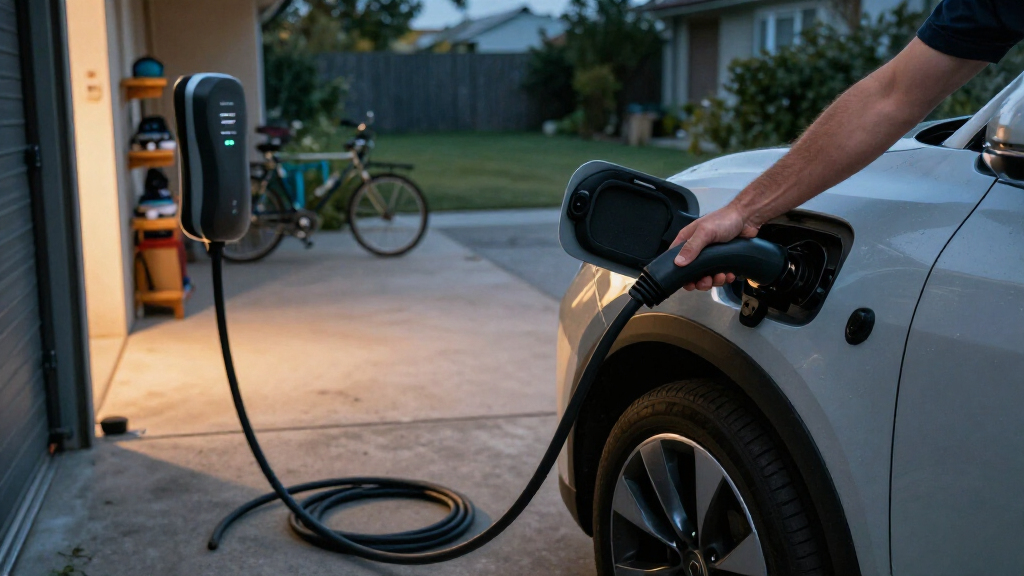
How We Picked
I evaluated these fifteen chargers based on three core pillars: electrical efficiency, user experience, and long-term reliability. First, I prioritized models that offer consistent amperage delivery, distinguishing between true 48A hardwired units and 40A plug-in options to clarify charging speed expectations. Second, I assessed the usability of smart features, favoring chargers with intuitive apps that allow for scheduling and remote monitoring over those with basic or non-existent connectivity. Third, I considered build quality and connector durability, ensuring that recommended models use robust J1772 or NACS connectors capable of withstanding outdoor conditions.
The ranking logic places emphasis on flexibility for the average homeowner. Models that offer both plug-in and hardwired configurations, like the ChargePoint HomeFlex, rank higher because they accommodate different home electrical setups without forcing a specific installation path. Premium picks are reserved for units with advanced energy management or future-proofing features like NACS compatibility, while budget picks are selected for their ability to deliver reliable basic charging without premium price tags.
Factors to Consider When Choosing Best Home EV Chargers
Selecting a home charger isn’t just about picking the fastest option; it’s about matching the hardware to your home’s electrical capacity and your daily driving habits. Here are the critical factors that separate a good purchase from a headache.Hardwired vs. Plug-In Installation
The first major decision is whether to install a hardwired unit or use a NEMA 14-50 plug. Hardwired chargers typically support higher amperage (up to 48A or 80A) and are more secure, eliminating the risk of the plug loosening over time. However, they require a dedicated circuit and often need a licensed electrician, adding to upfront costs. Plug-in models offer flexibility; you can unplug and take the charger with you if you move, but they are often capped at 40A. If you rent or plan to move soon, a plug-in model like the Leviton Smart Level 2 makes more sense. For permanent residences, a hardwired setup like the Emporia Level 2 provides better long-term value and faster charging speeds.
Amperage and Charging Speed
Amperage directly dictates how many miles of range you add per hour. A 40A charger typically adds about 30-35 miles per hour, which is sufficient for most daily commutes. A 48A charger pushes this to 35-40 miles per hour, a marginal gain for daily driving but valuable for larger vehicles like the Ford F-150 Lightning or GMC Hummer EV. Don’t assume you need the highest amperage; check your vehicle’s onboard charger limit. If your car only accepts 32A, buying a 48A charger won’t speed up your charge. Match the charger’s output to your vehicle’s intake to avoid paying for unused capacity.
Smart Features and Energy Management
Smart chargers do more than just connect to Wi-Fi; they offer control over when and how you charge. App connectivity allows you to schedule charging during off-peak hours to lower electricity bills. Some models, like the Emporia Pro, integrate with home energy monitors to prevent tripping your main breaker by balancing load across the house. Basic chargers lack these features, offering a ‘plug and play’ experience that is simpler but less efficient for cost-conscious users. If you have time-of-use rates, investing in a smart charger with robust scheduling features pays for itself through energy savings. If you charge overnight regardless of rates, a basic model may suffice.
Connector Type: J1772 vs. NACS
The industry is transitioning from the J1772 connector to the Tesla NACS (North American Charging Standard). Most current EVs use J1772, which remains the universal standard for non-Tesla vehicles. However, newer models and future vehicles are adopting NACS. Chargers like the IYILO Level 2 EV Charger with NACS connectors are future-proofing your home for the next generation of EVs. If you currently drive a Tesla, you likely have access to NACS natively. If you drive a legacy J1772 vehicle, you might need an adapter for NACS chargers. Choose J1772 for broad current compatibility, or NACS if you are buying a new EV and want to avoid adapters later.
Cable Length and Parking Logistics
Cable length is often overlooked but critically impacts daily convenience. A 25-foot cable, common on models like the DEWALT Level 2, allows you to park farther from the outlet, reducing the need to maneuver tightly into a garage. Shorter cables force you to park precisely or use extension cords, which are generally unsafe for high-current EV charging. Measure the distance from your parking spot to the breaker panel before buying. If your garage is deep, a 25-foot or 30-foot cable is non-negotiable. If you park in a driveway with the charger nearby, a shorter cable might save you money on the unit itself.
Frequently Asked Questions
Do I need a 200-amp electrical panel for a Level 2 charger?
Not necessarily, but it depends on your home’s existing load. A 48A charger draws about 9.6 kW. If your home already has a high load from HVAC, electric water heaters, or other appliances, adding a 48A load might trip the main breaker. Many smart chargers, like the Emporia Pro, offer load balancing to prevent this. For standard 40A chargers, most 100-amp or 200-amp panels can handle the load if dedicated properly. Always have an electrician assess your panel’s capacity before installation to avoid safety hazards.
Can I use an extension cord with a Level 2 EV charger?
Using an extension cord with a Level 2 charger is strongly discouraged and often voids the warranty. Level 2 chargers draw high current (240V, 32-48A), which generates significant heat. Standard extension cords are not rated for this continuous load and pose a serious fire risk. If you cannot reach your car with the charger’s built-in cable, you need to install a dedicated outlet or hardwire the charger closer to your parking spot. Do not attempt to bridge the gap with consumer-grade extension cords.
Is it worth paying extra for Wi-Fi and app features?
It depends on your utility rates. If you are on a time-of-use plan where electricity is cheaper at night, Wi-Fi-enabled chargers like the ChargePoint HomeFlex allow you to schedule charging during off-peak hours, saving you money over time. These apps also provide diagnostic data and firmware updates that keep the charger secure and efficient. If you have flat-rate electricity and simply plug in when you get home, the app features are less valuable. For most users, the convenience of remote monitoring and scheduling justifies the slight price premium.
What is the difference between J1772 and NACS connectors for home use?
J1772 is the current standard for all non-Tesla EVs in North America, while NACS is Tesla’s proprietary connector that is becoming the new industry standard. If you own a current non-Tesla EV, J1772 is the direct fit. If you are buying a new EV, it may come with a NACS port or an adapter. Installing a NACS charger now, such as the IYILO NACS model, ensures compatibility with future vehicles without needing adapters. However, if you plan to keep your current car for years, sticking with J1772 is safer and offers more product choices.
Can I install a Level 2 charger myself?
Plug-in models with a NEMA 14-50 outlet can be installed by a handy homeowner if the outlet is already present. However, hardwired installations require running conduit and wiring from the breaker panel, which typically requires a licensed electrician due to local code requirements. Incorrect wiring can lead to electrical fires or damage to your vehicle’s onboard charger. While some models like the AIMILER Level 2 offer simple plug-in options, hardwired units are complex electrical projects. Always check local permits and codes before attempting any electrical work.
Conclusion
Choosing the right home charger depends on your specific electrical setup and driving needs. For most homeowners, the ChargePoint HomeFlex is the Best Overall pick because it balances smart features, reliability, and installation flexibility. If you are on a budget and need a simple, reliable solution, the Raylix Portable Level 1/2 offers excellent value without the complexity of smart home integration. For those seeking premium performance and energy management, the Emporia Pro is the Best Premium choice, especially if you want to monitor household energy usage. Beginners or renters should look at the Leviton Smart Level 2 for its plug-in convenience and user-friendly app. Finally, if you are future-proofing for new EVs, the IYILO Level 2 with NACS is the Best for Future-Proofing, ensuring compatibility with the next generation of electric vehicles.