
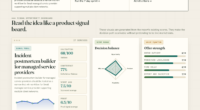
📊 Full opportunity report: The Enforcement Countdown: 89 Days Until the EU AI Act’s GPAI Penalty Phase Begins on ThorstenMeyerAI.com — validation score, market gap, and execution plan.
Listen free for 30 days with Audible
Thousands of audiobooks and originals — cancel anytime.
Start your free trialAs an affiliate, we earn on qualifying purchases.
TL;DR
In 89 days, the EU will activate enforcement powers under the AI Act for GPAI providers, allowing fines and penalties. Companies must meet compliance requirements or face significant fines. This marks a key shift in AI regulation enforcement.
In 89 days, on August 2, 2026, the European Commission will activate its enforcement powers under the EU AI Act against providers of general-purpose AI models, enabling fines up to €35 million or 7% of global turnover. This marks a significant shift in regulatory enforcement, with penalties now enforceable for non-compliance by major AI companies operating in the EU.
Since August 2, 2025, the EU has been gradually implementing substantive obligations for GPAI providers, including documentation, risk assessment, and transparency requirements. However, it is only on August 2, 2026, that the Commission can impose financial penalties for non-compliance, marking a critical enforcement milestone.
Alongside penalty activation, obligations for high-risk AI systems under Annex III will become enforceable for new deployments, requiring companies to adhere to risk management, data governance, and transparency standards. Existing systems will face compliance deadlines if they undergo significant updates.
Major AI firms such as Microsoft, Alphabet, Meta, Amazon, and private companies like OpenAI and Anthropic are directly impacted, with potential fines reaching billions of dollars based on their revenue scales. The enforcement infrastructure has been in place since August 2025, but the penalty powers are now the final piece coming into effect.
89 days.
€35 million / 7%.
August 2, 2026 — Commission’s penalty powers activate. The 89-day window is the final structural-readiness deadline.
Up to €35M or 7% of worldwide turnover — whichever is higher. Microsoft fine ceiling ~$19B. Alphabet ~$24B. Meta ~$13B. Amazon ~$45B. Compliance is not theoretical. OpenAI signed Code of Practice. Anthropic disclosed in IPO filing. Meta + xAI face elevated risk. The 89-day window is the structural compliance deadline.
worldwide turnover
Nine phases. One structural threshold.
Substantive obligations have been progressively activating through 2025-2026. August 2, 2026 is the structural shift from “EU AI Act exists” to “EU AI Act enforcement is active.”
Eight providers. Non-uniform exposure.
Compliance positions are non-uniform across major providers. The first 12 months of enforcement reveal which providers face the deepest scrutiny.
Three scenarios. One year of enforcement.
25/55/20 probability. Base scenario most likely because AI Office signaled cooperative intent, providers invested in compliance, and first year of authority typically produces moderate enforcement.
- Documentation phase onlyFew high-profile actions.
- No early finesCompliance commitments resolve.
- Cooperative classificationAnnex III ambiguity worked through.
- Limited margin impactEU compliance ~3-5% overhead.
- Outcome: EU AI Act operational but doesn’t materially affect economics.
- 1-3 doc-driven actions5-10 Member State complaints.
- First fine €5-25MxAI most likely · Meta secondary.
- Annex III disputeFormal proceedings, resolved.
- 5-10% EU overheadMaterial but absorbable.
- Outcome: Modest valuation compression. Frontier-lab base case.
- Major fine €100-500MTop-tier provider.
- Market restrictionFrontier-tier model.
- 15-25% EU overheadMaterial cost cascade.
- Frontier-lab valuation hitEU-specific compression.
- Outcome: Multi-year recovery. Bubble bear case gains evidence.
EU enforcement activation is not a discrete regulatory event. It is the operational reality that determines whether the AI cycle’s structural risks compound or remain bounded. The first 12 months of enforcement reveal which scenario materializes — and create global precedents that ripple beyond EU markets.
Four assignments. By role.
Complete substantive compliance now.
Documentation, AI Office collaboration channels active, required notifications filed. Treat 89-day window as final readiness deadline before active enforcement authority begins. The structural goal: avoid being the high-profile enforcement test case in the first 12 months. OpenAI / Anthropic / Google / Microsoft well-positioned; Meta / xAI face elevated risk.
Invest in downstream compliance support.
Compliance through cloud-AI services (Azure OpenAI, Vertex AI, Bedrock) is multi-layer complex. The provider that makes EU compliance easiest for enterprise customers captures durable share. Compliance support investment is structural competitive moat — not just cost center.
Plan deployment timing strategically.
August 2, 2026 changes regulatory calculus for new deployments. Pre-August deployments get more favorable carve-outs in many cases. Pre-position accordingly. Multi-vendor sourcing reduces single-vendor compliance failure exposure. The 89-day window is structural deployment-timing optimization opportunity.
Update forward-risk models.
Differentiate on compliance investment quality. xAI / Meta-Llama-deployers face highest enforcement risk; OpenAI / Anthropic / Google / Microsoft face manageable risk. Anthropic IPO disclosure framework provides useful precedent — explicit risk acknowledgment combined with active compliance investment positions favorably.
Implications of the EU AI Act Enforcement Activation
This enforcement activation is a turning point for AI regulation in the EU, as it introduces enforceable penalties for GPAI providers, potentially shaping global compliance strategies. The move underscores the EU’s commitment to regulating AI risks and could influence international standards, impacting major tech companies and AI deployment in European markets.
Non-compliance risks include substantial fines that could reach billions for large corporations, incentivizing rapid compliance and risk mitigation. The enforcement will test how regulatory risk translates into operational reality, affecting innovation and deployment strategies across the industry.
AI compliance documentation software
As an affiliate, we earn on qualifying purchases.
As an affiliate, we earn on qualifying purchases.
Background on EU AI Regulation Timeline
The EU AI Act, adopted in 2021, aims to regulate AI systems based on risk levels, with substantive obligations gradually coming into force since February 2025. Enforcement infrastructure, including the AI Office, was established in August 2025, but the authority to impose fines was set to activate on August 2, 2026. Prior to this, companies have been required to meet certain transparency and risk management standards, but without penalty enforcement powers.
The upcoming enforcement phase is part of a broader effort to ensure compliance across the EU market, with deadlines for high-risk systems and pre-existing models set for late 2026 and 2027. Major providers have been adjusting their compliance strategies accordingly, knowing penalties are imminent.
“Our new enforcement capabilities will ensure that AI providers adhere to the highest safety and transparency standards, protecting EU citizens and markets.”
— European Commission spokesperson
As an affiliate, we earn on qualifying purchases.
Uncertainties Surrounding Enforcement Implementation
While the activation date is confirmed, it remains unclear how quickly and aggressively the European Commission will pursue enforcement actions against specific providers. The exact criteria for prioritizing investigations or penalties, and the initial cases to be pursued, are still undisclosed. Additionally, the impact on smaller firms or non-compliant providers remains to be seen as enforcement begins.
As an affiliate, we earn on qualifying purchases.
Next Steps as Enforcement Powers Come Into Effect
Following August 2, 2026, the European Commission is expected to initiate enforcement actions, including documentation requests, evaluations, and potential fines. Major AI companies should prioritize compliance to mitigate risks, while industry observers will monitor enforcement patterns and any early penalties. Further guidance on enforcement procedures and case priorities is anticipated in the coming months.
AI governance and risk management software
As an affiliate, we earn on qualifying purchases.
As an affiliate, we earn on qualifying purchases.
Key Questions
What exactly changes on August 2, 2026?
On August 2, 2026, the European Commission activates its authority to impose fines and penalties for non-compliance with the EU AI Act for GPAI providers, alongside enforceable obligations for high-risk systems.
Which companies are most affected by the enforcement powers?
Major tech firms such as Microsoft, Alphabet, Meta, Amazon, and private AI developers like OpenAI and Anthropic are most impacted due to their large market presence and revenue, which determine potential fines.
Will existing AI systems need to be updated to comply?
Existing systems will need to undergo significant design changes if they are updated after August 2, 2026, to meet new high-risk obligations. Systems on the market before August 2025 must comply by August 2, 2027.
What are the penalties for non-compliance?
Fines can reach up to €35 million or 7% of worldwide turnover, whichever is higher, depending on the severity and nature of the violation.
How might enforcement impact AI innovation in the EU?
Enforcement could incentivize companies to prioritize compliance, potentially slowing some deployments but also encouraging safer, more transparent AI systems.
Source: ThorstenMeyerAI.com
Fall Picks
fall essentials
As an affiliate, we earn on qualifying purchases.