TL;DR
Prime for Young Adults — start your free trial
Fast free delivery, streaming and member deals for eligible 18–24 year olds.
Try it freeAs an affiliate, we earn on qualifying purchases.
Researchers are testing a phone-camera-based shade scoring system to objectively measure teeth whitening progress at home. This innovation could improve product effectiveness and reduce guesswork for consumers.
Phone-camera technology is being explored as a tool to objectively measure teeth whitening progress at home, potentially transforming how consumers track and optimize their whitening routines. This development is significant because it addresses a longstanding challenge: the lack of reliable, easy-to-use measurement methods for home whitening results, which often leads to product cycling and consumer frustration.
According to recent reports from IdeaNavigator AI, researchers are testing a prototype app that uses guided lighting and phone-camera analysis to approximate the calibrated shade readings typically performed by dentists. The goal is to provide home whitening users with an objective, consistent measure of tooth shade change over time, improving their ability to assess product effectiveness.
The app’s core feature involves capturing images of the teeth under controlled lighting conditions, then comparing the shade against a standardized dental shade scale. Users can track their progress visually and numerically, with the app plotting shade scores over weeks. It also offers recommendations based on data from users with similar starting shades and product histories.
Initial validation involves benchmarking the app’s shade scores against dentist VITA readings for fifty users. Early indications suggest a strong correlation, which could validate the app as a reliable measurement tool. The developers plan to monetize through subscriptions and affiliate sales of proven whitening products, creating a measurement layer atop the existing market.
Potential for Objective, Consistent Teeth Whitening Tracking
This innovation could significantly impact the consumer oral-care market by reducing the guesswork involved in whitening routines. Currently, users rely on subjective visual assessments, which are often inaccurate due to lighting conditions and personal perception. An objective measurement system could lead to more effective product use, less frustration, and better overall satisfaction.
Moreover, the ability to quantify whitening progress may foster increased consumer confidence and loyalty to specific products, as users can see measurable results. It could also encourage brands to develop more effective formulations, knowing that consumers can track their progress objectively.
However, the market’s acceptance depends on the app’s accuracy and ease of use. If validated, this technology might become a standard feature in home whitening kits and apps, integrating seamlessly into consumer routines.
As an affiliate, we earn on qualifying purchases.
Advances in Smartphone Technology Enable Shade Measurement
Teeth whitening has long been a popular but subjective practice, with consumers often cycling through multiple products without knowing if they are making progress. The industry has lacked a reliable, user-friendly method to measure shade change at home, leading to trial-and-error approaches that can be costly and ineffective.
Recent technological developments, including improved camera sensors and guided lighting, have opened the possibility of using smartphones for dental shade analysis. Similar methods are already employed in professional dental settings, where calibrated shade guides and specialized equipment are used to ensure accuracy.
The new approach aims to adapt these techniques for consumer use, leveraging the widespread availability of smartphones and the increasing sophistication of mobile apps. This initiative aligns with broader trends in health and beauty tech, where objective measurement tools are becoming more common.
Initial testing is underway, with researchers aiming to benchmark app scores against professional dental readings to establish reliability before broader market rollout.
“Using guided lighting and camera analysis, we aim to provide a reliable, objective measure of teeth whitening progress that consumers can trust.”
— an anonymous researcher
As an affiliate, we earn on qualifying purchases.
Validation and Consumer Acceptance Still Uncertain
While initial benchmarking shows promise, it is not yet confirmed that the app’s shade scores will consistently match dentist VITA readings across diverse users and lighting conditions. Further testing is needed to establish accuracy and reliability.
It remains unclear how quickly the technology can be refined for widespread consumer use, and whether users will adopt it as part of their routine. Regulatory considerations and integration with existing whitening products are also still in development.
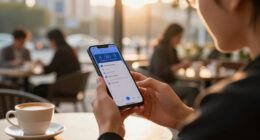
smartphone teeth whitening measurement device
As an affiliate, we earn on qualifying purchases.
As an affiliate, we earn on qualifying purchases.
Next Steps: Broader Testing and Market Integration
The developers plan to expand testing to include a larger, more diverse group of users to validate the app’s accuracy further. They aim to refine the guided-lighting system and improve user interface based on initial feedback.
Pending validation, the next phase involves partnerships with whitening brands to integrate the technology into commercial products or companion apps. Consumer trials and regulatory reviews will follow before potential launch.
Industry observers will watch for updates on the app’s performance and adoption, which could influence future product development and marketing strategies in the home whitening market.
As an affiliate, we earn on qualifying purchases.
Key Questions
Can phone cameras accurately measure teeth whitening progress?
Initial research indicates that with guided lighting and calibration, phone cameras can approximate professional shade readings. However, further validation is needed to confirm accuracy across diverse users and conditions.
Will this technology replace dentist assessments?
It is unlikely to fully replace professional assessments but could serve as a reliable tool for consumers to monitor progress at home, reducing guesswork and improving product effectiveness.
How soon could this app be available to consumers?
If validation continues positively, a broader testing phase is planned, with potential market availability within the next 12-24 months, depending on regulatory and commercial developments.
Will using the app cost extra for consumers?
The developers plan to monetize through subscriptions and affiliate sales, which could add a cost layer but also provide access to proven whitening products and personalized recommendations.
What are the limitations of using phone cameras for shade measurement?
Challenges include variability in lighting, camera quality, and user technique, which can affect measurement accuracy. Ongoing testing aims to address these issues.
Source: IdeaNavigator AI
NFL season / tailgating Picks
team gear
As an affiliate, we earn on qualifying purchases.