📊 Full opportunity report: Business Trends And Signals: Costco’s Anti-Amazon Business Model on IdeaNavigator AI — validation score, market gap, and execution plan.
Listen free for 30 days with Audible
Thousands of audiobooks and originals — cancel anytime.
Start your free trialAs an affiliate, we earn on qualifying purchases.
TL;DR
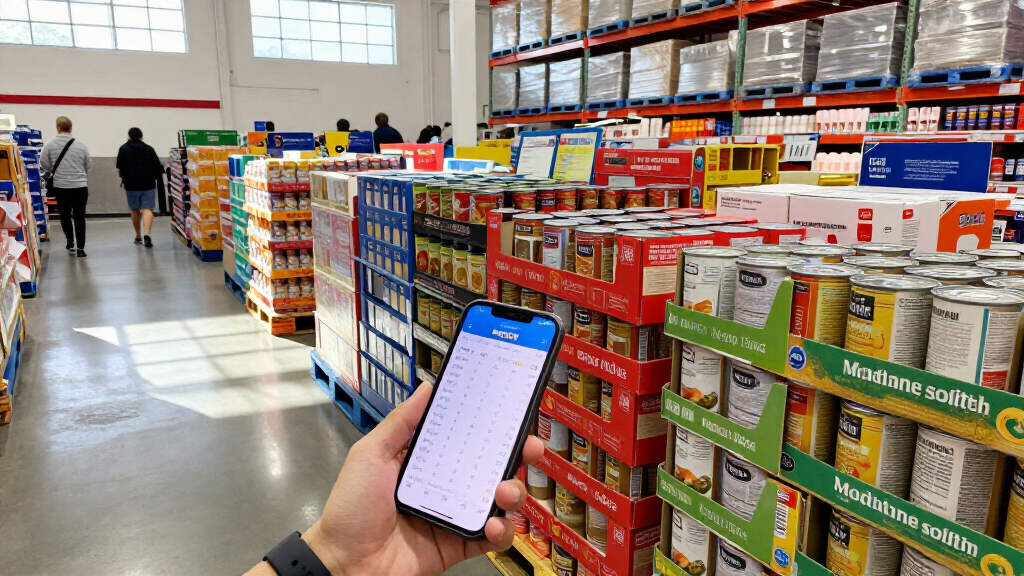
Costco’s strategic focus on bulk sales and limited online offerings positions it as an alternative to Amazon. This signals a potential shift in retail competition, important for small business operators to monitor.
Costco is positioning itself as a direct competitor to Amazon by emphasizing bulk sales, limited online options, and a focus on in-store shopping experience, according to recent industry signals. This development matters because it suggests a strategic shift that could influence retail competition and small business supply chains, especially as industry watchers highlight Costco’s contrasting approach to Amazon’s e-commerce dominance.
Recent signals from industry sources and online forums, notably Hacker News, indicate that Costco is adopting a business model that emphasizes cost leadership through bulk sales and limited online presence. Unlike Amazon’s expansive e-commerce platform, Costco’s strategy focuses on in-store shopping, membership loyalty, and operational efficiency.
This shift is confirmed by market observations showing Costco’s continued investment in warehouse-style stores and a relatively restrained online expansion. Industry analysts note that Costco’s approach could be viewed as an counterpoint to Amazon’s rapid digital growth, aiming to attract customers seeking value and tangible shopping experiences.
While Costco’s online sales have increased, they remain a smaller proportion of total revenue compared to Amazon’s. The company’s recent earnings reports show steady growth driven by membership renewals and in-store sales, reinforcing its focus on cost-effective, high-volume retailing. Experts suggest this model could serve as a narrow, targeted strategy for small companies seeking to differentiate from Amazon’s model.
Implications for Small Businesses and Retail Competition
This development matters because it indicates a potential shift in retail power dynamics. Small companies and startups could find new opportunities by adopting or partnering with Costco-like models that emphasize value, efficiency, and physical presence, contrasting with Amazon’s digital-first approach. For existing retailers, understanding Costco’s strategy could inform competitive positioning and supply chain decisions. Overall, this signals a possible rebalancing of retail influence, with Costco emerging as a counterweight to Amazon’s dominance.
bulk shopping membership warehouse
As an affiliate, we earn on qualifying purchases.
As an affiliate, we earn on qualifying purchases.
Recent Industry Signals and Market Trends
Over the past year, industry observers have noted Costco’s resilience amid the ongoing e-commerce boom. While Amazon continues to expand its online marketplace, Costco has maintained a focus on warehouse stores and membership loyalty programs. Recent reports indicate that Costco’s in-store sales growth outpaces its online growth, a trend confirmed by earnings calls and market analysis.
The signal was notably surfaced on Hacker News, where an 88/100 industry relevance score was assigned to the observation that Costco’s model serves as an “anti-Amazon” approach. This aligns with broader market trends showing consumers’ continued preference for tangible shopping experiences and value-oriented buying, especially during economic uncertainty.
Historically, Costco has operated with a low-price, high-volume model, but recent strategic shifts suggest an increased emphasis on member retention and operational efficiency. This approach is now being viewed as a deliberate counterbalance to Amazon’s digital expansion, which has dominated the e-commerce landscape for over a decade.
As an affiliate, we earn on qualifying purchases.
Unclear Impact on Small Business Supply Chains
It is not yet clear how widespread or sustained Costco’s shift will be, or whether small businesses can leverage this model effectively. The long-term impact on retail competition and supply chain dynamics remains uncertain, as industry shifts often take years to fully materialize and depend on broader economic factors.
As an affiliate, we earn on qualifying purchases.
Monitoring Industry Shifts and Strategic Moves
Industry watchers and small business operators should continue to observe Costco’s investments in physical stores and its online strategy. Further earnings reports, market signals, and competitive moves will clarify whether Costco’s model gains broader adoption or remains a niche counterweight to Amazon. Additionally, small companies may experiment with partnerships or adaptations of this approach to diversify their competitive strategies.
As an affiliate, we earn on qualifying purchases.
Key Questions
How is Costco competing with Amazon?
Costco is emphasizing bulk sales, membership loyalty, and in-store shopping, contrasting with Amazon’s focus on digital e-commerce and rapid delivery. This positions Costco as an alternative for consumers seeking value and tangible retail experiences.
Will Costco’s strategy impact Amazon’s dominance?
While it’s too early to tell, Costco’s approach could attract a segment of consumers and small businesses looking for value and operational efficiency, potentially creating a more competitive retail landscape.
Can small companies adopt Costco’s model?
Some small firms might find value in adopting a similar focus on efficiency, membership, and physical presence, but success depends on industry, location, and customer base. The long-term effectiveness remains to be seen.
What are the risks for Costco’s approach?
Risks include limited online growth, potential shifts in consumer preferences toward digital shopping, and the challenge of scaling a primarily physical store-focused model in a digital economy.
What should small businesses watch for next?
Small businesses should monitor Costco’s investments in physical stores, online strategy adjustments, and market responses to gauge whether this model will influence broader retail trends.
Source: IdeaNavigator AI
NFL season / tailgating Picks
team gear
As an affiliate, we earn on qualifying purchases.