
🔍 Read the full analysis: How AI Is Setting New Standards For Plumbing & HVAC Integration on ThorstenMeyerAI.com

Get business pricing on monitors, keyboards and dev gear
- Business-only prices and quantity discounts
- Tax-exempt purchasing
- Multiple users, one account, clear invoices
TL;DR
Artificial intelligence is now enabling precise coordination and documentation in plumbing and HVAC projects, drastically reducing unplanned wall breakthroughs and leak detection times. This shift improves efficiency and profitability for building services companies.
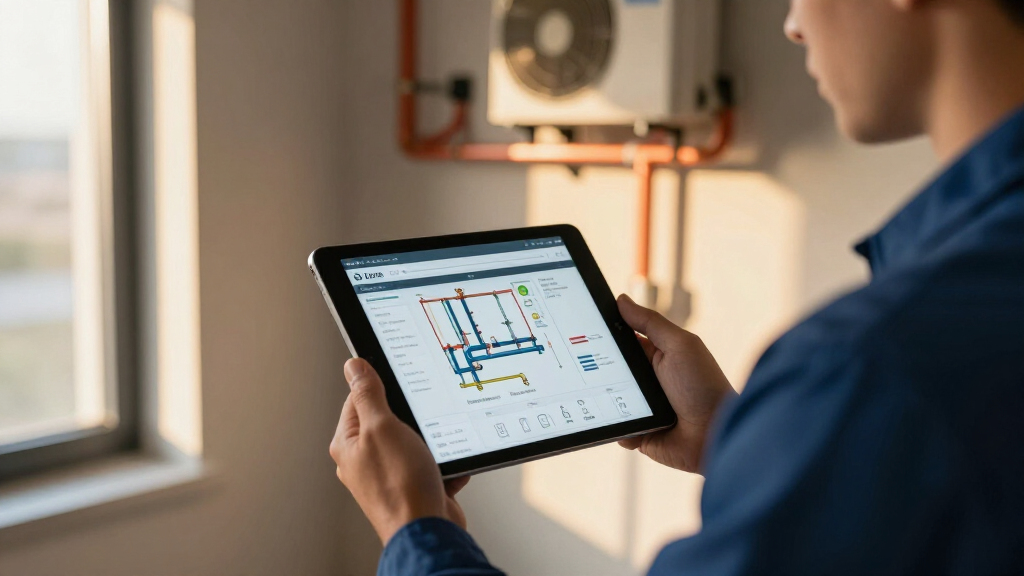
Artificial intelligence is now being integrated into plumbing and HVAC workflows, setting new standards for project coordination, documentation, and maintenance management. This development is transforming how building services companies plan, execute, and maintain complex installations, with confirmed benefits including reduced unplanned wall breakthroughs and faster leak detection.
Recent industry trials demonstrate that AI-driven platforms, such as Gewerkton, enable detailed pre-construction planning and real-time coordination, significantly decreasing uncoordinated breakthroughs from over 40 per project to fewer than five. These platforms utilize digital models, automated photo documentation, and AI-based collision detection to ensure that shafts, pipes, and other installations align precisely before concrete pouring. According to sources, this reduces costly rework and project delays.
Furthermore, AI enhances maintenance and operational workflows. By generating structured equipment registers and tracking warranty deadlines automatically, building operators can perform targeted leak detection and repairs. In one case, leak location times dropped from two days to just 20 minutes using AI-enhanced photo archives. These innovations are expected to improve long-term asset management and service revenues, as noted by industry experts.
Impacts of AI on Construction Efficiency and Maintenance
The adoption of AI in plumbing and HVAC workflows marks a significant shift towards digital, integrated building services management. It improves project margins by reducing rework and delays, enhances safety by preventing structural conflicts, and streamlines maintenance operations through better data management. These changes are expected to influence industry standards globally, especially in regions with complex regulatory requirements like Germany.
AI-powered plumbing inspection tools
As an affiliate, we earn on qualifying purchases.
As an affiliate, we earn on qualifying purchases.
Evolution of Digital Tools in Building Services
Over recent years, construction and building maintenance have increasingly incorporated digital tools. Platforms like Gewerkton, powered by Thorsten Meyer AI, have introduced comprehensive solutions that unify documentation, defect management, and operational data. The current focus on AI integration extends these capabilities, enabling predictive analytics, automated collision detection, and detailed project tracking. This evolution responds to longstanding industry frustrations with uncoordinated workflows and inefficient defect resolution, which AI now addresses with unprecedented precision.
As an affiliate, we earn on qualifying purchases.
Remaining Challenges and Unanswered Questions
While early results are promising, it is still unclear how widely these AI platforms will be adopted across different regions and project types. Questions remain about integration with existing legacy systems, data security concerns, and the long-term reliability of AI-driven automation in complex construction environments. Further studies are needed to confirm scalability and cost-effectiveness at larger scales.
Building project collision detection software
As an affiliate, we earn on qualifying purchases.
As an affiliate, we earn on qualifying purchases.
Future Developments and Industry Adoption Paths
Industry stakeholders anticipate broader deployment of AI platforms in the coming years, supported by ongoing software enhancements and increasing regulatory acceptance. Future updates may include more advanced predictive analytics for maintenance, expanded integration with building management systems, and AI-driven optimization of workflows. Monitoring pilot projects and early adopters will provide insights into best practices and potential barriers to widespread adoption.
Digital plumbing and HVAC planning tools
As an affiliate, we earn on qualifying purchases.
As an affiliate, we earn on qualifying purchases.
Key Questions
How does AI improve project coordination in plumbing and HVAC?
AI platforms enable detailed digital modeling, collision detection, and real-time communication, preventing conflicts before construction begins and reducing rework.
What are the main benefits of AI for maintenance management?
AI automates equipment data collection, tracks warranty deadlines, and accelerates leak detection, leading to faster repairs and better asset management.
Are these AI solutions widely available now?
They are currently in pilot phases or early deployment, primarily within large or technologically advanced firms, with broader adoption expected over the next few years.
What challenges could hinder AI adoption in this sector?
Barriers include integration with legacy systems, data security concerns, and the need for industry-wide standardization and training.
Will AI replace human workers in plumbing and HVAC?
Current developments aim to augment human expertise, reducing manual errors and increasing efficiency rather than replacing skilled workers entirely.
Source: ThorstenMeyerAI.com
Halloween Picks
halloween
As an affiliate, we earn on qualifying purchases.