Innovations like advanced battery technology, including higher energy densities and solid-state options, have made electric versions of the VW bus feasible, offering longer ranges and faster charging. Regenerative braking captures energy during deceleration, boosting efficiency and range. Modern design preserves the vintage look while integrating eco-friendly powertrains. These advancements blend nostalgia with innovation, transforming the classic bus into a sustainable icon. Keep exploring to discover how these breakthroughs revolutionize electric vehicles and preserve automotive history.
Key Takeaways
- Advanced battery technologies, like higher energy density and solid-state batteries, enable longer range and faster charging for electric VW Buses.
- Regenerative braking captures energy during deceleration, boosting efficiency and extending the vehicle’s driving range.
- Modern electric powertrains preserve the vintage VW Bus aesthetic while reducing emissions and improving environmental sustainability.
- Innovations in energy storage and safety make retrofitting classic models into EVs practical and reliable.
- Overall technological progress merges nostalgia with eco-friendly mobility, transforming the classic gas guzzler into a zero-emissions vehicle.
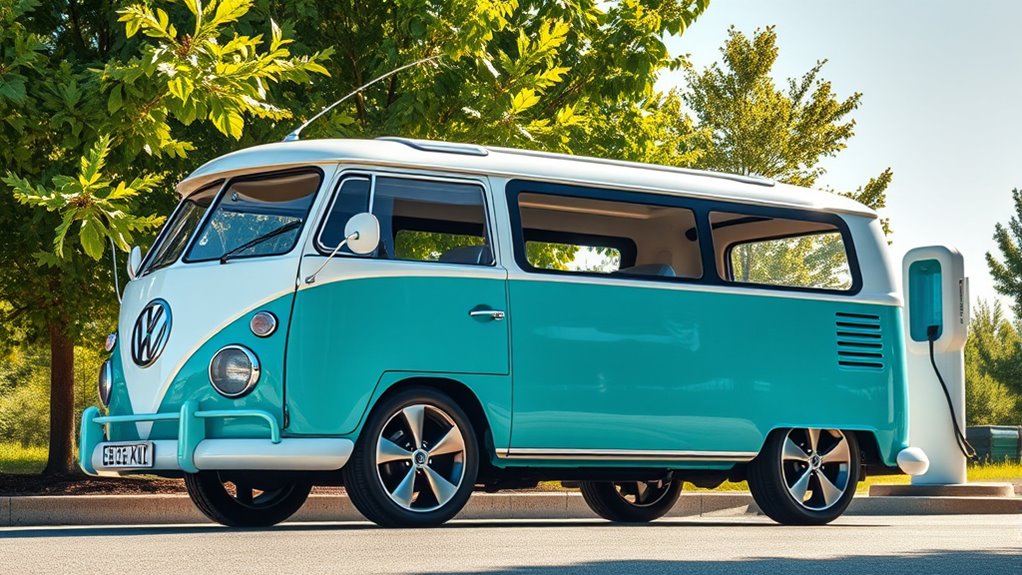
The classic VW Bus is making a bold comeback, now reimagined as an electric vehicle that combines nostalgia with cutting-edge technology. This transformation wouldn’t be possible without significant advancements in battery technology. Gone are the days of limited range and long charging times. Today’s batteries are more efficient, offering higher energy densities that allow you to travel farther on a single charge. Solid-state batteries, in particular, are set to revolutionize the game by providing faster charging, improved safety, and greater longevity. These innovations mean you can enjoy the iconic look and feel of the VW Bus without sacrificing practicality or environmental responsibility. The integration of advanced battery tech also enables the vehicle to store excess energy generated during braking and deliver it back to the system, making each journey more sustainable.
Emerging battery technologies are also driving further improvements in energy storage capabilities, supporting the evolution of electric vehicles.
Regenerative braking plays a pivotal role in this eco-friendly evolution. When you lift off the accelerator, the system automatically captures the kinetic energy that would otherwise be wasted as heat during traditional braking. Instead, it converts this energy into electrical power, which is then stored in the battery for later use. This process not only extends your driving range but also reduces wear and tear on brake components, leading to lower maintenance costs. With regenerative braking, every stop and start becomes an opportunity to recharge, making your drives more efficient and eco-conscious. This technology seamlessly integrates into the driving experience, giving you a sense of control while maximizing energy recovery. It’s an essential feature that helps the electric VW Bus stand out as a practical, sustainable alternative to its gas-powered predecessor.
Together, these innovations in battery technology and regenerative braking are transforming the classic VW Bus into a modern marvel. You get the nostalgic charm of a vintage design paired with the power and efficiency of the latest electric vehicle advancements. The enhanced battery systems ensure you spend less time plugged in and more time on the road, while regenerative braking helps you squeeze out every mile possible from each charge. This combination of technology not only aligns with current environmental goals but also caters to your desire for a reliable, stylish, and eco-friendly vehicle. As you embrace the electric VW Bus, you participate in a movement that preserves a beloved icon while pushing the boundaries of innovation. It’s a perfect blend of history and future, all driven by smarter, greener energy solutions.

AI Integrated Software Automation Testing JAVA with Selenium: Selenium WebDriver with JAVA | Software Automation Testing with AI Tools | TestNG ... 2025 | Code with AI | Auto Coding with AI
As an affiliate, we earn on qualifying purchases.
Frequently Asked Questions
What Was the Original Fuel Efficiency of the Classic VW Bus?
You might wonder about the original fuel efficiency of the classic VW bus. Back then, its gas mileage was quite modest, averaging around 15 miles per gallon. The focus wasn’t on fuel economy, but rather on versatility and style. Today, understanding its limited fuel economy highlights why innovations like electric conversions are so significant, helping you reduce emissions and improve efficiency in modern vehicles.
How Long Does the Electric VW Bus’s Battery Last on a Single Charge?
You might wonder how far the electric VW bus can go on a single charge. Its battery life typically offers a range estimation of around 150 to 200 miles, depending on driving conditions and usage. While that’s less than traditional gas engines, it’s enough for daily commutes and short trips. This shift from fuel to electricity showcases how innovative battery tech is redefining what’s possible, balancing sustainability with practicality.
Are There Any Special Features Unique to the Electric VW Bus?
You’ll notice the electric VW Bus has some unique features, blending retro design with smart tech. Its classic look appeals to nostalgic fans, while smart tech enhances your driving experience with advanced navigation, touchscreen controls, and connectivity. These features make the bus not only stylish but also practical and modern, ensuring you enjoy a seamless, innovative ride that respects its vintage roots while embracing cutting-edge technology.
What Is the Charging Time for the New Electric VW Bus?
You’ll find that the new electric VW Bus charges fairly quickly thanks to advanced battery technology and expanded charging infrastructure. With fast chargers, you can expect about 30-45 minutes to reach 80% charge, making long trips more convenient. Standard chargers take a few hours, typically around 6-8 hours. As charging infrastructure improves, the process becomes even more efficient, helping you enjoy your electric adventure without long waits.
How Does the Cost Compare to the Original Gas-Powered Model?
You’re probably wondering how the electric VW Bus stacks up in cost against the original gas model. Overall, the cost comparison shows a higher upfront price for the electric version, but the affordability analysis reveals significant savings on fuel and maintenance over time. While it’s a heavy lift initially, many find that the long-term benefits make it worth the investment, proving that sometimes, you have to spend a little to save a lot.

Software Testing Unlocked - A Beginner’s Guide to QA & Automation: 20-Step Journey from Beginner to Your First QA Job
As an affiliate, we earn on qualifying purchases.
Conclusion
Thanks to these groundbreaking innovations, you can now imagine cruising in a clean, quiet electric VW Bus, leaving behind emissions and pollution. It’s a symbol of how far we’ve come from gas-guzzling days to a sustainable future. Do you ever wonder what other classic vehicles might be reborn with zero emissions? With every technological leap, the road ahead looks brighter—and cleaner—for you and generations to come.

Hands-On Automated Testing with Playwright: Create fast, reliable, and scalable tests for modern web apps with Microsoft's automation framework
As an affiliate, we earn on qualifying purchases.

Software Testing with Generative AI
As an affiliate, we earn on qualifying purchases.