
Automated software testing tools include frameworks and platforms, but this roundup reviews books and learning guides that help readers choose, build, or improve test automation. Hands-On Automated Testing with Playwright is my best overall pick for readers seeking practical web automation, while Automated Testing Engineering Fundamentals offers a broader foundation and Software Testing with Generative AI explores AI-assisted workflows. The main tradeoff is between learning a specific framework, building general testing judgment, and applying newer AI techniques. A book can teach a workflow, but it does not replace the tools, code, and environment needed to run tests. Continue reading for the full breakdown and help matching a guide to your goals.

Get business pricing on monitors, keyboards and dev gear
- Business-only prices and quantity discounts
- Tax-exempt purchasing
- Multiple users, one account, clear invoices
Key Takeaways
- Playwright has the clearest hands-on path in this lineup: one title centers on practical browser automation, while the agentic AI title adds adaptive and self-healing concepts.
- Fundamentals and framework tutorials serve different needs. Automated Testing Engineering Fundamentals aims at broad engineering knowledge; Selenium and Playwright books focus on specific automation approaches.
- AI coverage is spread across distinct testing problems. The lineup includes generative AI, Python automation, spec-driven testing, and enterprise reliability and security rather than one interchangeable AI topic.
- Beginner readers have a choice between broad orientation and automation practice. The job-ready QA guide and The Way of the Web Tester suggest different starting points: career breadth versus a direct introduction to automated tests.
- Some titles prioritize development philosophy or system-wide quality. Test Driven Development: By Example and Full Stack Testing can inform how teams build and validate software, but neither title is framed as a single-framework manual.
| Test Driven Development: By Example |  | Best for Learning Test-First Thinking | Format: Book | Subject: Test-driven development | Approach: Presented through practical examples | VIEW LATEST PRICE | See Our Full Breakdown |
| Software Testing with Generative AI | 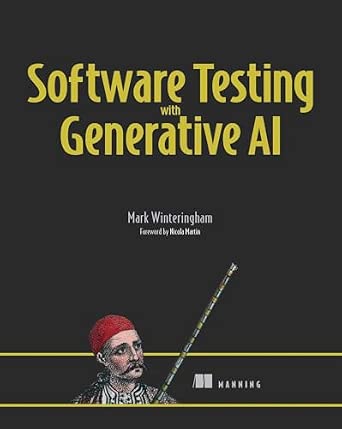 | Best for Exploring Generative AI in Testing | Format: Book | Subject: Software testing | Focus: Generative AI | VIEW LATEST PRICE | See Our Full Breakdown |
| All You Need to Know About Software Testing: From Beginner to Job-Ready QA Engineer |  | Best Broad Roadmap for Aspiring QA Engineers | Format: Book | Stated audience: Readers progressing from beginner toward QA engineer roles | Testing topics: Manual testing and automation | VIEW LATEST PRICE | See Our Full Breakdown |
| AI for Quality Assurance and Software Testing: A Practitioner’s Guide | 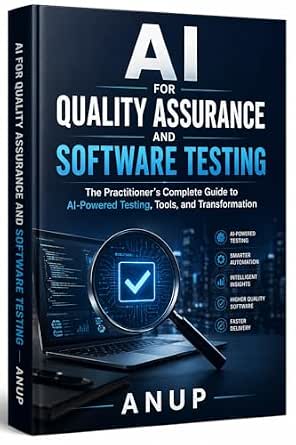 | Best for QA Teams Considering AI Adoption | Format: Book | Subject: Quality assurance and software testing | Audience framing: Practitioner’s guide | VIEW LATEST PRICE | See Our Full Breakdown |
| AI Testing with Python: Build Intelligent Test Automation |  | Best for Python-Based AI Test Automation | Format: Book | Programming language: Python | Browser automation: Selenium | VIEW LATEST PRICE | See Our Full Breakdown |
| Automated Testing Engineering Fundamentals: The Complete Handbook, Volume 1 |  | Best for Testing Foundations | Product type: Handbook | Subject: Automated testing engineering fundamentals | Series: The Complete Handbook | VIEW LATEST PRICE | See Our Full Breakdown |
| Hands-On Automated Testing with Playwright |  | Best for Practical Web Testing | Product type: Book | Framework: Microsoft Playwright | Focus: Automated testing | VIEW LATEST PRICE | See Our Full Breakdown |
| Full Stack Testing: A Practical Guide for Delivering High Quality Software in the Age of AI |  | Best for Broad Testing Strategy | Product type: Practical guide | Subject: Full-stack testing | Goal: Delivering high-quality software | VIEW LATEST PRICE | See Our Full Breakdown |
| AI-Powered Software Testing, Volume 2: Reliability, Security, and Enterprise Integration |  | Best for Enterprise Reliability and Security | Product type: Book | Subject: AI-powered software testing | Volume: 2 | VIEW LATEST PRICE | See Our Full Breakdown |
| Spec-Driven Software Testing with AI |  | Best for AI-Assisted Test Design | Product type: Book | Subject: Spec-driven software testing with AI | Test automation: Covered | VIEW LATEST PRICE | See Our Full Breakdown |
| Intelligent Test Automation: Mastering Playwright with Agentic AI for Self-Healing, Adaptive Web Testing |  | Best for AI-Assisted Playwright Testing | Format: Book | Named framework: Playwright | Testing focus: Automated web testing | VIEW LATEST PRICE | See Our Full Breakdown |
| The Way of the Web Tester: A Beginner’s Guide to Automating Tests |  | Best for Beginners | Subject: Web test automation | Intended audience: Beginners | Guide type: Beginner’s guide | VIEW LATEST PRICE | See Our Full Breakdown |
| Ultimate Selenium WebDriver for Test Automation |  | Best for Java and Selenium Frameworks | Format: English edition | Programming language: Java | Automation framework: Selenium WebDriver | VIEW LATEST PRICE | See Our Full Breakdown |
| automated software testing tool | ASIN | Format | Subject |
|---|---|---|---|
| Test Driven Development: By Ex | 0321146530 | Book | Test-driven development |
| Software Testing with Generati | 1633437361 | Book | Software testing |
| All You Need to Know About Sof | B0H5872NSQ | Book | — |
| AI for Quality Assurance and S | B0GX35R1QX | Book | Quality assurance and software testing |
| AI Testing with Python: Build | B0H8CT7GW4 | Book | — |
| Automated Testing Engineering | B0CHLC1Y2N | Not specified | Automated testing engineering fundamentals |
| Hands-On Automated Testing wit | 1806106477 | — | — |
| Full Stack Testing: A Practica | B0GKDT7Y8G | Not specified | Full-stack testing |
| AI-Powered Software Testing | B0GZWGZGD5 | — | AI-powered software testing |
| Spec-Driven Software Testing w | B0HH1B3LZG | — | Spec-driven software testing with AI |
| Intelligent Test Automation: M | B0G2HLLLP4 | Book | — |
| The Way of the Web Tester: A B | B0D8DTMQS5 | — | Web test automation |
| Ultimate Selenium WebDriver fo | B0CX5MVQ6W | English edition | Automated web testing |
More Details on Our Top Picks
Test Driven Development: By Example
Test Driven Development: By Example has a focused role in a roundup of automated software testing tools: it teaches a development practice that shapes how tests are written, rather than serving as a software tool or a guide to a particular automation framework. Its example-led approach makes it a better fit for readers who want to understand test-driven development than All You Need to Know About Software Testing, whose stated topics span manual testing, APIs, Selenium, Playwright, and CI/CD.
That narrow focus is also the main tradeoff. The available product information identifies the subject and example-based format, but gives no details about languages, frameworks, or coverage of current automation workflows. Choose it to build a test-first mindset; pair it with a hands-on framework guide if you need instructions for setting up automated tests.
Pros:- Direct focus on test-driven development
- Uses examples to present the subject
- Can help readers think about tests as part of development rather than a separate final check
Cons:- Available details do not identify programming languages or specific testing frameworks
- The described focus is narrower than guides covering manual testing, APIs, and CI/CD
- No product description is provided to clarify the examples’ scope or level
Best for: Developers and QA engineers who want to learn test-driven development through practical examples before choosing an automation framework.
Not ideal for: Readers seeking step-by-step setup for Selenium, Playwright, API testing, or CI/CD, since those subjects are not specified in the available product information.
- Format:Book
- Subject:Test-driven development
- Approach:Presented through practical examples
- Series:Addison-Wesley Signature Series
- ASIN:0321146530
- Automation framework details:Not provided
Our verdict“Choose this book to study example-led test-driven development, and look elsewhere for framework-specific automation instructions.”
Software Testing with Generative AI
Software Testing with Generative AI points directly to a timely area of automated testing: using generative AI in software testing. That makes it a distinct choice beside AI Testing with Python, whose stated scope names Python, Selenium, APIs, PyTest, and LLMs. The title alone, however, does not establish which techniques, tools, or programming languages this book covers, so I would treat it as an exploratory choice rather than a confirmed implementation manual.
The limited product details make it hard to judge depth or practical coverage. Readers who already know they want a Python-centered route have clearer topic signals in AI Testing with Python; readers comparing this title should first check its contents for examples and tool coverage. Its appeal is the generative AI focus, while its tradeoff is the lack of further description.
Pros:- Explicitly focuses on software testing with generative AI
- Addresses an AI-related angle distinct from conventional framework guides
- May suit readers comparing approaches to AI-assisted testing
Cons:- No description identifies tools, methods, or programming languages
- Available details do not confirm practical examples or implementation guidance
- Its specific coverage cannot be compared reliably with AI Testing with Python from the supplied information
Best for: Software testers and developers researching generative AI’s possible role in automated testing who can confirm the book’s contents before choosing it.
Not ideal for: Buyers who need a clearly specified, hands-on guide to a particular language, test framework, or AI testing workflow.
- Format:Book
- Subject:Software testing
- Focus:Generative AI
- Programming language details:Not provided
- Testing framework details:Not provided
- ASIN:1633437361
Our verdict“Consider it for a generative AI testing focus, but verify its contents if you need a specific hands-on toolchain.”
All You Need to Know About Software Testing: From Beginner to Job-Ready QA Engineer
All You Need to Know About Software Testing has the broadest stated learning path among these five: it connects manual testing with automation, API testing, Selenium, Playwright, and CI/CD. That breadth makes it more suited to someone building an overview of QA work than Test Driven Development: By Example, which focuses on a single development practice, or AI Testing with Python, which names a Python-centered toolset.
The same range may mean less depth on any one framework; the supplied description does not say how much space each topic gets or provide sample projects. I would pick it for orientation across QA areas and common automation technologies, not as proof of advanced expertise in a particular stack. Readers who already know their target framework may get a more direct route from a focused guide.
Pros:- Combines manual testing and automation topics
- Names API testing as part of its scope
- Includes Selenium and Playwright
- Addresses CI/CD alongside testing
Cons:- The broad topic list may offer less depth on individual frameworks
- No sample projects or chapter-level detail are provided
- The available description does not establish how the book supports a job-ready outcome
Best for: Beginners preparing for QA engineering roles who want an introduction spanning manual testing, automation, APIs, browser tools, and CI/CD.
Not ideal for: Experienced automation engineers seeking advanced, project-level coverage of one framework or detailed implementation examples.
- Format:Book
- Stated audience:Readers progressing from beginner toward QA engineer roles
- Testing topics:Manual testing and automation
- API testing:Included
- Browser automation tools:Selenium and Playwright
- Delivery workflow:CI/CD
- ASIN:B0H5872NSQ
Our verdict“Choose this as a broad starting point for QA work, then use a focused framework guide to deepen your automation skills.”
AI for Quality Assurance and Software Testing: A Practitioner’s Guide
AI for Quality Assurance and Software Testing: A Practitioner’s Guide is aimed at the organizational side of automated testing: its description says it covers AI-powered testing tools and transformation. That gives it a different purpose from Software Testing with Generative AI, whose supplied details establish a generative AI focus but no further scope, and from AI Testing with Python, which names a specific programming and framework toolkit.
This guide may suit practitioners weighing how AI fits into QA work, but the product data does not name tools, methods, or implementation examples. I would not choose it on the assumption that it teaches a particular automation workflow. Compared with the Python-focused title, its stated emphasis appears broader and more practice-oriented at the QA level, with less evidence of hands-on coding detail.
Pros:- Explicitly addresses AI-powered testing tools
- Frames AI through quality assurance and software testing practice
- Includes the theme of QA transformation
Cons:- No specific tools or frameworks are identified in the available description
- The product data does not confirm coding exercises or implementation examples
- Coverage boundaries and intended reader experience are not detailed
Best for: QA leads and software testing practitioners evaluating AI-powered tools and changes to team testing practices.
Not ideal for: Developers looking for confirmed Python, Selenium, API, or PyTest exercises to build automation themselves.
- Format:Book
- Subject:Quality assurance and software testing
- Audience framing:Practitioner’s guide
- AI coverage:AI-powered testing tools
- Additional focus:Transformation in quality assurance and software testing
- Programming language or framework details:Not provided
- ASIN:B0GX35R1QX
Our verdict“Choose this for a practitioner-level view of AI in QA, while Python-focused learners should favor a guide with named tools and frameworks.”
AI Testing with Python: Build Intelligent Test Automation
AI Testing with Python gives the clearest named toolchain among these five: Python, Selenium, APIs, and PyTest, with LLMs and AI-powered testing also in scope. That specificity makes it a more actionable pick for developers building automated tests than Software Testing with Generative AI, whose available details do not name tools or languages. It is also more focused on coding than All You Need to Know About Software Testing, which spans beginner QA topics and multiple testing areas.
The tradeoff is its Python-centered scope. Teams using another language or seeking a broad QA career overview may find the other titles a closer fit. The description does not specify project depth or how the AI material is applied, so buyers should check the contents if they need a particular LLM workflow. Still, its combination of conventional automation tools and AI topics gives Python learners a defined starting point.
Pros:- Names Python and PyTest for building automated tests
- Includes Selenium and API testing
- Adds LLM and AI-powered testing topics to a conventional automation toolset
Cons:- Python-centered scope may not suit teams using other languages
- The available description does not specify project depth or sample exercises
- The practical coverage of LLM testing workflows is not detailed
Best for: Python developers and QA engineers who want to connect Selenium, API testing, and PyTest with LLM and AI testing topics.
Not ideal for: Teams committed to another programming language or beginners seeking a broad introduction to all QA responsibilities.
- Format:Book
- Programming language:Python
- Browser automation:Selenium
- API testing:Included
- Test framework:PyTest
- AI topics:LLMs and AI-powered testing
- ASIN:B0H8CT7GW4
Our verdict“Choose this when your automation work centers on Python and you want AI topics alongside established testing tools.”
Automated Testing Engineering Fundamentals: The Complete Handbook, Volume 1
Automated Testing Engineering Fundamentals is the most foundational pick in this group: its title signals a focus on core engineering principles rather than one framework or a specialized AI workflow. That makes it a possible fit for readers who want to build their understanding before choosing tools. Compared with Hands-On Automated Testing with Playwright, it appears less tied to practical web test implementation; compared with Spec-Driven Software Testing with AI, it does not advertise AI-based test generation or specification-led suites. The limitation is the sparse product information: the description gives no contents, format, or examples, so I cannot judge its depth or how directly it helps readers automate tests. Treat it as a fundamentals-oriented option, and check the book’s contents before relying on it for hands-on instruction.
Pros:- Explicitly focuses on automated testing engineering fundamentals
- Volume 1 identifies it as the first volume in a series
- Broad framing may suit readers who have not settled on a specific testing tool
Cons:- The available description provides no detail about topics, examples, or depth
- No specific framework or practical exercise format is identified
Best for: Readers seeking an introduction to automated testing engineering before choosing a framework
Not ideal for: Developers looking for confirmed Playwright examples, AI-assisted workflows, or detailed information about the book’s contents
- Product type:Handbook
- Subject:Automated testing engineering fundamentals
- Series:The Complete Handbook
- Volume:1
- ASIN:B0CHLC1Y2N
- Format:Not specified
Our verdict“Choose it as a possible starting point for testing fundamentals, but verify the contents if you need tool-specific instruction.”
Hands-On Automated Testing with Playwright
Hands-On Automated Testing with Playwright is the clearest choice here for readers who want instruction tied to a named automation framework. Its focus on creating fast, reliable, and scalable tests for modern web applications points toward practical implementation, while Automated Testing Engineering Fundamentals: The Complete Handbook, Volume 1 offers a broader fundamentals framing without a stated framework. That specificity is useful if your team is adopting Playwright and needs to turn browser testing into repeatable work. The tradeoff is its narrower scope: the supplied description does not claim coverage of enterprise security, full-stack testing, or AI-assisted test design, topics associated with other books in this batch. It is best suited to web developers and QA engineers who want Playwright-centered guidance, rather than readers seeking a general survey of automated testing tools.
Pros:- Practical, hands-on focus
- Centers on Microsoft’s Playwright automation framework
- Targets fast and reliable test creation
- Addresses scaling tests for modern web applications
Cons:- Playwright focus may be limiting for teams using other automation frameworks
- The supplied description does not specify coverage of AI workflows or enterprise security
Best for: Web developers and QA engineers building or scaling browser tests with Microsoft Playwright
Not ideal for: Readers seeking framework-neutral coverage or a guide centered on AI, security, or enterprise integration
- Product type:Book
- Framework:Microsoft Playwright
- Focus:Automated testing
- Application type:Modern web applications
- Emphasis:Fast, reliable, and scalable tests
- ASIN:1806106477
Our verdict“Pick this book when your immediate goal is practical automated testing for modern web applications with Playwright.”
Full Stack Testing: A Practical Guide for Delivering High Quality Software in the Age of AI
Full Stack Testing takes the widest-scope approach in this set, framing software quality across the stack and in the context of AI. That makes it potentially relevant to teams deciding how automated checks fit into a larger delivery process, rather than focusing only on browser scripts as Hands-On Automated Testing with Playwright does. The title also signals a practical guide, though the supplied description does not identify specific tools, test layers, or examples. That lack of detail is a real buying limitation: readers cannot tell whether it offers implementable automation patterns or mainly strategic guidance. Compared with AI-Powered Software Testing, Volume 2, it signals a broader full-stack view, while the latter explicitly emphasizes reliability, security, and enterprise integration. This option fits readers who want cross-stack perspective and can verify the contents before committing.
Pros:- Frames testing across the full software stack
- Connects software quality to AI-era development
- Described as a practical guide
Cons:- The available description does not name tools or automation frameworks
- No specific test types, examples, or contents are provided
Best for: Engineering leads and developers seeking a practical, cross-stack view of quality work in AI-era software delivery
Not ideal for: Readers who need a named automation framework, confirmed hands-on code examples, or detailed security guidance
- Product type:Practical guide
- Subject:Full-stack testing
- Goal:Delivering high-quality software
- Context:Age of AI
- ASIN:B0GKDT7Y8G
- Format:Not specified
Our verdict“Consider it for a broad full-stack testing perspective, after checking whether its contents include the automation detail you need.”
AI-Powered Software Testing, Volume 2: Reliability, Security, and Enterprise Integration
AI-Powered Software Testing, Volume 2 has the most specialized audience in this batch: senior architects and operations engineers responsible for reliability, security, and connecting testing with enterprise systems. Those priorities set it apart from Hands-On Automated Testing with Playwright, which is centered on building web tests with a specific framework, and from Full Stack Testing, which signals a broader quality focus in AI-era development. This book’s stated topics make it a stronger match when automated testing must support operational and organizational needs, not just test authoring. The tradeoff is that the senior-level focus may be too advanced or indirect for beginners who want step-by-step automation exercises. The supplied data also does not specify which AI techniques, platforms, or integration patterns the volume covers, so readers should review its contents for fit.
Pros:- Explicit focus on reliability and security
- Addresses enterprise integration
- Aimed at senior architects and operations engineers
Cons:- The intended senior audience may make it less accessible to newcomers
- The available description does not identify specific AI methods or integration platforms
Best for: Senior software architects and operations engineers planning AI-supported testing around reliability, security, and enterprise integration
Not ideal for: Beginners or individual contributors seeking framework tutorials and step-by-step test automation exercises
- Product type:Book
- Subject:AI-powered software testing
- Volume:2
- Topics:Reliability, security, and enterprise integration
- Intended audience:Senior architects and operations engineers
- ASIN:B0GZWGZGD5
Our verdict“Choose this volume when enterprise reliability, security, and integration are central to your automated testing responsibilities.”
Spec-Driven Software Testing with AI
Spec-Driven Software Testing with AI stands out for linking test automation to specifications: the stated approach is to build test suites from defined requirements with AI. That gives it a different decision-making angle from Hands-On Automated Testing with Playwright, which focuses on executing web tests through a particular framework. Its listed subjects—test automation, TDD, API testing, and CI/CD—also give readers several points where specification-led tests can fit into a development pipeline. The tradeoff is breadth: the description names multiple topics but does not say which AI tools, test frameworks, or implementation examples appear. Readers who need enterprise reliability and security guidance may find AI-Powered Software Testing, Volume 2 more directly aligned. This book makes most sense for developers who want to connect requirements, AI-assisted test design, and delivery automation.
Pros:- Focuses on building test suites from specifications
- Includes AI and test automation
- Covers TDD and API testing
- Includes CI/CD as part of the stated scope
Cons:- The supplied description does not name AI tools or testing frameworks
- The breadth of topics leaves the depth of each area unclear
Best for: Developers and QA engineers who want to generate or organize automated test suites from specifications and connect them to CI/CD
Not ideal for: Readers seeking a detailed guide to a named browser framework or enterprise security and integration practices
- Product type:Book
- Subject:Spec-driven software testing with AI
- Test automation:Covered
- Test-driven development:Covered
- API testing:Covered
- CI/CD:Covered
- ASIN:B0HH1B3LZG
Our verdict“Pick it if you want specification-led, AI-assisted test design tied to development and CI/CD practices.”
Intelligent Test Automation: Mastering Playwright with Agentic AI for Self-Healing, Adaptive Web Testing
Playwright plus agentic AI gives this book a distinct focus: adapting web tests when interfaces change, rather than covering automation broadly. That makes it a more specialized choice than The Way of the Web Tester, which is aimed at beginners, and a different path from Ultimate Selenium WebDriver for Test Automation, which centers on Java and Selenium. The title points readers toward self-healing and adaptive testing, ideas that may interest teams trying to reduce brittle UI checks. The available product information does not describe the book’s examples, prerequisites, or technical depth, so I would not treat its title as proof that it provides implementation-ready guidance. It suits readers already exploring Playwright and AI-assisted test maintenance, but buyers seeking a verified, broad curriculum have limited detail to judge before choosing.
Pros:- Focuses on Playwright-based web test automation
- Addresses self-healing and adaptive testing concepts
- Connects agentic AI with automated test maintenance
Cons:- Available product details do not describe examples or implementation depth
- The specialized AI focus may be less useful to readers seeking general testing fundamentals
Best for: Playwright practitioners exploring agentic AI approaches to adaptive web test maintenance
Not ideal for: Readers who need a clearly documented beginner curriculum, detailed examples, or confirmed technical coverage before buying
- Format:Book
- Named framework:Playwright
- Testing focus:Automated web testing
- AI approach:Agentic AI
- Adaptation topics:Self-healing and adaptive testing
- ASIN:B0G2HLLLP4
Our verdict“Choose this title if you already work with Playwright and want to explore AI-assisted adaptation, while accepting that its depth is not established by the available details.”
The Way of the Web Tester: A Beginner’s Guide to Automating Tests
For someone taking a first step into web test automation, this guide has the clearest audience in the group: beginners learning to automate tests. That makes it a more accessible starting point than Ultimate Selenium WebDriver for Test Automation, whose Java, Selenium WebDriver, and Grid focus suggests a more specific framework path. It also differs from Intelligent Test Automation, which centers on Playwright and agentic AI rather than introductory learning. The available description does not name a framework, language, sample project, or prerequisite, so readers cannot tell how hands-on the material is or whether it matches their intended stack. I would choose it for orientation to web automation, but developers who need framework-specific setup and implementation guidance may prefer a title with those topics stated explicitly.
Pros:- Explicitly targets beginners
- Keeps its subject focused on automating web tests
- May suit readers who want an entry point before choosing a framework
Cons:- Available details do not identify a framework or programming language
- The description does not establish how much practical, hands-on instruction it includes
Best for: New QA learners and developers who want an introductory guide to automating web tests
Not ideal for: Practitioners who need instruction for a particular framework, programming language, or test infrastructure
- Subject:Web test automation
- Intended audience:Beginners
- Guide type:Beginner’s guide
- Named framework:Not specified in available product details
- Programming language:Not specified in available product details
- ASIN:B0D8DTMQS5
Our verdict“Pick this guide for a beginner-oriented introduction, but choose a framework-specific book if you need actionable setup guidance for your stack.”
Ultimate Selenium WebDriver for Test Automation
This is the most clearly stack-specific option in this batch: it covers Java, Selenium WebDriver, and Selenium Grid while focusing on building automated testing frameworks. That makes it a stronger match for teams committed to Selenium than Intelligent Test Automation, which points readers toward Playwright and agentic AI, or The Way of the Web Tester, which is framed for beginners without naming a toolset. Its examples span EdTech, banking, and SaaS, giving the framework discussion several application settings. The same specificity narrows its appeal: readers using Playwright or seeking a tool-neutral introduction may get more relevant direction elsewhere. The product description does not state the required Java level or how deeply it covers Grid, so readers should weigh that uncertainty if they need a precise match for their experience.
Pros:- Covers Java with Selenium WebDriver
- Includes Selenium Grid as a framework topic
- Focuses on building and implementing automated testing frameworks
- Uses examples from EdTech, banking, and SaaS
Cons:- Its Selenium and Java focus limits relevance for teams using other frameworks
- Available details do not specify Java prerequisites or the depth of Grid coverage
Best for: Java developers and QA engineers building Selenium-based web test frameworks, including teams considering Grid
Not ideal for: Beginners seeking a tool-neutral overview or teams whose web automation stack is based on Playwright
- Format:English edition
- Programming language:Java
- Automation framework:Selenium WebDriver
- Grid technology:Selenium Grid
- Subject:Automated web testing
- Application areas:EdTech, banking, and SaaS
- ASIN:B0CX5MVQ6W
Our verdict“Choose this book when your team is building Java and Selenium automation frameworks, especially if Grid is in scope.”

How We Picked
I ranked these 13 books and guides by how directly their stated focus helps a reader learn or make decisions about automated software testing. I gave the most weight to practical automation instruction, clarity about the audience, relevance of framework coverage, and whether the topic supports skills that transfer across projects. Titles focused on AI received credit for a distinct, clearly identified testing use case, while broad quality and software testing books were judged on the foundations they appear to offer.
The ranking favors resources with a clear route from learning to applying automation, then places narrower framework guides, AI specializations, and broader testing or development references according to the needs they serve. A title’s name alone cannot establish its technical accuracy, depth, edition quality, or update schedule, so readers should check the book’s contents and publication details before choosing. These recommendations compare the stated scope of the titles; they do not claim hands-on testing of the books or software.
| automated software testing tool | Format |
|---|---|
| Test Driven Development: By Ex | Book |
| Software Testing with Generati | Book |
| All You Need to Know About Sof | Book |
| AI for Quality Assurance and S | Book |
| AI Testing with Python: Build | Book |
| Automated Testing Engineering | Not specified |
| Hands-On Automated Testing wit | — |
| Full Stack Testing: A Practica | Not specified |
| AI-Powered Software Testing | — |
| Spec-Driven Software Testing w | — |
| Intelligent Test Automation: M | Book |
| The Way of the Web Tester: A B | — |
| Ultimate Selenium WebDriver fo | English edition |
Factors to Consider When Choosing Automated Software Testing Tools
Choose a learning resource by the work you need to do after reading it. The right fit depends on your current testing knowledge, the applications you need to test, and whether you need a framework tutorial or a wider engineering perspective.
Choose a learning resource, then verify the actual tools
A book about automation is not itself an automation platform, so check whether you need instruction, runnable tooling, or both. Before choosing a title, identify the language, browser, application type, and CI environment your team already uses. Look at the contents or sample pages for concrete exercises, repository links, and setup instructions. A framework guide can become a poor fit if its examples assume a different language or project structure. Also check publication and revision dates, since APIs and recommended practices can change. If you need software to run tests, compare the framework’s current documentation and licensing separately from any book recommendation.
Match framework depth to your project
Framework-specific knowledge pays off when your team has already chosen a stack and needs to ship reliable tests in it. If that decision is still open, compare the maintenance activity, browser or platform support, language fit, ecosystem integrations, and skills available on your team before buying a narrowly focused guide. Avoid selecting a framework solely because a tutorial promises quick setup; the long-term cost often appears in flaky tests, complex fixtures, and maintenance work. A focused book can accelerate onboarding, but it cannot settle architecture questions for every application. For teams with several stacks, pair a practical framework resource with principles that apply across them. That combination can prevent a useful tutorial from turning into a rigid template.
Separate AI assistance from dependable test coverage
AI features can help draft tests, interpret failures, or adapt to interface changes, but those tasks carry different risks. Ask what data an AI workflow sends to a provider, whether the output is reviewable, and how a team detects incorrect assertions or missed edge cases. Self-healing selectors may reduce maintenance for some UI changes while also hiding a broken user flow if updates go unchecked. Treat AI-generated tests as proposals that need human review and meaningful assertions. Readers evaluating AI-focused material should look for repeatable examples, failure handling, and discussion of security and privacy. A useful AI guide should strengthen a testing process rather than ask readers to trust generated output by default.
Budget time for maintenance, not just test creation
Test automation has an ongoing cost: teams must maintain fixtures, update dependencies, diagnose failures, and decide which checks belong in each pipeline stage. A resource that teaches test design and failure diagnosis may serve a team longer than one that only demonstrates how to write scripts. Estimate how often the application changes and which failures are expensive before deciding how much browser coverage to automate. Fast feedback on critical paths may matter more than broad, slow end-to-end coverage. Keep a human owner for flaky tests and define when a test should be repaired, replaced, or removed. This maintenance view helps readers judge whether a promising example can work in a real delivery cycle.
Pick breadth or specialization based on your next milestone
Beginners may benefit from a broad view of QA before committing to a single framework, while working engineers often need to solve a specific automation problem now. Decide whether your next milestone is learning testing vocabulary, building a first browser test, adding AI to an existing workflow, or improving system-level quality. Broad guides can clarify how automation fits into development, but they may not provide enough code for immediate use. Specialized books can shorten the path to a working example while leaving gaps in testing strategy. A practical way to avoid a mismatch is to define one outcome you expect from the book, such as a maintainable login flow test or a reviewed AI test-generation process. Check the table of contents against that outcome before committing.
Frequently Asked Questions
Are these books themselves automated software testing tools?
No. The lineup consists of books and guides about software testing, automation, and related methods; it does not list runnable testing platforms. Use a book to learn concepts or a workflow, then select software that fits your language, application, and team infrastructure. Check the current documentation and licensing for any framework discussed in a title. This distinction matters if you are looking for something you can install and run today.
Should I learn Playwright or Selenium first?
Start with the framework that best matches your application, team language, existing tests, and hiring or support needs. The lineup includes a practical Playwright guide and a Selenium WebDriver title, but their presence alone does not establish which framework suits every project. Compare current browser support, integrations, maintenance activity, and the skills your team can sustain. If you are choosing without a project constraint, review a small representative test in each framework before committing to a learning path.
Can I use an AI testing guide if I am new to QA?
You can, but AI material is easier to judge when you already understand test cases, assertions, and failure analysis. Without those basics, generated tests may look convincing even when they miss important behavior. A broad QA or beginner automation guide can provide context before you tackle generative or agentic workflows. If you do begin with an AI title, treat each generated test as code that needs review and verification.
Is a framework book enough to set up automation for my team?
Usually not on its own. A book can explain framework concepts and examples, while a team setup also depends on application architecture, test data, CI configuration, environment management, and ownership of failures. Check whether the resource includes maintained examples and details that resemble your stack. Then validate the approach with a small pilot that covers a critical user flow and runs in your actual pipeline. That pilot reveals integration and maintenance work that a reading list cannot predict.
Should I choose a broad testing guide or a specialized AI or framework book?
Choose based on the next skill gap you need to close. A broad guide is more useful when you need testing vocabulary, QA context, or principles that apply across projects; a specialized title is a better match when your team has selected a framework or has a defined AI use case. The roundup includes both kinds, so the titles are not direct substitutes. If you are uncertain, begin with the broadest gap, then add a focused resource when you know which workflow needs attention.
Conclusion
For a practical entry into browser automation, I recommend Hands-On Automated Testing with Playwright as the best overall pick in this lineup. Readers seeking broad engineering grounding should compare it with Automated Testing Engineering Fundamentals, my best value choice for a general foundation; readers wanting a premium-style specialization can look to AI-Powered Software Testing, Volume 2 for its stated focus on reliability, security, and enterprise integration. For beginners, The Way of the Web Tester offers the most direct beginner framing, while the job-ready QA guide suits readers seeking wider career orientation. Choose Ultimate Selenium WebDriver for Test Automation when Selenium is already relevant to your work, and turn to the generative, Python, or spec-driven AI titles only when those specific workflows match your goals. Check the contents and publication details before purchase to confirm the material fits your stack.