📊 Full opportunity report: How Founders Can Find A Partner With A Compatible Work Style on IdeaNavigator AI — validation score, market gap, and execution plan.

Get business pricing on monitors, keyboards and dev gear
- Business-only prices and quantity discounts
- Tax-exempt purchasing
- Multiple users, one account, clear invoices
TL;DR

IdeaNavigator AI has proposed testing a cofounder-matching service that assesses work style alongside skills and shared interests. Its suggested validation is to offer reports to 200 early-stage pairs and track whether those partnerships remain intact after 12 months; no results or evidence of a launched service are provided.
IdeaNavigator AI has proposed a cofounder-matching service that would pair founders by work style as well as skills and startup interests. In its proposal, the company describes this as a product concept, not a reported launch or proven method: its suggested test is to provide compatibility reports to 200 existing early-stage pairs and check their partnership status after 12 months.
In its proposal, IdeaNavigator AI identifies the target user as a founder searching for a cofounder. The proposed service would add a work-style assessment to profile matching, covering decision-making, conflict handling, risk appetite and pace. The proposal’s premise is that two people with complementary résumés or shared enthusiasm for a business may still differ in how they make decisions, resolve disagreements, approach uncertainty or organize their work.
For a minimum viable product, IdeaNavigator AI proposes showing matches a compatibility map that highlights likely areas of friction, along with structured trial-project templates. The proposal says those projects would give prospective partners a way to test how they collaborate before making a longer-term commitment. It also suggests revenue from a premium matching subscription and paid compatibility reports for pairs who already work together.
As a proposed evidence-gathering step, IdeaNavigator AI says reports could be offered to 200 early-stage founder pairs, then their compatibility scores compared with whether their partnerships survive for 12 months. This is a suggested research plan, not a completed study: the proposal provides no assessment questions, scoring method, participant recruitment details or results.
Founder partnerships · Product concept
How Founders Can Find a Partner With a Compatible Work Style
A proposed matching service would add work style to the search for a cofounder. Its promise is clear; its ability to predict durable partnerships remains untested.
01 / What it would assess
Beyond résumés and shared enthusiasm
The concept adds a structured conversation about how two people work together. It would complement skills and shared startup interests, rather than replace them.
How choices get made
Compare how founders weigh input, make calls and move from discussion to action.
How disagreements unfold
Surface different ways of raising concerns, working through tension and reaching resolution.
How work moves forward
Explore comfort with uncertainty, appetite for risk and preferred working tempo.
Compatibility is a prompt for discussion, not a verdict. The proposal does not define which styles count as compatible or explain how the assessment would score a match.
02 / From match to working relationship
Test collaboration before the commitment
The proposed minimum viable product would combine a compatibility map with guided trial projects, giving prospective cofounders a practical way to observe how they work together.
Build profiles
Bring together work style, skills and startup interests.
Review a map
Highlight potential friction points to discuss openly.
Try a project
Use a structured project template to collaborate in practice.
Decide together
Use the experience as one input before a longer-term commitment.
03 / Evidence check
A test is proposed; validation is still open
The suggested research plan would compare compatibility scores with partnership status after a year. No assessment, recruitment plan or findings are provided.
Follow 200 early-stage pairs
Offer compatibility reports to existing founder pairs, then check whether each partnership remains intact after 12 months.
Key parts of the method
The proposal does not say how scores would be produced, who would run the study, or how participants would be recruited.
04 / What founders should know
Useful idea, unproven signal
A compatibility map may help people talk through differences. Whether its scores can forecast a team’s future is a separate question that needs evidence.
Make friction discussable
Structured prompts and trial work could reveal collaboration habits that profiles and casual conversations miss.
Outcomes need context
A team staying together for 12 months does not explain why it succeeded, struggled or separated.
Demand is not quantified
The proposal points to founder services and structured cofounder search, but gives no market sizing or supporting figures.
05 / Questions still to answer
What would make the case stronger?
Before founders or investors can judge the service, the assessment and follow-up need enough detail to be understood and evaluated.
Has the service launched?
No. IdeaNavigator AI describes a product concept and proposed minimum viable product, not an available service or launch.
What exactly gets measured?
The proposal names decision-making, conflict handling, risk appetite and pace. It gives no assessment questions or scoring system.
Can scores predict outcomes?
No results or validated assessment are reported. A follow-up could test an association, but would not by itself prove prediction or causation.
What happens next?
The 200-pair study is a suggestion. Recruitment, timing, partnership-survival criteria and study ownership remain unspecified.
Testing Compatibility Before Commitment
If work-style differences are relevant to how founders collaborate, a structured way to discuss them could help people identify potential disagreements before they share responsibility for a company. A trial project could also give prospective partners a practical basis for judging their working relationship, rather than relying only on profiles and conversations.
But the product’s value depends on whether its assessment can predict real outcomes. A compatibility map could be useful for prompting discussion without accurately forecasting whether a partnership will last. The proposed 12-month follow-up is intended to start testing that link, though partnership survival alone would not explain why a team separated or whether a match was otherwise successful.
Popular right now

Apple AirPods Pro 3 Wireless Earbuds with Active Noise Cancellation

Vitamix Propel Series 750 Professional-Grade Blender, 4 Programs, Black
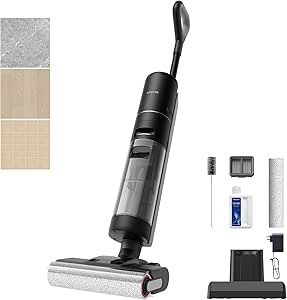
Dreame G10 Pro Wet and Dry Vacuum Mop
As an affiliate, we earn on qualifying purchases.
In its proposal, IdeaNavigator AI frames the concept as a focused addition to existing cofounder search: matching based on work style, rather than replacing skill and idea-interest filters. The company says YC’s matching platform has helped normalize structured cofounder search, creating an audience for another matching layer. The proposal supplies no separate evidence or figures to quantify that claim or the size of the potential market.
IdeaNavigator AI describes founder services and startup formation as the relevant market. It also characterizes partnership breakups as a major startup risk, but provides no supporting data for the claim that they are the top cause of startup failure. The case for building the service therefore rests on a plausible problem statement that still needs independent testing.
Evidence the Proposal Still Needs
No validation results are reported in IdeaNavigator AI’s proposal. It remains unclear how the assessment would be developed or tested, what counts as a compatible work style, and how the service would distinguish useful differences from warning signs. The proposal does not identify researchers, describe a validated assessment, or provide data showing that work-style scores predict partnership outcomes.
Details of the proposed 200-pair test are also missing, including how participants would be recruited, what would count as a surviving partnership and how other factors would be handled. A 12-month check could record whether pairs remain together, but it would not by itself establish that the assessment caused or accurately predicted that outcome.
From Matching Concept to Test
IdeaNavigator AI’s proposal identifies the next step as offering compatibility reports to 200 existing early-stage pairs and comparing their scores with partnership status 12 months later. The proposal does not say that recruitment has begun, set a timetable, or name an organization responsible for running the test.
Before founders or investors can judge the service, the assessment and its results would need to be made clear, including how scores are produced and what the follow-up finds. Until then, work-style matching remains a proposed product concept rather than an established way to select a cofounder.
Source: IdeaNavigator AI’s proposal
Key Questions
Has the cofounder-matching service launched?
The IdeaNavigator AI proposal describes a product concept and minimum viable product. It does not report a launch or say that a service is available to founders.
What work styles would the assessment cover?
IdeaNavigator AI’s proposed assessment would examine decision-making, conflict handling, risk appetite and pace. The specific questions and scoring system have not been provided.
How would founders test a potential match?
The proposal includes structured trial-project templates so prospective cofounders can work together before committing. No templates or project examples are included in the proposal.
How would the idea be validated?
IdeaNavigator AI proposes giving compatibility reports to 200 existing early-stage pairs and comparing their scores with whether the partnerships survive over 12 months. No study results are available.
Source: IdeaNavigator AI