
Get business pricing on monitors, keyboards and dev gear
- Business-only prices and quantity discounts
- Tax-exempt purchasing
- Multiple users, one account, clear invoices
Key Takeaways
- Hardwired 50A units like the Autel MaxiCharger deliver up to 25% faster charging than standard 40A plug-in models, making them ideal for long-range EV owners.
- Smart Wi-Fi connectivity is now standard on mid-range chargers, enabling useful features like scheduled charging to take advantage of off-peak electricity rates.
- Portable Level 2 chargers with NEMA 14-50 plugs offer the most flexibility for renters or those who travel, though they lack the permanent installation benefits of hardwired units.
- Build quality and weather resistance vary widely; premium models like the Grizzl-E Avalanche Edition feature rugged casings that withstand harsh outdoor conditions better than budget competitors.
- Amperage limits are dictated by your home’s electrical panel; upgrading to a 48A or 50A charger often requires a dedicated 60A circuit, adding significant installation costs.
| Aimiler Level 2 EV Charger, 32A, 25 ft Cable, NEMA 14-50 Plug, J1772 Connector |  | Best for Adjustable Portable Charging | Maximum output: 32A; up to 7.68 kW | Current adjustment: 16–32A | Voltage: 240V | VIEW LATEST PRICE | See Our Full Breakdown |
| Grasside 40A Level 2 EV Charger with J1772 Connector, 25 ft Cable, NEMA 14-50 Plug |  | Best for Multiple Access Options | Maximum output: 40A; up to 9.6 kW | Current adjustment: 10–40A via app; 16/24/32/40A via button | Required circuit: 50A | VIEW LATEST PRICE | See Our Full Breakdown |
| Autel MaxiCharger AC Home Level 2 EV Charger, 50A, J1772, Hardwired, 25-Foot Cable |  | Best for Connected High-Output Charging | Maximum output: 50A; 12 kW | Installation: Hardwired | Connector: J1772 | VIEW LATEST PRICE | See Our Full Breakdown |
| EVIQO Level 2 J1772 EV Charger, 40A, NEMA 14-50, 240V |  | Best Plug-In Outdoor Pick | Maximum output: 40A | Voltage: 240V | Outlet: NEMA 14-50 | VIEW LATEST PRICE | See Our Full Breakdown |
| Autel 50A Level 2 Hardwired EV Charger with 25 ft J1772 Cable |  | Best for Fine-Tuned Current Control | Maximum output: 50A; 12 kW | Adjustable current: 6–50A | Voltage and installation: 240V, hardwired | VIEW LATEST PRICE | See Our Full Breakdown |
| Leviton EV40P Smart Level 2 EV Charger, 40A, Wi-Fi, White |  | Best for App-Based Scheduling | Maximum current: 40A | Maximum charging power: Up to 9.6 kW | Input voltage: 240 V AC | VIEW LATEST PRICE | See Our Full Breakdown |
| IYILO Level 2 EV Charger, 40A, 9.6 kW, 240V, NEMA 14-50P, Wi-Fi |  | Best for Adjustable Charging | Maximum current: 40A | Power: 9.6 kW | Voltage: 240V | VIEW LATEST PRICE | See Our Full Breakdown |
| Autel MaxiCharger 50A Level 2 EV Charger, Hardwired, J1772, Wi-Fi and Bluetooth, 25-Foot Cable |  | Best for High-Output Hardwired Charging | Maximum current: 50A | Maximum power: 12 kW | Voltage: 240V | VIEW LATEST PRICE | See Our Full Breakdown |
| Evwallbox Level 2 EV Charger, 40 Amp, 9.6 kW, 240V, J1772, 25 ft Cable |  | Best for At-a-Glance Charging Status | Maximum current: 40A | Power: 9.6 kW | Voltage: 240V | VIEW LATEST PRICE | See Our Full Breakdown |
| Grizzl-E Avalanche Edition Level 2 EV Charger, 40A, NEMA 14-50 Plug |  | Best for Rugged, Portable Reliability | Maximum current: 40A | Wattage: 10 kW | Voltage: 240V | VIEW LATEST PRICE | See Our Full Breakdown |
| ApexCharger MACH 1 48A Level 2 EV Charger |  | Best Versatility for Mixed Households | Max Amperage: 48 A (hardwired) | Connector Type: J1772 with Tesla NACS Adapter | Cable Length: 30 ft | VIEW LATEST PRICE | See Our Full Breakdown |
| ChargePoint HomeFlex Level 2 Hardwired EV Charger | 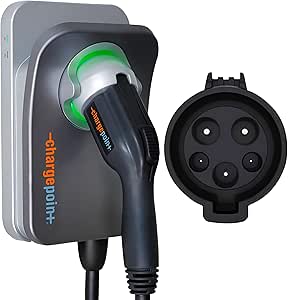 | Best Premium Smart Integration | Max Amperage: 50 A (adjustable) | Connector Type: J1772 | Cable Length: 23 ft | VIEW LATEST PRICE | See Our Full Breakdown |
| EVPOVO Level 2 Portable EV Charger |  | Best Portable and Travel-Friendly Option | Max Amperage: 32 A | Connector Type: J1772 | Cable Length: 25 ft | VIEW LATEST PRICE | See Our Full Breakdown |
| Emporia Pro Level 2 EV Charger with PowerSmart |  | Best for Energy Management | Max Amperage: 48 A | Connector Type: J1772 | Cable Length: 25 ft | VIEW LATEST PRICE | See Our Full Breakdown |
| Autel MaxiCharger Level 2 EV Charger |  | Best Balanced Plug-In Performance | Max Amperage: 40 A | Connector Type: J1772 | Cable Length: 25 ft | VIEW LATEST PRICE | See Our Full Breakdown |
More Details on Our Top Picks
Aimiler Level 2 EV Charger, 32A, 25 ft Cable, NEMA 14-50 Plug, J1772 Connector
The Aimiler is a flexible, lower-output pick for drivers who want a portable charger with scheduling and app monitoring. Its adjustable 16–32A range lets owners match charging to the circuit and vehicle, while the 25-foot cable can make a distant parking spot easier to reach. Compared with the Grasside 40A, it gives up charging power and RFID access, but its simpler portable setup may suit households that do not need the higher output.
The tradeoff is its limited environmental guidance: the instructions advise against rain and direct sunlight, so I would not choose it for an exposed outdoor installation. Tesla and NACS vehicles need a separate adapter, and the optional 120V adapter is not included. This is a better fit for protected, occasional portability than for a permanently exposed charging location.
Pros:- Adjustable 16–32A output accommodates different charging needs and circuit limits.
- Wi-Fi app supports scheduling and charging-status monitoring.
- 25-foot cable and portable design offer flexibility around a garage or driveway.
- ETL and FCC listed.
Cons:- Maximum 32A output is lower than the 40A Grasside and EVIQO options.
- Instructions advise against exposure to rain or direct sunlight.
- Tesla/NACS and 120V use require separately purchased adapters.
Best for: J1772 EV and plug-in hybrid owners who want a portable 240V charger, app scheduling, and adjustable current for a protected garage or covered parking area.
Not ideal for: Drivers who need a weather-exposed permanent installation, more than 32A output, or a ready-to-use Tesla or NACS connection.
- Maximum output:32A; up to 7.68 kW
- Current adjustment:16–32A
- Voltage:240V
- Plug:NEMA 14-50
- Connector:J1772
- Cable length:25 ft
- Connectivity and controls:Wi-Fi app, charging schedule, LED screen
- Certifications:ETL, FCC
Our verdict“Choose the Aimiler if you want adjustable, app-connected 32A charging in a protected location and do not need the Grasside’s higher output.”
Grasside 40A Level 2 EV Charger with J1772 Connector, 25 ft Cable, NEMA 14-50 Plug
The Grasside stands out for giving households a choice of how to control charging: plug-and-charge, app control, or RFID access. That mix can be useful when several drivers share one charger or when owners want to limit casual use. Its 40A, 9.6 kW output is also a step up from the 32A Aimiler, while the 25-foot cable provides similar reach.
That extra output requires a compatible NEMA 14-50 outlet on a 50A circuit, so it is not a way around electrical-capacity limits. The unit is also substantially heavier than a simple portable charger at 17.51 pounds, and app features depend on 2.4 GHz Wi-Fi. IP65 protection and ETL listing make it a more outdoor-ready choice than the Aimiler, but Tesla drivers still need an adapter sold separately.
Pros:- 40A output delivers up to 9.6 kW on a compatible circuit.
- Offers plug-and-charge, RFID, and app control.
- Current adjustment and scheduled charging allow charging to fit household routines.
- IP65 protection, ETL listing, and a stated 3-year support plan.
Cons:- Requires a NEMA 14-50 outlet connected to a 50A circuit.
- App connectivity requires 2.4 GHz Wi-Fi.
- At 17.51 pounds, it is less convenient to move than the portable Aimiler.
Best for: Households with multiple drivers who want 40A plug-in charging, scheduled sessions, and the option to control access with RFID.
Not ideal for: Drivers with a lower-capacity outlet or circuit, a 5 GHz-only Wi-Fi network, or a need for an included Tesla adapter.
- Maximum output:40A; up to 9.6 kW
- Current adjustment:10–40A via app; 16/24/32/40A via button
- Required circuit:50A
- Plug:NEMA 14-50
- Connector:J1772
- Cable length:25 ft
- Connectivity and access:2.4 GHz Wi-Fi; app, RFID, plug-and-charge
- Protection and certification:IP65; ETL listed to UL-2594 and CSA-C22.2 No. 280
- Support:3-year Grasside Care
Our verdict“Pick the Grasside if shared access controls and 40A plug-in charging matter more than a lightweight portable design.”
Autel MaxiCharger AC Home Level 2 EV Charger, 50A, J1772, Hardwired, 25-Foot Cable
This Autel suits homeowners who want hardwired, high-output charging and several ways to connect to the charger. At up to 50A and 12 kW, it exceeds the plug-in Grasside and EVIQO in listed output, though actual charging speed also depends on the vehicle and electrical service. Its Wi-Fi, Bluetooth, and Ethernet give owners more connectivity choices than the EVIQO’s 2.4 GHz Wi-Fi setup.
The main cost in convenience is installation: unlike the EVIQO, this model is hardwired, so adding it may require electrical work. It has a 25-foot J1772 cable and is described as suitable for indoor or outdoor use, but vehicles with a different inlet need an adapter. This makes the most sense when a permanent install and higher available amperage matter more than plug-in portability.
Pros:- Up to 50A and 12 kW output for compatible vehicles and electrical service.
- Wi-Fi, Bluetooth, and Ethernet provide several connectivity options.
- 25-foot cable offers reach across a garage or parking area.
- App controls include scheduling and over-the-air updates.
Cons:- Hardwired installation can require electrical work.
- J1772 vehicles are the direct fit; vehicles with another inlet need an adapter.
- Higher charger output does not guarantee the vehicle can accept charging at that rate.
Best for: Homeowners with a compatible electrical supply who want a permanently installed 50A charger and flexible network connections.
Not ideal for: Renters, frequent movers, or drivers who want a plug-in charger that can be removed without an electrician.
- Maximum output:50A; 12 kW
- Installation:Hardwired
- Connector:J1772
- Cable length:25 ft
- Connectivity:Wi-Fi, Bluetooth, Ethernet
- Charging speed:Up to 37 miles per charging hour, according to the product description
- Weight:18.21 lb
- Dimensions:16.3 × 12.3 × 9.25 in
Our verdict“Choose this Autel over the plug-in EVIQO when you have the electrical capacity for a permanent 50A installation and value multiple connectivity options.”
EVIQO Level 2 J1772 EV Charger, 40A, NEMA 14-50, 240V
The EVIQO is the clearest fit for drivers who want a plug-in charger rated for outdoor use. Its 40A output and 25-foot J1772 cable match the Grasside’s headline charging capacity, while IP66/NEMA 4 weather protection supports a more exposed installation than the Aimiler’s guidance allows. App functions include scheduling, remote start and stop, and energy tracking; a glow-in-the-dark holster also makes the connector easier to locate in a dark garage.
Compared with the Grasside, the EVIQO trades RFID access for weather protection and a listed set of UL, ETL, FCC, and Energy Star certifications. It still depends on a dedicated 50A circuit and a 2.4 GHz network for Wi-Fi features. Tesla owners can use the vehicle’s J1772 adapter, but the unit’s 40A ceiling makes the hardwired Autel a better match for buyers seeking higher listed output.
Pros:- IP66/NEMA 4 housing is suited to indoor or outdoor use.
- 40A output and a 25-foot cable cover common home charging needs.
- App supports scheduling, remote start and stop, and energy tracking.
- Includes a glow-in-the-dark holster and a 3-year warranty.
Cons:- Requires a NEMA 14-50 outlet on a dedicated 50A circuit.
- Wi-Fi features require a 2.4 GHz network.
- 40A maximum output is below the hardwired Autel models’ listed 50A capacity.
Best for: Homeowners with a dedicated 50A circuit who want a 40A plug-in J1772 charger for indoor or outdoor parking.
Not ideal for: Drivers who need RFID access, depend on 5 GHz-only Wi-Fi, or want the 50A output and hardwired installation of the Autel MaxiCharger.
- Maximum output:40A
- Voltage:240V
- Outlet:NEMA 14-50
- Connector:J1772
- Cable length:25 ft
- Wi-Fi:2.4 GHz
- Weather protection:IP66 / NEMA 4
- Certifications:UL, ETL, FCC, Energy Star
- Warranty:3 years
Our verdict“Choose the EVIQO if you want a weather-protected plug-in charger, rather than the Grasside’s RFID access or the Autel’s higher hardwired output.”
Autel 50A Level 2 Hardwired EV Charger with 25 ft J1772 Cable
This Autel’s standout is its unusually broad 6–50A current adjustment, paired with up to 12 kW output. That range gives homeowners more room to set charging around the available electrical capacity than the 50A AC Home model, whose supplied specs list maximum amperage but not the same adjustment range. Both are hardwired Autel chargers with 25-foot J1772 cables; this model adds NEMA 4X protection and CSA certification for indoor or outdoor installation.
The flexibility comes with a fixed-installation tradeoff: hardwiring is less convenient than the EVIQO’s NEMA 14-50 plug and can require electrical work. Wi-Fi and Bluetooth support app control, but there is no Ethernet listed as on the AC Home model. Buyers should also confirm their vehicle uses J1772 or plan for an adapter.
Pros:- Up to 50A and 12 kW output for vehicles and circuits that can use it.
- Adjustable current from 6A to 50A allows more tailored charging.
- NEMA 4X protection supports indoor and outdoor installation.
- Wi-Fi and Bluetooth app connectivity with a 25-foot cable.
Cons:- Hardwired installation can require an electrician and is not readily portable.
- J1772 connector may require an adapter for vehicles with a different inlet.
- Unlike the other Autel hardwired model in this roundup, Ethernet is not listed.
Best for: Homeowners planning a permanent installation who want 50A capability but need fine-grained current adjustment to fit their electrical setup.
Not ideal for: Renters, drivers who may relocate the charger, or buyers who prefer a plug-in setup and do not need adjustable output down to 6A.
- Maximum output:50A; 12 kW
- Adjustable current:6–50A
- Voltage and installation:240V, hardwired
- Connector:J1772
- Cable length:25 ft
- Connectivity:Wi-Fi, Bluetooth
- Weather protection:NEMA 4X
- Certification:CSA
- Warranty:3 years
Our verdict“Choose this Autel over the AC Home model if adjustable current and NEMA 4X protection matter more than Ethernet connectivity.”
Leviton EV40P Smart Level 2 EV Charger, 40A, Wi-Fi, White
The Leviton EV40P is a practical pick for drivers who want remote control without moving to a hardwired setup. Its My Leviton app supports scheduling, monitoring, and starting or stopping a session, while the 25-foot cable gives more placement flexibility than a short-reach unit. At up to 9.6 kW, it matches the IYILO charger’s output, but Leviton’s appeal is its straightforward combination of app functions and a standard NEMA 14-50 plug.
The tradeoff is that the outlet must already be available and appropriately installed; this is not the choice for someone seeking a higher-output, hardwired system like the Autel MaxiCharger 50A. The J1772 connector also means Tesla drivers need a separate NACS adapter. Its weather-resistant enclosure suits indoor or outdoor placement, though installation still depends on a suitable circuit.
Pros:- My Leviton app offers remote monitoring, scheduling, and start/stop control
- 25-foot J1772 cable gives useful reach around a garage or driveway
- Weather-resistant enclosure supports indoor or outdoor installation
- UL and Energy Star certifications
Cons:- Requires a compatible NEMA 14-50 receptacle
- Tesla vehicles need a separate Leviton NACS adapter
- Maximum output is lower than 50A hardwired alternatives
Best for: Drivers with a NEMA 14-50 outlet who want app scheduling and remote session control from a familiar home-electrical brand.
Not ideal for: Buyers planning a hardwired, higher-amperage installation or Tesla owners who want a native NACS connector.
- Maximum current:40A
- Maximum charging power:Up to 9.6 kW
- Input voltage:240 V AC
- Cable length:25 ft
- Connector:SAE J1772
- Plug:NEMA 14-50P
- Connectivity:Wi-Fi
- Certifications:UL, Energy Star
Our verdict“Choose the Leviton EV40P if you have a suitable 14-50 outlet and value app scheduling more than maximum charging output.”
IYILO Level 2 EV Charger, 40A, 9.6 kW, 240V, NEMA 14-50P, Wi-Fi
The IYILO-RA40 stands out for control over charging current: drivers can adjust output from 6A to 40A in 1A increments. That helps when sharing a circuit with other household loads or matching charging to a vehicle’s schedule. Its app also handles scheduling and energy-use tracking, while connector-temperature monitoring can stop charging if the plug overheats. Compared with the Leviton EV40P, IYILO offers finer current adjustment and a stated power-sharing function for two chargers, but its Wi-Fi is limited to 2.4 GHz.
This is a feature-rich plug-in option, not a shortcut around electrical planning. The product data says maximum-output hardwiring needs a 50A breaker and a licensed electrician; some smart features and power sharing may need extra equipment. Buyers wanting fewer setup variables may prefer the Grizzl-E Avalanche, which emphasizes rugged construction and electrical protection over app features.
Pros:- Current adjusts from 6A to 40A in 1A increments
- App supports scheduled charging and energy-use tracking
- Connector temperature monitoring can trigger automatic shutoff
- 25-foot cable and support for power sharing between two chargers
Cons:- Wi-Fi supports 2.4 GHz only
- Tesla vehicles need a separate adapter
- Maximum-output hardwired installation requires a 50A breaker and a licensed electrician
Best for: Households that need to tune charging current around circuit limits, schedules, or a second charger.
Not ideal for: Buyers with only 5 GHz Wi-Fi or anyone expecting maximum-output installation and power sharing to work without electrical upgrades or extra equipment.
- Maximum current:40A
- Power:9.6 kW
- Voltage:240V
- Current adjustment:6A to 40A in 1A increments
- Cable length:25 ft
- Connector and plug:SAE J1772; NEMA 14-50P
- Wi-Fi:2.4 GHz
- Warranty:3 years
- Certifications:ETL, Energy Star; manufacturer states UL 2594 test report and CSA listing
Our verdict“Pick the IYILO if fine-grained current adjustment and app controls matter more than simple setup or dual-band Wi-Fi.”
Autel MaxiCharger 50A Level 2 EV Charger, Hardwired, J1772, Wi-Fi and Bluetooth, 25-Foot Cable
For a permanent installation where higher output matters, the Autel MaxiCharger 50A leads this group with up to 12 kW at 240V. Its 25-foot cable is described as flexible in cold weather, and the NEMA Type 4 enclosure supports indoor or outdoor placement. Wi-Fi, Bluetooth, Ethernet, app controls, and over-the-air updates give it more connection options than the plug-in Leviton EV40P, which is better suited to homes with an existing 14-50 receptacle.
The central tradeoff is installation: this unit is hardwired, so a qualified electrician and a suitable circuit are part of the plan. Its J1772 connector also requires an adapter for vehicles that use a different inlet. Compared with the 40A IYILO, the Autel offers more maximum power but less flexibility for owners who need a plug-in charger or adjustable current settings documented in the supplied product data.
Pros:- Up to 50A and 12 kW output
- NEMA Type 4 enclosure supports indoor and outdoor use
- Wi-Fi, Bluetooth, Ethernet, and over-the-air updates
- 25-foot cable and 3-year warranty
Cons:- Hardwired installation requires an electrician
- J1772 connector may need an adapter for some vehicles
- No plug-in option for easy removal or relocation
Best for: EV owners planning a permanent, electrician-installed home charging station and seeking up to 50A output.
Not ideal for: Renters, frequent movers, or households that need a plug-in charger or a connector that works without an adapter on their vehicle.
- Maximum current:50A
- Maximum power:12 kW
- Voltage:240V
- Installation:Hardwired
- Cable length:25 ft
- Connector:J1772
- Connectivity:Wi-Fi, Bluetooth, Ethernet
- Enclosure:NEMA Type 4
- Warranty:3 years
Our verdict“Choose the Autel MaxiCharger 50A for a permanent installation when higher output and multiple connectivity options justify hardwiring.”
Evwallbox Level 2 EV Charger, 40 Amp, 9.6 kW, 240V, J1772, 25 ft Cable
The Evwallbox FU-AM3-40 adds a feature the other plug-in 40A options here do not list: a 4.3-inch display for checking charger information at the unit. App control, scheduling, adjustable current, and an included RFID card broaden its appeal for households that want both phone access and a local way to manage access. Like the Leviton EV40P, it reaches 9.6 kW through a NEMA 14-50 plug and includes a 25-foot J1772 cable, but Evwallbox puts more emphasis on visible status and RFID access.
That extra interface is useful only if it fits how the charger will be used; buyers seeking a simpler setup may prefer the Leviton. The Evwallbox also depends on a compatible 240V outlet, and its J1772 connector may need an adapter for some vehicles. Its ETL, FCC, and CE certifications are listed, while the Autel 50A is the better match for buyers prioritizing higher output over a screen and plug-in convenience.
Pros:- 4.3-inch display provides on-unit access to charger information
- Adjustable current and app-based scheduling and monitoring
- RFID card included for access control
- Weatherproof enclosure and 25-foot J1772 cable
Cons:- Requires a compatible 240V NEMA 14-50 outlet
- J1772 connector may require an adapter for some vehicles
- Provides less maximum power than the 50A hardwired Autel
Best for: Households that want a plug-in 40A charger with a built-in display, scheduling, and RFID access control.
Not ideal for: Drivers who do not need a screen or RFID access, lack a suitable NEMA 14-50 outlet, or want a hardwired charger above 40A.
- Maximum current:40A
- Power:9.6 kW
- Voltage:240V
- Cable length:25 ft
- Connector and plug:SAE J1772; NEMA 14-50
- Display:4.3-inch
- Connectivity:Wi-Fi and smartphone app
- Certifications:ETL, FCC, CE
- Included access:RFID card
Our verdict“Choose the Evwallbox if you want a plug-in 40A charger with a local display and RFID access rather than maximum charging output.”
Grizzl-E Avalanche Edition Level 2 EV Charger, 40A, NEMA 14-50 Plug
The Grizzl-E Avalanche Edition is the no-app, durability-first choice in this group. Its IP67-rated construction and listed indoor/outdoor use make it a fit for exposed garages and driveways, while built-in GFCI and other electrical protections address faults and abnormal conditions. Unlike the Leviton EV40P and Evwallbox, it does not rely on Wi-Fi, scheduling, or a display; the payoff is a simpler feature set centered on charging and protection.
Its current settings range from 16A to 40A, so owners can match output to the circuit rather than always running at maximum. The 24-foot cable is a foot shorter than the 25-foot leads on those alternatives, and the unit still needs an appropriately rated breaker for the selected amperage. This portable design also suits a different need than the hardwired Autel MaxiCharger 50A, which offers more output but requires a fixed installation.
Pros:- IP67 ingress protection and weather-resistant construction
- Adjustable current settings from 16A to 40A
- Built-in GFCI and multiple electrical protections
- Portable NEMA 14-50 design for compatible North American EVs and plug-in hybrids
Cons:- Requires a circuit breaker rated for the selected amperage
- 24-foot cable is shorter than the 25-foot leads on several alternatives
- No app connectivity or scheduled charging features are listed
Best for: Drivers who want a rugged, portable J1772 home charger with adjustable amperage and built-in electrical protections, without app dependence.
Not ideal for: Buyers who want Wi-Fi scheduling, energy tracking, a built-in display, or output above 40A.
- Maximum current:40A
- Wattage:10 kW
- Voltage:240V
- Amperage settings:16A, 24A, 32A, 40A
- Cable length:24 ft
- Plug:NEMA 14-50
- Ingress protection:IP67
- Weight:16.79 lb
- Certifications:UL tested and certified; Energy Star certified
Our verdict“Pick the Grizzl-E Avalanche if rugged construction and adjustable, protected charging matter more than app features or maximum output.”
ApexCharger MACH 1 48A Level 2 EV Charger
This unit stands out for its dual-connector flexibility, making it ideal for households with both standard and Tesla vehicles. Unlike the ChargePoint HomeFlex, which requires a separate adapter purchase for Teslas, the MACH 1 includes a NACS adapter right in the box. The 30-foot cable provides significant reach compared to the 25-foot standard seen in most competitors, reducing the need to reposition the vehicle. Installation is straightforward with NEMA 14-50 plug-in capability, though hardwiring unlocks the full 48A potential. The LED display offers immediate feedback without needing to check a phone, a convenience factor that many app-only chargers lack.
Pros:- Includes Tesla NACS adapter in the box
- Exceptional 30-foot cable length for easy parking
- Onboard LED display for instant status checks
Cons:- Requires a 60A breaker for maximum 48A hardwired speed
- Single port limits simultaneous charging
Best for: Households with mixed EV brands or owners who want maximum reach and immediate status visibility.
Not ideal for: Users seeking the absolute highest amperage, as hardwired installation requires a 60A breaker.
- Max Amperage:48 A (hardwired)
- Connector Type:J1772 with Tesla NACS Adapter
- Cable Length:30 ft
- Installation:Plug-in (NEMA 14-50) or Hardwired
- Connectivity:Wi-Fi, Bluetooth, RFID
- Display:2.4 in LED
Our verdict“Choose this if you need a flexible, long-cable solution that works out-of-the-box for both J1772 and Tesla vehicles.”
ChargePoint HomeFlex Level 2 Hardwired EV Charger
The HomeFlex is designed for users who prioritize software reliability and safety certifications over raw hardware specs. While the ApexCharger MACH 1 offers more physical reach with its 30-foot cable, the ChargePoint’s 23-foot cord is sufficient for most garages and benefits from a UL-certified build quality that appeals to cautious buyers. The app ecosystem is mature, offering detailed charging history and reminders that surpass the basic scheduling found in the EVPOVO portable unit. However, the hardwired-only nature means you cannot take this charger with you, and it demands professional installation, adding to the initial cost compared to plug-in alternatives.
Pros:- Energy Star certified for energy efficiency
- Mature app with detailed charging insights
- Cold-resistant cable for winter durability
Cons:- Hardwired installation requires professional labor
- Tesla charging requires a separate adapter purchase
Best for: Tech-savvy owners who want a permanent, high-reliability smart charger with robust app features.
Not ideal for: Renters or DIYers, as it requires permanent hardwiring by a licensed electrician.
- Max Amperage:50 A (adjustable)
- Connector Type:J1772
- Cable Length:23 ft
- Installation:Hardwired only
- Certification:UL, Energy Star
- Warranty:3 Years
Our verdict“This is the smart choice for permanent installations where app reliability and safety certification outweigh cable length.”
EVPOVO Level 2 Portable EV Charger
This unit redefines convenience by being portable and lightweight at just 2.5 kg, unlike the bulky wall-mounted Emporia Pro. It is the ideal solution for owners who travel frequently or lack a dedicated garage, as it plugs into any standard NEMA 14-50 outlet. The adjustable amperage allows you to dial down the current to 16A or 24A, preventing circuit trips in older homes—a feature less granular than the Autel MaxiCharger’s fixed-step adjustments. While it lacks the sleek aesthetic of a permanent wall unit, its weather-resistant enclosure and ETL safety listing make it a trustworthy companion for on-the-go charging.
Pros:- Lightweight and portable for travel
- Fine-grained adjustable amperage (16-32A)
- ETL listed for strict safety compliance
Cons:- Maxes out at 32A, slower than 48A+ hardwired units
- App requires 2.4 GHz Wi-Fi specifically
Best for: Travelers, renters, or owners with multiple homes who need a charger they can pack in the trunk.
Not ideal for: Those seeking a permanent, high-amperage (48A+) home installation for fastest daily charging.
- Max Amperage:32 A
- Connector Type:J1772
- Cable Length:25 ft
- Weight:2.5 kg
- Safety Cert:ETL Listed
- Temp Range:Down to -22°F
Our verdict“Buy this if you need a safe, flexible charger that travels with you rather than stays on your wall.”
Emporia Pro Level 2 EV Charger with PowerSmart
The Emporia Pro is distinct because it includes a Home Energy Monitor and PowerSmart software, allowing it to balance charging loads against household usage. This is a critical advantage over the Autel MaxiCharger, which charges at a fixed rate regardless of your home’s electrical load. For owners of older panels, this technology can prevent the need for expensive electrical panel upgrades by throttling charging when the house is busy. The plug-in or hardwired flexibility matches the ApexCharger, but the added value here is the holistic view of your home’s energy consumption, turning the charger into a smart grid device rather than just a power source.
Pros:- Includes home energy monitor and software
- Load balancing prevents circuit overloads
- Flexible plug-in or hardwired installation
Cons:- Complex setup requires configuring energy monitor
- J1772 only; no included adapter for other ports
Best for: Homeowners with limited electrical capacity who want to avoid panel upgrades via load balancing.
Not ideal for: Users who already have a separate energy monitoring system or don’t care about home power usage.
- Max Amperage:48 A
- Connector Type:J1772
- Cable Length:25 ft
- Installation:Plug-in or Hardwired
- Key Feature:PowerSmart Load Balancing
- Included:Vue Home Energy Monitor
Our verdict“This is the smartest choice for protecting your home’s electrical panel while gaining detailed energy insights.”
Autel MaxiCharger Level 2 EV Charger
The Autel MaxiCharger offers a straightforward, no-nonsense approach that contrasts with the feature-heavy Emporia Pro. It delivers a solid 40A via a simple NEMA 14-50 plug, striking a balance between speed and ease of installation. While the EVPOVO is better for travel, the Autel is designed for permanent wall mounting with a rugged NEMA 4X enclosure that withstands harsh outdoor conditions. The app is functional for scheduling but lacks the deep energy analytics of competitors. It is a reliable workhorse for those who want high amperage without the complexity of load-balancing software or hardwiring requirements.
Pros:- NEMA 4X rated for harsh outdoor weather
- Adjustable current up to 40A
- Simple plug-in installation
Cons:- RFID access control is optional, not standard
- Basic app features compared to smart competitors
Best for: Homeowners wanting high-speed plug-in charging with durable outdoor build quality.
Not ideal for: Tesla owners without an adapter or those needing advanced home energy integration.
- Max Amperage:40 A
- Connector Type:J1772
- Cable Length:25 ft
- Installation:Plug-in (NEMA 14-50)
- Warranty:3 Years
Our verdict“Select this for a durable, high-amperage plug-in charger that prioritizes weather resistance over smart home integration.”
How We Picked
To determine the best home EV chargers, I evaluated each model based on three core pillars: charging performance, connectivity features, and build quality. Charging performance was judged by maximum amperage output and compatibility with various EV connectors, ensuring the options could handle everything from compact hybrids to heavy-duty trucks. I prioritized chargers that offer stable power delivery without overheating, a common issue in lower-cost units.
Connectivity features were assessed for their practical utility, such as app-based scheduling, real-time monitoring, and firmware updates that future-proof the device. Build quality was scrutinized for durability, particularly the quality of the cable and connector, which are frequent failure points. Finally, value was determined by weighing the upfront cost against long-term reliability and installation requirements, ensuring recommendations suit different budgets and electrical setups.
Factors to Consider When Choosing Best Home EV Chargers
Selecting the right Level 2 charger requires more than just picking the highest amperage. Your home’s electrical infrastructure, daily driving habits, and future-proofing needs all play a role in the decision.Amperage and Charging Speed
Amperage directly dictates how fast your EV charges, but higher isn’t always better if your home can’t support it. A standard 32A or 40A charger adds roughly 15-30 miles of range per hour, which is sufficient for most daily commutes under 40 miles. However, if you drive more than 50 miles daily or need to recharge a large battery overnight, a 48A or 50A hardwired unit is necessary to avoid leaving home with a low charge. Always check your EV’s onboard charger limit, as plugging a 50A charger into a vehicle that only accepts 32A won’t speed up charging and may waste money on unneeded capacity.
Plug-In vs. Hardwired Installation
The choice between a plug-in and hardwired charger often comes down to flexibility versus permanence. Plug-in models with NEMA 14-50 plugs are ideal for renters or those who move frequently, as they can be unplugged and taken with you. Hardwired units, typically requiring a licensed electrician, offer a cleaner look and often support higher amperages like 48A or 50A. Hardwired installations are generally safer for permanent setups because they eliminate the risk of loose plug connections and weather-related wear on the receptacle, making them the preferred choice for homeowners planning to stay put.
Smart Features and App Integration
Smart capabilities have moved from a luxury to a practical necessity for managing energy costs. Features like scheduled charging allow you to delay charging until off-peak hours, potentially saving hundreds of dollars annually on electricity bills. Some advanced models, such as the Emporia Pro, even offer power balancing, which dynamically adjusts charging speed based on your home’s total electrical load to prevent breaker trips. When evaluating smart features, prioritize chargers with reliable Wi-Fi connectivity and intuitive apps, as poor software implementation can render these benefits useless.
Build Quality and Weather Resistance
Since most home chargers are installed outdoors, durability against the elements is a critical differentiator. Look for units with an IP rating of at least IP65, which ensures protection against dust and water jets. The quality of the J1772 connector and cable insulation also matters; thinner cables can become brittle in cold weather or degrade quickly under UV exposure. Premium models often feature ruggedized casings and replaceable cable assemblies, extending the lifespan of the unit compared to cheaper alternatives that may fail within a few years of outdoor exposure.
Connector Compatibility and Future Proofing
While J1772 remains the standard for most non-Tesla EVs, the industry is shifting toward the NACS connector used by Tesla. Some newer chargers, like the ApexCharger MACH 1, come with adapters or are designed to be compatible with both standards, offering a degree of future-proofing. If you own a Tesla, a native NACS charger is the most seamless option, but for others, a J1772 charger with a NACS adapter provides flexibility if you switch vehicles in the future. Ensure the charger supports firmware updates to maintain compatibility with evolving charging protocols.
Frequently Asked Questions
Do I need a 50A charger if my car only accepts 32A?
No, buying a 50A charger for a vehicle with a 32A onboard charger is not cost-effective. The car will only draw the maximum amperage its internal system allows, meaning a 50A unit will charge at the same speed as a 32A unit. You would pay more for the hardware and potentially the electrical upgrade without gaining any charging speed benefits. It is better to match the charger’s amperage to your vehicle’s maximum input or choose a slightly lower amperage model to save on installation costs.Is it safe to leave a portable Level 2 charger plugged in outside?
Leaving a portable charger plugged into a NEMA 14-50 outlet outdoors for extended periods is risky due to weather exposure. Moisture can corrode the plug contacts over time, leading to poor connections or even fire hazards. If you must use a portable unit, ensure the outlet is covered by a weatherproof box and the plug is oriented downward to shed water. For permanent outdoor use, a hardwired unit or a dedicated weatherproof enclosure for the plug is a safer long-term solution.How much does it cost to install a hardwired home EV charger?
Installation costs vary widely based on your home’s electrical panel capacity and the distance from the panel to the parking spot. Simple installations where the panel is near the garage might cost $300-$600 for labor and materials. However, if you need a new dedicated circuit breaker, panel upgrade, or long conduit runs, costs can easily exceed $1,500-$2,500. Always get multiple quotes from licensed electricians and check for local utility rebates that may offset some of these expenses.Can I use a standard 120V outlet for daily charging?
While possible, using a standard 120V outlet for daily charging is generally discouraged for full-size EVs. Level 1 charging adds only 3-5 miles of range per hour, which is insufficient for most commuters and requires the outlet to be dedicated and grounded to avoid overheating. It is best reserved for emergency use or for plug-in hybrids with small batteries. Investing in a Level 2 charger significantly improves convenience and safety for daily use.Are smart chargers worth the extra cost over basic models?
Smart chargers are worth the investment if you have time-of-use electricity rates or want to monitor energy consumption. The ability to schedule charging during off-peak hours can save enough on electricity bills to offset the higher upfront cost within a year or two. Basic models are fine if you have flat-rate electricity and don’t care about app features. However, smart chargers also offer better diagnostics and firmware updates, which can extend the device’s lifespan and reliability.Conclusion
Choosing the right home EV charger depends on your specific electrical setup and daily driving needs. For most homeowners seeking a balance of speed, smart features, and durability, the Autel MaxiCharger AC Home is the best overall choice, offering reliable 50A hardwired performance. If you prefer a plug-in solution with excellent value and solid build quality, the Grasside 40A Level 2 EV Charger is the best value pick. For those who need rugged durability in harsh climates, the Grizzl-E Avalanche Edition stands out as the best premium option for its weather resistance. Beginners should look to the EVIQO Level 2 J1772 EV Charger for a straightforward, easy-to-install experience that covers the basics without unnecessary complexity.