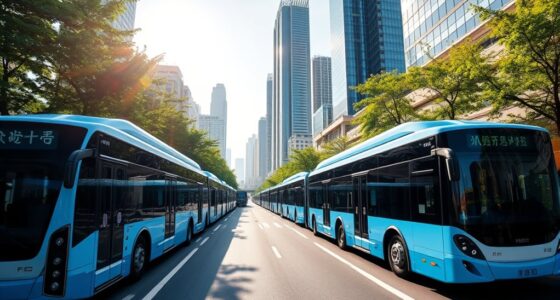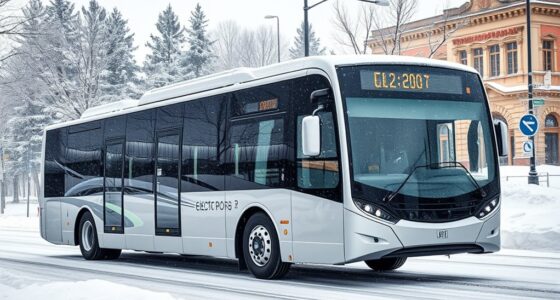
Switching your rural school district to electric buses is possible with targeted funding strategies like federal, state, and private grants focused on renewable energy and rural emission reductions. Plan your charging infrastructure carefully by evaluating energy needs, installing fast chargers, and utilizing solar panels at bus depots. Engaging community stakeholders and showcasing long-term savings can build support. Keep exploring these solutions to guarantee a smooth, sustainable change for your district.

Get business pricing on monitors, keyboards and dev gear
- Business-only prices and quantity discounts
- Tax-exempt purchasing
- Multiple users, one account, clear invoices
Key Takeaways
- Seek federal, state, and private grants focused on renewable energy and rural emission reductions.
- Plan charging infrastructure by assessing energy needs and installing fast chargers and solar-powered stations.
- Engage community stakeholders early to build support and highlight environmental and economic benefits.
- Explore public-private partnerships with solar companies or energy providers for funding and infrastructure.
- Implement smart energy management systems to optimize charging, reduce costs, and ensure sustainability.
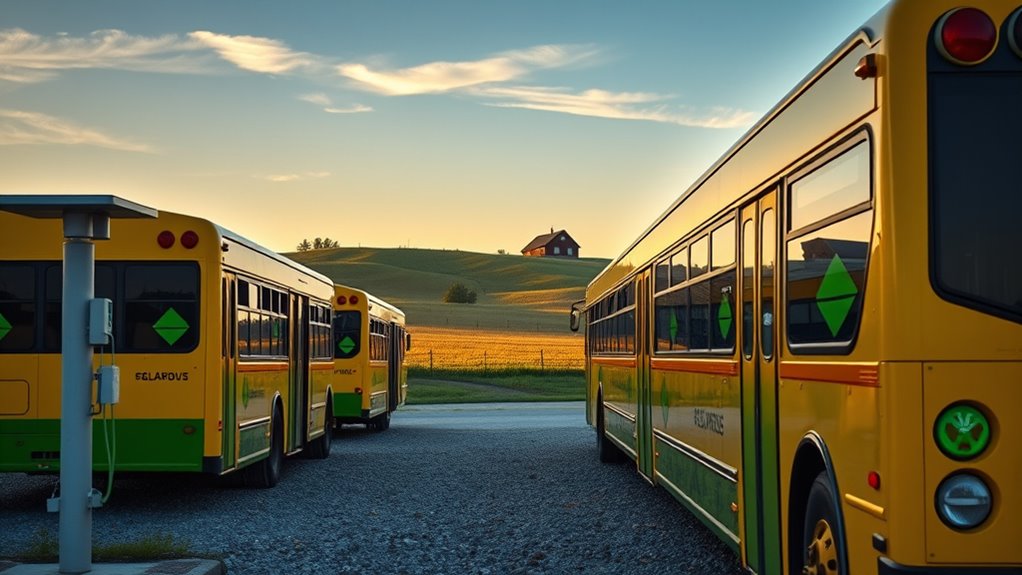
Many rural school districts are making the switch to electric buses to reduce emissions and cut costs. This change isn’t just about replacing old diesel vehicles; it’s about embracing a sustainable future powered by renewable energy. You’ll find that integrating renewable energy sources, like solar or wind, into your charging infrastructure can significantly lower operating costs and your district’s carbon footprint. When you harness local renewable energy, you reduce reliance on grid electricity that may come from fossil fuels, making your entire operation more environmentally friendly. Plus, community engagement plays a vital role in this shift. When you involve parents, local businesses, and residents in planning and decision-making, you foster support and understanding. This collective effort can lead to grant opportunities, community-funded initiatives, and increased awareness of the benefits of clean transportation.
Securing funding for electric buses and the necessary charging infrastructure can seem intimidating, but numerous options exist. Federal grants and state programs often prioritize projects that promote renewable energy and community involvement. For example, some grants are specifically aimed at reducing emissions in rural areas or expanding renewable energy use. You should explore these opportunities early and craft compelling proposals that highlight how your district’s switch to electric buses aligns with broader environmental goals and community benefits. Public-private partnerships can also be effective; partnering with local solar companies or energy providers might offer shared investment and technical support. Additionally, ticketing or transportation grants can sometimes help offset costs, especially when your project demonstrates environmental and community advantages.
Explore federal, state, and private grants to fund electric buses and renewable energy projects in rural districts.
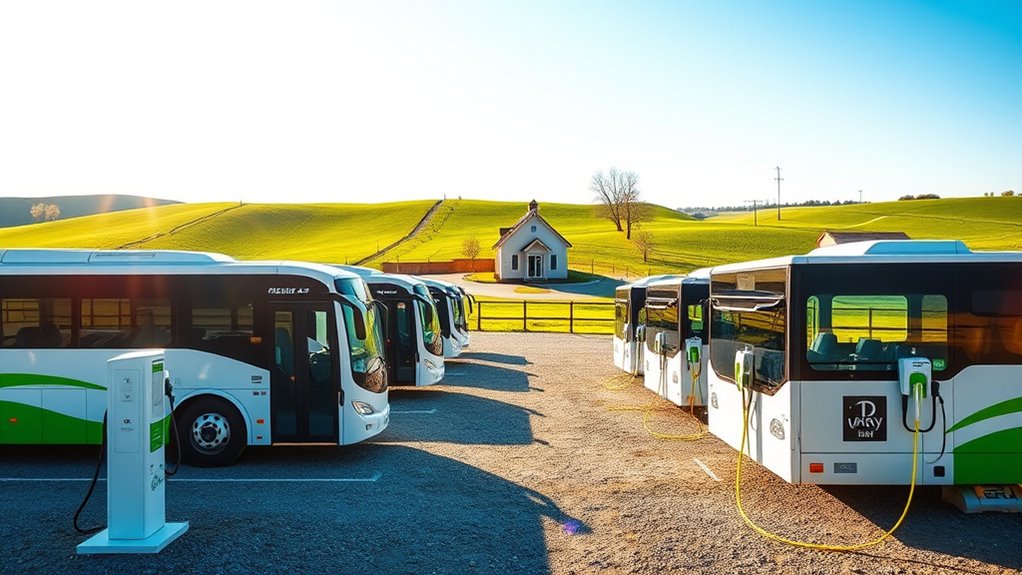
When it comes to charging solutions, strategic planning is key. You’ll need to assess your district’s energy needs and consider installing fast chargers to minimize downtime. Incorporating renewable energy into your charging stations—such as solar panels on bus depots—can help provide clean, cost-effective power. This approach not only saves money but also demonstrates your district’s commitment to sustainability, which can resonate with the community. Educating stakeholders about the benefits of renewable energy and involving them in decisions about infrastructure helps build trust and enthusiasm. It’s essential to communicate how these investments will lead to cleaner air, healthier communities, and long-term cost savings. Understanding smart energy management can optimize your charging operations and maximize efficiency. Engaging the community in these efforts ensures broader support and helps sustain momentum for your district’s electric bus program.
Ultimately, shifting to electric buses with renewable energy and strong community engagement isn’t just a logistical upgrade; it’s a commitment to a healthier, more sustainable future for your district and its residents.
As an affiliate, we earn on qualifying purchases.
Frequently Asked Questions
How Will Electric Buses Impact Long-Term Maintenance Costs?
Electric buses will likely reduce your long-term maintenance costs because their batteries have improved longevity, meaning fewer replacements and repairs over time. You’ll spend less on repair expenses related to traditional engine parts, as electric motors are simpler and more reliable. Although initial costs might be higher, the durability of batteries and lower repair needs will save you money in the long run, making electric buses a cost-effective choice.
What Training Is Needed for Drivers and Maintenance Staff?
You’ll need to provide driver training focused on electric bus operation, including handling regenerative braking and charging procedures. Maintenance staff should develop maintenance skills specific to electric drivetrains, batteries, and electrical systems. Make certain they understand safety protocols for working with high-voltage components. Regularly update training to keep everyone informed about new technology and best practices, which helps maximize efficiency and safety in your district’s electric bus fleet.
Are There Any Grants Specific to Rural Electric School Bus Projects?
Yes, there are grants available for rural electric school bus projects. You should explore federal funding programs like the Diesel Emissions Reduction Act (DERA) and state grants designed to support clean transportation initiatives. These grants can help offset costs for purchasing electric buses and installing charging infrastructure. Keep an eye on local and national funding opportunities, and consider applying early to maximize your chances of securing financial support for your shift.
How Will Charging Infrastructure Affect Local Utility Services?
Charging infrastructure can impact your local utility services by increasing grid stability challenges and utility demand. As more buses charge, your utility may experience higher peak loads, potentially stressing the grid. To avoid disruptions, you might need to coordinate with your utility for demand management solutions, such as smart charging or time-of-use rates. This guarantees your district’s electric buses operate smoothly without overloading the local utility system.
What Are the Safety Considerations for Charging Stations in Rural Areas?
You need to prioritize fire safety by installing charging stations that meet strict electrical codes. Guarantee proper ventilation and fire suppression systems are in place, especially in rural areas where emergency response might be slower. Conduct regular safety inspections and staff training to prevent electrical faults or fires. Using certified equipment and adhering to local regulations minimizes risks, keeping students and staff safe during charging operations.
As an affiliate, we earn on qualifying purchases.
Conclusion
Switching your rural school district to electric buses is a smart move, especially with 84% of districts citing cost savings as a top benefit. By securing funding and installing reliable charging stations, you’ll reduce emissions and save money in the long run. Embracing this change not only benefits the environment but also improves student health and community well-being. With careful planning, your district can lead the way toward a cleaner, more sustainable future for all.
As an affiliate, we earn on qualifying purchases.
rural electric bus charging station
As an affiliate, we earn on qualifying purchases.
As an affiliate, we earn on qualifying purchases.
Evergreen bestsellers Picks
bestsellers
As an affiliate, we earn on qualifying purchases.