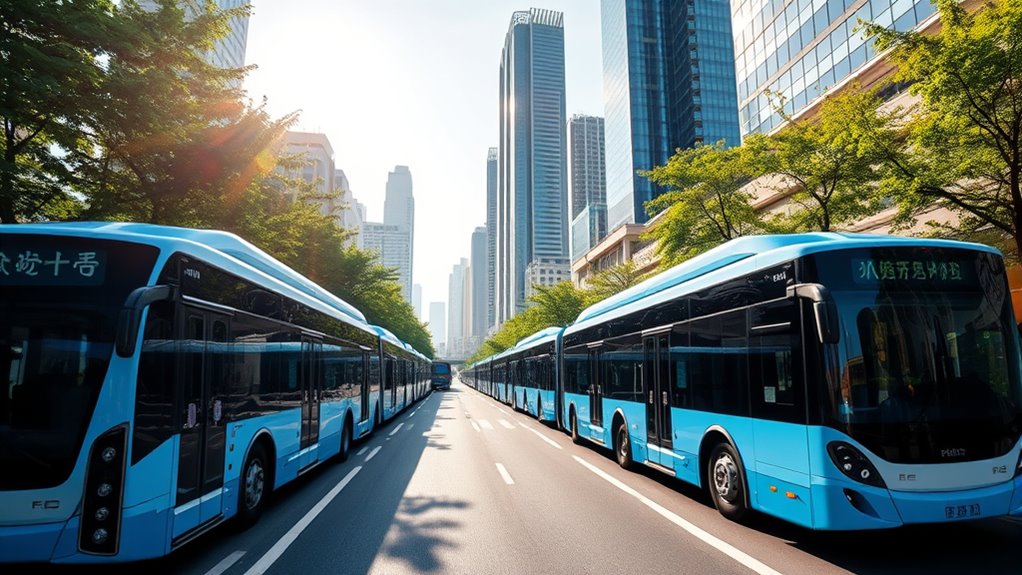

Shenzhen achieved full fleet electrification by planning carefully, investing in extensive charging infrastructure, and offering strong government incentives. They gradually replaced diesel buses with over 16,000 electric ones, supported by subsidies, grants, and policies that promote cleaner energy. The city’s charging stations are strategically placed for quick turnaround, ensuring smooth operations. This integrated approach created a sustainable and efficient transit system. If you want to explore more about their successful strategy, there’s plenty more to discover.

Get business pricing on monitors, keyboards and dev gear
- Business-only prices and quantity discounts
- Tax-exempt purchasing
- Multiple users, one account, clear invoices
Key Takeaways
- Shenzhen implemented extensive policies and financial incentives to support electric bus adoption and infrastructure development.
- The city built a large, strategically located charging network enabling quick turnaround and longer operational hours.
- Gradual transition with careful planning ensured infrastructure, policy, and fleet integration for seamless electrification.
- Strong government commitment and coordinated investments fostered innovation and minimized operational disruptions.
- The integrated approach of policy support, infrastructure, and fleet management established Shenzhen as a global leader in electric bus deployment.
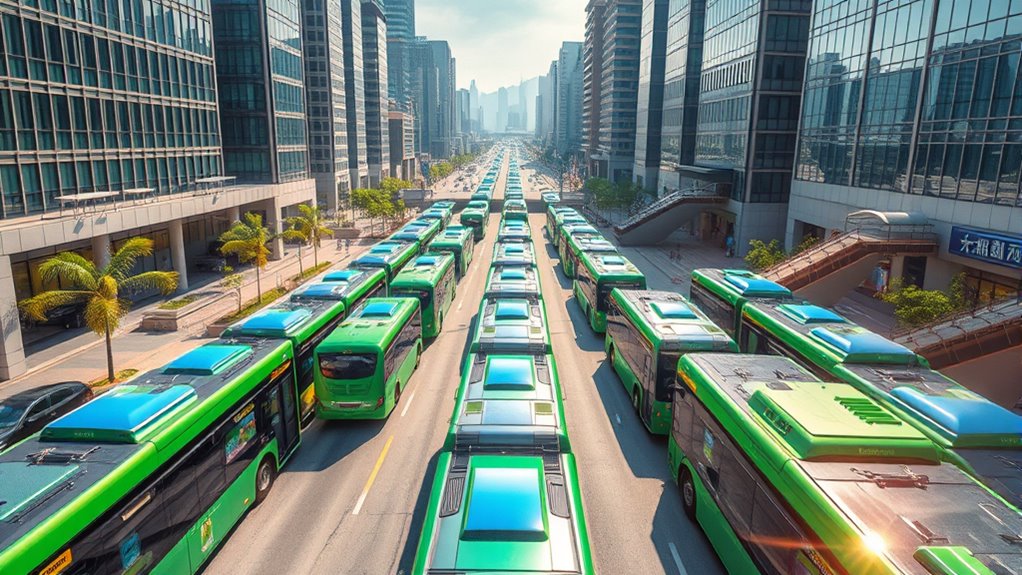
Shenzhen has transformed its public transportation system by deploying over 16,000 electric buses, making it one of the largest electric bus fleets in the world. This remarkable shift didn’t happen overnight; it resulted from strategic planning, significant investments, and a clear commitment to sustainability. Central to this success is the city’s robust charging infrastructure. You’ll find that Shenzhen invested heavily in building an extensive network of charging stations strategically located throughout the city. These stations are designed for quick turnaround, allowing buses to recharge efficiently during short layovers. The infrastructure isn’t just about quantity but also quality, ensuring reliable power supply and minimal downtime. With this all-encompassing charging network, the buses stay operational longer and maintain a high service frequency, making electric buses a practical choice for daily transit needs. Additionally, the city’s focus on infrastructure quality and operational efficiency has been key to supporting the large-scale deployment. Policy incentives played a crucial role in accelerating Shenzhen’s transition. The local government implemented a range of policy measures that made adopting electric buses financially attractive. For example, you might notice subsidies and grants offered to bus manufacturers and transit agencies, reducing the upfront costs of acquiring electric vehicles. Additionally, policies favoring cleaner energy sources helped phase out older diesel buses, creating a more level playing field for electric alternatives. These incentives didn’t just cover vehicle purchase costs but extended to infrastructure development, further encouraging private and public sector investments. The city also set ambitious targets, pushing transit agencies to electrify their fleets within specific timelines. Such policies created a sense of urgency and provided clear guidelines for industry stakeholders, fostering innovation and competition.
Moreover, Shenzhen’s approach demonstrates how government support can catalyze large-scale change. You see this in how policy incentives are aligned with infrastructure development, creating a seamless ecosystem for electric buses. The combination of financial support and a well-planned charging network reduces operational costs for transit operators, making electric buses not only environmentally friendly but also economically viable. This strategic alignment ensures that buses can operate throughout the day without frequent charging disruptions. By establishing a detailed policy framework alongside a robust infrastructure, Shenzhen effectively eliminated many barriers that could have hindered full fleet electrification. As a result, you witness a city that’s leading by example, showing how integrated planning and policy support can revolutionize urban transit on a massive scale.
As an affiliate, we earn on qualifying purchases.
Frequently Asked Questions
How Does Shenzhen Finance Its Electric Bus Program?
You can see Shenzhen finance its electric bus program through a mix of public-private partnerships and government subsidies. The city partners with private companies to share costs and risks, making the shift more affordable. Additionally, government subsidies provide financial support, encouraging manufacturers and operators to adopt electric buses. This combined approach helps Shenzhen maintain its ambitious electrification goals while managing costs effectively.
What Challenges Did Shenzhen Face During Fleet Transition?
You faced enormous challenges during Shenzhen’s fleet changeover, like managing fleet logistics that felt almost impossible and training thousands of drivers in record time. The scale was mind-boggling, but you tackled it head-on, overcoming logistical nightmares and ensuring everyone knew how to operate the new electric buses safely. It was a monumental effort, but your perseverance turned what seemed impossible into a groundbreaking success.
How Does the Electric Bus System Impact Local Air Quality?
You’ll notice significant air quality improvements as electric buses reduce emissions, especially pollutants like nitrogen oxides and particulate matter. These emission reductions lead to cleaner air, benefiting public health and the environment. By replacing traditional diesel buses, the system cuts down on harmful exhaust, ensuring a healthier urban atmosphere. Your city’s shift to electric buses directly contributes to better air quality and a more sustainable future for everyone.
What Maintenance Innovations Support the Electric Fleet?
You benefit from maintenance innovations like advanced battery management systems that optimize battery health and longevity, reducing downtime. The charging infrastructure is streamlined with smart chargers that monitor and adjust charging cycles for efficiency. Regular diagnostics and predictive maintenance tools help spot issues early, ensuring your electric fleet stays reliable and efficient. These innovations minimize disruptions and extend the lifespan of your buses, making fleet management more cost-effective and sustainable.
Are Other Chinese Cities Adopting Similar Electric Bus Policies?
Many Chinese cities are jumping on the electric bus bandwagon, aiming for cleaner transit. They’re investing heavily in charging infrastructure and prioritizing battery recycling to guarantee sustainability. Like a ripple spreading across a pond, this shift accelerates nationwide. Cities such as Beijing and Guangzhou are adopting policies similar to Shenzhen’s, expanding their electric fleets and reducing emissions. Your city could follow suit by focusing on these key areas to make a greener impact.
As an affiliate, we earn on qualifying purchases.
Conclusion
By embracing this vast electric fleet, you’ve glimpsed a future where city life gently shifts toward sustainability. Shenzhen’s journey shows that even the most ambitious goals can become a reality with vision and persistence. As you imagine cleaner air and quieter streets, remember that every small step counts. This quiet revolution invites you to contemplate how your city might also turn the page toward a brighter, greener chapter—one electric bus at a time.
As an affiliate, we earn on qualifying purchases.
electric bus fleet management software
As an affiliate, we earn on qualifying purchases.
As an affiliate, we earn on qualifying purchases.
Evergreen bestsellers Picks
bestsellers
As an affiliate, we earn on qualifying purchases.