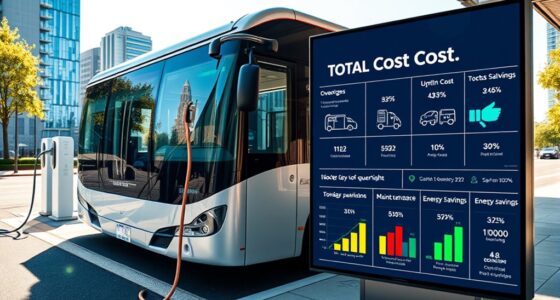
An electric bus uses advanced technologies like lithium-ion batteries to store and supply power for efficient operation. Key terms include charging infrastructure, which provides stations and connectors for replenishing battery energy, and different charging methods such as depot or opportunity charging to maximize route flexibility. Understanding these concepts helps you see how battery tech and infrastructure work together to make electric buses reliable and sustainable. Keep exploring to uncover more about these innovative systems and their benefits.
Key Takeaways
- Battery technology includes lithium-ion systems that store electrical energy chemically for powering electric buses.
- Charging infrastructure comprises stations and equipment designed to recharge buses via depot or opportunity charging.
- Types of charging include depot (overnight) and opportunity (on-route quick top-ups), with fast chargers providing rapid recharging.
- Advances in battery tech necessitate compatible, efficient charging stations to maximize performance and reduce downtime.
- Effective integration of battery systems and charging infrastructure enhances the operational efficiency and sustainability of electric buses.
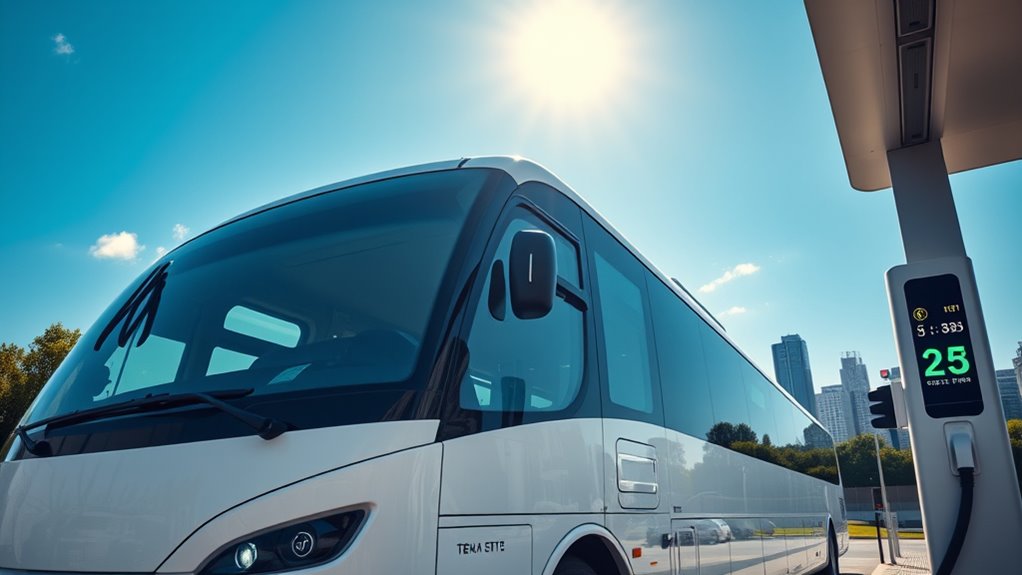
Are you new to electric buses and wondering what all the technical terms mean? Don’t worry—you’re not alone. As the industry grows, so does the vocabulary, and understanding key concepts like battery technology and charging infrastructure is essential. Battery technology refers to the systems that store and supply power to the bus. Most electric buses use lithium-ion batteries because they offer a good balance of energy density, weight, and lifespan. These batteries consist of multiple cells that store electrical energy chemically, enabling your bus to run smoothly and efficiently. Advances in battery technology continually improve range, charging speed, and durability, making electric buses more practical for daily use. Knowing how these batteries work helps you appreciate the importance of proper maintenance and management to maximize their lifespan and performance.
Charging infrastructure, on the other hand, encompasses the network of facilities and equipment needed to recharge electric buses. This includes charging stations, connectors, and power supply systems. The most common types of charging are depot charging, where buses are plugged in overnight at a central location, and opportunity charging, which allows quick top-ups during the day at bus stops or transfer points. Fast chargers can replenish a significant portion of the battery in as little as 30 minutes, reducing downtime and increasing route flexibility. The development of charging infrastructure is critical because it directly impacts how easily and efficiently electric buses can operate within your transit system. A well-planned network ensures buses stay charged and ready, avoiding delays and increasing reliability.
Understanding the relationship between battery technology and charging infrastructure is vital. As battery technology advances, charging stations need to adapt to accommodate faster, higher-capacity batteries. Conversely, improvements in charging infrastructure can open the full potential of new battery innovations by providing rapid, reliable charging options. As you learn more about these terms, you’ll see how they work together to make electric buses a viable, sustainable alternative to traditional diesel-powered vehicles. This synergy reduces emissions, lowers operating costs, and improves overall service quality. Whether you’re involved in planning, operating, or maintaining electric buses, grasping these fundamental concepts helps you make informed decisions and contribute to a cleaner, more efficient transit system.

The 2027-2032 World Outlook for Large Electric Bus Lithium-Ion Batteries
As an affiliate, we earn on qualifying purchases.
As an affiliate, we earn on qualifying purchases.
Frequently Asked Questions
How Do Electric Buses Compare in Lifespan to Diesel Buses?
You’ll find that electric buses generally have a comparable lifespan to diesel buses, often around 12-15 years. Their battery longevity can impact overall durability, but modern batteries last longer than before. Maintenance costs tend to be lower with electric buses because they have fewer moving parts and require less engine maintenance. Over time, this can make electric buses more cost-effective, even if initial investments are higher.
What Are the Main Challenges in Electric Bus Charging Infrastructure?
You face challenges with electric bus charging infrastructure, especially around charging station placement and grid capacity. Properly locating stations guarantees buses can recharge efficiently without disrupting traffic or service schedules. Meanwhile, grid capacity challenges can limit charging speed and frequency, requiring upgrades to local power systems. Addressing these issues involves strategic planning, investing in infrastructure, and coordinating with utility providers to ensure reliable, scalable charging solutions for your fleet.
Are Electric Buses Suitable for Long-Distance Routes?
Sure, electric buses are perfect for long-distance routes—if you enjoy frequent charging stops and a battery capacity that keeps up with your travel ambitions. While tech advances are impressive, you’ll find yourself planning routes around charging stations or accepting extended downtime. So, unless you love playing a game of “charge and go,” these buses might be more suited for short hauls rather than epic journeys.
How Do Battery Recycling and Disposal Work for Electric Buses?
You should know that battery recycling and disposal processes are crucial for electric buses. When batteries reach the end of their life, recycling involves reclaiming valuable materials like lithium and cobalt to reduce environmental impact. Disposal processes ensure batteries are handled safely, preventing hazardous leaks. Proper recycling and disposal not only protect the environment but also support sustainable use of electric bus batteries, making the whole system more eco-friendly and efficient.
What Subsidies or Incentives Are Available for Electric Bus Adoption?
You can take advantage of government grants and tax credits to adopt electric buses. These incentives help offset the initial costs, making the switch more affordable. Many local, state, and federal programs offer financial support, so check what’s available in your area. By applying for these incentives, you can reduce your overall investment, accelerate your progression to cleaner transportation, and contribute to reducing emissions.

TRON Wall & Car Charger Travel Charging Station, 36W Dual USB-C & USB-A Fast Charger, Foldable for iPhone, iPad, Android, Earbuds – TR17
- Warranty: 2-Year Limited Warranty
- Versatile Use: Car and Wall Charging
- Dual Ports: USB-C and USB-A
As an affiliate, we earn on qualifying purchases.
As an affiliate, we earn on qualifying purchases.
Conclusion
Now that you’ve explored these key terms and technologies, you’re better equipped to understand the electric bus world. As the industry shifts towards cleaner transportation, knowing these concepts helps you stay informed and engaged. Isn’t it exciting to think about how these innovations could transform our daily commutes? Stay curious and keep learning—after all, the future of transportation is electrifying, and you’re part of this movement. Are you ready to embrace the change?

Square D by Schneider Electric Square D – PK23GTACP 23 Terminal Load Center Ground Bar Kit
- Ground Bar Kit: Includes grounding bar for load centers
- Compatible with 200A Main Breaker: Designed for 200A load centers with main breaker
- Supports 20-40 Circuits: Suitable for 20 to 40 circuit configurations
As an affiliate, we earn on qualifying purchases.
As an affiliate, we earn on qualifying purchases.
electric bus opportunity charging system
As an affiliate, we earn on qualifying purchases.
As an affiliate, we earn on qualifying purchases.