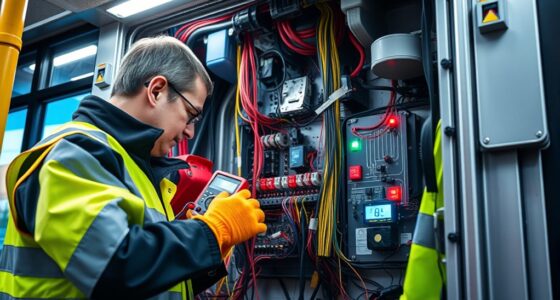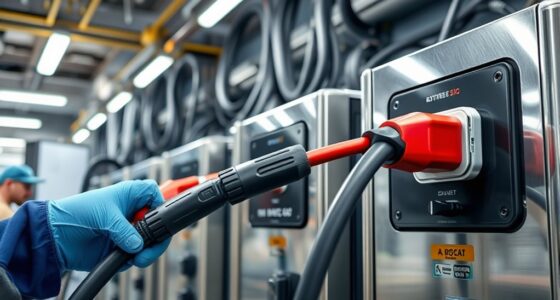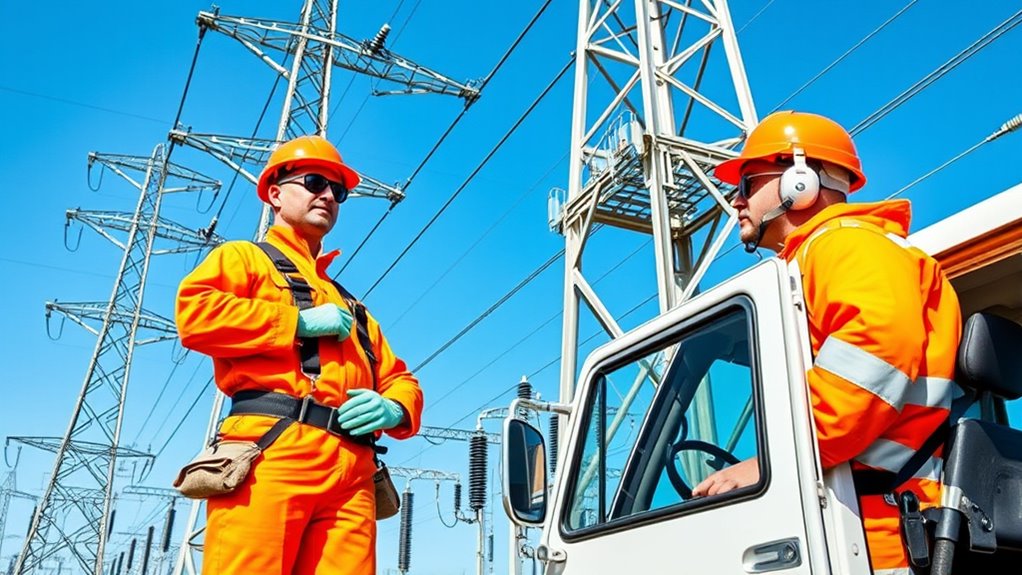

High-voltage safety training is essential for technicians and drivers to protect themselves from electrical hazards. It teaches you how to recognize risks, use proper safety gear, and follow protocols like lockout/tagout and emergency procedures. By understanding battery maintenance and hazard prevention, you reduce the chance of shocks, fires, or injuries. Staying proactive and informed keeps everyone safe. If you want to know more about best practices and safety tips, there’s plenty to explore.

Get business pricing on monitors, keyboards and dev gear
- Business-only prices and quantity discounts
- Tax-exempt purchasing
- Multiple users, one account, clear invoices
Key Takeaways
- Proper safety training educates technicians and drivers on high-voltage risks and safe handling procedures to prevent accidents and injuries.
- Regular inspection and maintenance of batteries ensure safe operation and reduce the risk of sparks, fires, or equipment failure.
- Emergency response training prepares personnel to safely shut off power and use protective gear during accidental shocks or exposures.
- Implementing lockout/tagout and safety audits minimizes electrical hazards and promotes proactive risk management.
- Using appropriate safety gear and maintaining clear communication help protect personnel during high-voltage system operations.
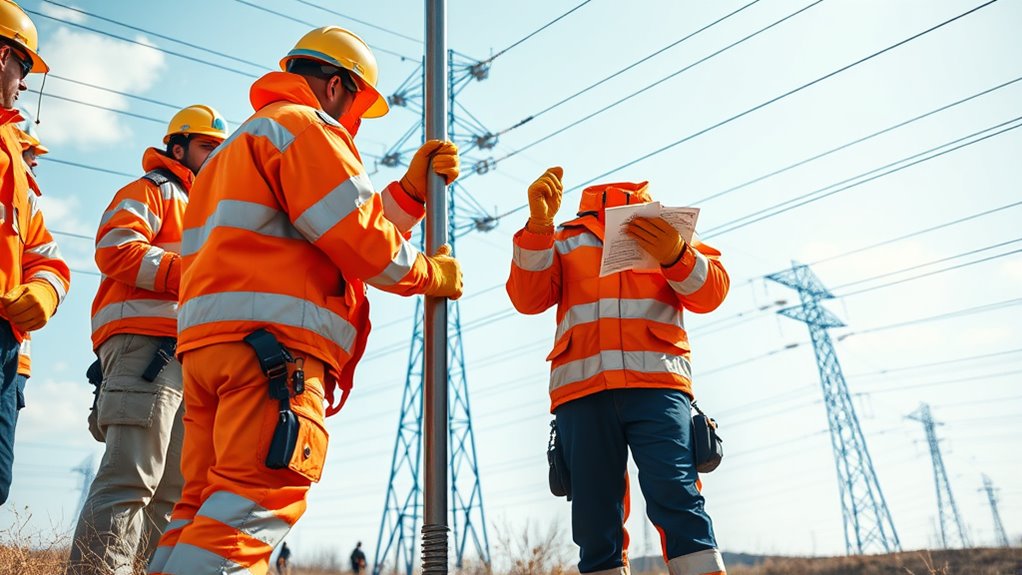
High-voltage safety training is fundamental for anyone working with or near electrical equipment. Whether you’re a technician maintaining high-voltage systems or a driver operating vehicles with electrical components, understanding the risks and safety protocols is indispensable. One important aspect of this training involves proper battery maintenance. Batteries in electric vehicles or backup power systems can pose significant risks if mishandled. You need to know how to inspect for damage, guarantee proper connections, and avoid short circuits that could lead to sparks or fires. Regular maintenance isn’t just about keeping equipment running smoothly; it’s about preventing accidents that could cause severe injuries or even fatalities. During training, you learn to identify warning signs of battery issues, such as swelling, leaks, or corrosion, and how to address them safely. Proper tools and protective gear are essential to prevent accidental shocks or burns during maintenance activities.
Equally important is understanding emergency response procedures. Despite all safety measures, accidents can happen, so being prepared is critical. High-voltage safety training teaches you how to quickly assess a situation and respond effectively. If someone is exposed to live circuits or has received an electric shock, you need to act fast but safely—shutting off power sources, avoiding direct contact, and calling emergency services. Knowing how to use emergency equipment, like insulated gloves and rescue tools, can make a difference in saving lives. The training emphasizes the importance of establishing a safe perimeter around the affected area, preventing untrained personnel from entering and risking their safety. You also learn about the importance of accurately reporting incidents, documenting damage, and cooperating with emergency responders to facilitate a swift response.
In addition to immediate responses, the training covers how to prepare for potential electrical hazards proactively. This includes conducting regular safety audits, ensuring all personnel are aware of safety protocols, and maintaining clear communication channels during operations. You’ll be taught to always follow lockout/tagout procedures before working on electrical systems, which helps prevent accidental energization. Additionally, understanding color accuracy and how it relates to the overall image quality can help in assessing the safety and reliability of visual displays related to electrical equipment. By integrating these practices into your routine, you reduce the likelihood of accidents and guarantee a safer working environment for everyone involved. Ultimately, high-voltage safety training equips you with the knowledge and skills to handle the complexities of working with electrical systems confidently, minimizing risks related to battery maintenance and emergency response. It’s about protecting yourself, your colleagues, and the people who rely on your expertise every day.
As an affiliate, we earn on qualifying purchases.
Frequently Asked Questions
What Are the Latest High-Voltage Safety Standards?
You should follow the latest high-voltage safety standards by ensuring proper electrical insulation and adhering to updated emergency procedures. These standards emphasize regular inspection of insulation barriers, using appropriate personal protective equipment, and training for quick, effective responses during emergencies. Staying current with industry guidelines helps protect yourself and others, minimizing risks associated with high-voltage work. Always review the latest regulations from OSHA and NFPA for extensive safety compliance.
How Often Should Refresher Safety Training Be Conducted?
You should conduct refresher safety training every 12 months to guarantee technicians stay current. Studies show that after a year, skills can decline by up to 30%, increasing risks. Regular renewal frequency and training updates help reinforce safety protocols, keeping everyone prepared for high-voltage hazards. By scheduling annual sessions, you ensure your team remains vigilant and compliant, reducing accident potential and safeguarding lives on the job.
Are There Specific Safety Protocols for Different Vehicle Types?
Yes, you should follow vehicle-specific procedures tailored to each type, like electric trucks or utility vehicles, to guarantee safety. Familiarize yourself with emergency response protocols unique to each vehicle, such as handling high-voltage components or disconnecting power sources. These protocols help you react quickly and correctly during incidents, minimizing risk. Always review and practice these safety measures regularly to stay prepared and confident in any situation involving different vehicle types.
What Are Common High-Voltage Accident Causes?
You should be aware that common high-voltage accident causes include insulation failure and accidental contact. Insulation failure can occur due to wear, damage, or manufacturing defects, exposing live components. Accidental contact happens when technicians or drivers unintentionally touch energized parts, often during maintenance or repairs. To prevent these incidents, always follow safety protocols, use proper protective equipment, and stay vigilant around high-voltage systems.
How Is High-Voltage Safety Compliance Enforced?
You guarantee high-voltage safety compliance by following strict protocols, including wearing personal protective equipment at all times. Regular inspections and safety audits are conducted to enforce standards, and you must adhere to emergency response procedures if incidents occur. Supervisors monitor your actions, and violations result in disciplinary measures. Staying current with safety training and reporting hazards helps maintain a safe environment, protecting everyone from high-voltage risks.
electric vehicle battery maintenance tools
As an affiliate, we earn on qualifying purchases.
As an affiliate, we earn on qualifying purchases.
Conclusion
By embracing high-voltage safety training, you’re not just safeguarding equipment—you’re nurturing a safer environment for yourself and those around you. Think of it as tending to a delicate garden; with careful attention and respect, you prevent unwanted surprises and ensure everything thrives smoothly. Remember, your vigilance is the gentle shield that keeps everyone secure. Prioritize your training, stay alert, and let safety be your guiding light—because in this line of work, a cautious approach blossoms into true peace of mind.
As an affiliate, we earn on qualifying purchases.
As an affiliate, we earn on qualifying purchases.
Halloween Picks
halloween
As an affiliate, we earn on qualifying purchases.