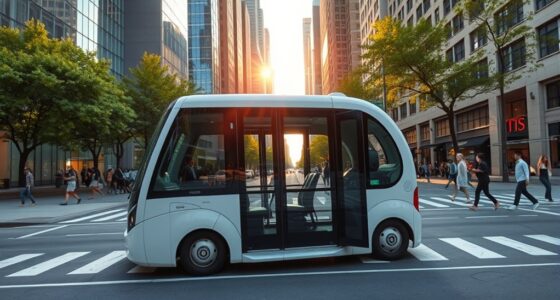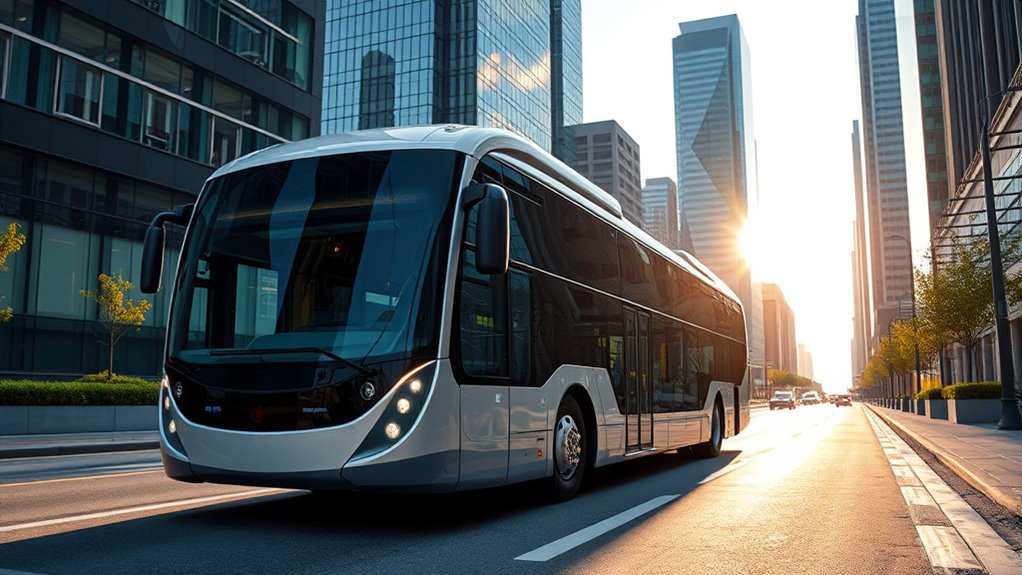

Level-4 autonomous electric buses are already testing in pilot programs worldwide, but widely hitting your streets may still take a few years. You’ll need supportive infrastructure, like reliable charging stations, and clear regulations to guarantee safety and liability are addressed. Progress depends on overcoming technical, infrastructural, and legal hurdles. If you keep exploring, you’ll discover how these innovations are shaping future urban transportation and when they might become part of everyday life.

Get business pricing on monitors, keyboards and dev gear
- Business-only prices and quantity discounts
- Tax-exempt purchasing
- Multiple users, one account, clear invoices
Key Takeaways
- Pilot programs for autonomous electric buses are already underway in several cities, indicating early deployment stages.
- Widespread Level-4 bus adoption depends on overcoming infrastructure, regulatory, and technical challenges.
- Advanced charging infrastructure and supportive regulations are critical for operational readiness.
- Full deployment is expected gradually, with incremental introduction of Level-4 buses over the next few years.
- The timeline largely hinges on stakeholder coordination, technological advancements, and regulatory approvals.
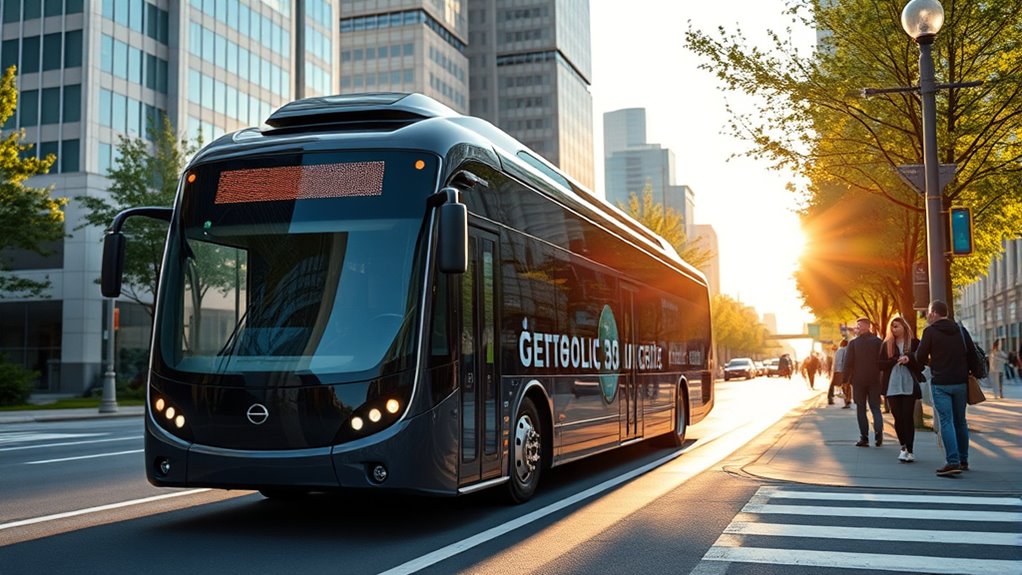
Autonomous electric buses are transforming public transportation by combining self-driving technology with eco-friendly power sources. These vehicles promise to reduce traffic congestion, lower emissions, and improve mobility for all. However, for these buses to become a widespread reality, significant infrastructure and regulatory hurdles need to be addressed. One of the most critical components is charging infrastructure. Unlike traditional buses that can rely on standard fueling stations, electric autonomous buses require extensive, reliable charging networks. These networks must support fast-charging capabilities to keep vehicles operational throughout the day, especially in busy urban routes. Cities need to invest in strategically placed charging stations that can accommodate the high energy demands of autonomous electric buses. Without adequate infrastructure, even the most advanced self-driving buses can’t reach their full potential, as delays caused by charging issues could undermine efficiency and reliability. Developing this infrastructure isn’t just about installing chargers; it involves integrating these stations into existing transportation networks, ensuring compatibility with different bus models, and managing grid capacity to handle increased electricity demand. This process can be complex and costly, requiring coordinated planning among city planners, utility companies, and transportation agencies. Additionally, advances in charging technology are essential to meet the energy needs of autonomous electric buses efficiently and sustainably.
Alongside infrastructure, regulatory challenges pose another significant barrier. Autonomous buses must operate within a framework of laws and safety standards that are still evolving. Governments are working to develop regulations that ensure passenger safety, cybersecurity, and data privacy, but these policies take time to implement and often lag behind technological advancements. You might find that in some regions, regulatory approval processes slow down deployment, as authorities seek to thoroughly evaluate safety protocols and liability issues. Additionally, legal questions around liability in case of accidents or system failures remain unresolved in many areas. For autonomous electric buses to hit streets on a large scale, regulators need to establish clear, consistent guidelines that foster innovation while maintaining safety. This process involves balancing public trust with technological progress, which can be a lengthy, complex endeavor.
While the technology is rapidly advancing, and pilot programs are already underway in several cities, widespread adoption depends heavily on overcoming these infrastructure and regulatory barriers. You can expect to see incremental deployments initially, with Level-4 autonomous buses becoming more common as cities invest in charging networks and regulations mature. Ultimately, the timeline for when these buses will be a routine sight on your streets hinges on how quickly stakeholders can address these challenges and build the necessary foundation for autonomous electric public transportation.
As an affiliate, we earn on qualifying purchases.
Frequently Asked Questions
What Are the Main Safety Concerns With Level-4 Autonomous Buses?
Your main safety concerns with level-4 autonomous buses include sensor reliability and passenger security. You need to guarantee sensors accurately detect obstacles and pedestrians in all weather conditions to prevent accidents. Additionally, safeguarding passenger security from cyber threats and system malfunctions is vital. If sensors fail or hacking occurs, it could lead to dangerous situations, so rigorous testing and secure systems are indispensable for safe and reliable autonomous bus operations.
How Will Autonomous Buses Impact Current Transportation Jobs?
Imagine a new wave crashing onto your transit jobs. Autonomous buses will shake up transit employment, possibly replacing some autonomous bus jobs like drivers. But they also create opportunities in tech, maintenance, and oversight. You might find yourself adapting to new roles or upgrading skills. While some jobs fade, the autonomous bus revolution could open fresh pathways in transit employment, transforming your career landscape into a high-tech highway.
What Infrastructure Is Needed for Autonomous Electric Bus Deployment?
You need to develop dedicated charging stations for autonomous electric buses, ensuring quick and reliable recharging. Upgrading traffic management systems is essential to coordinate autonomous routes, prevent congestion, and enhance safety. Clear and accessible infrastructure, including smart traffic signals and dedicated lanes, supports smooth operation. Investing in these elements enables efficient deployment, reduces downtime, and maximizes the benefits of autonomous electric buses on your streets.
Are There Any Legal Barriers to Autonomous Bus Operation?
You’ll find that legal regulations and liability issues are vital barriers to autonomous bus operation. Currently, over 60 countries are developing frameworks, but many lack clear rules for autonomous vehicles. Liability concerns, especially in accidents, complicate deployment and insurance policies. These legal uncertainties slow down adoption, making it essential for policymakers to establish thorough regulations that clarify responsibilities, ensuring safe and widespread autonomous bus use on our streets.
How Do Autonomous Buses Handle Complex Urban Traffic Scenarios?
You’ll find that autonomous buses handle complex urban traffic scenarios by relying on sensor fusion, which combines data from cameras, lidar, and radar to create a thorough environment understanding. They also use advanced route optimization algorithms to adapt quickly to changing conditions, like construction or unexpected obstacles. This combination allows the buses to navigate safely and efficiently, even in busy city environments, ensuring smooth operation amidst unpredictable traffic patterns.
fast charging station for electric buses
As an affiliate, we earn on qualifying purchases.
As an affiliate, we earn on qualifying purchases.
Conclusion
As the horizon of autonomous electric buses draws nearer, it’s like watching a new chapter unfold in transportation’s storybook. These sleek, silent giants promise to reshape your daily commute, turning it from a mundane chore into a smooth, futuristic ride. While they may still be a few chapters away from your street corner, the journey is well underway. Soon, you’ll step aboard a bus that’s as smart as it is green—leading us all into a brighter, cleaner future.
autonomous electric bus safety regulations
As an affiliate, we earn on qualifying purchases.
As an affiliate, we earn on qualifying purchases.
As an affiliate, we earn on qualifying purchases.
Halloween Picks
halloween
As an affiliate, we earn on qualifying purchases.