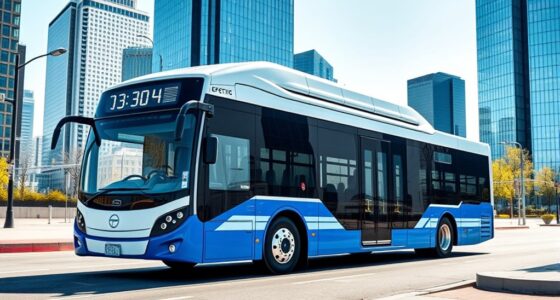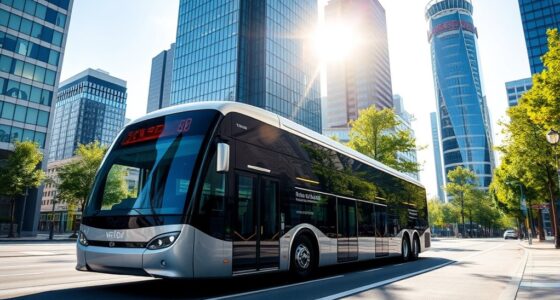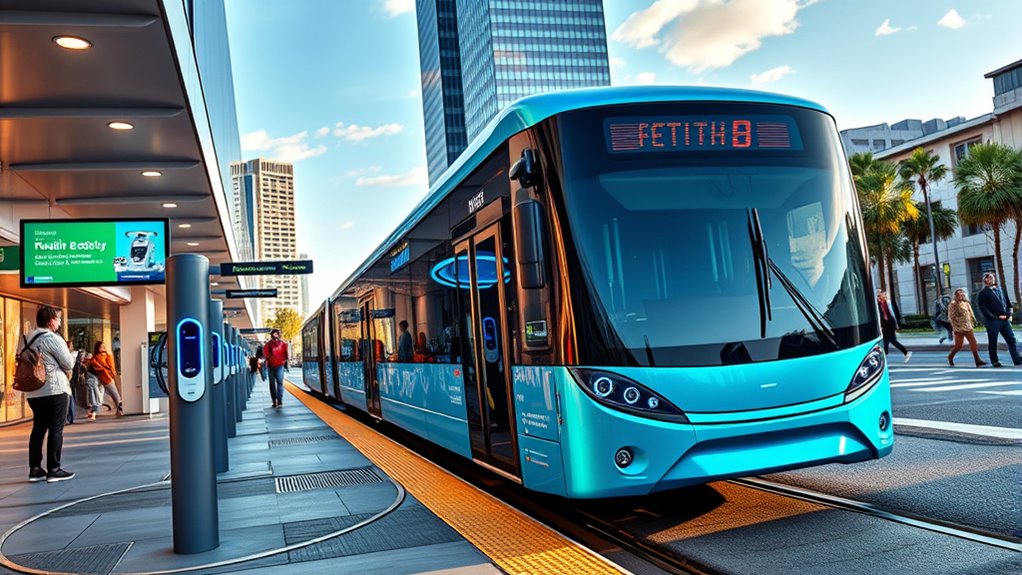
Integrating electric buses into MaaS platforms is shaping future urban mobility by improving sustainability, efficiency, and passenger comfort. You’ll see advanced charging infrastructure, such as fast-charging stations powered by renewable energy, supporting seamless operation. Digital tools provide real-time updates, enhance transparency, and improve the overall experience. Community engagement fosters support and trust. If you explore further, you’ll discover how these innovations are transforming transit and driving the shift toward smarter cities.
Key Takeaways
- Integrating real-time data and digital platforms enhances operational efficiency and passenger experience in electric bus MaaS systems.
- Developing strategic, renewable-powered charging infrastructure supports seamless, sustainable electric bus integration into future mobility.
- Smart scheduling and fleet management optimize electric bus utilization and minimize charging downtime.
- Community engagement initiatives build public trust and promote adoption of electric buses within MaaS platforms.
- Electric buses contribute to cleaner, quieter urban environments, aligning with emerging trends in sustainable, smart mobility solutions.
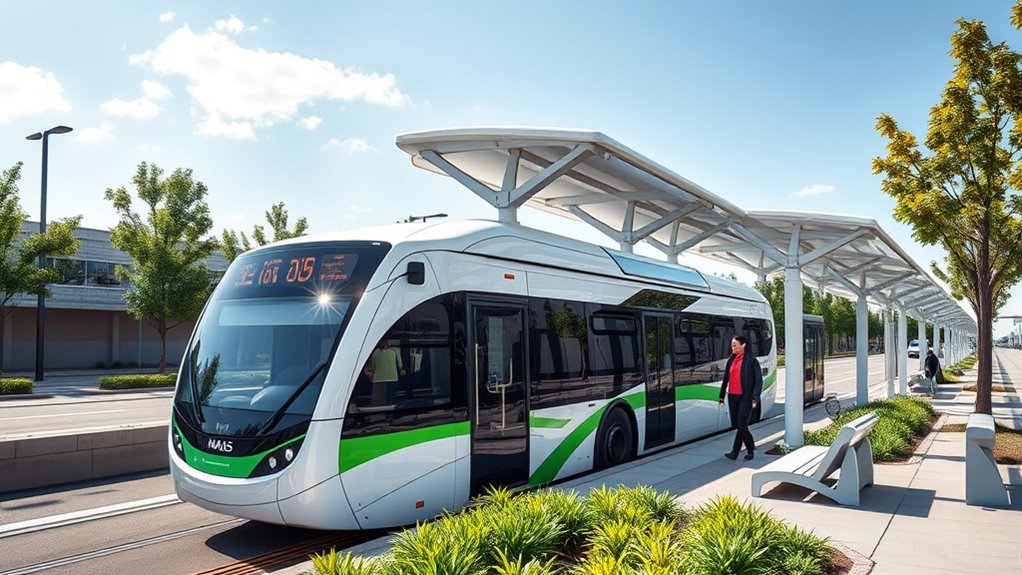
As cities aim to reduce emissions and improve transportation sustainability, integrating electric buses into Mobility-as-a-Service (MaaS) platforms offers a practical solution. By seamlessly combining electric bus networks with digital platforms, you can provide users with a more efficient, eco-friendly, and convenient transit experience. A key component of this integration is developing robust charging infrastructure. Without sufficient charging stations, electric buses risk long downtimes, which can disrupt service reliability and passenger confidence. You need strategically placed charging points at bus depots, key transit hubs, and along routes to ensure buses are always ready to operate. Fast-charging technology, in particular, can minimize charging times, allowing you to keep vehicles on the road longer and reduce the need for extensive infrastructure while maintaining operational efficiency.
Develop robust charging infrastructure with strategic points and fast-charging tech for reliable electric bus service.
When you incorporate electric buses into MaaS platforms, passenger experience becomes a central focus. Electric buses are quieter and produce no local emissions, leading to a more pleasant and healthier environment for your riders. You can leverage real-time data from the MaaS platform to inform passengers about bus arrivals, charging status, and route updates, creating a more transparent and reliable service. This technological integration not only improves convenience but also builds trust in the system, encouraging more people to adopt sustainable transportation options.
Furthermore, as you optimize the charging infrastructure, you can implement smart scheduling systems that align bus operations with charging times, reducing idle periods and maximizing fleet utilization. This coordination helps maintain service frequency and reduces wait times, making transit more attractive to passengers. Additionally, incorporating renewable energy sources, like solar or wind, into your charging stations enhances the environmental benefits of electric buses and aligns with broader sustainability goals.
The passenger experience is also impacted by the comfort and modern features of electric buses, which can include Wi-Fi, real-time information displays, and accessible design. When these features are integrated into the MaaS platform, users gain a seamless, user-friendly interface for planning trips, buying tickets, and receiving updates. This holistic approach makes public transportation more appealing, especially to tech-savvy passengers seeking convenience and sustainability.
To maximize the benefits of electric buses, it’s also essential to consider special events and themed breakfasts that can serve as community outreach opportunities, raising awareness about sustainable transit initiatives and encouraging public support for electric vehicle adoption. Ultimately, the success of integrating electric buses into MaaS platforms hinges on your ability to develop an extensive charging infrastructure and prioritize passenger experience. By doing so, you not only advance environmental objectives but also create a more efficient, reliable, and enjoyable transit system that encourages widespread adoption and supports future mobility trends.

TRON Wall & Car Charger Travel Charging Station, 36W Dual USB-C & USB-A Fast Charger, Foldable for iPhone, iPad, Android, Earbuds – TR17
- Warranty: 2-Year Limited Warranty
- Versatile Use: Car and Wall Charging
- Dual Ports: USB-C and USB-A
As an affiliate, we earn on qualifying purchases.
As an affiliate, we earn on qualifying purchases.
Frequently Asked Questions
How Do Electric Buses Impact Urban Air Quality?
Electric buses considerably improve urban air quality by reducing emissions, which benefits everyone’s health. When you switch to electric, you cut down on harmful pollutants like NOx and particulate matter, leading to cleaner air. These emission reductions help decrease smog and respiratory problems, making your city a healthier place to live and breathe. By adopting electric buses, you actively contribute to a cleaner, more sustainable urban environment.
What Are the Main Challenges in Electric Bus Integration?
You’ll face challenges like establishing sufficient charging infrastructure to keep your electric buses running smoothly, especially during peak hours. Managing your fleet efficiently also poses difficulties, requiring advanced fleet management systems to monitor battery levels and schedule charging. Additionally, integrating these new buses into existing urban transit networks demands coordination and investment, making it vital to plan carefully to guarantee seamless operation and maximize benefits for your city’s mobility and air quality.
How Does Passenger Experience Improve With Electric Buses?
With electric buses, you notice improved passenger comfort thanks to smoother acceleration and quieter rides. Boarding efficiency also increases because electric buses often feature low floors, making it easier for you to get on and off quickly. Additionally, the quieter operation reduces noise pollution, creating a more pleasant environment for passengers. Overall, electric buses enhance your travel experience by making rides more comfortable and efficient.
What Are the Cost Implications of Transitioning to Electric Buses?
Switching to electric buses can be a game-changer, but it’s not without costs. You’ll need to do a thorough cost analysis and adapt your budget planning to account for higher upfront investments in vehicles and charging infrastructure. While maintenance costs drop, initial expenses are higher, so budgeting wisely guarantees a smooth transition. Over time, savings on fuel and repairs can tip the scales in your favor, making it a smart move.
How Do Electric Buses Affect Overall Transportation System Reliability?
Electric buses enhance your transportation system’s reliability by reducing downtime through simplified fleet maintenance and fewer mechanical issues. Their advanced energy management systems optimize battery use, ensuring consistent performance and extended operational hours. You’ll experience fewer breakdowns, lower maintenance costs, and improved scheduling accuracy. This increased dependability keeps your system running smoothly, boosts passenger confidence, and supports sustainable growth in mobility, making your overall transportation network more resilient and efficient.

Portable Solar Generator 300W Portable Power Station with 60W Solar Panel
- Powerful 300W Portable Generator: Charges smartphones, tablets, laptops, and small devices
- Includes 60W Foldable Solar Panel: Recharges via solar, AC, or car power
- Multiple Charging Outlets: AC, DC, USB, and quick charge ports
As an affiliate, we earn on qualifying purchases.
As an affiliate, we earn on qualifying purchases.
Conclusion
So, you’re ready to embrace the future of mobility with electric buses on your MaaS platform? Great choice—just don’t forget to tell your passengers how “green” your fleet is while they wait for the charging station to fill up. Remember, it’s all about seamless, sustainable travel… or at least pretending it is. After all, who needs real progress when you can just electrify the illusion of it? Welcome to the future!

GPS Tracker for Vehicles,Tracking Devices for Cars Hidden, iOS & Android
- No Monthly Fees: No subscription required for real-time tracking
- Universal Compatibility: Works with iOS and Android devices
- Waterproof and Durable: IP67 rated for heavy rain and snow
As an affiliate, we earn on qualifying purchases.
As an affiliate, we earn on qualifying purchases.
electric bus passenger Wi-Fi system
As an affiliate, we earn on qualifying purchases.
As an affiliate, we earn on qualifying purchases.