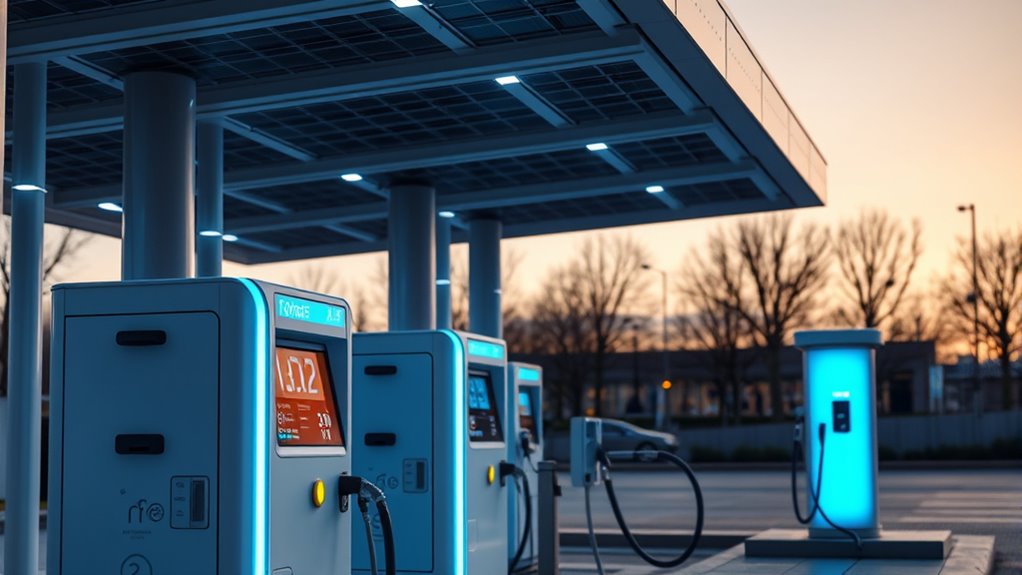

Innovations in hydrogen refueling infrastructure focus on reducing costs and installation time by adopting modular designs and standardized components. Prefabricated modules allow quick onsite setup, while streamlined construction methods cut down project timelines markedly. Supportive policies and enhanced planning also help speed up approvals, making expansion easier and more affordable. These advancements are paving the way for faster, more economical hydrogen networks, so exploring further will reveal even more effective strategies and future possibilities.

Get business pricing on monitors, keyboards and dev gear
- Business-only prices and quantity discounts
- Tax-exempt purchasing
- Multiple users, one account, clear invoices
Key Takeaways
- Implementing modular designs and standardized components reduces manufacturing costs and accelerates station deployment.
- Prefabricated modules enable rapid onsite assembly, significantly shortening construction timelines.
- Innovative site planning and digital twin technology optimize infrastructure layout and speed up installation.
- Streamlining permitting processes and regulatory support eliminate bureaucratic delays, facilitating faster project approval.
- Advanced construction techniques and site prep methods further decrease build time and overall infrastructure costs.
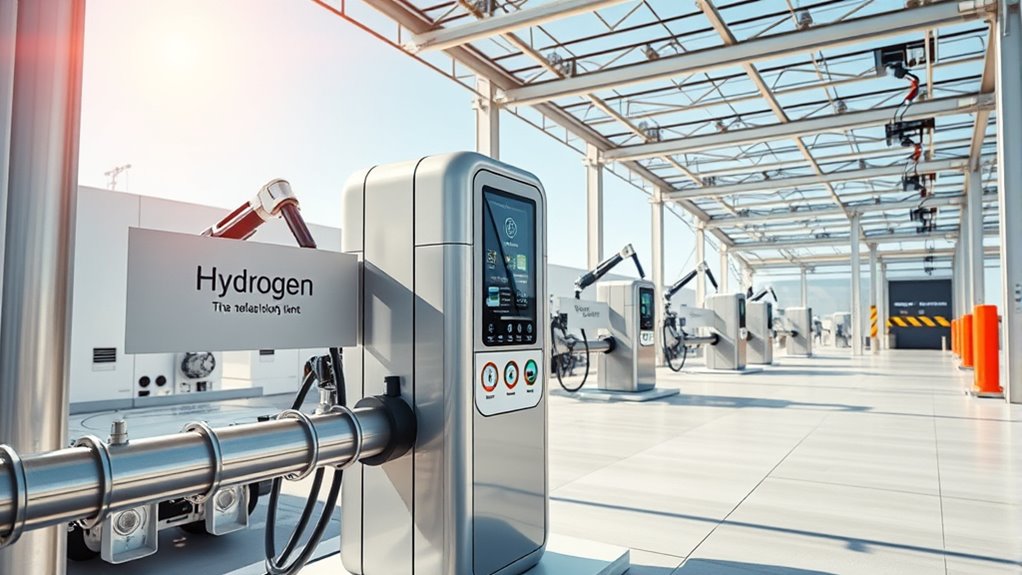
Have you ever wondered what it takes to make hydrogen fueling stations more efficient and widespread? The answer lies in innovations that focus on reducing costs and speeding up installation processes. As the demand for hydrogen-powered vehicles grows, streamlining the development of fueling infrastructure becomes essential. One of the biggest hurdles has always been the high upfront costs associated with building these stations. However, recent advancements are tackling this issue head-on, making it more feasible for companies and governments to invest in expanding hydrogen networks. By adopting modular designs and standardized components, manufacturers can cut down on custom fabrication, which considerably lowers overall expenses. These standardized parts are easier to produce at scale, leading to cost reductions that benefit everyone involved.
Innovative modular designs and standardized parts are reducing costs and accelerating hydrogen fueling station deployment.
Installation speed plays an equally critical role in accelerating the deployment of hydrogen stations. Traditional construction methods often take months to complete, delaying the availability of fueling options for drivers. Now, innovative construction techniques, such as prefabricated modules and rapid assembly methods, are transforming the process. Prefabricated modules come pre-assembled in controlled environments, allowing for quick onsite installation once they arrive. This approach not only shortens construction timelines but also minimizes disruptions to the surrounding area. Additionally, advancements in site preparation—like improved excavation techniques and simplified foundation designs—further speed up the process. These efficiencies mean that new stations can be operational in a matter of weeks rather than months, greatly increasing the pace at which the infrastructure can grow. Leveraging zoning laws and regulations can also facilitate faster deployment by removing bureaucratic barriers and streamlining approval processes.
Moreover, integrating smart planning tools and digital twin technology helps optimize site selection and design, reducing trial-and-error during installation. When combined, these innovations in design and construction enable faster rollouts without compromising safety or quality. The goal is to create a scalable, cost-effective infrastructure that can keep pace with the rising demand for hydrogen fuel. Governments and industry players are also incentivizing faster deployment through streamlined permitting processes and supportive policies, which further boost installation speed. All these efforts work together to bring down the barriers of high costs and lengthy construction times, making hydrogen refueling stations more accessible and widespread.
In short, by focusing on cost reduction strategies and embracing rapid installation techniques, the hydrogen infrastructure industry is making notable strides. These innovations ensure that expanding the network becomes more practical and economically viable, paving the way for a cleaner, more sustainable transportation future. As you look forward, it’s clear that these developments will play a pivotal role in transforming the way hydrogen fueling stations are built and integrated into our daily lives.
hydrogen fueling station modular components
As an affiliate, we earn on qualifying purchases.
As an affiliate, we earn on qualifying purchases.
Frequently Asked Questions
How Do Hydrogen Refueling Stations Impact Local Air Quality?
Hydrogen refueling stations positively impact your local air quality by promoting pollution reduction, as hydrogen fuel produces only water vapor when used. This leads to air quality improvement because it cuts down harmful emissions from traditional vehicles. By supporting clean energy, these stations help create healthier environments, reduce smog, and lower respiratory health risks for your community, making your surroundings safer and more sustainable.
What Are the Safety Protocols for Hydrogen Storage and Dispensing?
Prioritize precise protocols for hydrogen storage and dispensing by practicing safety training and implementing hydrogen leak detection. You should consistently check for leaks, handle high-pressure tanks carefully, and follow strict procedures. Regular safety training ensures you understand risks, while leak detection systems alert you to hazards early. Staying vigilant and adhering to these safety standards helps prevent accidents, protect personnel, and promote a secure, sustainable hydrogen refueling environment.
How Can Public Acceptance of Hydrogen Stations Be Improved?
You can improve public acceptance of hydrogen stations by focusing on public education and community engagement. Educate people about hydrogen safety, benefits, and environmental impacts through workshops, social media, and local events. Engage with communities early, listen to concerns, and involve them in planning. Transparency builds trust, making people more comfortable with hydrogen infrastructure, ultimately leading to broader acceptance and support for cleaner energy solutions.
What Are the Long-Term Maintenance Costs for Hydrogen Infrastructure?
You might be surprised to learn that long-term maintenance costs for hydrogen infrastructure are influenced by lifecycle expenses and durability challenges. Over time, components may need replacement or upgrades, but advances in materials and technology are reducing these costs. While initial investments are high, ongoing expenses tend to stabilize as systems become more reliable, helping you plan budgets effectively while ensuring the infrastructure remains durable and efficient for years to come.
How Will Government Policies Influence Infrastructure Expansion?
Government policies, through policy incentives and robust regulatory frameworks, will considerably influence infrastructure expansion. Your efforts will be supported by incentives that reduce costs and encourage development, while clear regulations streamline permitting and safety standards. These policies create a conducive environment for investment, accelerating infrastructure rollout. By aligning incentives and regulations, the government helps you build hydrogen refueling networks faster and more efficiently, ensuring broader adoption and infrastructure growth.
prefabricated hydrogen refueling modules
As an affiliate, we earn on qualifying purchases.
As an affiliate, we earn on qualifying purchases.
Conclusion
So, here you are, watching as hydrogen fueling stations become cheaper and faster to build—yet still wondering if we’ll ever truly leave behind fossil fuels. It’s ironic how innovation promises a cleaner future, but progress often feels painfully slow. As we inch closer to widespread hydrogen adoption, remember: sometimes, the biggest breakthroughs come not just from technology, but from patience. After all, saving the planet might just take a little longer than we’d hoped.
hydrogen station construction kit
As an affiliate, we earn on qualifying purchases.
As an affiliate, we earn on qualifying purchases.
digital twin technology for hydrogen infrastructure
As an affiliate, we earn on qualifying purchases.
As an affiliate, we earn on qualifying purchases.
Halloween Picks
halloween
As an affiliate, we earn on qualifying purchases.