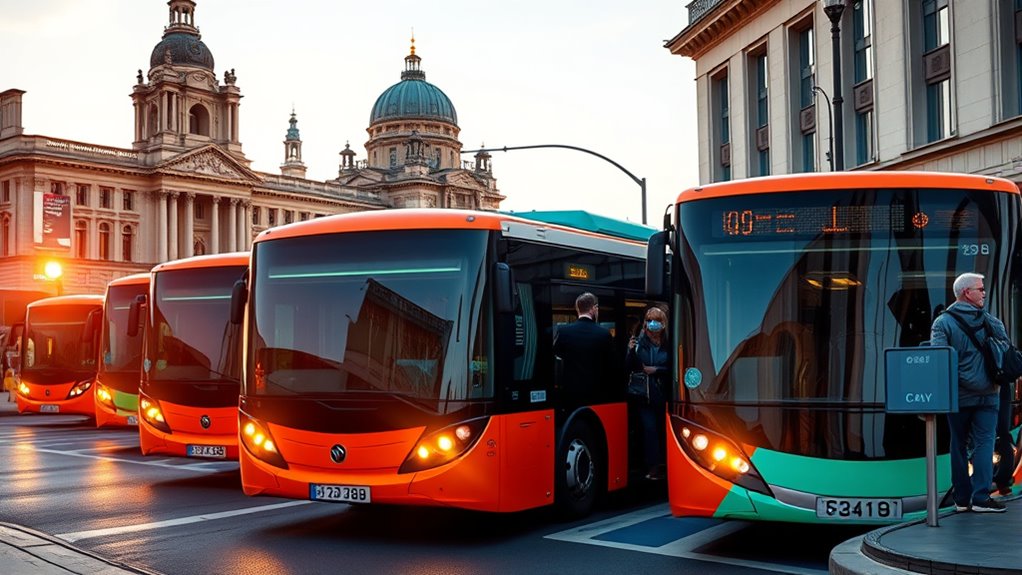

Germany is committing €1.45 billion in 2024 to subsidize zero-emission buses, aiming to accelerate sustainable urban transport. This funding will help you see more electric buses on city streets, reducing pollution and improving air quality. It supports investments in charging stations and encourages manufacturers to develop innovative electric bus models. By backing these initiatives, Germany is working toward cleaner, quieter cities. Keep exploring to discover how this initiative will transform urban mobility and environment.
Key Takeaways
- Germany allocates €1.45 billion in 2024 to subsidize electric, zero-emission buses nationwide.
- The funding aims to promote sustainable urban transit and reduce emissions in cities.
- Subsidies cover a significant part of bus costs, making electric buses more affordable.
- The initiative includes investments in charging infrastructure and industry innovation.
- It supports modernizing public transportation and advancing Germany’s climate and mobility goals.
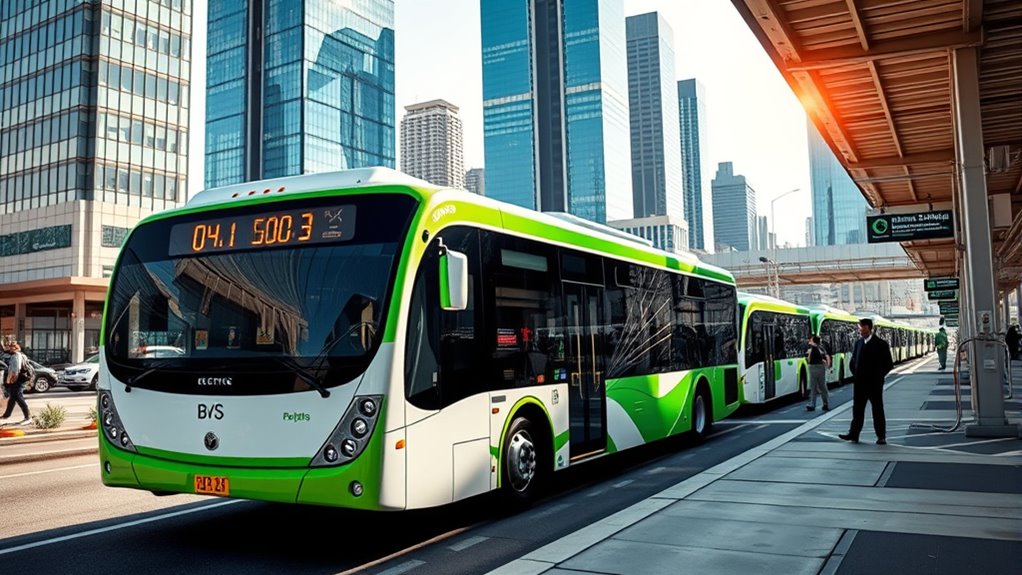
Germany has announced a commitment of €1.45 billion to subsidize zero-emission buses, aiming to accelerate the country’s shift toward sustainable public transportation. This bold move underscores the government’s dedication to transforming urban transportation development by encouraging the adoption of electric vehicles. If you’re involved in city planning, transportation management, or even a local bus operator, this funding presents a significant opportunity to modernize your fleet and reduce emissions. The incentives are designed to make electric buses more accessible and financially viable, removing barriers that might have previously hindered widespread adoption.
With these electric vehicle incentives, you’ll find that purchasing zero-emission buses becomes more affordable. The subsidies will cover a substantial portion of the costs, easing the financial burden on municipalities and transit agencies. This financial support aims to accelerate the transition from traditional diesel-powered buses to cleaner, electric alternatives. As a result, you’ll see cleaner air in urban areas, improved public health, and a step closer to meeting climate goals. The funding isn’t just about replacing old buses; it’s about reshaping the entire landscape of urban transport. You can expect increased investment in charging infrastructure, which will further streamline the deployment of electric buses across cities.
Electric bus subsidies make adoption more affordable, boosting urban air quality and supporting climate goals.
This initiative aligns with Germany’s broader vision of sustainable urban transportation development. You, as a stakeholder, should recognize that this push isn’t just about individual buses but about creating a holistic, eco-friendly transit ecosystem. Electric buses contribute to quieter, more efficient city environments, and the government’s financial incentives make it easier for you to integrate these vehicles into your existing fleet. It’s an opportunity to future-proof your transportation services while actively participating in environmental preservation efforts.
Moreover, the subsidies are expected to foster innovation within the industry. Manufacturers will be encouraged to develop advanced electric bus models, which could lead to better range, faster charging, and improved passenger comfort. For you, this means access to a wider selection of reliable, cutting-edge vehicles that meet your specific needs. The emphasis on urban transportation development indicates that local authorities will prioritize expanding electric bus networks in densely populated areas, enhancing mobility and accessibility for residents.
Additionally, understanding the refrigeration cycle is essential for maintaining these electric buses, especially in ensuring their climate control systems operate efficiently, which helps optimize energy use and prolong vehicle lifespan.
Top picks for "germany pledg billion"
As an affiliate, we earn on qualifying purchases.
Frequently Asked Questions
How Will the Subsidy Impact Bus Manufacturing Companies Financially?
The subsidy will boost your company’s financial health by reducing manufacturing costs for zero-emission buses, making your products more competitive. You’ll likely see increased sales as market competition shifts towards sustainable options. This financial support encourages innovation and expansion, helping you stay ahead in the growing green bus market. Overall, the subsidy provides a significant advantage, enabling you to invest more in technology and production, strengthening your market position.
Will the Subsidies Influence the Pricing of Zero-Emission Buses?
Yes, the subsidies will influence the pricing of zero-emission buses. By reducing production costs, manufacturers can offer more competitive prices, boosting market competitiveness. As a result, consumers will find zero-emission buses more affordable, encouraging wider adoption. This increase in consumer affordability can lead to greater demand, further driving down prices and fostering a more vibrant, sustainable transportation market.
Are There Specific Regions in Germany Prioritized for the Subsidies?
While the subsidies target the entire country, you’ll notice a regional focus on urban areas. These densely populated zones prioritize cleaner transportation solutions, aiming to reduce emissions and improve air quality. The government directs more support to cities where the impact can be greatest, making urban centers the primary beneficiaries of the €1.45 billion funding. So, if you’re in a city, you’re more likely to see these zero-emission buses roll out sooner.
How Will the Government Ensure the Sustainability of These Subsidies?
The government will guarantee the sustainability of these subsidies by tying funding to ongoing investments in renewable energy and public transportation infrastructure. You can expect strict oversight and performance metrics to track progress, ensuring funds support long-term green goals. By integrating renewable energy funding into the subsidy program, they aim to reduce reliance on fossil fuels and maintain a resilient, eco-friendly transportation system for the future.
What Are the Long-Term Plans for Zero-Emission Bus Adoption Beyond 2024?
You’ll see Germany aim to expand its zero-emission bus fleet by 50% over the next decade. Long-term plans include adopting innovative charging solutions, like fast-charging stations and battery swaps, to support fleet expansion. These advancements will make zero-emission buses more practical and accessible, ensuring cleaner public transport. By integrating new technology, Germany commits to a sustainable future, reducing emissions and improving air quality for generations to come.
Conclusion
By investing €1.45 billion in zero-emission buses, Germany is clearly committed to a cleaner future. With over 70% of public buses expected to run on electric power by 2030, this funding could markedly speed up the shift. You can see how such substantial support not only reduces emissions but also encourages innovation. It’s a bold step toward sustainable urban transport, inspiring other nations to follow suit and prioritize greener mobility solutions.