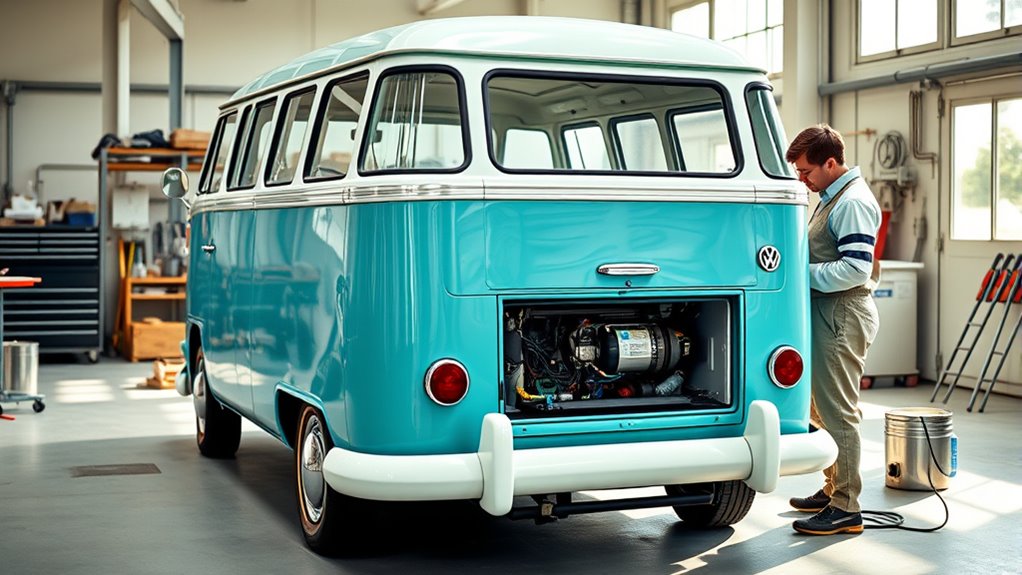

When upgrading a classic VW bus with an electric drivetrain, focus on selecting a reliable Battery Management System (BMS) to extend battery life and guarantee safety. Choose a motor compatible with your chassis and performance goals, balancing power and efficiency. Proper integration of these components is key for smooth operation, safety, and maximizing range. Restomod shops emphasize meticulous planning of system compatibility and management—continue exploring to uncover the full tips for a successful electric conversion.
Key Takeaways
- Selecting a compatible, lightweight electric motor ensures smooth performance and integration with the VW bus chassis.
- Implementing a robust Battery Management System (BMS) extends battery life and maintains safety during operation.
- Proper system integration balances motor power, battery capacity, and vehicle weight for optimal range and performance.
- Restomod shops prioritize cooling and safety features to prevent overheating and electrical issues in electric conversions.
- Monitoring and maintaining battery and motor health data helps plan effective maintenance and enhances reliability.

Restomodding classic VW buses has become a popular way to revive these iconic vehicles while enhancing their performance and comfort. When you decide to upgrade an old bus with an electric drivetrain, one of the most critical aspects to contemplate is battery management. Modern electric conversions rely on sophisticated battery systems that optimize charging, discharging, and cooling to extend battery life and ensure safety. You’ll want to work with experts who understand how to integrate battery management systems (BMS) seamlessly, so your restored bus remains reliable and efficient. Proper battery management prevents overheating, overcharging, and deep discharging, all of which can shorten the lifespan of your batteries or cause safety issues. A well-designed BMS also provides valuable data about your battery pack’s health, helping you monitor performance over time and plan maintenance accordingly.
Another essential factor in the conversion process is motor compatibility. Not all electric motors will fit or perform well with the original VW bus chassis, so you need to choose a motor that aligns with your goals for power, torque, and range. Restomod shops often recommend motors that are compact, lightweight, and compatible with the existing transmission or offer a direct-drive setup to reduce complexity. The right motor ensures you get smooth acceleration and enough torque for city driving or hilly terrains, without adding unnecessary weight or complexity. They also consider the bus’s electrical system—voltage, connectors, and control modules—so everything works harmoniously. Compatibility extends beyond just fitting physically; it involves matching the motor’s performance characteristics with your desired driving experience and the capabilities of your battery pack. A motor that’s too powerful might drain your batteries quickly, while one that’s underpowered could make your bus sluggish. Additionally, understanding battery management is crucial for maintaining optimal performance and longevity.
In the end, successful restomodding hinges on carefully balancing battery management and motor compatibility. You’re not just swapping out the engine; you’re reengineering the entire drivetrain system to work efficiently and reliably. Restomod shops leverage their expertise to select the right components, ensuring your vintage VW bus runs smoothly on electric power while preserving its charm. This integration isn’t just about installing new parts; it’s about creating a cohesive system that maximizes range, performance, and safety. By paying close attention to these technical details, you’ll enjoy a classic vehicle that’s modern, fun to drive, and environmentally friendly. With the right approach, your restored VW bus will stand out as a perfect blend of nostalgia and cutting-edge technology.

Blue Sea Systems 2340 Battery Terminal Mount Tin-plated Copper BusBars, Positive and Negative with 4 x 10-24" Stainless Screws, 32V, 100A,Red/Black
Easily add positive and negative busbars directly to a threaded-post battery terminal
As an affiliate, we earn on qualifying purchases.
As an affiliate, we earn on qualifying purchases.
Frequently Asked Questions
What Is the Average Cost of an Electric VW Bus Conversion?
You can expect the total conversion costs for an electric VW bus to range between $15,000 and $30,000, depending on the battery lifespan and parts chosen. The battery lifespan impacts long-term reliability and replacement costs, so investing in quality batteries might increase initial expenses but saves money over time. Keep in mind that labor, parts, and customization will influence the final price, so plan accordingly.
How Long Does an Electric VW Bus Battery Last?
Imagine you’re living in the 1960s’ heyday, but your electric VW bus’s battery longevity lasts around 8 to 10 years or roughly 1,000 to 1,500 charging cycles. Modern lithium-ion batteries typically hold up well, but lifespan depends on factors like usage, charging habits, and environmental conditions. Proper maintenance can extend your battery’s life, ensuring you keep cruising without worries for years to come.
Are Electric Conversions Legal in All States?
Electric conversions in VW buses are generally legal, but you need to check specific state regulations and licensing requirements. Some states have strict rules for vehicle modifications, emissions, and safety standards, which can affect your project’s legality. You should research your state’s laws or consult with local authorities to confirm your electric VW bus complies. Staying informed helps you avoid potential fines or legal issues down the road.
Can I Upgrade My Existing VW Bus to Electric Myself?
You can attempt a DIY conversion, but it’s challenging and requires mechanical skills, electrical knowledge, and patience. Visualize carefully planning your battery placement and wiring layout before starting. Be prepared for ongoing battery maintenance, ensuring safety and performance. While it’s rewarding to upgrade your VW bus yourself, consider consulting detailed guides or experts to avoid costly mistakes and guarantee your electric upgrade is safe and reliable.
What Are the Main Challenges in Restoring Electric VW Buses?
The main challenges in restoring electric VW buses include managing battery placement to guarantee proper weight distribution and safety. You also need to address component compatibility, making sure the electric motor, controller, and other parts work seamlessly with the bus’s original design. Additionally, space constraints can complicate installation, and sourcing vintage-compatible electric components may require extra effort. Planning carefully helps overcome these hurdles and creates a reliable, stylish EV conversion.

EUDAX 6 Set DC Motors Kit, Mini Electric Hobby Motor 3V -12V 25000 RPM Strong Magnetic with Shaft Propeller, 2 x AA Battery Holder,9V Battery Clip Connector,Plastic Wheels for DIY Science Projects
Pay attention: Please read the instructions or pictures carefully, use the correct circuit diagram to avoid short circuit,…
As an affiliate, we earn on qualifying purchases.
As an affiliate, we earn on qualifying purchases.
Conclusion
Just like the legendary Hippie Van rolling down open highways, upgrading your VW bus with an electric drivetrain transforms it into a modern marvel without losing its soul. Restomod shops act as the artisans, blending past and future seamlessly. As you set out on this journey, remember that each upgrade is a brushstroke in a living masterpiece—an ode to freedom and innovation, echoing the timeless spirit of adventure that made these buses icons.

Fan Mounting Kit, Mellbree 2-Pack Electric Radiator Fan Mounting Kit Compatible for Electric Cooling and Transmission Cooler
The car radiator fan unit is a part of the car's cooling system and is controlled by a…
As an affiliate, we earn on qualifying purchases.
As an affiliate, we earn on qualifying purchases.

48V 105AH Lithium Lifepo4 Battery for Golf Cart Kit with 18A Charger and Touch Monitor,Built-in 200A BMS and Bluetooth,Up to 6000+ Deep Cycle,Perfect for Golf Carts,Lawnmower,Club Car
【A+ top-grade EVE battery cells】48 volt lithium battery for golf cart and trailers of all kinds.Utilizes automotive grade…
As an affiliate, we earn on qualifying purchases.
As an affiliate, we earn on qualifying purchases.