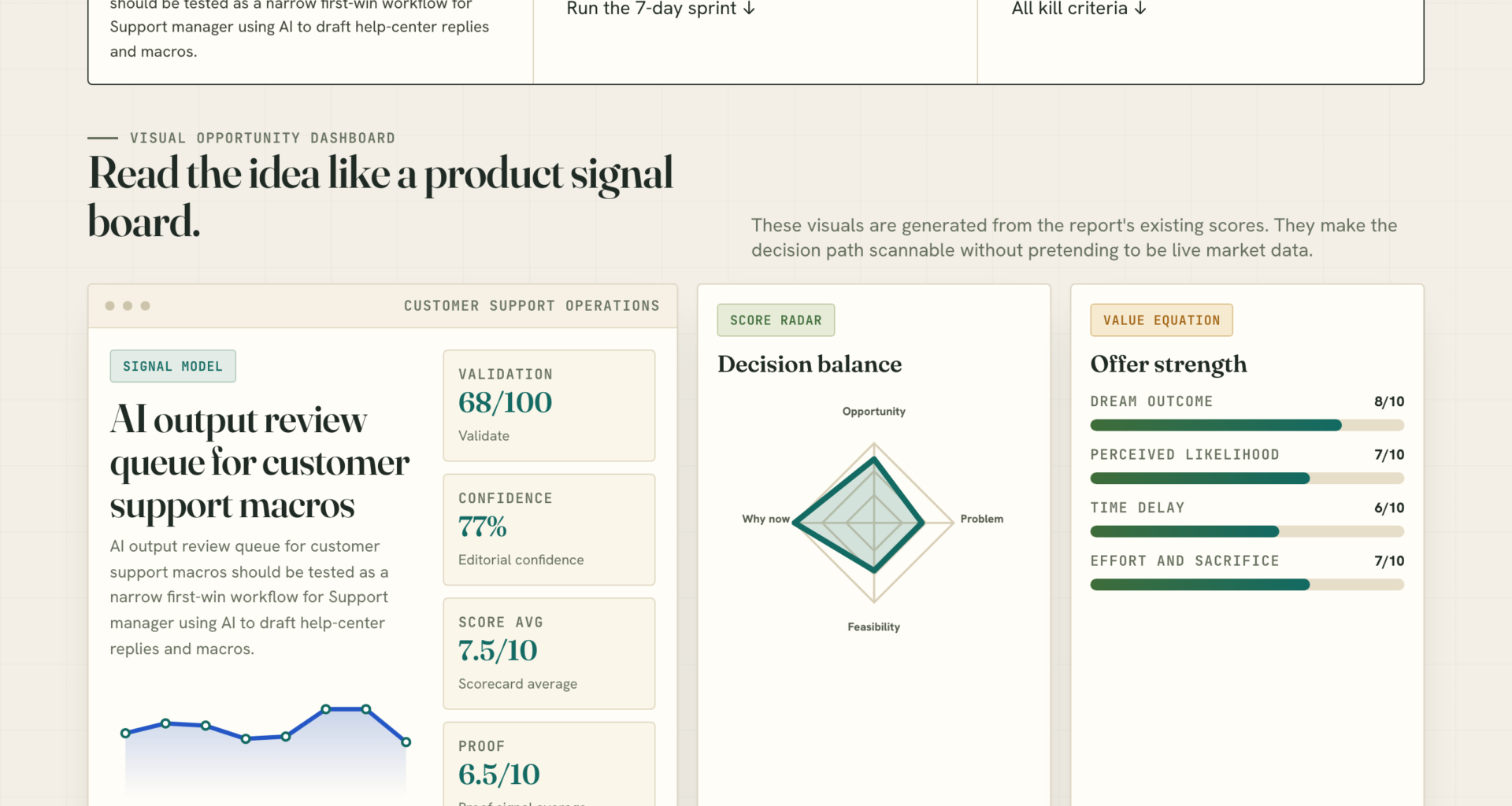
📊 Full opportunity report: AI output review queue for customer support macros on IdeaNavigator AI — validation score, market gap, and execution plan.

Get business pricing on monitors, keyboards and dev gear
- Business-only prices and quantity discounts
- Tax-exempt purchasing
- Multiple users, one account, clear invoices
TL;DR
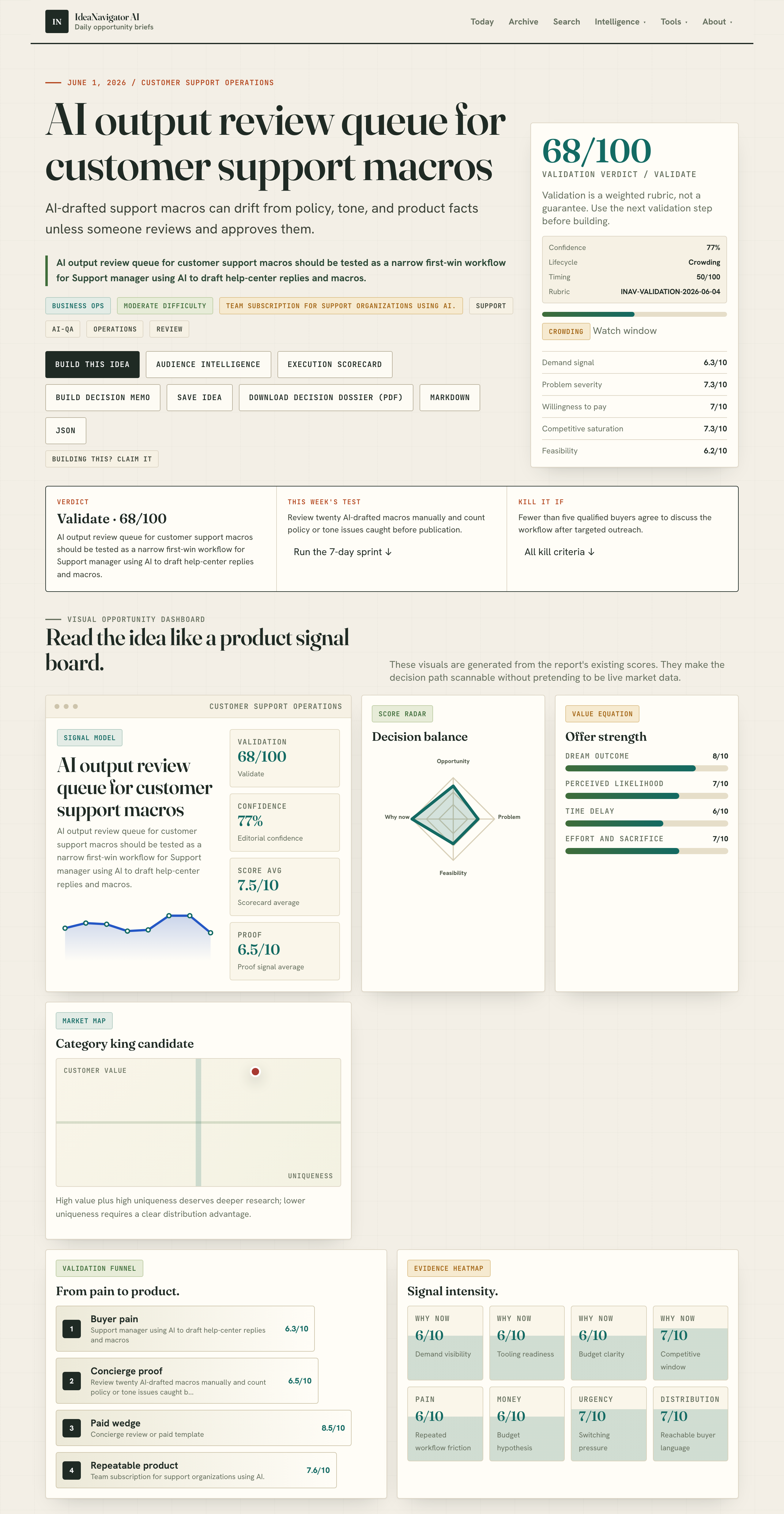
Support organizations are piloting a new AI output review queue for customer support macros. This aims to improve quality control amid rapid AI adoption. The initiative is in early testing, with results pending.
Support organizations are beginning to test a new AI output review queue for customer support macros, designed to ensure that AI-generated responses align with company policies, tone, and product facts before they are published. This development addresses growing concerns about the accuracy and appropriateness of AI-drafted support content as AI adoption accelerates across customer service teams.
The proposed review queue will automatically score AI-drafted support macros based on criteria such as policy adherence, tone consistency, source reliability, and risk of making false promises. Support managers will then review and approve these drafts before they go live. The initial testing involves manually reviewing twenty AI-generated macros to evaluate how many policy or tone issues are detected prior to publication.
This approach is seen as a first step toward formalizing quality control processes for AI-supported customer service workflows. The concept was introduced by IdeaNavigator AI as a way to mitigate risks associated with unreviewed AI outputs, which can drift from company policies or produce misleading information if left unchecked.
According to sources familiar with the initiative, the review queue aims to streamline support operations by reducing manual oversight while maintaining high standards of accuracy and compliance. The tool would be offered as a subscription service to support teams that rely on AI to generate help-center replies and macros, with the goal of preventing policy violations and safeguarding brand reputation.
Potential Impact on Customer Support Quality Control
This development is significant because it addresses a critical challenge in scaling AI use within customer support: ensuring that automated responses do not violate policies or deliver incorrect information. As support teams adopt AI faster than they can establish formal approval workflows, the review queue offers a practical solution to maintain quality without sacrificing efficiency. Successful implementation could set a new standard for AI governance in support operations, reducing risks of brand damage and customer dissatisfaction caused by inappropriate responses.
Popular right now

Shark AI Ultra Robot Vacuum with Matrix Clean and Self-Empty Base

Ninja CREAMi Scoop & Swirl Ice Cream and Soft Serve Maker, 13 Programs, 4 Pints, NC701

Roborock Q10 S5+ Robot Vacuum and Mop with Self-Emptying Station
As an affiliate, we earn on qualifying purchases.
Rapid AI Adoption in Customer Support Drives Need for Oversight
Over the past year, many customer support organizations have increasingly integrated AI tools to draft responses and create support macros, aiming to improve response times and reduce workload. However, this rapid adoption has outpaced the development of formal review and approval processes, raising concerns about the accuracy and appropriateness of AI-generated content. Previously, companies relied on manual review for support responses, but the volume of AI-drafted replies now necessitates automated quality checks. The idea of an AI output review queue has been discussed as a way to address these challenges, with initial testing now underway.
“The review queue aims to automatically flag macros that drift from company policies or contain tone issues, making it easier for support managers to approve safe content.”
— an anonymous researcher
Uncertainties About Effectiveness and Deployment Timeline
It is not yet clear how effective the review queue will be in catching all policy or tone issues during initial testing. The number of macros flagged or approved in the pilot phase remains unknown, and the scalability of the solution as support teams increase usage is still to be demonstrated. Details about the deployment timeline and whether the system will be adopted widely are also pending.
Next Steps in Testing and Potential Rollout
Support organizations will continue testing the review queue, with plans to analyze the accuracy of the scoring system and the rate of policy compliance in the reviewed macros. If results are positive, broader deployment and integration into support workflows could follow within the next few months. Ongoing monitoring will assess how well the system performs at scale and whether additional refinements are needed.
Key Questions
How will the review queue improve support macro quality?
The review queue will automatically score AI-drafted macros for policy adherence, tone, and risk, helping support managers quickly identify and approve only appropriate responses.
Is this system mandatory for all support teams?
It is currently in testing, and adoption will depend on pilot results. Support organizations may choose to implement it based on effectiveness and ease of integration.
Will the review queue eliminate manual review entirely?
No, it is designed to assist and streamline manual review, not replace it entirely. Human oversight remains essential, especially for complex or sensitive issues.
When could this system be available for general use?
If testing proves successful, broader rollout could occur within the next few months, but exact timelines are still being determined.
What are the risks of relying on an automated review system?
The main risks include missed policy violations or tone issues if the scoring system is not sufficiently accurate. Continuous monitoring and updates will be necessary to mitigate these risks.
Source: IdeaNavigator AI