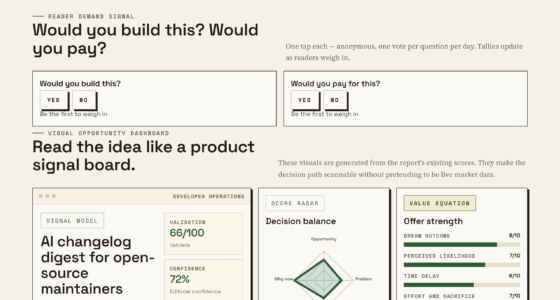
📊 Full opportunity report: How To Safeguard Your Remote Team’s Hardware With SMB Security Measures on IdeaNavigator AI — validation score, market gap, and execution plan.

Get business pricing on monitors, keyboards and dev gear
- Business-only prices and quantity discounts
- Tax-exempt purchasing
- Multiple users, one account, clear invoices
TL;DR
A new device security checker for remote SMB teams offers a lightweight, voluntary solution to verify device security postures. It aims to bridge compliance gaps without invasive management, supporting SOC 2 readiness.
A new lightweight device security checker is being introduced for remote teams in small and medium-sized businesses (SMBs), aiming to verify device security postures such as encryption, OS updates, and screen locks. This tool addresses a growing compliance gap as companies face increasing security reviews like SOC 2, while traditional mobile device management (MDM) solutions remain too invasive for employee-owned devices.
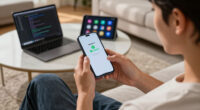
The device security checker is a voluntary, lightweight agent that employees install on their personal devices, including Macs, Windows laptops, and smartphones. It performs automated checks on disk encryption, OS updates, screen lock status, and password manager presence, then reports results to a centralized dashboard. The system does not enable remote control or management but provides self-remediation instructions for devices that fail security checks. This approach aims to help SMBs meet compliance standards such as SOC 2 without the logistical and privacy concerns associated with traditional MDM solutions.Initially, the product is being tested at ten remote startups facing SOC 2 audits, with the goal of measuring device enrollment rates and assessing whether security posture reports are accepted by auditors as valid evidence. The service is offered on a per-device monthly pricing model, with additional features such as compliance report exports available on paid tiers. The market focus is on SMB endpoint security, where organizations often lack comprehensive hardware verification tools for employee-owned devices.
Why SMBs Need Lightweight Hardware Security Verification
This development matters because SMBs with remote teams face increasing pressure to demonstrate device security compliance without the invasive overhead of traditional management tools. The new checker offers a practical solution for verifying security postures on employee-owned devices, helping companies meet standards like SOC 2 and avoid security breaches. As remote work persists and compliance requirements tighten, this approach could fill a critical verification gap, reducing risks associated with unmanaged or outdated devices in the workforce.Popular right now

Shark AI Ultra Robot Vacuum with Self-Empty Base

Bose QuietComfort Headphones (2nd Gen), Wireless Noise-Cancelling Over-Ear Headphones, Eucalyptus Green

Dyson Cyclone V10 Origin Cordless Vacuum
As an affiliate, we earn on qualifying purchases.
Growing Compliance Demands and the Management Gap
Remote work has expanded the use of personal devices for company data, creating security challenges for SMBs. Traditional mobile device management (MDM) solutions are often too invasive or incompatible with employee-owned hardware, leaving a verification gap. Recent compliance frameworks like SOC 2 increasingly require organizations to demonstrate control over endpoint security, but many SMBs lack scalable, non-intrusive tools to verify device security status. The concept of a lightweight, voluntary agent that checks encryption, updates, and screen locks is emerging as a practical solution to this problem, especially in a market where cost and privacy concerns limit the adoption of enterprise-grade management platforms.Uncertainties Around Adoption and Auditor Acceptance
It is still unclear how widely SMBs will adopt this lightweight checker, and whether auditors will accept its reports as sufficient evidence of device security postures. The initial deployment is limited to ten startups, and broader validation is ongoing. Additionally, the effectiveness of the self-remediation instructions and long-term compliance impact remain to be seen as the product matures.Next Steps in Deployment and Validation
The initial deployment at ten startups will continue to gather data on device enrollment rates and audit acceptance. If successful, the company plans to expand testing to more SMBs and refine the agent’s detection capabilities. Further development may include integration with existing security workflows or automation of remediation steps, with the goal of making device security verification seamless and scalable for remote teams. Monitoring how auditors respond to these reports will be critical for broader market adoption.Key Questions
How does this device security checker work?
The checker is a voluntary, lightweight agent that employees install on their personal devices. It performs automated checks on encryption, OS updates, screen lock status, and password manager presence, then reports the results to a centralized dashboard without remote control capabilities.
Will this replace traditional MDM solutions?
No, it is designed as a lightweight, non-invasive supplement for SMBs that find MDM solutions too invasive or incompatible with employee-owned devices. It focuses on verification rather than management or control.
Is this tool accepted by auditors for compliance purposes?
It is currently under validation, with initial testing at ten startups. Its acceptance by auditors will depend on how well it demonstrates security posture and whether its reports meet compliance standards like SOC 2.
What are the limitations of this approach?
Since it relies on voluntary installation and self-reporting, there is a risk of incomplete coverage or falsified results. Its effectiveness depends on employee cooperation and auditor acceptance, which are still being evaluated.
What happens if a device fails security checks?
The system provides self-remediation instructions, guiding employees to address issues such as enabling disk encryption or updating their OS. It does not remotely control devices or enforce changes.
Source: IdeaNavigator AI