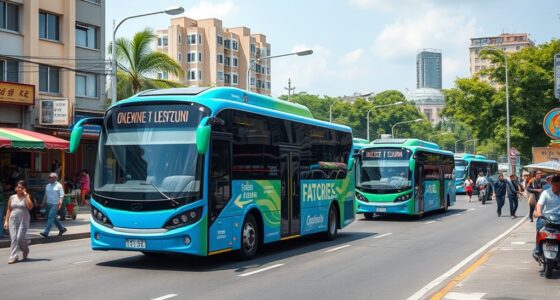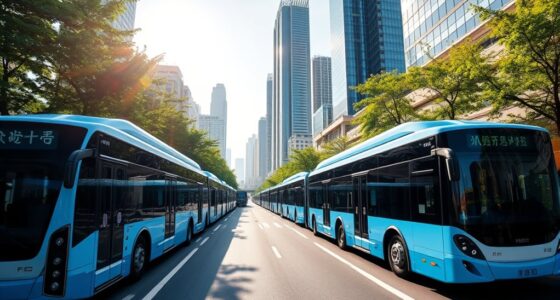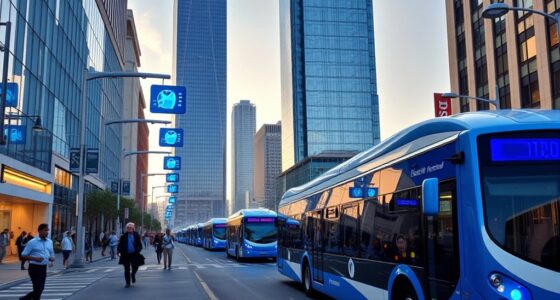

Implementing Maryland’s zero-emission school bus mandate faces hurdles like building reliable charging infrastructure, securing sufficient funding, and managing technological advances. You’ll need to navigate high upfront costs, address logistical issues, and guarantee equitable access for underserved districts. Infrastructure development requires collaboration among agencies, utilities, and districts. Staying flexible with funding and tech changes is also key. Keep exploring further to understand how these challenges are being addressed and what strategies can help overcome them.
Key Takeaways
- Developing reliable, scalable EV charging infrastructure across districts faces logistical, financial, and capacity constraints.
- Securing sufficient funding involves navigating federal grants, public-private partnerships, and equitable distribution challenges.
- Evolving EV technology can affect procurement timelines, costs, and infrastructure planning strategies.
- Addressing disparities ensures underserved districts access resources, preventing widening transportation inequities.
- Workforce training and community engagement are critical for sustainable implementation of zero-emission school buses.

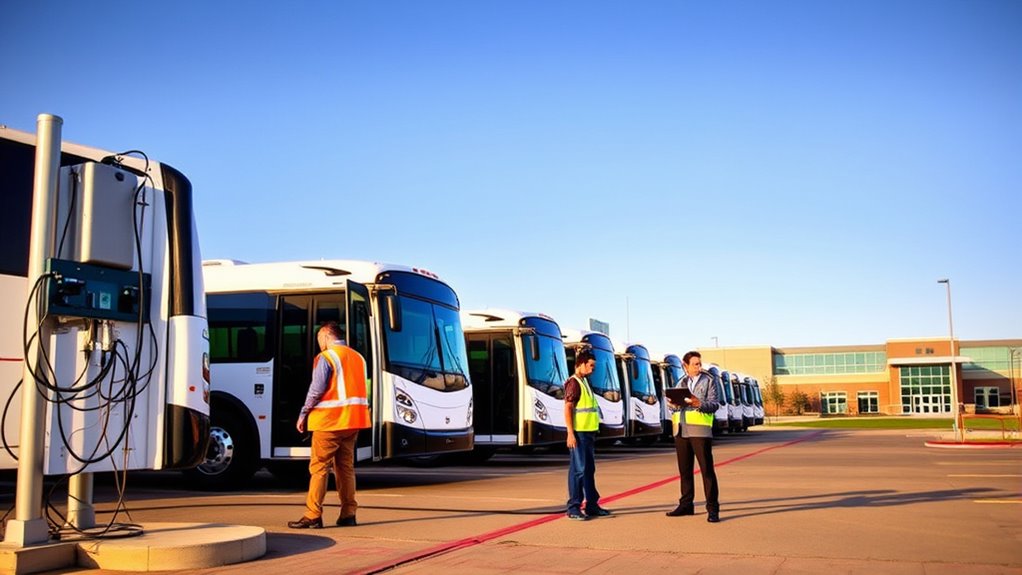
Have you wondered how Maryland is working to reduce pollution from school transportation? The state is making strides toward cleaner air by implementing a zero-emission school bus acquisition requirement, but putting this plan into action isn’t without hurdles. One of the biggest challenges lies in developing sufficient EV infrastructure across various districts. Electric buses need reliable charging stations, and installing these facilities requires significant planning and investment. Many districts face logistical issues, such as limited space or lack of existing electrical capacity, which can delay or complicate installation. Building a comprehensive charging network demands collaboration between government agencies, utility providers, and school districts to ensure that infrastructure is scalable, accessible, and capable of supporting the growing fleet of electric buses.
Funding strategies play a vital role in overcoming these obstacles. Moving to zero-emission buses involves higher upfront costs compared to traditional diesel models, making it essential for Maryland to secure adequate financial support. The state has been exploring various funding avenues, including federal grants, state budgets, and public-private partnerships, to finance the purchase of electric buses and the necessary infrastructure. However, charting these funding streams can be complex, often requiring districts to demonstrate detailed plans and meet strict eligibility criteria. This can slow down procurement processes and limit the number of buses that can be transitioned initially.
Moreover, funding strategies must adapt to changing market conditions and technological advancements. As EV technology evolves and becomes more affordable, Maryland needs flexible financial plans that can capitalize on new opportunities without risking premature investments. Ensuring equitable distribution of funds is also essential; districts in underserved or economically challenged areas might struggle to access resources, potentially widening disparities in clean transportation access. To address this, the state is exploring targeted incentives and grants designed to support these districts specifically.
The implementation challenges extend beyond infrastructure and funding. There’s also a need for workforce training, maintenance planning, and community engagement to ensure the transition is smooth and sustainable. As Maryland navigates these complexities, the importance of strategic planning cannot be overstated. The success of the zero-emission school bus initiative hinges on the state’s ability to develop innovative EV infrastructure solutions and funding strategies that are adaptable, equitable, and forward-thinking. Only then can Maryland truly realize its goal of cleaner, healthier school transportation for all students.

Workington 8-Device Open Desktop School Charging Cart Station for Ipads, Chromebooks, Tablets and Laptops Computer with Power Strip Included, Assembly Required, 1004 Black
Charge and Store 8 Devices: Padded shelf store to charge 8 devices at once and the additional back…
As an affiliate, we earn on qualifying purchases.
As an affiliate, we earn on qualifying purchases.
Frequently Asked Questions
How Will Funding for Zero-Emission Buses Be Secured Long-Term?
You can secure long-term funding for zero-emission buses through a combination of financial incentives and public-private partnerships. These incentives help reduce upfront costs, making adoption more affordable, while partnerships with private companies can provide ongoing financial support and resources. By leveraging both, you guarantee sustained funding, promote innovation, and foster collaboration, ultimately making the shift to zero-emission buses more feasible and financially viable over time.
What Training Will Drivers Need for New Zero-Emission Buses?
You’ll need training that covers driver safety and proper charging protocols for zero-emission buses. This includes understanding how to operate the electric systems safely, managing charging schedules efficiently, and responding to any technical issues. By mastering these areas, you guarantee safe driving and peak bus performance. Your training will also prepare you to handle emergencies related to electric vehicles, keeping both students and yourself protected on the road.
How Will Maintenance Costs Compare to Traditional Diesel Buses?
Maintenance costs for zero-emission buses may be higher initially due to battery degradation and specialized parts, but over time, they can be lower than traditional diesel buses. You’ll need to budget for potential repair costs related to batteries and electrical systems, which tend to be different from diesel engine repairs. However, fewer moving parts mean less frequent maintenance, helping you save money and reduce downtime in the long run.
Are There Enough Charging Stations Available Across Maryland?
Imagine a web of charging infrastructure spreading across Maryland, ready to catch each bus as it rolls in. Currently, station accessibility varies, with some areas well-equipped and others still waiting for a spark. While progress is steady, you might find gaps in charging stations, especially in rural regions. Expanding the charging network is essential, ensuring every bus has a reliable place to recharge and keep Maryland’s zero-emission goals moving forward.
What Are the Penalties for Non-Compliance With the Mandate?
If you don’t meet the compliance deadlines, penalty enforcement can include fines or other sanctions. Maryland enforces the mandate strictly, and failure to comply could result in financial penalties or loss of funding opportunities. It’s essential to stay on top of the compliance deadlines and make sure your fleet shifts to zero-emission buses on time. Staying ahead helps avoid penalties and demonstrates your commitment to sustainable transportation.

Electric Vehicle Charging Technician: Powering the Future, One Charge at a Time
As an affiliate, we earn on qualifying purchases.
As an affiliate, we earn on qualifying purchases.
Conclusion
As you navigate Maryland’s zero-emission bus mandate, remember it’s like steering a ship through choppy waters—challenging but essential. While obstacles may seem like storm clouds on the horizon, your efforts are the lighthouse guiding us toward a cleaner, brighter future. Embracing these changes might be tough now, but with determination, you’ll turn the tide and help transform our roads into a path of hope and sustainability. The journey’s tough, but the destination’s worth every mile.

Electrical Maintenance Tool Kit including Multi-Tool Pliers, Multimeter, Multi-Bit Screwdriver, Compact Pocket Knife, LED Headlamp, Buss Blade Fuses, Zip Ties, and Electrical Tape
Measure Battery & Outlet Voltage, Check Fuses, Test Heating Element, and other common electrial measurements
As an affiliate, we earn on qualifying purchases.
As an affiliate, we earn on qualifying purchases.

Guidebook for Transitioning to an Electric Fleet
As an affiliate, we earn on qualifying purchases.
As an affiliate, we earn on qualifying purchases.