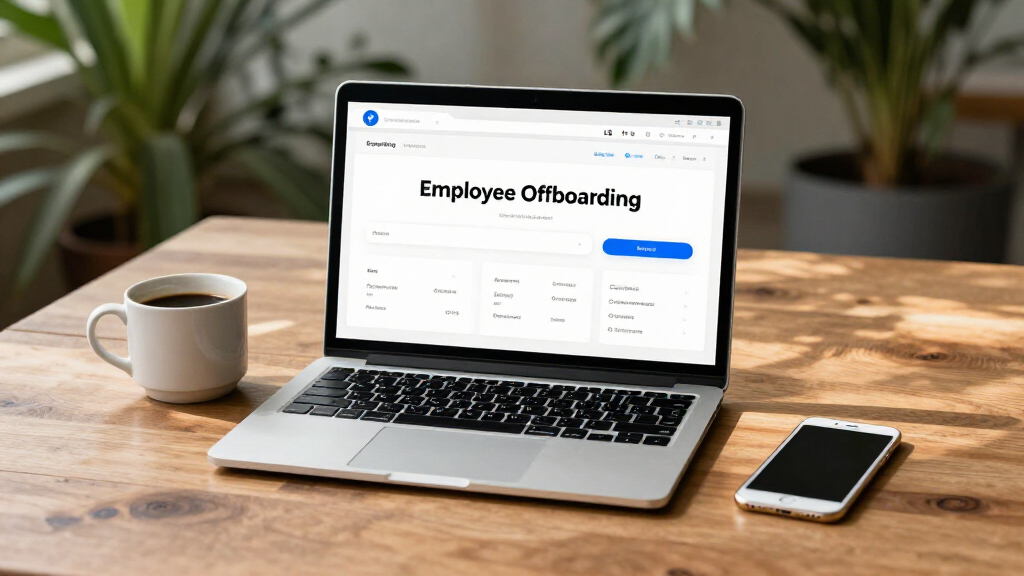

📊 Full opportunity report: One-click Employee Offboarding For Startups Without IT on IdeaNavigator AI — validation score, market gap, and execution plan.

Get business pricing on monitors, keyboards and dev gear
- Business-only prices and quantity discounts
- Tax-exempt purchasing
- Multiple users, one account, clear invoices
TL;DR
A new offboarding solution is being tested for startups with no IT staff, offering a one-click process to revoke access and generate compliance reports. This could streamline security for small teams.
A new offboarding tool designed for startups without dedicated IT teams is being tested, enabling a single click to revoke access across SaaS platforms and generate audit reports. This development addresses a common security challenge faced by small companies as they grow and SaaS sprawl increases, making employee exit procedures more complex and error-prone.
The proposed solution connects Google Workspace and other SaaS applications via OAuth, allowing operations leads or founders to execute a comprehensive offboarding checklist with a single click on departure day. This checklist revokes sessions, transfers ownership of files, reassigns licenses, rotates shared secrets, and produces an audit-ready report. The process aims to eliminate lingering access that often persists weeks after an employee leaves, reducing security risks.
This initiative is targeted at startups with 10-100 employees that lack dedicated IT staff, a common scenario among early-stage companies. The tool’s initial testing phase involves twenty startups, with plans to validate its effectiveness by revealing lingering access issues during audits. The business model includes per-employee-per-month pricing and a per-offboarding-event starter tier, aiming to generate revenue from small businesses needing scalable security solutions.
Experts note that the increasing complexity of SaaS environments and the rise of security audits like SOC 2 are pressuring small companies to formalize offboarding procedures. The new tool seeks to address this gap by providing an easy, automated process that minimizes human error and saves time for founders and operations teams.
Potential Security and Compliance Benefits for Small Startups
This development could significantly improve security posture for small startups by ensuring that access is revoked immediately when an employee departs, reducing the risk of unauthorized access or data breaches. It also helps companies meet compliance requirements for documented offboarding, which are increasingly emphasized in security audits and vendor assessments. Streamlining offboarding processes with automation could save time and resources, particularly for teams without dedicated IT staff, and set a new standard for security practices in early-stage companies.
employee offboarding SaaS security tool
As an affiliate, we earn on qualifying purchases.
As an affiliate, we earn on qualifying purchases.
Growing SaaS Sprawl and Regulatory Demands Drive Need for Automation
As startups expand, their SaaS environments often become complex, with dozens of tools and shared accounts. Currently, many small companies rely on manual or semi-automated processes to revoke access, which can be inconsistent and error-prone. This challenge is compounded by the increasing regulatory focus on security and data privacy, with frameworks like SOC 2 requiring documented offboarding procedures. The rising SaaS sprawl and compliance pressures create a clear demand for automated solutions tailored to startups without dedicated IT resources.
Previous efforts to address offboarding have targeted larger enterprises with dedicated security teams. However, small startups often lack the capacity to implement such systems, leaving security gaps. The new tool aims to fill this niche by offering a simple, effective way to manage employee departures securely and compliantly, with a focus on ease of use and quick deployment.
automated access revocation software
As an affiliate, we earn on qualifying purchases.
As an affiliate, we earn on qualifying purchases.
Uncertainties Around Deployment and Effectiveness in Early Testing
Details about the initial testing outcomes remain limited, and it is not yet clear how effectively the tool will perform across different SaaS environments or how quickly startups can adopt it. The scalability of the solution and its integration with diverse tools beyond Google Workspace are still under evaluation. Additionally, the long-term security and compliance benefits will depend on widespread adoption and proper implementation, which are still being observed during the pilot phase.
SaaS offboarding management platform
As an affiliate, we earn on qualifying purchases.
As an affiliate, we earn on qualifying purchases.
Next Steps Include Broader Testing and Market Validation
The developers plan to expand testing to more startups, gather feedback, and refine the tool’s features. Success will be measured by the ability to reliably revoke access and produce audit reports during real employee departures. If proven effective, the company intends to launch a full product with scalable features and broader SaaS integrations. Further, marketing efforts will target early adopters in the SMB space to validate demand and refine pricing models.
As an affiliate, we earn on qualifying purchases.
Key Questions
How does the one-click offboarding tool work?
The tool connects to SaaS platforms via OAuth, allowing users to execute a pre-defined checklist that revokes sessions, transfers ownership of files, reassigns licenses, rotates shared secrets, and generates audit reports—all with a single click on employee departure day.
Which startups are the target users for this tool?
The initial focus is on startups with 10 to 100 employees that lack dedicated IT teams, where manual offboarding processes are common and security risks are higher due to inconsistent revocation of access.
What are the main benefits of automating offboarding for small companies?
Automating reduces security risks by ensuring immediate revocation of access, saves time for founders and operations teams, helps meet compliance requirements, and minimizes human error during employee departures.
Will this tool support SaaS platforms beyond Google Workspace?
Initially, the focus is on Google Workspace and a select set of SaaS apps, but future plans include expanding integrations to other popular tools as the product matures.
When will this tool be generally available?
The current testing phase is ongoing; a broader market launch is expected after successful validation, potentially within the next several months, depending on pilot results.
Source: IdeaNavigator AI
Halloween Picks
halloween
As an affiliate, we earn on qualifying purchases.