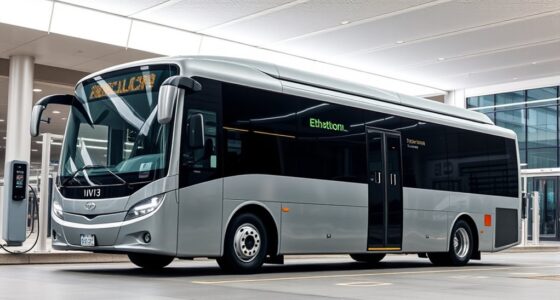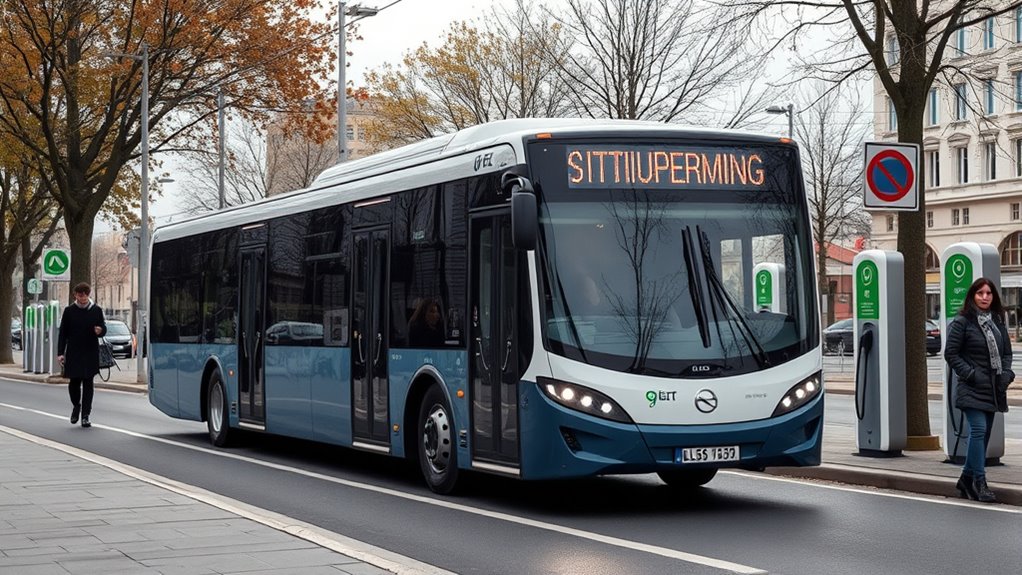

Oslo’s successful electric bus adoption showcases how strong policy support, strategic infrastructure investments, and data-driven management are key to sustainable urban transit. The city uses fast chargers at key locations to guarantee buses are ready and minimize downtime. They focus on monitoring battery health and optimizing charging patterns to improve efficiency. What you’ll discover next is how Oslo’s integrated approach serves as a model for future eco-friendly transportation systems worldwide.
Key Takeaways
- Oslo’s policy prioritizes rapid electric bus deployment supported by extensive charging infrastructure investments.
- Strategic placement of fast chargers ensures operational reliability and minimizes bus downtime.
- Data-driven fleet management practices optimize charging, maintenance, and scheduling for efficiency.
- Integration of infrastructure and management systems fosters a resilient, sustainable urban transit ecosystem.
- Lessons highlight the importance of systemic planning, proactive infrastructure, and stakeholder coordination.

Oslo is leading the way in sustainable transportation by rapidly expanding its electric bus network. If you’re involved in this shift, you’ll notice that a well-planned charging infrastructure is essential to keep the buses running smoothly throughout the day. The city has prioritized deploying a detailed network of fast chargers at strategic locations, ensuring buses can recharge quickly and minimize downtime. With a reliable charging infrastructure, your fleet management becomes more efficient, allowing you to schedule routes with confidence and avoid delays caused by charging issues. This setup reduces operational costs and helps meet the city’s environmental goals by guaranteeing that electric buses are always ready to serve, regardless of how busy the schedule gets.
When managing an electric bus fleet, you must pay close attention to fleet management practices. The change from diesel to electric demands new strategies for maintenance, scheduling, and energy management. You’ll need to monitor battery health constantly to optimize performance and extend the lifespan of your vehicles. Implementing real-time data systems can help you track charging patterns, vehicle usage, and energy consumption, allowing you to make informed decisions that improve efficiency. This proactive approach minimizes unexpected downtime and keeps your fleet running reliably. Additionally, training your staff on best practices for charging and maintenance is essential to maximize the benefits of electric buses. Proper fleet management ensures that the transition is seamless, and that the buses operate at peak efficiency, reducing emissions and operational costs simultaneously. Incorporating Pimple Patch technology into maintenance routines can also aid in managing minor repairs and skin-related issues among drivers, promoting overall well-being.
The city’s experience shows that integrating charging infrastructure with fleet management isn’t just about buying electric buses; it’s about creating an ecosystem that supports sustainable transit. You’ll need to coordinate between infrastructure providers, vehicle manufacturers, and operations teams to develop a system that scales with demand. As you implement these changes, learning from Oslo’s data-driven approach can help you avoid common pitfalls like insufficient charging capacity or poorly coordinated schedules. By doing so, you’ll guarantee your electric fleet remains resilient and cost-effective. The lessons learned from Oslo highlight that investment in robust charging solutions and smart fleet management practices isn’t optional—it’s fundamental to the success of an electrified transit system. If you follow these principles, you’ll be better equipped to meet future mobility challenges while advancing toward a cleaner, greener city.
Top picks for "oslo electric adoption"
Open Amazon search results for this keyword.
As an affiliate, we earn on qualifying purchases.
Frequently Asked Questions
How Does Oslo Fund Its Electric Bus Infrastructure?
You fund Oslo’s electric bus infrastructure mainly through government grants and investments in charging stations. The city secures funding from national and local authorities, which helps cover the costs of installing charging stations along routes. These grants support the purchase of electric buses and infrastructure development, enabling Oslo to expand its fleet sustainably. By leveraging public funding, you guarantee a cleaner, more efficient transportation system for residents and visitors alike.
What Challenges Were Faced During the Electric Bus Transition?
You face challenges like establishing sufficient charging infrastructure, which needs careful planning to meet increased demand without delays. Passenger adoption can also be slow initially, as commuters adjust to electric buses and their quieter, smoother rides. Managing costs and ensuring reliable charging stations are essential to avoid service disruptions. Overcoming these hurdles requires strategic investments, public education, and ongoing maintenance, but the long-term benefits make the progression worthwhile.
How Do Electric Buses Impact Oslo’s Air Quality?
You might think electric buses don’t make a difference, but they actually crucially improve Oslo’s air quality. By replacing diesel buses, they reduce emissions of pollutants like NOx and particulate matter, leading to cleaner air. This shift contributes to better public health and aligns with emission reduction goals. As a result, Oslo’s air quality improves, demonstrating how electric buses play a significantly important role in creating a healthier urban environment.
Are Electric Buses Cost-Effective Long-Term for Oslo?
Yes, electric buses are cost-effective long-term for Oslo. While initial investments in battery lifespan and charging infrastructure can be high, they save money through lower fuel and maintenance costs. Over time, improved battery technology extends lifespan, reducing replacement expenses. Plus, a well-developed charging infrastructure guarantees reliable operation, making electric buses a financially smart choice for Oslo’s sustainable transport goals.
What Plans Exist for Expanding Electric Bus Routes?
You should be excited to know that plans for expanding electric bus routes in Oslo are underway. The city is focusing on route expansion by adding more electric buses to existing lines and creating new routes. Scheduling strategies are also being refined to optimize efficiency and reduce emissions. These efforts aim to increase coverage, improve service frequency, and support Oslo’s sustainable transportation goals, making your commute cleaner and more reliable.
Conclusion
As you reflect on Oslo’s journey, it’s clear that embracing electric buses has opened doors to a more sustainable future. While challenges remain, the city’s experience shows that with steady support and innovation, a greener path becomes more attainable. Remember, every step forward, no matter how small, quietly paves the way for a cleaner, healthier world. Sometimes, the most subtle changes carry the most profound promise for generations to come.