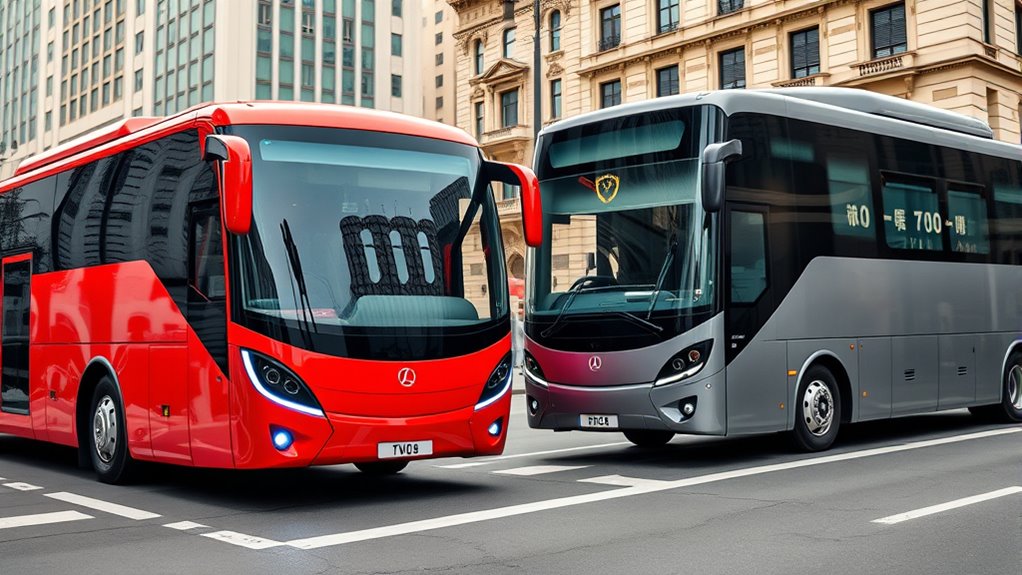

Chinese electric buses focus on advanced battery tech, fast charging, and cost efficiency, making them highly performance-driven and affordable with innovative features. European models emphasize safety, durability, and passenger comfort, often costing more upfront but offering longer lifespan and proven reliability. Both regions prioritize sustainability, but their approaches differ—Chinese systems lean toward rapid technology adoption, while Europeans emphasize safety standards. If you want to explore how these differences impact operation and value, there’s more to discover.
Key Takeaways
- Chinese electric buses prioritize rapid charging and advanced battery chemistries for higher performance and longer cycle life.
- European models focus on safety, durability, and environmental standards, often with higher initial costs but longer lifespan.
- Chinese buses feature integrated telematics and smart management systems, enhancing operational efficiency and real-time monitoring.
- European buses emphasize passenger comfort, ergonomic design, and proven longevity, aligning with strict regulatory safety standards.
- Pricing varies: Chinese buses offer cost-effective, high-tech solutions, while European models tend to be more expensive but emphasize sustainability and safety.

When comparing electric buses from China and Europe, you’ll notice significant differences in design, technology, and market approach. One of the key factors shaping these differences is battery longevity. Chinese manufacturers often prioritize maximizing battery life, integrating advanced cell chemistries and thermal management systems that extend the lifespan of their batteries. This focus means their buses can endure more charge cycles, reducing long-term maintenance costs and increasing overall reliability. European companies, on the other hand, tend to emphasize safety and sustainability, often opting for batteries with proven longevity but sometimes at a higher initial cost. This approach aims to balance performance with environmental considerations, ensuring that batteries remain effective over many years without needing frequent replacements.
Chinese buses focus on maximizing battery life with advanced chemistries, while European models prioritize safety and proven longevity.
Charging infrastructure is another area where these regions diverge. Chinese cities have rapidly deployed extensive, integrated charging networks, making it easier for buses to recharge quickly and stay operational throughout demanding schedules. Many Chinese electric buses support fast charging, often capable of gaining 80% charge in under 30 minutes, which minimizes downtime and enhances fleet efficiency. European markets, however, typically adopt a more cautious approach, focusing on standardized charging stations and interoperability. While fast charging exists, it’s less widespread, and infrastructure development can be more gradual due to regulatory processes and higher costs. This difference influences operational flexibility, with Chinese operators benefiting from a more seamless charging experience, whereas European fleets might require more planning around charging schedules.
Design philosophies also reflect these market distinctions. Chinese buses are often built with a focus on cost-efficiency and high-volume production, leading to modular designs that simplify maintenance and upgrades. European buses, meanwhile, tend to prioritize ergonomic design, passenger comfort, and integration with existing transit systems. These differences are partly driven by consumer preferences and regulatory standards, which influence everything from body materials to interior layouts.
In terms of technology, Chinese electric buses frequently incorporate cutting-edge features like integrated telematics and smart battery management systems that monitor health and optimize performance in real-time. European manufacturers, meanwhile, often emphasize safety features and compliance with stringent standards, which can lead to slightly more conservative technological implementations but with a strong focus on durability and passenger safety. Additionally, Chinese buses often utilize advanced battery chemistries that further enhance longevity and performance, giving them an edge in operational lifespan.
Top picks for "chinese european electric"
Open Amazon search results for this keyword.
As an affiliate, we earn on qualifying purchases.
Frequently Asked Questions
How Do Maintenance Costs Compare Between Chinese and European Electric Buses?
You’ll find that maintenance expenses for Chinese electric buses are generally lower than European ones, mainly due to simpler designs and more standardized parts. Repair frequency tends to be higher for European buses because their advanced technology can lead to more frequent repairs. However, European buses often have better durability, which balances out the overall maintenance costs. So, your choice depends on balancing initial expenses with long-term maintenance needs.
What Are the Safety Standards Differences for Chinese and European Electric Buses?
You’ll notice that European electric buses typically adhere to stricter safety regulations and certification standards, guaranteeing higher safety levels. European standards emphasize rigorous crash tests, fire safety, and electrical system robustness. Chinese buses also meet safety requirements, but their certification standards vary and might be less detailed depending on the region. Always verify specific safety certifications to ensure the bus complies with local safety regulations before making a choice.
How Do Consumer Perceptions Influence Chinese Versus European Electric Bus Adoption?
You might be surprised to learn that 65% of consumers trust European electric buses more than Chinese ones, mainly because of brand reputation and perceived safety. Your perceptions are influenced by factors like user reviews, government support, and historical safety records. These perceptions impact your willingness to adopt electric buses, with Europeans generally more confident due to trusted brands, while Chinese buses often face skepticism despite competitive features.
What Are the Environmental Impacts of Manufacturing Chinese and European Electric Buses?
You should consider that manufacturing Chinese and European electric buses impacts the environment mainly through manufacturing emissions and raw material sourcing. Chinese buses often involve higher manufacturing emissions due to less stringent regulations, while European buses benefit from stricter standards, reducing emissions. Additionally, sourcing raw materials like lithium and cobalt can have significant environmental effects, affecting ecosystems and local communities. These factors influence the overall sustainability of electric bus production in both regions.
How Do Different Charging Infrastructures Affect Bus Deployment in China and Europe?
Charging infrastructure is the backbone of your electric bus deployment, shaping your route like a well-laid railway. In China, dense charging station networks and strong grid integration allow quick, widespread charging, boosting fleet efficiency. In Europe, sparser stations and varying grid capabilities slow down deployment and limit route flexibility. You’ll need to adapt your strategy based on station density and grid readiness to optimize performance and reduce downtime.
Conclusion
As you weigh the differences between Chinese and European electric buses, one thing’s clear—you haven’t seen everything yet. With ongoing innovations and shifting market dynamics, the ultimate winner could surprise you. Will advanced Chinese tech continue to outpace European rivals, or will Europe’s meticulous design redefine the game? Stay tuned, because the future of electric buses holds surprises that could change your perspective in ways you never expected. The most exciting developments are just around the corner.