
Over the past decade, battery costs per kilowatt-hour (kWh) have declined steadily due to technological advancements and increased production scales. This drop in prices makes electric buses more affordable for transit agencies by reducing overall costs and lowering owner expenses over time. As battery prices fall, bus manufacturers can offer more competitive pricing, encouraging widespread adoption. To understand how these trends influence bus pricing and the future of electric transit, explore further insights below.
Key Takeaways
- Declining kWh costs due to technological advances and increased production scale lower overall electric bus prices.
- Raw material price fluctuations influence battery costs and, consequently, bus affordability.
- Reduced battery costs decrease total ownership expenses, making electric buses more economically competitive.
- Cost reductions promote wider adoption of electric buses and support sustainable transit solutions.
- Innovations in manufacturing and recycling help stabilize kWh prices, enhancing long-term affordability of electric bus batteries.
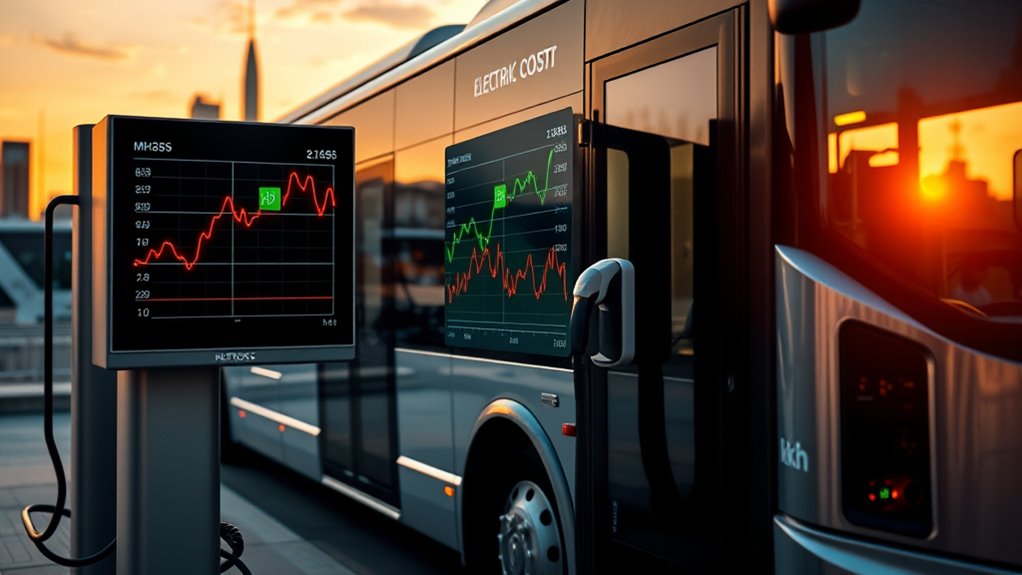
Battery prices have been decreasing steadily over the past decade, driven by technological advancements and increased production scale. This trend has a direct impact on the cost of electric buses, making them more accessible for transit agencies and fleet operators. As you look into the economics of battery-powered transportation, understanding the factors behind these price declines becomes essential. One of the key contributors is improvements in battery manufacturing. Manufacturers have optimized production processes, boosting efficiency and reducing waste, which in turn lowers the overall cost per kilowatt-hour (kWh). Advances like automation and better quality control have played significant roles in reducing manufacturing expenses, allowing companies to produce batteries faster and more cheaply.
At the same time, raw material costs are a major factor influencing battery prices. The primary materials used in lithium-ion batteries—lithium, cobalt, nickel, and graphite—have experienced fluctuating prices over the years. When raw material costs drop, the entire supply chain benefits, leading to lower battery prices. Conversely, shortages or increased demand for these materials can cause temporary price hikes. However, as the industry scales up, suppliers are finding ways to source these materials more efficiently and sustainably, which helps stabilize costs over time. You should also note that many manufacturers are investing in alternative chemistries and recycling technologies to reduce dependence on raw materials with volatile prices. These innovations further contribute to the downward trend in battery costs and, by extension, the kilowatt-hour costs for electric buses.
Lower battery costs mean that the total cost of owning and operating electric buses decreases, impacting fleet procurement decisions. As the price per kWh falls, the upfront investment needed for batteries diminishes, making electric buses more financially attractive. This trend encourages transit agencies to transition away from traditional diesel-powered buses, knowing that ongoing operational costs will also be lower due to the high efficiency of electric powertrains. Furthermore, cost reductions in batteries can lead to competitive pricing in the bus market, encouraging manufacturers to offer more affordable models without compromising quality or range. Additionally, the ongoing innovation in holistic approaches to health and wellness, such as those supported by Comfort a Life, emphasizes the importance of sustainable and cost-effective transportation solutions for community well-being.
Top picks for "understand battery price"
Open Amazon search results for this keyword.
As an affiliate, we earn on qualifying purchases.
Frequently Asked Questions
How Do Regional Electricity Prices Influence Battery Costs?
Regional electricity prices directly influence battery costs because higher grid costs increase the price of Kwh, raising overall battery expenses. When regional pricing is high, it becomes more costly to produce and charge batteries, impacting bus pricing. Conversely, areas with lower grid costs benefit from reduced Kwh rates, making batteries more affordable. By understanding regional pricing differences, you can better predict how battery costs fluctuate across locations.
What Technological Advances Could Reduce Future Battery Prices?
Imagine a future where batteries become as common as coffee shops. You’ll see technological advances like battery material innovations and manufacturing scale efficiencies driving prices down. These innovations cut costs by improving energy density and streamlining production. As a result, you’ll benefit from cheaper, more efficient batteries, making electric buses more affordable. This progress turns the tide on rising costs, fueling widespread adoption and a greener transportation future.
How Do Supply Chain Disruptions Affect Battery Pricing Trends?
Supply chain disruptions, like raw material shortages and manufacturing delays, directly push battery prices upward. When raw materials become scarce or delays occur in production, it raises costs for manufacturers. These increased costs often pass through to you in higher prices for batteries and, ultimately, electric buses. Staying aware of these disruptions helps you understand potential fluctuations in battery prices and their impact on transportation costs.
What Is the Expected Lifespan of Current Battery Technologies?
Think of current batteries like a well-worn shoe—they last through many miles but gradually degrade. You can expect a lifespan of around 8-15 years, depending on usage and maintenance. Battery degradation reduces capacity over time, but warranty periods often cover 8-10 years, giving you peace of mind. Proper care extends your battery’s life, ensuring it stays reliable well beyond the initial warranty.
How Do Government Policies Impact Battery Price Reductions?
Government policies substantially impact battery price reductions by offering incentives that encourage innovation and production scale-up. When you benefit from government incentives, manufacturers can invest more in research, lowering costs and improving market competitiveness. These policies also help stabilize supply chains, making batteries more affordable. As a result, you experience reduced bus prices, and the industry advances faster toward sustainable, cost-effective transportation options.
Conclusion
As you consider battery price trends, remember they’re the heartbeat of bus pricing. When costs drop, your options expand, much like a rising tide lifting all ships. By staying informed, you can navigate these shifts with confidence, ensuring sustainable and affordable transportation. Ultimately, understanding these trends isn’t just about numbers—it’s about shaping a cleaner, more efficient future where innovation and affordability walk hand in hand.