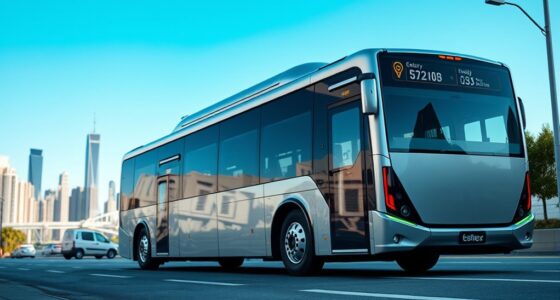
To finance electric buses effectively, you can use leasing options to spread out upfront costs or secure loans to eventually own your vehicles. Innovative business models like energy-as-a-service or public-private partnerships can help reduce infrastructure expenses and generate revenue. Grants and subsidies further ease financial burdens. Combining these strategies helps manage high initial investments while enabling faster fleet upgrades. Keep exploring to discover how these options can work best for your organization’s shift to electric transportation.

Get business pricing on monitors, keyboards and dev gear
- Business-only prices and quantity discounts
- Tax-exempt purchasing
- Multiple users, one account, clear invoices
Key Takeaways
- Leasing spreads upfront costs and often includes maintenance, easing budget management for electric bus fleets.
- Loans enable transit agencies to own buses outright after repayment, providing long-term asset benefits.
- Public-private partnerships and grants help finance charging infrastructure, reducing capital barriers.
- Innovative business models like energy-as-a-service and revenue-sharing decrease upfront expenses and shift costs to operations.
- Combining multiple funding sources—leases, loans, grants, and new business models—optimizes financial strategies for electric bus adoption.
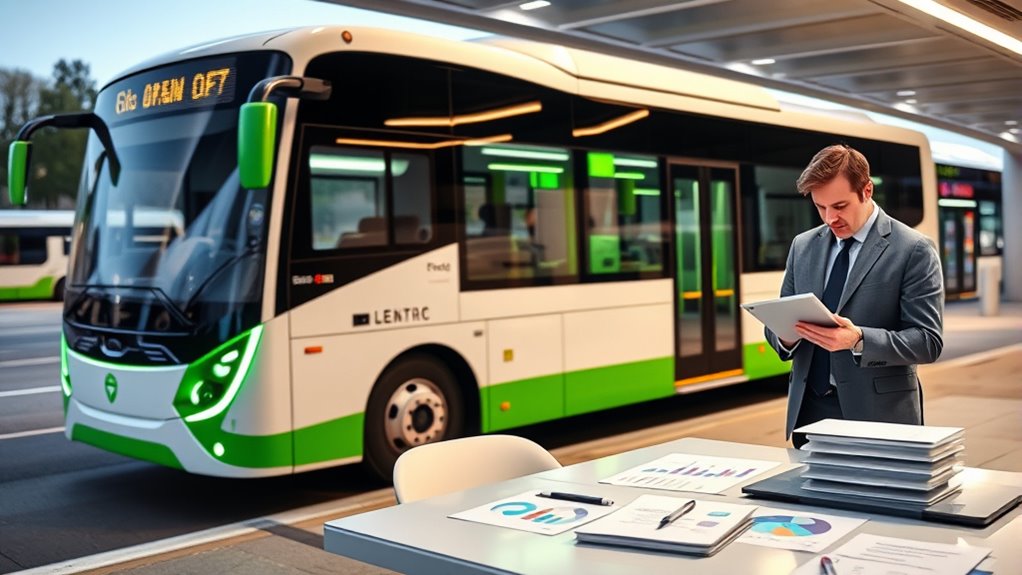
Moving to electric buses is a significant step toward sustainable transportation, but funding these investments can be challenging. One of the key factors influencing the success of electrification is understanding how to finance the essential components, particularly battery technology and charging infrastructure. The cost of batteries has dropped substantially over recent years, making electric buses more affordable, but they still represent a significant upfront expense. To manage these costs, many transit agencies turn to leasing arrangements or loans, which spread payments over time and reduce initial capital outlay. Leasing electric buses can be especially attractive because it allows you to access newer models without large upfront investments, and maintenance is often included, simplifying budgeting. Loans, on the other hand, provide the flexibility to own the buses outright after payments are completed, which can be advantageous if you plan to operate them long-term.
Leasing and loans help manage upfront costs of electric buses and infrastructure investments.
Investing in charging infrastructure is another major financial hurdle. Building a robust charging network requires substantial capital, but innovative financing options can help. Public-private partnerships are increasingly popular, where private companies invest in charging stations and share the costs or revenue with transit agencies. Grants and subsidies from government programs are also valuable sources of funding, especially for infrastructure projects that promote clean transportation. Additionally, business models like energy-as-a-service can reduce upfront costs by offering charging solutions as a subscription or service, spreading expenses over time and tying costs to usage rather than ownership.
Emerging business models further reshape the way you can finance electric buses. For instance, some cities adopt mobility-as-a-service models, where transportation is bundled into a single contract covering buses, charging, and maintenance. This approach minimizes the need for large capital investments and shifts the focus to operational expenses, which can be easier to budget for. Similarly, revenue-sharing agreements with private partners can offset costs and incentivize investments in infrastructure and battery technology. These models often incorporate innovative financing mechanisms, such as green bonds or climate funds, designed specifically to support sustainable transportation projects.
Ultimately, your goal is to develop a thorough financial strategy that leverages a mix of leasing, loans, grants, and innovative business models. By doing so, you can overcome the high initial costs associated with battery technology and charging infrastructure, ensuring a smoother transition to electric buses. With the right financial tools and partnerships, you’ll be able to accelerate your electrification plans while managing risks and controlling expenses. This balanced approach not only makes the transition more feasible but also positions you as a leader in sustainable transportation.
As an affiliate, we earn on qualifying purchases.
Frequently Asked Questions
What Are the Long-Term Cost Benefits of Electric Bus Leasing?
Leasing electric buses offers long-term cost benefits by reducing upfront expenses and spreading costs over time. You’ll benefit from improved battery longevity, which minimizes replacement costs, and can better manage charging infrastructure investments. Leasing also allows you to upgrade to newer models more easily, ensuring peak efficiency and savings. Overall, this approach helps you lower operating costs and enhances your fleet’s sustainability without the hefty initial investment.
How Do Government Incentives Impact Electric Bus Financing?
Oh, the sweet irony of government incentives—tax credits and subsidy programs—making electric bus financing feel almost too good to be true. You benefit from reduced upfront costs and more favorable loan terms, turning what once seemed costly into a surprisingly affordable venture. These incentives encourage adoption, easing your financial burden and speeding up electrification. fundamentally, they act as generous patrons, helping you embrace greener transportation while lightening your wallet.
What Are Innovative Business Models for Electric Bus Deployment?
You can explore innovative business models like autonomous technology-powered electric bus fleets, which reduce operational costs and improve efficiency. Incorporating battery recycling methods extends battery life, minimizing environmental impact and costs. You might also consider service-as-a-platform models, where revenue streams come from data analytics and maintenance services. These approaches enable you to deploy electric buses sustainably while maximizing value, leveraging advancements in autonomous tech and recycling to stay competitive.
How Do Maintenance Costs Compare Between Leasing and Owning Electric Buses?
Maintenance costs are like a rollercoaster, fluctuating based on how you manage them. When leasing, you typically face lower upfront costs and sometimes inclusive maintenance, reducing surprises. Owning requires you to handle battery lifespan and charging infrastructure upkeep, which can be costly over time. Regular maintenance for both depends on usage, but with leasing, the provider often covers major repairs, making costs more predictable and potentially lower in the long run.
What Are the Best Practices for Integrating Electric Buses Into Existing Fleets?
To effectively integrate electric buses into your fleet, prioritize installing reliable charging infrastructure and providing comprehensive driver training. Guarantee charging stations are strategically placed for efficiency and minimal downtime. Train drivers on ideal driving habits and charging procedures to maximize battery life and operational range. Regular maintenance and collaboration with manufacturers also help smooth integration, reducing disruptions and ensuring your electric buses operate smoothly within your existing fleet.
electric bus charging station financing
As an affiliate, we earn on qualifying purchases.
As an affiliate, we earn on qualifying purchases.
Conclusion
As you explore financing options, remember that leasing electric buses can reduce upfront costs by up to 50%, making the switch more affordable. Innovative business models are also emerging, offering flexible solutions to fit your needs. With electric buses expected to make up over 60% of new transit vehicle purchases by 2030, jumping on these opportunities now can position you ahead in sustainable transportation. Embrace these options to drive change and save costs in the long run.
electric bus battery replacement
As an affiliate, we earn on qualifying purchases.
As an affiliate, we earn on qualifying purchases.
public-private partnership electric bus
As an affiliate, we earn on qualifying purchases.
As an affiliate, we earn on qualifying purchases.
Halloween Picks
halloween
As an affiliate, we earn on qualifying purchases.