📊 Full opportunity report: DDR5 Now, DDR6 Soon: A Buyer’s Field Guide on ThorstenMeyerAI.com — validation score, market gap, and execution plan.

Get business pricing on monitors, keyboards and dev gear
- Business-only prices and quantity discounts
- Tax-exempt purchasing
- Multiple users, one account, clear invoices
TL;DR
Despite ongoing shortages, consumers should buy DDR5 now for current builds, as DDR6 isn’t ready for mainstream use until 2027. Waiting for DDR6 is generally unwise for most users.
Market conditions in 2026 make waiting for DDR6 impractical for most consumers. Despite rumors of DDR6’s upcoming release, experts agree that current shortages and high prices mean buyers should focus on DDR5, which is readily available and more cost-effective for today’s needs.
Market forecasts indicate that DDR5-6000 with CL30 timings remains the sweet spot for mainstream builds through 2028, offering the best balance of performance and price. Higher-speed kits, such as DDR5-8000, are generally unnecessary for gaming or typical workloads and represent wasted expenditure.
Buyers should prioritize right-sizing capacity, with 32GB sufficient for most gaming and desktop tasks, and 64GB for content creation or multitasking. The temptation to buy 128GB kits now is discouraged, as these capacities may sit unused until the market stabilizes post-shortage.
Regarding platform compatibility, newer motherboards support CUDIMMs for higher stability at increased speeds, and enterprise platforms are shifting toward registered memory (RDIMM), which requires careful checking of compatibility lists.
Importantly, buying DDR4 in 2026 is a mistake, as DDR4 production has been phased out and prices are now comparable to DDR5. New builds should exclusively use DDR5, as DDR4 will be a dead-end socket.
As for DDR6, it is not yet a practical choice. It promises higher bandwidth through architectural changes, but it requires entirely new CPUs, chipsets, and modules. Its rollout is staged, starting with enterprise and AI servers in 2026–27, with mainstream desktop adoption not expected until 2027 and full market penetration around 2030.
Most buyers in 2026 should not wait for DDR6, unless they are building a long-term workstation for AI, scientific computing, or heavy rendering, and can afford early-adopter risks. For the majority, a high-quality DDR5 system now will outperform a first-generation DDR6 setup in 2027 at a lower cost.
DDR5 now, DDR6 soon
A buyer’s field guide. The 20-year instinct — wait for prices to drop, or wait for the next generation — is broken this cycle. Buy the DDR5 you actually need now; don’t wait for DDR6. Here’s the reasoning.
Driven to end-of-life, production slashed. Same money, dead-end socket. Leave a working DDR4 box alone — but never start a new build on DDR4 to “save.”
A framework, not a gamble. Buy the DDR5 you need now, at the sweet spot, in the capacity you’ll actually use — don’t buy DDR4, don’t wait for DDR6. The two costliest mistakes in this market are the ones that feel prudent: waiting for a price drop that isn’t coming, and waiting for a next-gen part that launches dearer than what’s on the shelf. Next: The SSD Squeeze.
Why Immediate DDR5 Purchase Is the Smart Choice
For most consumers, purchasing DDR5 now ensures access to current technology at a reasonable price, avoiding the premium and instability associated with early DDR6 adoption. Delaying upgrades for DDR6 could mean missing out on platform improvements, CPU advancements, and GPU releases over the next two years. The market’s trajectory indicates that DDR6 will not be cost-effective or widely available until at least 2027 or later, making waiting a costly gamble.
Building on DDR5 also aligns with current platform support, ensuring compatibility and future upgrade paths without the need for costly replacements or socket changes. For high-end, long-term workstations, DDR6 may offer benefits, but for typical users, DDR5 remains the optimal choice for the foreseeable future.
As an affiliate, we earn on qualifying purchases.
Market Trends and Future DDR Memory Developments
The ongoing memory shortage of 2026 has driven prices higher and limited supply of DDR5 modules, but the technology itself is mature and available. DDR5-6000 CL30 configurations are standard on most new platforms, with higher speeds offering diminishing returns for most workloads.
DDR6, still in development, is expected to launch in enterprise and AI markets first, with mainstream adoption delayed until 2027 or later. Its architecture introduces four 24-bit sub-channels, doubling effective bandwidth, but it requires entirely new hardware, including CPUs, chipsets, and modules. The slow adoption curve mirrors that of DDR4, which took several years to become mainstream after initial release.
Manufacturers and industry analysts agree that most consumers should not plan to buy DDR6 in 2026, as early modules will likely be expensive, unstable, and limited in capacity. The focus should remain on DDR5, which offers a proven, cost-effective upgrade path.
“DDR5-6000 CL30 remains the sweet spot for most platforms through 2028, providing optimal balance of speed and cost.”
— Hardware manufacturer spokesperson
As an affiliate, we earn on qualifying purchases.
Uncertainties Surrounding DDR6 Adoption Timeline
While DDR6 promises significant architectural improvements, its exact release date, pricing, and performance benefits remain uncertain. The staged rollout means early modules may be expensive and unstable, and compatibility with existing platforms is not guaranteed. The industry consensus suggests DDR6 will not be practical for most users before 2027 or later, but delays or unforeseen technical issues could alter this timeline.
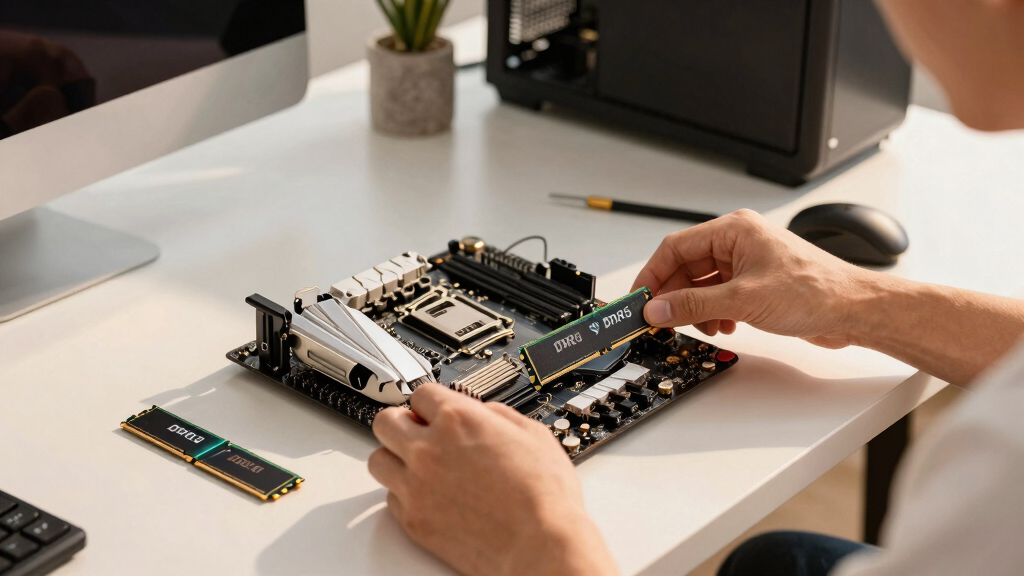
high-performance DDR5 desktop memory
As an affiliate, we earn on qualifying purchases.
As an affiliate, we earn on qualifying purchases.
Upcoming Developments in Memory Technology and Market Availability
In the near term, consumers should focus on purchasing DDR5 modules that meet their needs, with attention to platform compatibility and capacity. The industry will continue to refine DDR5 speeds and capacities, with new kits appearing on the market. DDR6 development is progressing, with JEDEC standards expected to finalize soon, and initial modules possibly appearing in enterprise systems by late 2026.
Most mainstream users should avoid early DDR6 modules, waiting instead for mature, tested products around 2027. Meanwhile, platform and CPU manufacturers will release new hardware supporting DDR6, setting the stage for broader adoption in the following years.
As an affiliate, we earn on qualifying purchases.
Key Questions
Should I buy DDR4 in 2026 to save money?
No. DDR4 has been phased out and now costs roughly the same or more than DDR5. Building on DDR4 is not advisable for new systems, as it will become obsolete and limit future upgrade options.
Is DDR6 worth waiting for in 2026?
For most users, no. DDR6 is still in development, with limited availability and high prices expected initially. It is better to buy a well-specced DDR5 system now and wait until DDR6 matures in 2027 or later.
What DDR5 configuration should I buy now?
The recommended configuration is DDR5-6000 CL30 for most workloads. Capacity should match your needs: 32GB for gaming and general use, 64GB for content creation. Higher speeds and capacities are generally unnecessary and more expensive.
Will DDR6 be compatible with current motherboards?
No. DDR6 requires new CPUs, chipsets, and modules. It is not backward compatible with DDR5 or DDR4 platforms, and early modules may only work with future hardware releases.
Source: ThorstenMeyerAI.com
Halloween Picks
halloween
As an affiliate, we earn on qualifying purchases.