

When evaluating the depreciation and resale value of electric buses, you should consider battery longevity, maintenance costs, and technological advances. As batteries degrade over time, their capacity affects resale value, especially if they near end-of-life. Keeping up with proper maintenance can preserve vehicle value, while newer models with advanced features may lower demand for older buses. Understanding these factors helps you better forecast future depreciation, and continuing will reveal more insights to optimize your fleet’s long-term worth.
Key Takeaways
- Battery health and degradation significantly influence electric bus resale value and depreciation rates.
- Lower maintenance costs and proper records can enhance residual value at end-of-life.
- Technological advances in newer models may reduce demand and accelerate depreciation of older buses.
- Monitoring battery longevity and repair costs helps forecast accurate depreciation and total ownership costs.
- Vehicle condition and remaining battery capacity are critical factors in assessing residual value.
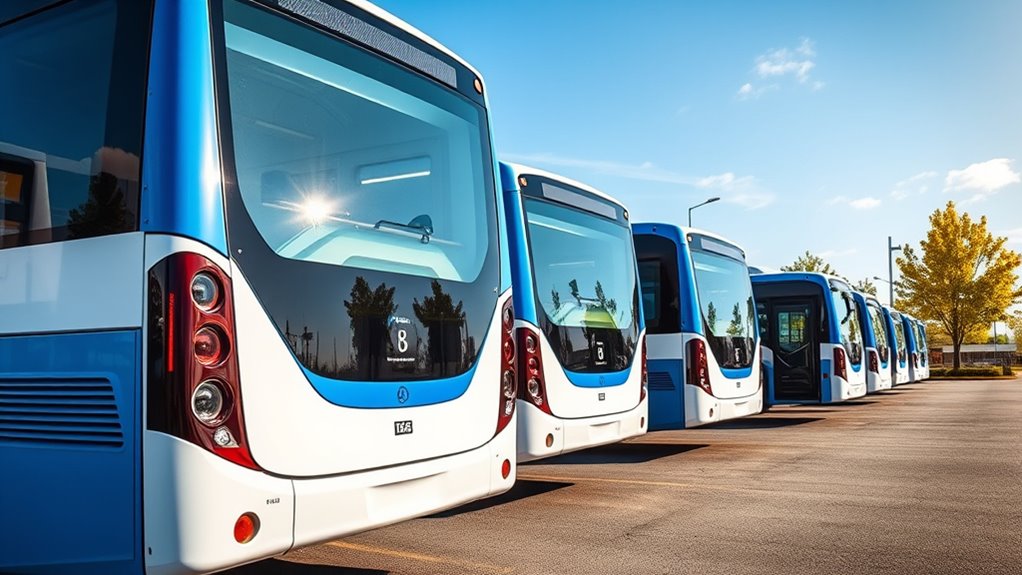
Electric buses are gaining popularity as a sustainable transportation solution, but understanding their depreciation is crucial for accurate financial planning. When evaluating how these vehicles lose value over time, one of the most critical factors you need to contemplate is battery longevity. The battery is at the heart of an electric bus’s performance and overall worth. Over years of service, batteries gradually degrade, leading to reduced range and efficiency. This deterioration directly impacts resale value since buyers are keen to know how well the battery has held up and if it will require costly replacements soon. You should anticipate that a well-maintained battery with a longer lifespan will preserve the bus’s value better, whereas batteries nearing the end of their lifecycle can considerably lower resale prospects.
Alongside battery health, maintenance costs play a pivotal role in depreciation calculations. Electric buses generally have lower maintenance costs compared to traditional diesel buses, but they’re not free from expenses. As the vehicle ages, you’ll need to account for routine checks, software updates, tire replacements, and potential repairs to the electrical system. If maintenance costs increase due to frequent repairs or early component failures, the bus’s value depreciates faster. Conversely, a bus with low maintenance needs over its lifespan retains its value more effectively. Keeping accurate records of maintenance history helps you demonstrate to potential buyers that the bus has been well cared for, which can positively influence resale value.
Another aspect to consider is the residual value at the end of the bus’s useful life. This value depends heavily on the remaining battery capacity and the overall condition of the vehicle. If the bus has maintained good battery health and minimal wear, its residual value will be higher. Conversely, if the battery has substantially degraded or the bus shows signs of extensive use, its resale value drops accordingly. You should also keep in mind that technological advances could influence depreciation; newer models with improved batteries or features might make older buses less desirable, further lowering the resale price. Furthermore, understanding battery longevity trends can help you better forecast depreciation and plan for replacements effectively.
To accurately evaluate depreciation, you need to track battery longevity trends and maintenance costs over the vehicle’s lifespan. Doing so gives you a clearer picture of how much value you’ll lose each year and what potential resale value you can expect. This understanding helps you make smarter purchasing decisions, plan for replacements, and accurately forecast the total cost of ownership. Ultimately, paying close attention to these factors ensures you’re better prepared for the financial realities of operating electric buses long-term.
Frequently Asked Questions
How Do Battery Replacement Costs Impact Resale Value?
Battery replacement costs can considerably lower your electric bus’s resale value because they impact overall costs and perceived longevity. If the battery’s longevity is uncertain or replacement costs are high, buyers might hesitate to pay top dollar. You should factor in potential replacement expenses when evaluating resale value, as these costs influence the vehicle’s attractiveness and overall profitability, especially if the battery’s condition or age raises concerns.
What Factors Most Influence Electric Bus Depreciation Rates?
You should consider that battery longevity and market demand most influence electric bus depreciation rates. When batteries last longer, the bus retains value better, and high market demand for electric buses keeps resale prices strong. If batteries degrade quickly or demand drops, depreciation accelerates. So, keeping batteries in good condition and staying aware of market trends can help you maximize resale value and reduce depreciation losses.
How Does Technological Advancement Affect Resale Prices?
Did you know that electric bus resale prices can drop by up to 30% after just three years? Technological advancements, like improved charging infrastructure and longer-lasting batteries, make older models less attractive. As new tech emerges, your bus’s resale value decreases because buyers prefer the latest features. So, staying current with innovations helps maintain higher resale prices and keeps your investment more valuable over time.
Are Government Incentives Included in Depreciation Calculations?
Yes, government incentives are incorporated in depreciation calculations. When you claim a tax deduction, the grant impact reduces the bus’s initial cost basis, which directly affects depreciation. Incorporating these incentives ensures you accurately reflect the vehicle’s value over time. This way, you maximize your tax benefits while considering the true economic value of your electric bus, helping you plan better for resale and future investments.
How Does Mileage Impact Electric Bus Depreciation?
Imagine the electric drivetrain humming along, but high mileage can wear it out faster. As you clock more miles, depreciation accelerates, reflecting the reduced lifespan of the battery and components. Charging infrastructure use also impacts resale value—more charging cycles can diminish battery health. So, heavy mileage signals greater wear, leading to quicker depreciation, but proper maintenance and infrastructure support can help preserve your electric bus’s value longer.
Conclusion
Understanding the depreciation and resale value of electric buses helps you make smarter investments. While EVs may start strong, their value can fade faster than traditional buses, like a clock losing minutes. However, with proper maintenance and technological upgrades, you can extend their worth and keep your fleet shining like a beacon. Remember, staying informed is your best tool to navigate the ebbs and flows of electric bus value—think of it as steering your vehicle through a dynamic landscape.