
Electric buses can substantially lower your maintenance and parts costs compared to diesel buses. With fewer moving parts, they require less regular upkeep, such as oil changes and exhaust repairs. Their batteries, when well-maintained, last longer and reduce replacement expenses, while advanced diagnostics catch issues early. This results in fewer unexpected repairs and lower labor costs. To discover how these savings can impact your fleet, keep exploring the details behind these advantages.
Key Takeaways
- Electric buses have fewer moving parts, reducing wear and lowering maintenance and parts replacement costs.
- They eliminate the need for oil changes, oil filter replacements, and exhaust system repairs common in diesel buses.
- Battery maintenance, when properly managed, extends lifespan and decreases the frequency and cost of replacements.
- Electric buses require less frequent servicing, resulting in lower labor costs and simplified maintenance schedules.
- Overall, electric buses offer predictable, lower ongoing maintenance expenses compared to diesel counterparts.
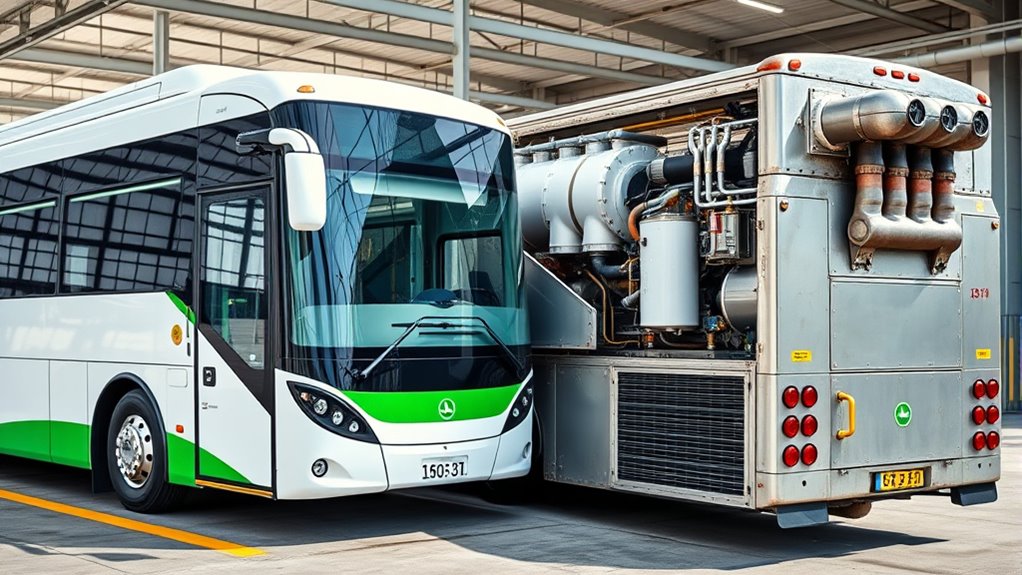
Are you looking for ways to boost your company’s profitability? One effective strategy is to examine the maintenance and parts costs associated with electric versus diesel buses. These choices directly impact your bottom line, especially when considering factors like battery longevity and fuel efficiency. Electric buses typically have fewer moving parts, which means less wear and tear. This translates to lower maintenance costs over time because you’re not dealing with oil changes, exhaust system repairs, or complex transmission issues common with diesel engines. Instead, your primary concern becomes maintaining the battery, which, with proper care, can last many years. Battery longevity is vital because it determines how often you’ll need to replace or refurbish this costly component. Advances in battery technology have considerably increased lifespan, meaning you won’t have to worry about frequent replacements if you follow manufacturer guidelines. This durability helps reduce downtime and ongoing expenses, making electric buses a more predictable financial choice. Additionally, the integration of advanced diagnostics can further optimize maintenance schedules, helping identify potential issues early and reducing unexpected repair costs.
Fuel efficiency is another major factor that influences operational savings. Electric buses excel here because electricity is generally cheaper than diesel fuel, especially when you leverage off-peak rates or renewable energy sources. When you compare the total cost of fueling electric buses to diesel counterparts, the savings can be substantial. Not only does this lower fuel expenditure, but electric buses also tend to have better energy conversion efficiency, meaning they get more miles per unit of energy. This efficiency can lead to longer routes without additional refueling, further cutting costs. Plus, electric buses often feature regenerative braking systems that recapture energy during deceleration, boosting overall efficiency and reducing electricity consumption.
Beyond fuel savings, electric buses often require less frequent and less intensive maintenance, which cuts down on labor and parts costs. For example, with no need for oil changes, fuel filters, or exhaust system repairs, your maintenance schedule becomes simpler and less expensive. Over the vehicle’s lifespan, these savings compound, providing a notable operational advantage. Conversely, diesel buses might have lower upfront costs but tend to incur higher ongoing maintenance and fuel expenses, which can erode any initial savings.
Top picks for "operational saving maintenance"
Open Amazon search results for this keyword.
As an affiliate, we earn on qualifying purchases.
Frequently Asked Questions
How Do Initial Purchase Costs Compare Between Electric and Diesel Buses?
You’ll find that electric buses generally have a higher upfront purchase cost compared to diesel buses. This initial expense stems from the costly batteries and advanced technology involved. Although electric buses might cost more initially, they often lead to savings in fuel and maintenance over time. So, while the purchase price is higher, the long-term operational savings can balance out the initial investment.
What Are the Environmental Impacts of Electric Versus Diesel Bus Maintenance?
Think of electric buses as green warriors, fighting pollution on the front lines. Their maintenance has a smaller environmental footprint thanks to fewer emissions and cleaner operation. Battery recycling is essential, reducing waste and reclaiming valuable materials. Compared to diesel buses, electric models markedly cut emissions, helping you achieve emissions reduction goals. By choosing electric, you’re not just maintaining a bus—you’re protecting the planet for future generations.
How Does Charging Infrastructure Affect Operational Costs for Electric Buses?
Charging infrastructure greatly impacts your operational costs. You’ll need to budget for charging station costs, which can vary based on capacity and technology, and grid upgrade expenses to support increased electricity demand. These upfront investments may seem high initially, but they can lead to lower long-term costs through more efficient energy use and reduced maintenance. Proper planning ensures your electric buses stay on the road without unexpected financial burdens.
Are There Differences in Downtime and Reliability Between the Two Bus Types?
Imagine your fleet switches to electric buses, and you notice less bus downtime because electric motors have fewer moving parts. This improves fleet reliability, reducing unexpected breakdowns. Electric buses tend to have higher reliability than diesel ones, which often face engine issues. Overall, electric buses can decrease downtime and enhance fleet reliability, ensuring your operations run smoothly and efficiently with fewer disruptions.
What Are the Long-Term Resale Values for Electric and Diesel Buses?
You’ll find that electric buses generally have higher resale values due to growing market demand and lower emissions standards, which boost their appeal. Diesel buses tend to experience faster market depreciation because of stricter regulations and declining demand for fossil fuel vehicles. Over the long term, electric buses could retain their value better, making them a smarter investment as the industry shifts toward sustainable transportation.
Conclusion
In the grand scheme, choosing electric buses subtly guides your operations toward a more refined efficiency, gently reducing ongoing maintenance and parts expenses. While the progression may entail initial adjustments, the long-term financial harmony becomes increasingly evident. Embracing this shift allows you to navigate future uncertainties with a touch more poise, ultimately fostering a smoother, more sustainable journey. By embracing these quieter savings, you position yourself at the forefront of innovative, cost-conscious transit solutions.