Your EV ownership costs differ between Sweden and Germany mainly because of electricity prices and incentives. Sweden benefits from lower electricity rates due to abundant renewable energy, making charging cheaper over time. Germany’s higher electricity costs increase ongoing expenses, though stronger incentives can offset upfront costs. These factors affect your overall affordability and long-term savings. To understand how these details impact your ownership experience, find out more about each country’s specific policies and market trends.
Key Takeaways
- Lower electricity prices in Sweden significantly reduce ongoing charging costs for EV owners compared to Germany.
- Higher electricity prices in Germany increase daily operational expenses despite generous purchase incentives.
- Sweden’s renewable energy mix contributes to more affordable and sustainable EV charging costs.
- In Germany, higher energy costs partially offset savings from purchase bonuses and tax incentives.
- Overall, electricity price differences are a key factor influencing total cost of ownership between the two countries.
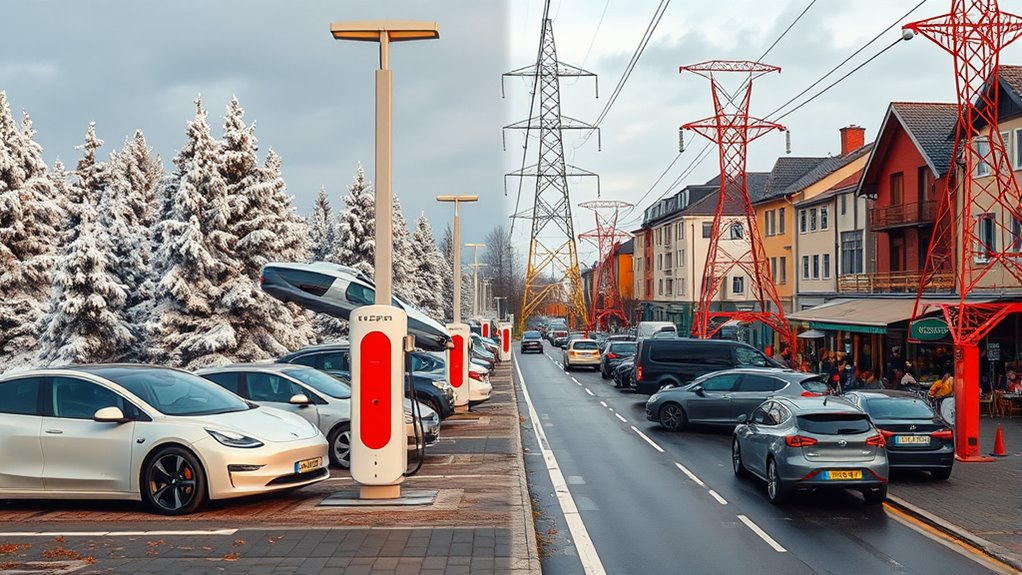
When comparing the cost of vehicle ownership in Sweden and Germany, it’s clear that various factors influence overall expenses, from taxes and insurance to fuel prices and maintenance. One key aspect affecting EV owners specifically is the availability of EV tax incentives. Sweden offers attractive incentives for electric vehicle buyers, including reduced registration fees and lower annual taxes. These incentives make EV ownership more affordable upfront and over time, encouraging more residents to switch to electric. Germany also provides substantial EV tax incentives, such as purchase bonuses and reduced company car taxes, which help offset the higher upfront costs. However, the structure of these incentives can differ, impacting the overall cost savings for you depending on where you live.
Another critical factor that impacts the total cost of EV ownership is battery recycling. As EVs become more popular, both countries are actively developing battery recycling programs to manage end-of-life batteries efficiently. Proper recycling reduces the environmental impact and can also lower the cost of raw materials for new batteries. For you, this means that in both Sweden and Germany, there’s an increasing focus on sustainable practices that could eventually influence the price of EVs and their maintenance. Ensuring your vehicle’s battery is recycled responsibly not only benefits the environment but could also help reduce the long-term costs of battery replacement, which is a significant expense in EV ownership. Additionally, sustainable practices are increasingly integrated into the automotive industry, shaping future innovations and cost efficiencies.
Electricity prices are another major factor in the overall cost comparison. Sweden generally benefits from lower electricity rates, thanks to its abundant renewable energy sources like hydroelectric power. This means charging your EV in Sweden can be more economical, reducing your ongoing costs. Germany, on the other hand, has higher electricity prices, partly due to its energy mix and policy changes. If you own an EV in Germany, you might spend more on charging, especially if you rely on public charging stations or have limited access to home charging. This difference directly influences the recurring expenses associated with EV ownership in each country.

ChargePoint HomeFlex Level 2 EV Charger J1772 – Fast Smart Battery Power Charging at Home for Electric Automobile Vehicles – Hardwired for Electric Car
Charge with Confidence: ChargePoint builds reliable, flexible EV charging stations for home, business, and fleets. Get 24/7 support…
As an affiliate, we earn on qualifying purchases.
As an affiliate, we earn on qualifying purchases.
Frequently Asked Questions
How Do Government Incentives Differ Between Sweden and Germany?
In Sweden, you benefit from generous tax incentives and subsidy programs that encourage electric vehicle adoption, such as reduced registration taxes and rebates. Germany also offers substantial support through similar incentives like purchase bonuses and tax reductions. While both countries aim to promote eco-friendly transportation, Sweden’s incentives tend to be more streamlined, whereas Germany’s programs often include additional subsidies for renewable energy integrations, making each country’s approach unique.
What Are the Environmental Impacts of Electricity Generation in Each Country?
Oh, the irony isn’t lost on you—while both countries boast renewable sources, Sweden’s clean hydro power drastically cuts carbon emissions, making it a true eco-hero. Germany, on the other hand, still struggles with coal and fossil fuels, which bump up carbon emissions despite renewable efforts. You might find it fascinating how their environmental impacts reflect their energy choices, shaping their sustainability stories in surprising ways.
How Does Energy Efficiency Influence Overall Ownership Costs?
Energy efficiency substantially lowers your overall ownership costs by reducing energy consumption. When you adopt renewable energy sources and benefit from technological advancements, your vehicle or home becomes more efficient, saving you money on electricity and fuel. Increased renewable adoption encourages innovation, making appliances and systems smarter and more efficient. This not only cuts costs but also helps reduce environmental impact, ensuring you spend less while supporting sustainable energy solutions.
Are There Significant Differences in Maintenance Expenses Between the Two Countries?
Yes, you’ll find notable differences in maintenance costs and service expenses between Sweden and Germany. In Sweden, maintenance tends to be slightly higher due to stricter environmental standards and more specialized service requirements. Conversely, Germany often offers more competitive service expenses thanks to a larger pool of authorized service centers and standardized maintenance protocols. These differences can influence your overall ownership costs, especially over the vehicle’s lifespan.
How Do Future Energy Policies Potentially Affect Ownership Costs?
Future energy policies can substantially impact your ownership costs by increasing subsidies for renewable energy and promoting energy storage solutions. These measures may lower your expenses over time, especially if you invest in renewable technologies or energy storage systems. However, they could also lead to higher initial costs or taxes to fund these policies. Staying informed and adapting your energy choices can help you optimize costs and benefit from evolving regulations.

EZ on the Earth – Dry Cell Battery Recycling Container Kit – 1 Gallon Battery Recycling Pail – Pre-Paid/Mail-Back Recycle kit that Holds up to 13.2 lbs Batteries – Recycling Pail with Cardboard Box
UN Approved Container for Dry Cell Batteries — Easily recycle various dry cell batteries such as Alkaline, Nickel…
As an affiliate, we earn on qualifying purchases.
As an affiliate, we earn on qualifying purchases.
Conclusion
Just as the phoenix rises from ashes, understanding the true cost of ownership in Sweden and Germany helps you make a smarter choice. With electricity prices acting like the wind in your sails, you can navigate your journey more confidently. Remember, knowing the nuances behind the numbers isn’t just about dollars—it’s about steering your future wisely. So, take the helm with insight, and let your decision shine brighter than ever.

AFYEEV 7.2kW Type 2 Charging Cable, 6/8/10/13/16/20/24/32A Adjustable Current, Charging Cable Electric car Type 2, EV Charger with Bag, 6M
Adjustable Current & Fast Charging: This level 2 ev charger charges quickly and can adjust the current (6A/8A/10A/13A/16A/20A/24A/32A)….
As an affiliate, we earn on qualifying purchases.
As an affiliate, we earn on qualifying purchases.

EV Maintenance Log Book
As an affiliate, we earn on qualifying purchases.
As an affiliate, we earn on qualifying purchases.