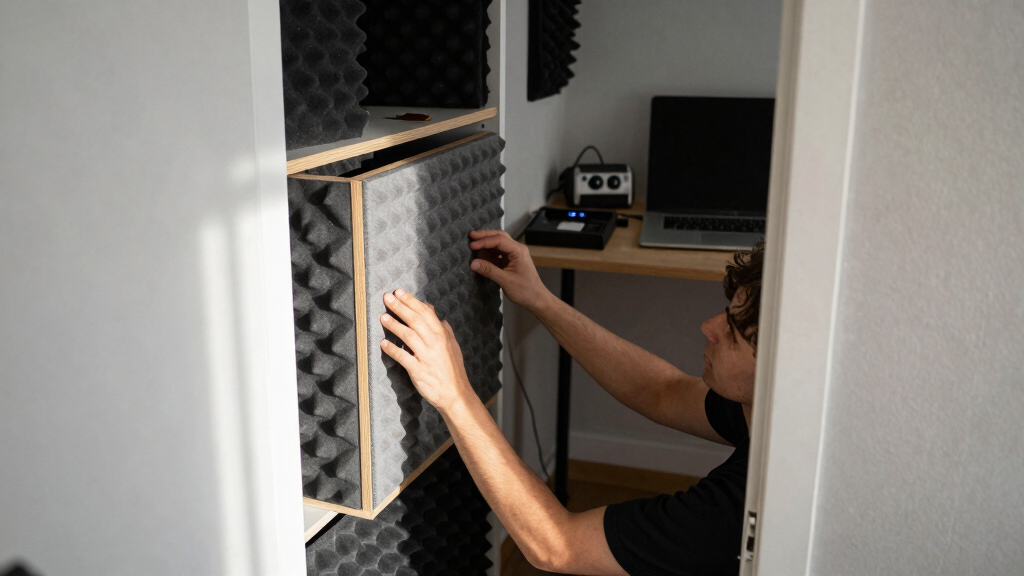

📊 Full opportunity report: Acoustic Dampening, Placement, and the “Rig in the Closet” Setup on ThorstenMeyerAI.com — validation score, market gap, and execution plan.

Get business pricing on monitors, keyboards and dev gear
- Business-only prices and quantity discounts
- Tax-exempt purchasing
- Multiple users, one account, clear invoices
TL;DR
Moving your high-powered rig into a closet can significantly reduce noise and reflections. Proper placement, sealing gaps, and using absorption materials are key to creating a quiet, effective workspace. Heat management is also crucial for safety and performance.
Moving a high-power computer rig into a closet is now confirmed as one of the most effective ways to reduce noise and reflections, according to recent expert guidance. This approach helps create a quieter, more controlled environment for audio recording or AI work, provided proper placement, sealing, and ventilation are implemented.
Experts note that relocating a rig into a closet can cut noise levels significantly—often more than adding foam treatments alone. The key is to position the equipment away from reflective surfaces and treat reflection points, such as behind the mic, side walls, and ceiling, with absorption materials like foam panels or blankets. Sealing gaps around doors and walls with weatherstripping enhances sound isolation, preventing noise leaks and echo.
However, placing a high-load rig in an enclosed space introduces heat management challenges. To prevent overheating, proper ventilation must be installed, such as exhaust fans or ducted airflow systems. Using a combination of passive vents and active cooling solutions ensures hardware remains within safe temperature ranges during extended operation.
Materials like thick blankets, rugs, and foam are effective for absorption, but require strategic placement to avoid deadening the room unnaturally. Bass traps in corners help control low-frequency muddiness, improving overall sound clarity. The door should be covered with blankets or foam, and gaps sealed to prevent sound escape and ingress.
Acoustic dampening
& the rig in the closet.
The most powerful noise fix isn’t a material — it’s a floor plan. A rig you can’t hear because it’s in another room beats any amount of foam. Tap the approaches in Part 1 to see what actually works.
(another room)
(levers 1–4)
(door / barrier)
(acoustic foam)
Contain the noise, not the heat
Why Closet Placement and Acoustic Treatment Matter
This approach is significant because it offers a practical, cost-effective solution for hobbyists and professionals seeking quieter workspaces without extensive construction. Properly treated closets can dramatically reduce noise pollution, improve recording clarity, and prevent heat buildup, which is critical for hardware longevity and performance. Understanding the distinction between dampening and soundproofing helps users optimize their setups effectively.
soundproofing foam panels for computer rigs
As an affiliate, we earn on qualifying purchases.
As an affiliate, we earn on qualifying purchases.
The Evolution of Home Studio and Rig Setup Techniques
Traditionally, high-power rigs and audio work required dedicated rooms with professional soundproofing. However, recent innovations and space constraints have led creators to adapt small spaces, like closets, into functional work areas. Industry experts have increasingly emphasized that moving equipment into a closet combined with strategic acoustic treatment and ventilation offers a viable alternative to costly room renovations. This shift is supported by emerging guidelines published in 2024, which detail effective placement, sealing, and cooling methods.
"Relocating your rig into a closet with proper treatment and ventilation can drastically cut noise and improve sound quality. It’s about smart placement and sealing, not just adding foam."
— Thorsten Meyer, acoustic engineer
acoustic blankets for closet soundproofing
As an affiliate, we earn on qualifying purchases.
As an affiliate, we earn on qualifying purchases.
What Aspects of Closet Rig Setup Are Still Being Developed
While general principles are well-established, specifics such as optimal material coverage percentages, the best ventilation configurations, and long-term effects of certain DIY treatments remain under review. Variations in closet size, equipment load, and room shape can influence results, and individual needs may differ.
ventilation fans for enclosed computer setups
As an affiliate, we earn on qualifying purchases.
As an affiliate, we earn on qualifying purchases.
Future Developments in Acoustic and Thermal Management for Closet Rigs
Researchers and manufacturers are expected to develop tailored acoustic panels and ventilation systems optimized for small spaces. Further studies will refine guidelines on material placement, heat dissipation, and noise isolation, helping users achieve better results with less trial and error. Expect updated best practices and possibly new products designed specifically for closet or small-room rigs.
bass traps for low-frequency sound control
As an affiliate, we earn on qualifying purchases.
As an affiliate, we earn on qualifying purchases.
Key Questions
Can I completely soundproof my closet rig?
No, moving your rig into a closet primarily improves dampening and reduces reflections. Complete soundproofing requires additional barriers like dense drywall and specialized barriers, which are more complex and costly.
What materials are best for absorbing sound in a small closet?
Thick foam panels, moving blankets, rugs, and quilts are effective. Bass traps in corners help with low-frequency muddiness. Strategically covering reflection points maximizes absorption without deadening the room.
How do I prevent overheating in a closet rig setup?
Install ventilation such as exhaust fans or ducted airflow, use passive vents, and consider cooling solutions like liquid coolers with ducting. Maintaining temperatures around 70-75°F is ideal for hardware safety and performance.
Does sealing gaps around the door make a big difference?
Yes, sealing gaps with weatherstripping or blankets significantly reduces sound leaks and reflections, improving overall noise isolation and clarity.
How much acoustic treatment do I need for a small closet?
About 20-30% wall coverage with absorption panels, plus treatment of reflection points and corners, generally provides good results. Exact needs vary based on room size and equipment noise level.
Source: ThorstenMeyerAI.com
Halloween Picks
halloween
As an affiliate, we earn on qualifying purchases.