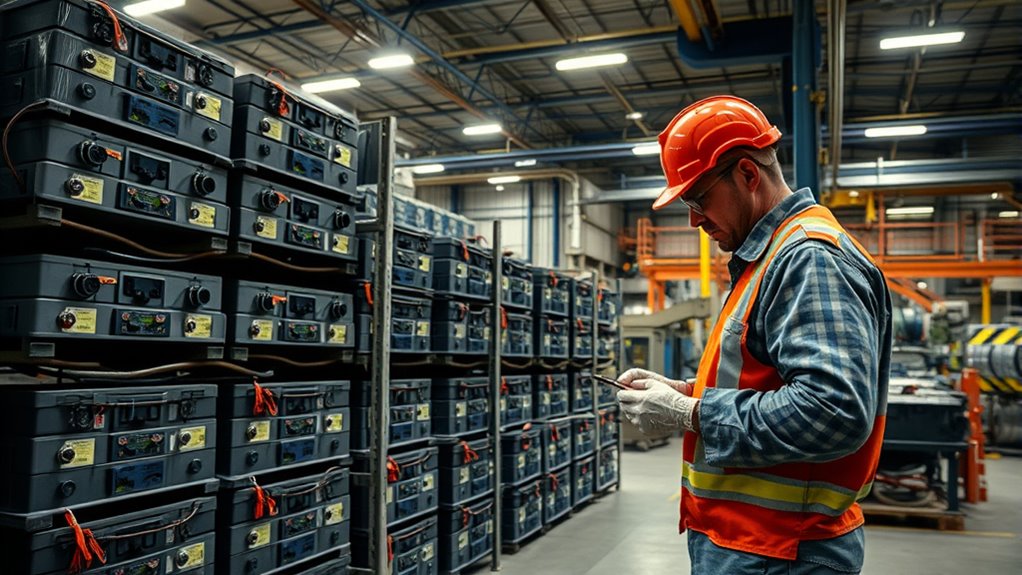

When recycling bus batteries, you’ll find that process begins with removing plastic casings and separating metal components through shredding, crushing, and sieving. Chemicals like hydrometallurgy and smelting help recover valuable materials such as lithium, cobalt, and nickel. This approach reduces environmental harm by cutting resource extraction, preventing pollution, and saving energy. If you want to understand how these steps come together for maximum sustainability, keep exploring how this process works.
Key Takeaways
- Batteries are dismantled and mechanically shredded to separate metals from plastics and residues.
- Chemical treatments like hydrometallurgy and pyrometallurgy extract valuable metals such as lithium, cobalt, and nickel.
- Recycling reduces the need for virgin resource extraction, conserving ecosystems and preventing habitat destruction.
- The process minimizes water pollution and energy consumption compared to mining, lowering environmental impact.
- Recycling supports a circular economy, ensuring sustainable growth of electric bus adoption and resource conservation.
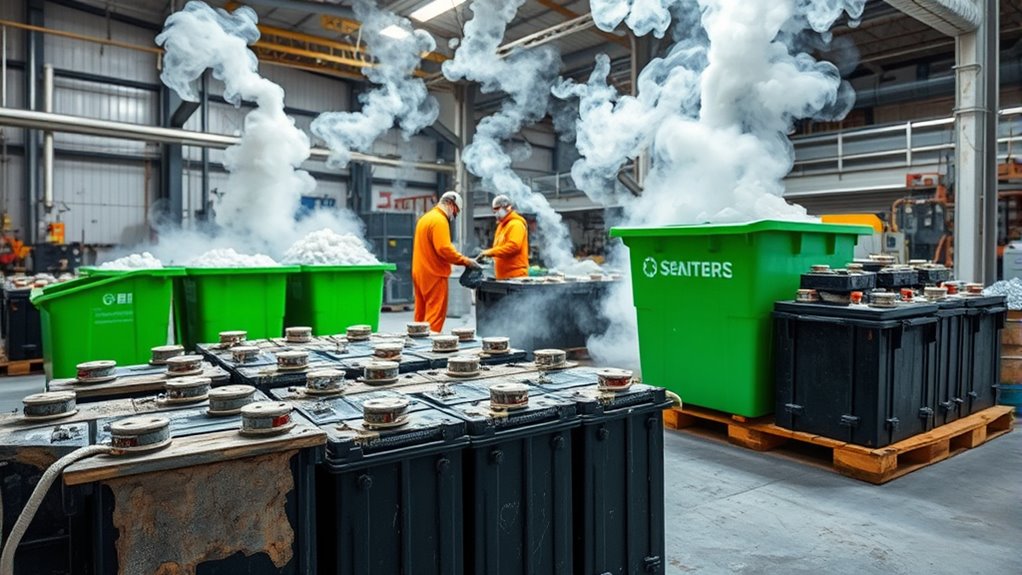
As electric buses become more common, recycling their batteries has never been more vital. These large batteries, often made from lithium-ion cells, contain valuable materials that can be recovered and reused, reducing the need for new resource extraction. The process of recycling these batteries involves advanced recycling technologies designed to efficiently separate and reclaim materials like lithium, cobalt, nickel, and other metals. By understanding how these processes work, you can appreciate their role in promoting sustainability and reducing environmental impact.
When a bus battery reaches the end of its useful life for transportation, it still holds a significant amount of capacity that can be repurposed. This is where battery reuse comes into play. Before recycling, some batteries are tested for secondary applications, like energy storage in stationary systems, giving them a second life and delaying the need for full recycling. This step helps maximize the value of the battery materials and reduces waste. Once the batteries are deemed no longer suitable for reuse, recycling technologies take over.
Recycling technologies involve a combination of mechanical and chemical processes. Initially, the batteries are carefully dismantled to remove plastic casings and other non-metal components. The remaining modules are then shredded into smaller pieces, making it easier to separate the different materials. Through processes like crushing and sieving, the metals are isolated from plastic and other residues. Chemical treatments such as hydrometallurgy or pyrometallurgy then extract specific metals from the shredded material. Hydrometallurgy uses liquids to leach out metals, while pyrometallurgy involves high-temperature smelting to recover valuable metals. These techniques ensure maximum recovery of critical materials, which can then be refined and used to manufacture new batteries or other products.
Recycling batteries uses mechanical shredding and chemical processes to recover valuable metals efficiently.
The environmental benefits of these recycling processes are substantial. They reduce the need for mining virgin materials, which often cause habitat destruction, water pollution, and high energy consumption. Recycling keeps hazardous materials contained and prevents them from leaching into soil and waterways. Moreover, by recovering metals from used batteries, you help diminish the carbon footprint associated with producing new raw materials, contributing to a more sustainable, circular economy. Additionally, advancements in recycling efficiency continue to improve material recovery rates, making the process even more environmentally friendly. As electric buses become a staple in public transit, the importance of effective battery recycling cannot be overstated. It’s a vital step in ensuring that the shift to cleaner transportation is truly environmentally responsible, conserving resources and protecting ecosystems for the future.
Frequently Asked Questions
How Long Do Bus Batteries Typically Last Before Recycling?
You can expect bus batteries to last around 5 to 8 years before recycling, depending on usage and maintenance. The battery lifespan varies based on factors like charging cycles and operating conditions. Recycling timing usually occurs when the battery’s performance declines markedly or it reaches the end of its useful life. Regular monitoring helps you determine the right moment for recycling, ensuring safety and environmental benefits.
Are Recycled Bus Batteries as Effective as New Ones?
Recycled bus batteries can be nearly as effective as new ones, thanks to improved recycling efficiency and restoration techniques. While battery longevity may decrease slightly after recycling, many are still reliable for continued use in buses or less demanding applications. Advances in recycling processes help preserve battery capacity, ensuring that recycled batteries remain a cost-effective and environmentally friendly alternative, providing good performance without compromising safety or efficiency.
What Safety Measures Are in Place During Battery Recycling?
During battery recycling, you’ll find strict safety measures in place to guarantee hazard prevention. Workers wear protective gear like gloves, goggles, and aprons to shield against harmful chemicals and potential fires. Proper ventilation systems help disperse toxic fumes, and handling protocols minimize risks. Regular training updates keep everyone aware of safety practices, making the process safe for workers and the environment.
How Does Battery Recycling Impact Bus Fleet Operation Costs?
Did you know recycling a bus battery can save you up to 30% on replacement costs? Recycling extends battery lifespan, reducing the need for frequent replacements and lowering overall operation costs. While recycling costs are involved, they are offset by the savings from fewer battery purchases and less environmental impact. By recycling, you not only cut expenses but also promote sustainability, making your fleet more cost-effective and eco-friendly in the long run.
Can Recycled Bus Batteries Be Used for Other Applications?
Yes, recycled bus batteries can be used for other applications through second life applications and alternative uses. After their initial use in buses, these batteries still hold significant capacity, making them suitable for energy storage systems, solar power setups, and backup power supplies. By repurposing them, you extend their lifespan, reduce waste, and optimize their environmental benefits, creating cost-effective and sustainable solutions for various energy needs.
Conclusion
By recycling bus batteries, you’re planting seeds for a greener future, turning waste into treasure. Imagine your choices as a guiding light, illuminating the path to cleaner air and healthier communities. Each recycled battery becomes a ripple in the pond of environmental change, spreading positive impact far and wide. So, embrace this cycle of renewal—because when you help recycle, you’re not just saving resources, you’re fueling a brighter, more sustainable world for everyone.