
To properly size your Level 2 EV charging circuit, you need to contemplate your charger’s amperage, existing electrical loads, and safety margins—usually 125% of the maximum load. Make sure your breaker and wiring gauge match these requirements to prevent overloads and safety issues. Planning for future upgrades and ensuring compliance with local codes are essential. If you want to avoid costly mistakes, understanding these steps will give you a solid foundation.
Key Takeaways
- Calculate the EV charger’s load by considering amperage, voltage, and wattage, then add existing household loads for accuracy.
- Always include a safety margin, typically 125% of the maximum load, to ensure reliable circuit performance.
- Select a breaker size according to manufacturer guidelines and electrical codes to prevent overloads and ensure safety.
- Use appropriately gauged wiring that can handle the load, preventing overheating and electrical hazards.
- Future-proof your circuit by installing larger wiring and breaker capacities to accommodate potential upgrades or additional chargers.
Why Proper Circuit Sizing Is Critical for Level 2 EV Chargers
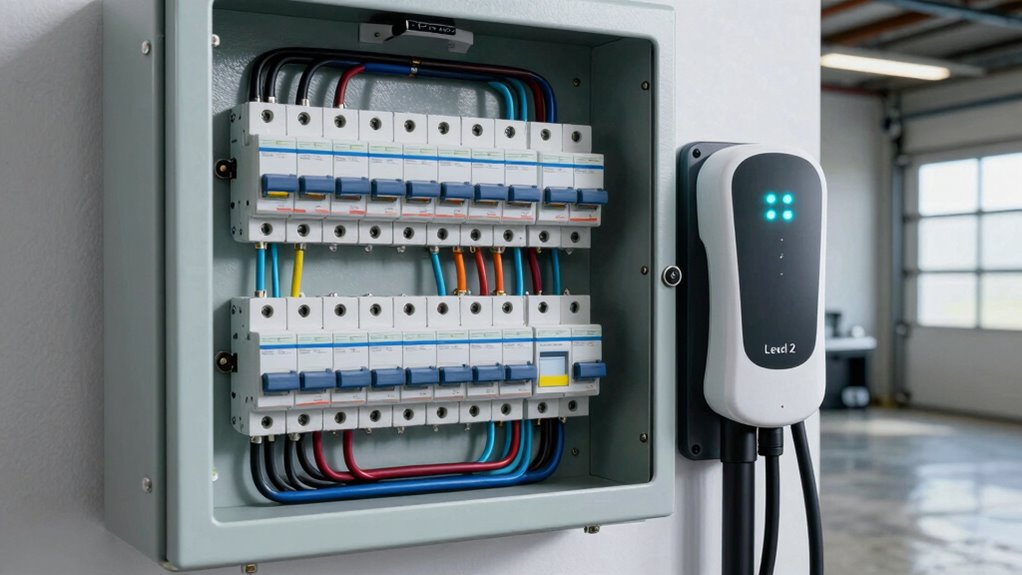
Proper circuit sizing is essential because it guarantees your Level 2 EV charger operates safely and efficiently. When the circuit is correctly rated, it minimizes electrical safety risks like overheating or short circuits, protecting both your home and device. Proper sizing also enhances cost efficiency by preventing unnecessary upgrades or repairs caused by overloading or insufficient wiring. If the circuit is too small, it can cause frequent tripping and damage, leading to higher maintenance costs. Conversely, an oversized circuit may be more expensive initially but ensures reliable performance without risking safety hazards. When you get the sizing right, it helps prevent electrical hazards and ensures your system operates smoothly. Additionally, understanding electrical code requirements helps ensure that your installation complies with safety standards and local regulations.
How to Calculate the Right Circuit Breaker and Load Requirements
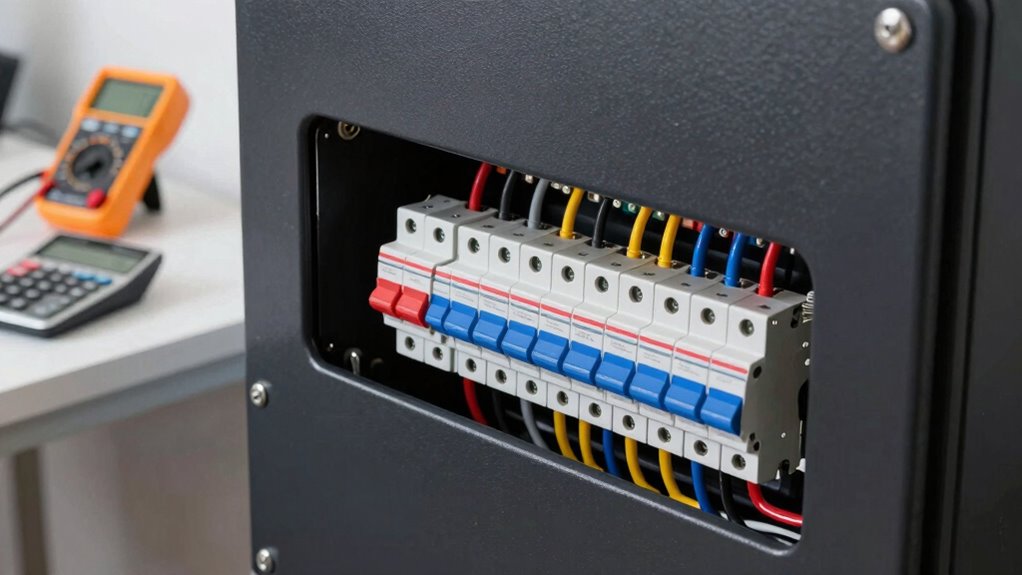
To determine the right circuit breaker and load requirements for your Level 2 EV charger, start by calculating the charger’s power needs. This involves reviewing the electrical codes to guarantee compliance and performing a proper load calculation. Visualize these steps:
- Identify the charger’s amperage and voltage to find its wattage.
- Add up existing loads on the circuit to prevent overload.
- Factor in a safety margin, usually 125% of the charger’s maximum load.
- Refer to style considerations to ensure your wiring and breaker selection align with recommended practices. Incorporate appropriate performance upgrades like high-quality wiring and components to enhance safety and efficiency. Additionally, consulting local electrical codes helps ensure your setup meets all safety standards. Ensuring proper circuit capacity is essential to prevent potential hazards. Proper load calculation, guided by electrical code requirements, helps you select an appropriate circuit breaker that protects both your wiring and your vehicle. Remember, accurate sizing prevents future issues and guarantees safe operation.
Common Mistakes to Avoid When Sizing Your EV Charging Circuit
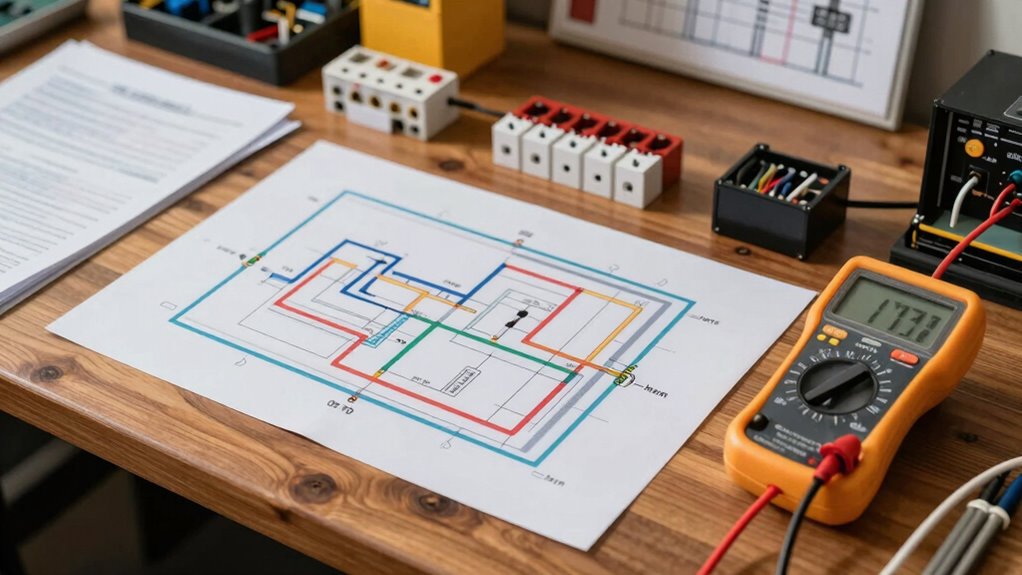
When sizing your EV charging circuit, one common mistake is underestimating the load or overlooking existing electrical demands, risking overloads and tripping. To ensure installation safety and code compliance, accurately assess total load and consider future expansion. Avoid rushing the process, which can lead to undersized circuits that strain your system. Properly sizing prevents overheating and potential hazards. Use this table to identify typical additional loads:
| Electrical Demand | Common Mistakes to Avoid |
|---|---|
| Existing circuits | Ignoring current load capacity |
| Future upgrades | Not planning for increased power needs |
| Circuit breakers | Overloading breakers beyond rated capacity |
| Wiring size | Using insufficient gauge wire |
Being aware of electrical code standards helps ensure your installation remains safe and compliant with local regulations. Additionally, consulting local electrical codes can provide guidance tailored to your specific region and prevent costly mistakes. For optimal performance and safety, understanding the power distribution system is crucial when planning your circuit design.
How to Future-Proof Your Circuit for EV Charger Upgrades
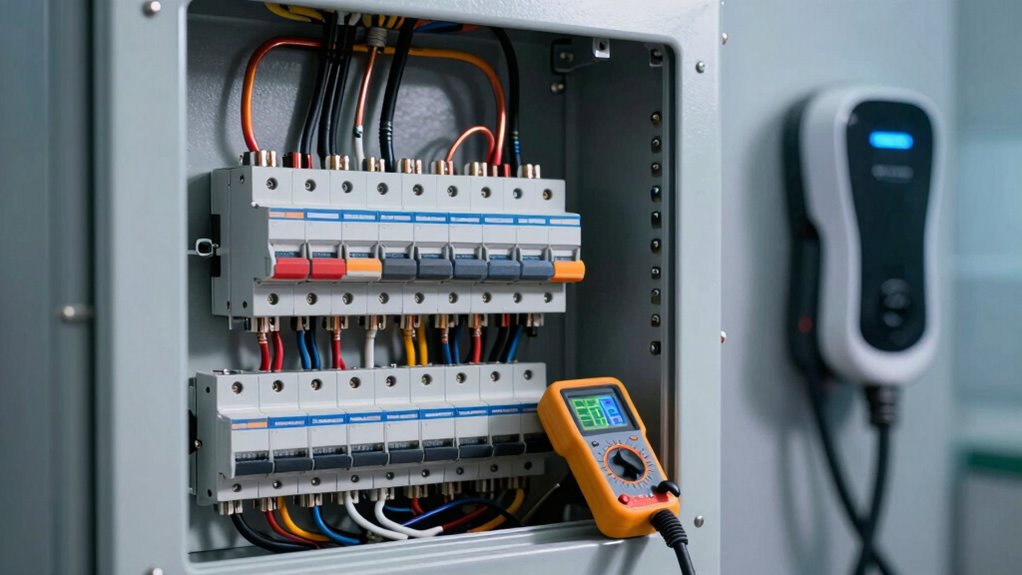
Planning for future EV charger upgrades requires more than just installing the current model; it calls for a proactive approach to circuit design. To future-proof your circuit, consider these steps:
Proactively design circuits with larger wiring, dedicated lines, and extra panel capacity for seamless future EV charger upgrades.
- Use larger wiring and breaker sizes to handle potential power increases, ensuring electrical safety and compliance with utility regulations.
- Install dedicated circuits for each charger, reducing overload risks and simplifying upgrades later.
- Include extra capacity in your panel to accommodate additional chargers or higher power levels, preventing costly rewiring.
A Step-by-Step Guide to Sizing Your Level 2 Charging Circuit
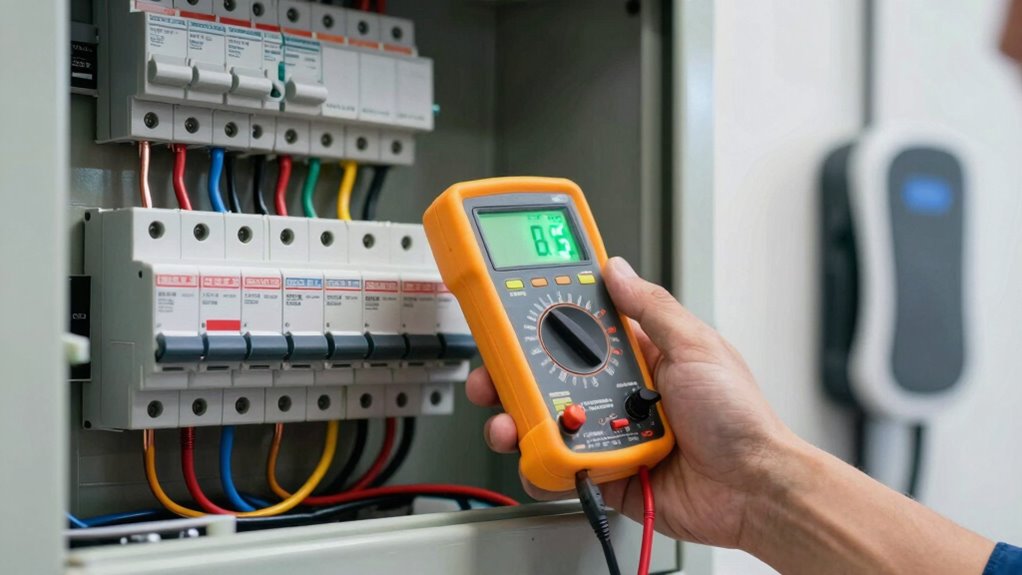
Sizing your Level 2 charging circuit begins with understanding your EV’s power requirements and your electrical system’s capacity. Start by evaluating your vehicle’s amperage needs and your home’s existing load. Proper load balancing guarantees electrical safety and prevents overloads. Next, determine the circuit breaker size, typically 40-50 amps for Level 2 chargers, depending on your EV and wire gauge. Use the table below to guide your choices:
| Step | Action | Consideration |
|---|---|---|
| 1 | Determine EV charging current | Check vehicle specs |
| 2 | Appraise existing electrical load | Avoid overloads |
| 3 | Choose appropriate breaker size | Follow manufacturer guidelines |
| 4 | Select proper wiring gauge | Ensure electrical safety |
| 5 | Balance load across circuits | Maintain system efficiency |
This process guarantees safe, efficient load balancing and suitable circuit sizing. Additionally, understanding circuit breaker sizing is crucial to prevent potential hazards and ensure compliance with electrical codes. Properly sizing your circuit also involves considering the horsepower of electric dirt bikes, especially if you plan to use the same electrical infrastructure for other high-demand devices or hobby equipment. Being aware of electrical safety standards helps maintain proper installation practices and protects against electrical faults.
Frequently Asked Questions
Can Existing Home Wiring Support Level 2 EV Chargers Safely?
Your existing home wiring might support Level 2 EV chargers, but you’ll need to review your current setup during home renovations for safety and efficiency. Upgrading your wiring can improve energy efficiency and make certain compliance with electrical codes. Consult a professional electrician to assess your circuit capacity and determine if upgrades are necessary, especially if you want to avoid overloads and maximize the benefits of your new charging station.
How Does Ambient Temperature Affect Circuit Sizing for EV Chargers?
Imagine your circuit as a delicate garden hose, where ambient temperature is the sun. When it’s hot, the hose’s performance drops, risking leaks or bursts, just like circuit performance can falter in extreme heat. Conversely, cold weather shrinks the hose’s capacity, requiring you to size your circuit bigger to handle the load safely. Always contemplate ambient temperature to guarantee your EV charger operates reliably and safely year-round.
Are There Specific Codes or Standards to Consider During Circuit Sizing?
You need to take into account electrical codes and safety standards when sizing circuits for EV chargers. These regulations, such as the NEC (National Electrical Code), specify requirements for wire gauges, breaker sizes, and grounding to ensure safety and compliance. Always check local codes, as they might have additional rules, and follow manufacturer guidelines to avoid overloading circuits or risking electrical hazards during Level 2 charging.
What Are the Signs of an Improperly Sized EV Charging Circuit?
If your EV charging circuit is improperly sized, you’ll notice overcurrent issues, like frequent breaker trips, and voltage fluctuations that can cause charging interruptions. You might also see signs like flickering lights or equipment overheating. These problems signal the circuit can’t handle the load properly, risking damage or safety hazards. It’s essential to verify the circuit is correctly sized to prevent these issues and maintain reliable, safe charging.
How Often Should Circuit Components Be Inspected After Installation?
You should inspect circuit components at least once a year to guarantee safety and proper function. Regular inspections help you monitor component durability and catch issues early, preventing costly repairs or failures. Keep an eye on connections, insulation, and signs of wear. Increasing inspection frequency might be necessary if you notice problems or if the environment accelerates wear and tear, ensuring your Level 2 charging station remains reliable.
Conclusion
Getting your circuit sizing right is vital to safely and efficiently power your Level 2 EV charger. Don’t fall into the trap of underestimating load requirements—think of it as avoiding a modern-day Icarus flight too close to the sun. By following proper calculations and future-proofing your setup, you’ll guarantee smooth charging now and down the road. Remember, a well-sized circuit isn’t just a good idea—it’s the key to avoiding costly mishaps and keeping your EV adventures running smoothly.