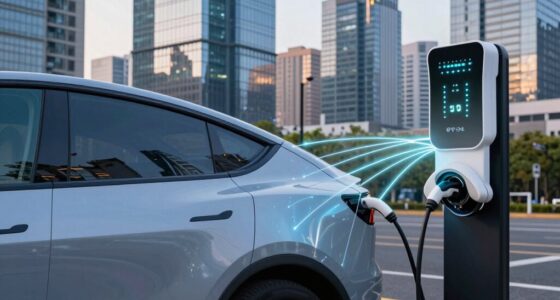
Vehicle-to-grid (V2G) technology lets your electric vehicle’s battery connect to the power grid, sending excess energy back during peak times. This helps balance supply and demand, supports renewable energy use, and enhances grid stability. As an EV owner, you could receive payments or incentives for sharing energy, making your vehicle more valuable. If you’re curious how this integration improves energy systems and benefits you, there’s more to discover below.
Key Takeaways
- V2G technology allows electric vehicle batteries to supply excess energy back to the power grid during peak demand.
- It enhances grid stability and facilitates integration of renewable energy sources like solar and wind.
- EV owners can earn incentives by providing energy services, creating additional financial benefits.
- Proper infrastructure and battery management are essential to ensure safe, efficient energy exchange and battery health.
- V2G transforms EVs into active energy resources, supporting a more reliable, sustainable, and resilient power system.
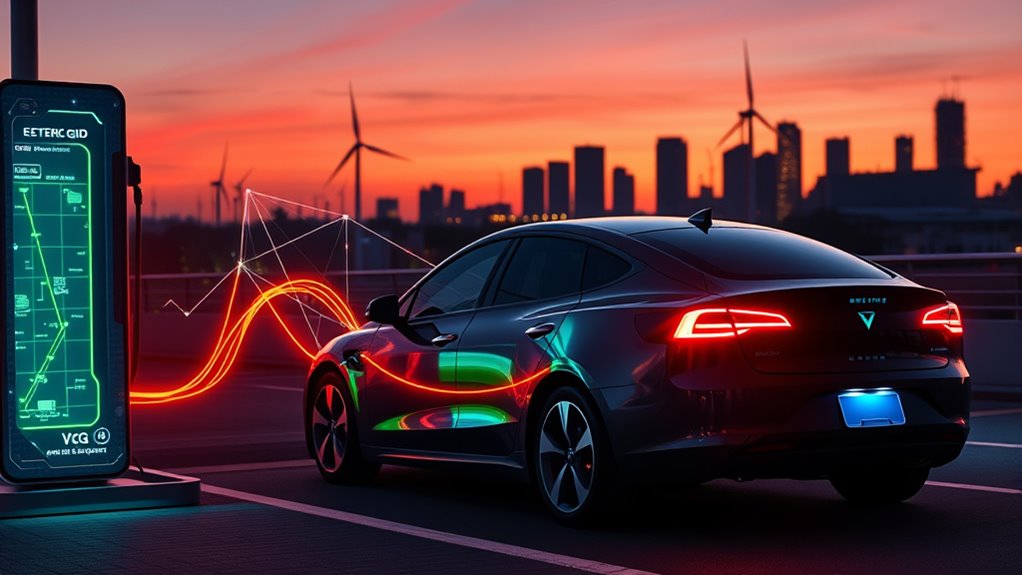
Vehicle-to-Grid (V2G) technology is transforming how we think about electric vehicles and energy management. Instead of just charging your EV and using it for transportation, V2G allows your vehicle’s battery to become part of the larger energy system. When you connect your EV to a compatible grid, it can send excess stored energy back into the power grid during peak demand times. This process hinges on effective battery integration, which guarantees your vehicle’s battery can safely and efficiently communicate with the grid. By integrating vehicle batteries into the energy network, V2G helps balance supply and demand, reducing strain on traditional power plants and minimizing outages.
V2G connects your EV battery to the grid, balancing demand and reducing outages through smart energy exchange.
One of the main benefits of this technology is grid stabilization. During periods of high electricity consumption, the grid can become overwhelmed, risking blackouts or the need for costly emergency power sources. Your EV can act as a distributed energy resource, providing stored electricity to help stabilize the grid. This not only enhances the reliability of the power supply but also supports the integration of renewable energy sources like wind and solar, which are inherently intermittent. When the sun isn’t shining or the wind isn’t blowing, your vehicle’s battery can discharge stored energy, smoothing out fluctuations and keeping the lights on.
For you as an EV owner, V2G offers more than just a way to contribute to a more reliable energy system. It can also provide financial incentives. Utilities may pay you for participating in V2G programs, compensating you for the energy your vehicle supplies back to the grid during peak times. This creates a new revenue stream while helping to offset the costs of owning an electric vehicle. Additionally, the technology promotes a more sustainable future by maximizing the utility of existing batteries. Instead of sitting idle, your EV’s battery works as part of a wider energy network, reducing the need for additional power plants and decreasing greenhouse gas emissions.
Implementing V2G requires smart charging infrastructure and sophisticated communication protocols to guarantee safe and efficient energy flow. It’s essential that battery integration is carefully managed to prevent excessive wear on your vehicle’s battery life. Advances in battery technology and management systems are making this more feasible than ever, ensuring that your vehicle can participate in V2G without compromising its longevity. Furthermore, understanding the importance of battery management systems and their role in maintaining battery health is crucial for successful V2G integration. Ultimately, V2G transforms your electric vehicle from a simple transportation tool into an active participant in energy management, offering benefits for the grid, the environment, and your wallet.
Top picks for "understand vehicle grid"
Open Amazon search results for this keyword.
As an affiliate, we earn on qualifying purchases.
Frequently Asked Questions
How Does V2G Technology Impact Electric Vehicle Battery Lifespan?
V2G technology can impact your electric vehicle’s battery lifespan by increasing battery degradation due to additional charging cycles. Every time you charge and discharge your battery through V2G, it accelerates wear, potentially reducing its overall lifespan. However, proper management of charging cycles and advanced battery technologies can mitigate these effects. So, while V2G offers benefits, it’s essential to balance its use to preserve your EV battery’s health over time.
What Are the Main Challenges to Widespread V2G Adoption?
Think the main hurdle to V2G taking over? It’s the grid infrastructure and regulatory policies, of course. Your current power grid isn’t exactly ready to handle a fleet of electric vehicles swapping energy like a busy coffee shop. Plus, regulators are playing catch-up, unsure whether to embrace this tech or treat it like a rebellious teenager. Until infrastructure upgrades and clear policies happen, widespread V2G adoption stays a wishful dream.
How Does V2G Integrate With Renewable Energy Sources?
V2G integrates with renewable energy sources by acting as a flexible energy storage solution, helping with renewable integration. When you connect your electric vehicle, it can store excess solar or wind power, then feed it back to the grid during high demand. This process improves grid stability by balancing supply and demand, ensuring a reliable energy flow even when renewable sources fluctuate. Your vehicle consequently becomes part of a smarter, cleaner energy system.
Are There Any Safety Concerns With Vehicle-To-Grid Systems?
Think of V2G systems as a double-edged sword—you must handle them with care. Yes, there are safety concerns, mainly around battery safety and grid stability. Proper safeguards and advanced management systems reduce risks, ensuring batteries don’t overheat or degrade prematurely. When managed well, V2G enhances grid stability without compromising safety, making it a smart, reliable way to optimize your energy use and support renewable sources.
What Incentives Are Available for V2g-Enabled Vehicle Owners?
You can benefit from incentives like rebates for installing charging stations and federal tax credits when you adopt V2G-enabled vehicles. These incentives help offset costs and encourage adoption. Some regions also offer special programs or financial rewards for participating in V2G systems, allowing you to earn money by feeding stored energy back into the grid. Check local policies to find specific incentives available in your area.
Conclusion
Imagine your car’s battery as a sleeping giant, quietly ready to wake and power the grid when needed. As you drive, you’re not just reaching your destination—you’re storing energy for a brighter, cleaner future. V2G technology transforms everyday vehicles into guardians of stability, balancing supply and demand like a conductor guiding an orchestra. Embrace this innovation, and you’ll help shape a sustainable world where your vehicle’s power lights the way forward.