
VW Buses rust mainly because they’re exposed to moisture, oxygen, and road salt, which cause metal to oxidize over time. Their design includes vulnerable spots like wheel wells, door sills, and hard-to-reach areas where water can collect. Keeping these areas clean and protected helps prevent rust from spreading. If you want to learn how to keep your VW bus in top shape and avoid costly repairs, there’s more to discover below.
Key Takeaways
- VW Buses are prone to rust due to exposure to moisture, oxygen, and road salt, especially in vulnerable areas like wheel wells and door sills.
- Older models have structural spots where moisture accumulates, accelerating rust formation without proper maintenance.
- Rust develops faster when dirt, salt, and debris trap moisture in hard-to-reach areas, worsening over time.
- Inadequate sealing around windows and doors allows water intrusion, increasing rust risk in hidden spots.
- Regular inspections, cleaning, and rust-proofing are essential to prevent rust and preserve the vehicle’s integrity.
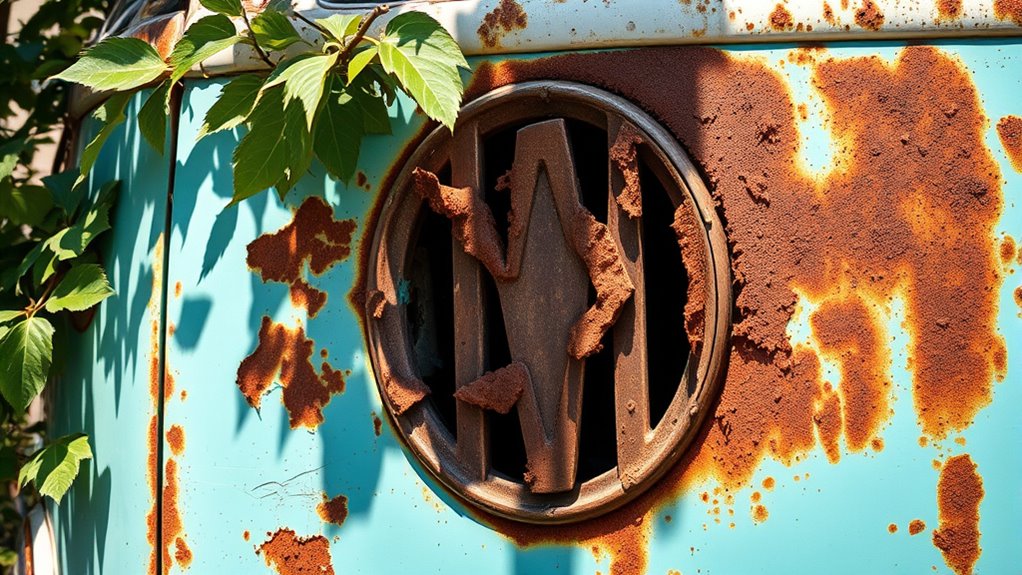
Volkswagen buses are iconic vehicles beloved by enthusiasts, but one common issue they face is rust. If you’re passionate about preserving your VW bus, understanding why rust develops and how to combat it is essential. Rust is more than just an aesthetic problem; it can compromise the structural integrity of your vehicle if left unchecked. The good news is that with proper restoration techniques and proactive rust prevention, you can keep your bus looking great and running smoothly for years to come.
Rust forms mainly because of exposure to moisture and oxygen, which cause the metal to oxidize over time. VW buses, especially older models, often have vulnerable spots like wheel wells, door sills, and underneath the chassis that are prone to rust if not properly protected. To tackle existing rust, you need to employ effective restoration techniques. This starts with thoroughly cleaning the affected areas, removing loose paint, dirt, and rust using wire brushes or grinders. Next, applying rust converters can neutralize remaining rust and prepare the surface for primer and paint. For severe corrosion, cutting out the rusted sections and welding in new panels might be necessary. Once the repairs are complete, sealing the area with quality paint or undercoating helps prevent moisture from penetrating again.
Rust develops from moisture and oxygen, threatening VW bus integrity; proper cleaning, repair, and sealing prevent damage.
Prevention is equally important as restoration. To keep rust at bay, you should regularly inspect your VW bus, especially after winter or long drives through wet conditions. Washing your vehicle frequently helps remove dirt and road salt that can accelerate rust formation. Applying a rust-proofing treatment or undercoating creates a barrier against moisture and salt, markedly reducing the likelihood of rust developing in the future. Make sure to pay special attention to hidden or hard-to-reach areas, where moisture tends to accumulate unnoticed. Keeping the underside of your bus dry and well-maintained is vital for rust prevention because once rust takes hold, it spreads quickly if not addressed promptly.
In addition to physical barriers, consider using rust inhibitors on vulnerable parts of your VW bus. Regular maintenance, such as checking and sealing seals around windows and doors, prevents water intrusion. Parking your vehicle in a garage or covered area also minimizes exposure to the elements. If you notice early signs of rust, don’t ignore them—addressing small spots immediately with touch-up paint or rust inhibitors can save you from costly repairs later.
Frequently Asked Questions
Are There Specific VW Bus Models More Prone to Rust?
Some VW bus models are more prone to rust due to model differences. Vintage durability varies, and early models like the Type 2 Bay Window tend to rust more because of design flaws and materials used. Later models improved with better corrosion protection, but you should still inspect any vintage VW bus thoroughly. Knowing these differences helps you preserve your vehicle better and avoid costly rust repairs down the line.
Can Modern Treatments Prevent Rust on Vintage VW Buses?
Think of modern treatments as your VW bus’s armor, shielding it like a knight’s shield. You can prevent rust with effective paint protection and durable underbody coatings, which act like a barrier against moisture and salt. Regular application of these treatments keeps your vintage VW looking fresh and preserves its charm. So, yes, with the right care, you can help prevent rust and maintain your bus’s legendary character.
How Long Does It Typically Take for a VW Bus to Rust?
You might wonder how long it takes for a VW bus to rust. It varies based on climate, paint protection, and storage techniques. In humid environments or without proper paint protection, rust can develop within a few years. Regularly storing your bus in a dry, sheltered spot and applying rust-resistant coatings substantially slows the process. Proper maintenance and preventive measures are key to prolonging your bus’s lifespan.
Does Climate Influence the Rusting Process of VW Buses?
Climate impact definitely influences rust prevention for your VW bus. In humid or salty environments, rusting happens faster due to moisture and salt exposure. To protect your vehicle, you need to regularly inspect and clean it, apply rust inhibitors, and keep it dry. Proper maintenance helps slow down the rusting process, especially in climates prone to high humidity or road salt, ensuring your VW bus stays in good condition longer.
What Are the Best Methods for Restoring Rusted VW Buses?
You might think restoring rusted VW buses is impossible, but it’s doable with the right steps. Start by removing rust through sandblasting or chemical treatments, ensuring all corrosion is gone. Then, perform rust removal to eliminate stubborn spots; finally, focus on paint restoration to protect the surface. These methods help bring back your bus’s charm, preserving its vintage appeal and preventing future rust issues.
Conclusion
So, now that you know why VW buses rust, you might wonder if yours has what it takes to withstand the test of time. Will a simple fix prevent future corrosion, or is your classic bus doomed to rust away? The truth is, proper care can buy you years of enjoyment, but neglect could lead to an inevitable decline. Are you prepared to take action and preserve your vintage ride, or will rust claim its victory? The choice is yours.