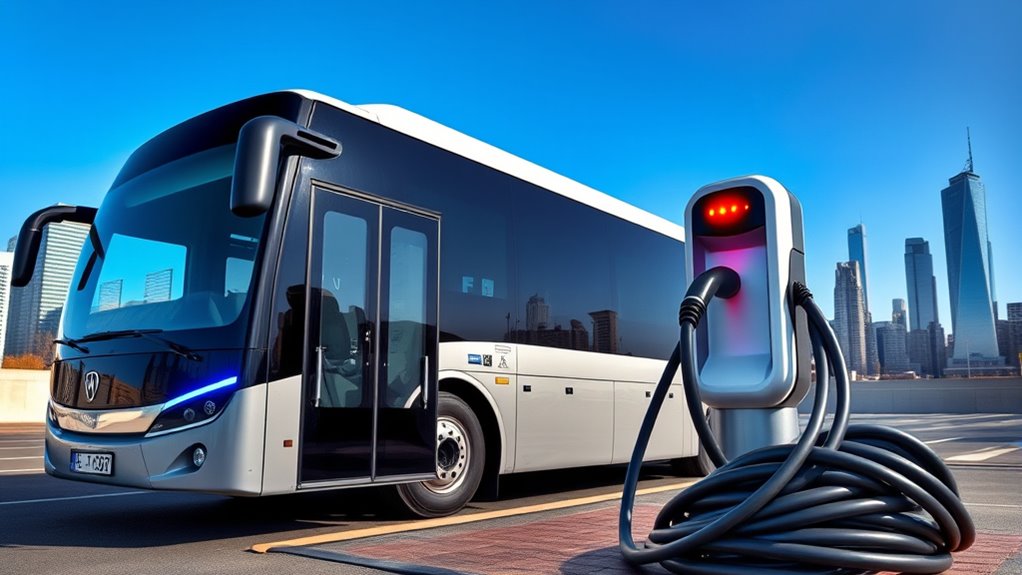

When it comes to charging buses, AC and DC methods differ mainly in speed and infrastructure. AC charging, common for overnight or depot top-ups, uses onboard converters and takes hours to fully recharge your bus, which is gentler on the battery’s lifespan. DC charging delivers power directly to the battery, allowing quick fills in 30 minutes or less, ideal for busy schedules but potentially stressing the batteries. Understanding these differences helps you plan smarter for fleet operations and longevity.

Get business pricing on monitors, keyboards and dev gear
- Business-only prices and quantity discounts
- Tax-exempt purchasing
- Multiple users, one account, clear invoices
Key Takeaways
- AC charging uses onboard converters for slower, overnight charging, ideal for depot and routine top-ups.
- DC charging delivers direct, rapid power to batteries, allowing buses to recharge up to 80% in about 30 minutes.
- AC is more common and gentler on batteries, while DC enables quick turnaround but may stress battery health over time.
- Infrastructure for both AC and DC supports flexible charging strategies, balancing overnight and fast charging needs.
- Proper management of heat and battery health is essential during DC fast charging to ensure vehicle longevity.
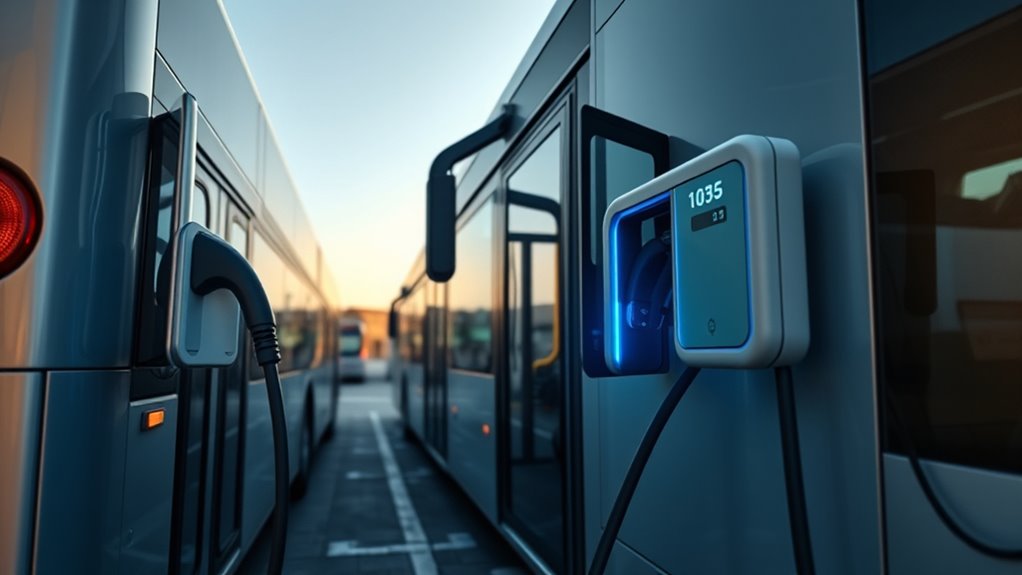
Charging your devices might seem straightforward, but understanding the basics can help you keep everything powered efficiently and safely. When it comes to buses, this is especially true because their large batteries and extensive charging needs require careful planning. Two main types of charging—AC and DC—serve different purposes and impact how quickly and effectively a bus can be charged. Knowing the differences between them can help you optimize your charging infrastructure and ensure your buses stay on the road longer.
AC charging, or alternating current charging, is the most common method used for everyday charging stations. It’s simple, reliable, and widely available, making it ideal for overnight or depot charging. When you plug a bus into an AC charger, the power goes through an onboard converter that transforms AC to DC, which then charges the battery. This process is gentler on the battery’s lifespan because it typically involves lower power levels over a longer period, helping preserve battery capacity over time. However, because AC chargers deliver less power, they’re slower, often taking several hours to fully recharge a bus. That makes AC charging more suitable for daily overnight top-ups rather than quick turnarounds during the day.
DC charging, or direct current charging, bypasses the onboard converter, supplying DC power directly to the bus’s battery. This setup allows for much faster charging, often providing 80% charge in just 30 minutes or less. Fast charging stations with high power output are becoming increasingly common for bus fleets that need rapid turnaround times. But this speed comes with considerations—DC chargers can generate more heat and stress on the battery, which can affect its long-term health if not managed properly. It’s crucial to understand your buses’ battery capacity and how it handles rapid charging to prevent premature degradation. Additionally, advancements in battery technology are helping to mitigate some of these issues, making fast charging safer and more efficient. Also, having the right charging infrastructure—such as properly rated connectors and safety systems—is essential to ensure safe and reliable charging operations.
The choice between AC and DC charging impacts your entire charging strategy, especially considering your fleet’s operational hours and battery capacity. A well-designed charging infrastructure should incorporate both types, allowing you to balance overnight charging with quick top-ups during the day. This flexibility ensures your buses remain operational, reduces downtime, and extends the lifespan of your batteries. Ultimately, understanding these differences helps you make smarter decisions about where and how to charge, maximizing efficiency and safety while protecting your investment in electric buses.
Frequently Asked Questions
How Does Charging Speed Differ Between AC and DC Chargers?
You’ll find that DC chargers deliver faster charging speeds because they support higher power levels, making them ideal for quick bus charges. AC chargers, on the other hand, are usually limited by their compatibility with charging stations and offer lower power delivery efficiency. This means you spend less time charging with DC stations, while AC chargers are better suited for overnight or longer-term charging, though they’re slower overall.
Are There Safety Concerns Specific to AC or DC Bus Charging?
Think of bus electrical safety as a delicate dance, where both AC and DC charging stations have their unique steps. While DC chargers tend to deliver higher power swiftly, they can pose more noticeable charging station hazards if not managed properly. AC chargers are generally safer for routine use, but you still need to stay vigilant about bus electrical safety. Proper protocols and equipment checks help prevent accidents and guarantee smooth, safe charging experiences.
What Are the Environmental Impacts of AC Versus DC Charging?
You should know that AC charging often uses more renewable energy sources, reducing carbon emissions, while DC fast charging can increase energy demand and waste. Both methods impact the environment differently, especially if renewable energy isn’t used consistently. Additionally, consider battery recycling to minimize waste. By choosing sustainable charging practices and supporting recycling programs, you help reduce overall environmental impacts and promote cleaner transportation.
Can Existing Bus Infrastructure Support Both AC and DC Charging?
Your existing bus infrastructure may support both AC and DC charging, but it depends on infrastructure compatibility and power supply flexibility. You’ll need to evaluate if your current systems can handle the different electrical requirements and charging rates. Upgrades might be necessary for seamless operation, especially if you want to maximize charging efficiency and minimize downtime. Consulting with infrastructure specialists helps ensure your setup is adaptable for both AC and DC charging needs.
How Does Charging Type Affect Bus Maintenance Requirements?
Charging type directly impacts your bus maintenance requirements. DC fast charging can increase fleet downtime because it stresses components like batteries and power electronics, leading to faster wear and more frequent repairs. Conversely, AC charging is gentler, reducing component wear and keeping your buses running longer. You should consider these factors when planning maintenance schedules, as choosing the right charging method helps optimize reliability and minimize downtime.
Conclusion
Understanding AC and DC charging helps you see the difference between slow, steady energy and rapid power boosts. While AC charging offers convenience and accessibility—like a leisurely drive—DC charging is your quick fix, getting buses back on the road faster. Both have their place in transit, much like a journey with gentle stops versus rapid escapes. By knowing when to use each, you’re better equipped to keep buses running smoothly, balancing patience with speed.
Halloween Picks
halloween
As an affiliate, we earn on qualifying purchases.