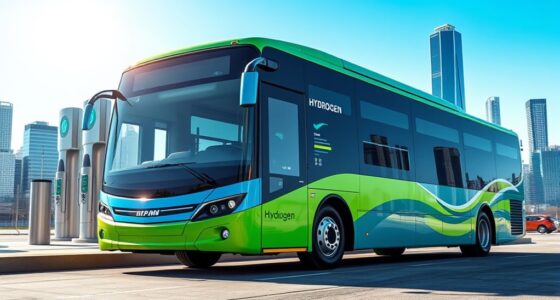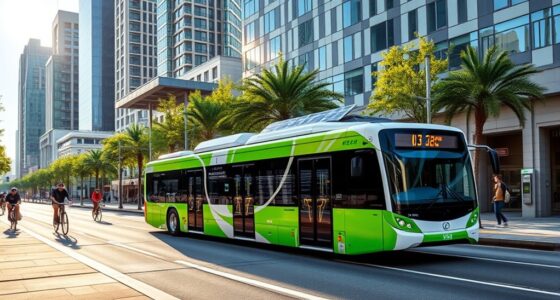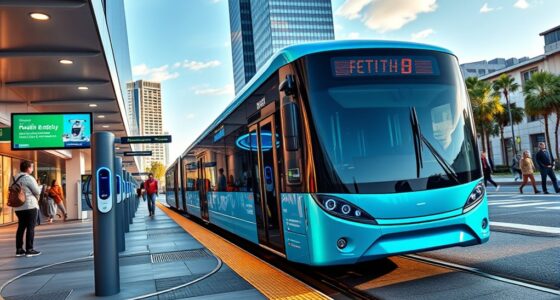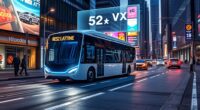
Autonomous bus services can lower costs by eliminating driver wages and improving maintenance through advanced diagnostics. They offer flexible funding options like government subsidies, private investments, and revenue from advertising or subscriptions, which help offset infrastructure expenses. innovative fare models, such as dynamic pricing and tiered options, boost revenue while keeping rides affordable. These strategies balance operational savings with revenue growth, ensuring long-term sustainability. To discover how these models work together, stay tuned for more insights.
Key Takeaways
- Autonomous buses reduce labor costs, lowering operational expenses and enabling flexible, demand-based fare models.
- Funding sources include government subsidies, public-private partnerships, and advertising revenue to offset high infrastructure costs.
- Innovative pricing strategies like dynamic fares and subscription models optimize revenue and improve affordability.
- Cost savings from autonomous technology support expanded coverage and increased ridership, boosting fare revenue.
- Infrastructure investments are funded through a mix of public funds, private investments, and revenue generated from enhanced service efficiency.
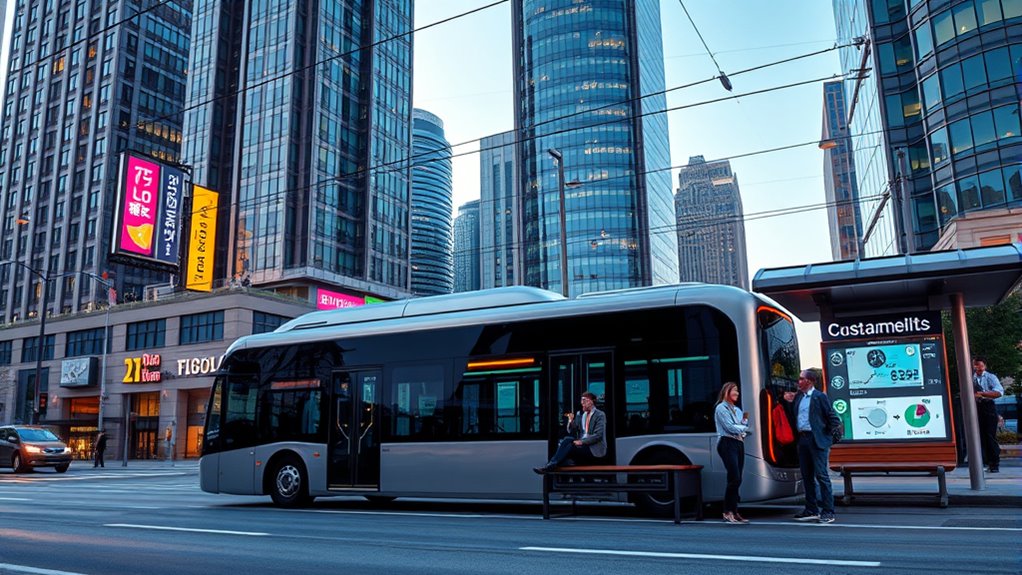
Have you ever wondered how autonomous bus services could reshape transportation economics? With the rise of self-driving technology, transportation providers are exploring new ways to design fare structures that balance affordability and profitability. Unlike traditional buses, which often rely on established fare models like flat rates or zone-based pricing, autonomous services have the flexibility to implement dynamic pricing strategies. For instance, they might adjust fares based on demand, time of day, or passenger load, maximizing revenue during peak hours while offering discounts during off-peak times. This flexibility can lead to more efficient use of resources and improved financial sustainability.
Funding sources for autonomous bus services also stand to evolve. Public transportation agencies might continue to rely on government subsidies, grants, or taxes, especially in the short term, to offset high initial investment costs and infrastructure upgrades. However, private companies and startups entering the autonomous space could introduce alternative funding models, such as partnerships with corporate sponsors or advertising revenue. Some autonomous bus projects might even utilize a subscription-based model, where riders pay a monthly fee for unlimited or discounted rides, providing a predictable income stream for operators. These diverse funding sources can reduce reliance on traditional government funding, making autonomous bus services more financially resilient and scalable in different regions.
Autonomous buses may rely on diverse funding like sponsorships, advertising, or subscriptions, reducing dependence on government support.
As you consider the economic implications, it’s important to recognize how autonomous technology can lower operational costs considerably. With no drivers to pay, labor expenses drop sharply, and maintenance costs may decrease due to advanced diagnostics and predictive maintenance systems. These savings can be passed on to consumers through lower fares, or reinvested into expanding services and infrastructure. At the same time, transit agencies and private operators need to carefully plan their fare structures to recover investments and sustain operations. Innovative fare models, such as pay-as-you-go or tiered pricing, can help optimize revenue while keeping the services accessible to a broad demographic.
In addition, autonomous bus services could open new funding opportunities through public-private partnerships. Cities might collaborate with technology firms or transportation network companies to share costs and benefits, attracting investment that might not have been available with traditional transit models. Furthermore, the potential for increased ridership due to improved convenience and coverage can generate higher fare revenues, which further supports the economic viability of these services.

Bidirectional Scan Tool VDIAGTOOL VD80 BT, 2026 Topology Mapping OBD2 Scanner for Car, 8" Wireless Full System Diagnostic Tool with 42+ Resets, ECU Coding, FCA AutoAuth, CAN FD/DoIP, 3 Years Update
Smarter Diagnostics, Broader Coverage, Greater Value Than $1,000+ Tools: The game-changing VD80BT OBD2 scanner delivers 4000+ active tests,…
As an affiliate, we earn on qualifying purchases.
As an affiliate, we earn on qualifying purchases.
Frequently Asked Questions
What Are the Long-Term Economic Benefits of Autonomous Bus Services?
You’ll see long-term economic benefits from autonomous bus services through technological innovation and environmental sustainability. These buses reduce operational costs, lower emissions, and improve efficiency, saving money over time. As technology advances, maintenance becomes easier and more cost-effective. Plus, greener transit options attract more riders, boosting local economies. Overall, embracing autonomous buses can lead to sustainable growth, cleaner cities, and a stronger transportation infrastructure for the future.
How Do Autonomous Buses Impact Local Employment and Job Markets?
You might notice autonomous buses reducing driver displacement, which can lead to job losses in transportation. However, robotic labor could create new roles in maintenance, programming, and system management. While some local employment may decline, opportunities in tech and support sectors could grow. You should consider how these shifts impact your community’s job market, balancing the loss of traditional driving jobs with emerging roles in autonomous vehicle operations.
What Are the Legal Liabilities Associated With Autonomous Bus Operations?
You’re responsible for understanding the legal liabilities of autonomous bus operations. You need to guarantee proper liability insurance covers potential accidents or malfunctions. Regulatory compliance is essential; you must follow local safety standards and testing requirements. If an incident occurs, liability may fall on your company or manufacturer, depending on fault. Staying updated on laws and maintaining thorough insurance helps you manage legal risks effectively.
How Do Funding Models Vary Between Urban and Rural Autonomous Bus Deployments?
You might notice that funding models differ markedly for urban and rural autonomous bus deployments. Urban areas often benefit from higher funding disparities due to dense populations and infrastructure investments, making it easier to secure public and private funding. In contrast, rural deployments face challenges with limited infrastructure and smaller budgets, relying more on government grants or community support to bridge funding gaps and guarantee service sustainability.
What Are the Potential Cost Savings for Cities Adopting Autonomous Bus Fleets?
You can expect significant cost reductions when adopting autonomous bus fleets, primarily through maintenance savings and lower labor costs. These vehicles require less frequent human intervention, reducing staffing expenses. Additionally, autonomous buses may benefit from improved routing efficiency, leading to further savings. Overall, these factors contribute to a more affordable transportation system for your city, making autonomous buses a cost-effective solution for expanding transit services.

ISO 9001:2015 and IATF 16949:2016 RATIONALIZED: Making Sense of How the Two Standards Work Together in a Process Based Manufacturing Environment
As an affiliate, we earn on qualifying purchases.
As an affiliate, we earn on qualifying purchases.
Conclusion
As you consider the future of autonomous bus services, envision a world where roads hum with silent, self-driving chariots gliding effortlessly. The economics may seem complex, but with innovative funding models and cost efficiencies, this vision becomes attainable. Just as a single drop creates ripples across a pond, your support and understanding can ripple into a transformed transportation landscape, turning dreams of seamless, autonomous transit into a vibrant reality that moves us all forward.
Medical Station Public Swooper Feather Advertising Flag & Pole Kit – Great for Businesses, Shops, Stores
🔑EVERYTHING YOU NEED: This kit contains everything you would need to begin advertising your business! Includes a full…
As an affiliate, we earn on qualifying purchases.
As an affiliate, we earn on qualifying purchases.

Safety Monitor for Kids with Special Needs, Autism and Elderly – GPS Tracker for Kids, SOS Button, 2-Way Speakerphone, Real Time Location Alerts, School Bus Tracking – Subscription Required
FREE SERVICE FOR 1st MONTH with easy activation on arrival. MONTHLY SUBSCRIPTION REQUIRED – 49.99 per month with…
As an affiliate, we earn on qualifying purchases.
As an affiliate, we earn on qualifying purchases.